Interieur van de Aya Sophia met geknielde en staande Turken — History & Analysis
Is this a mirror — or a memory? In Interieur van de Aya Sophia met geknielde en staande Turken, the viewer is invited to contemplate the layers of legacy that echo through time and space. Look to the center of the canvas where a vibrant play of light illuminates the grand arches of the Aya Sophia, casting intricate shadows that dance across the ornate floor. The figures of kneeling and standing men fill the scene with a silent gravity, their postures suggesting reverence and introspection.
Notice how the warm hues of ochre and gold mingle with the cooler tones of deep blue, creating a striking contrast that speaks to the convergence of faith and history within this sacred space. As the eye wanders, one can uncover subtle tensions beneath the surface: the devotion in the kneeling figures is juxtaposed with the upright men, who appear contemplative yet distant, symbolizing the complex relationship between individual belief and collective memory. The delicate detailing of the mosque’s architectural elements hints at both the physical and spiritual legacies of empires, inviting the viewer to ponder the weight of history on contemporary identity. Each brushstroke whispers stories of those who have come before, urging reflection on what is inherited and what is lost.
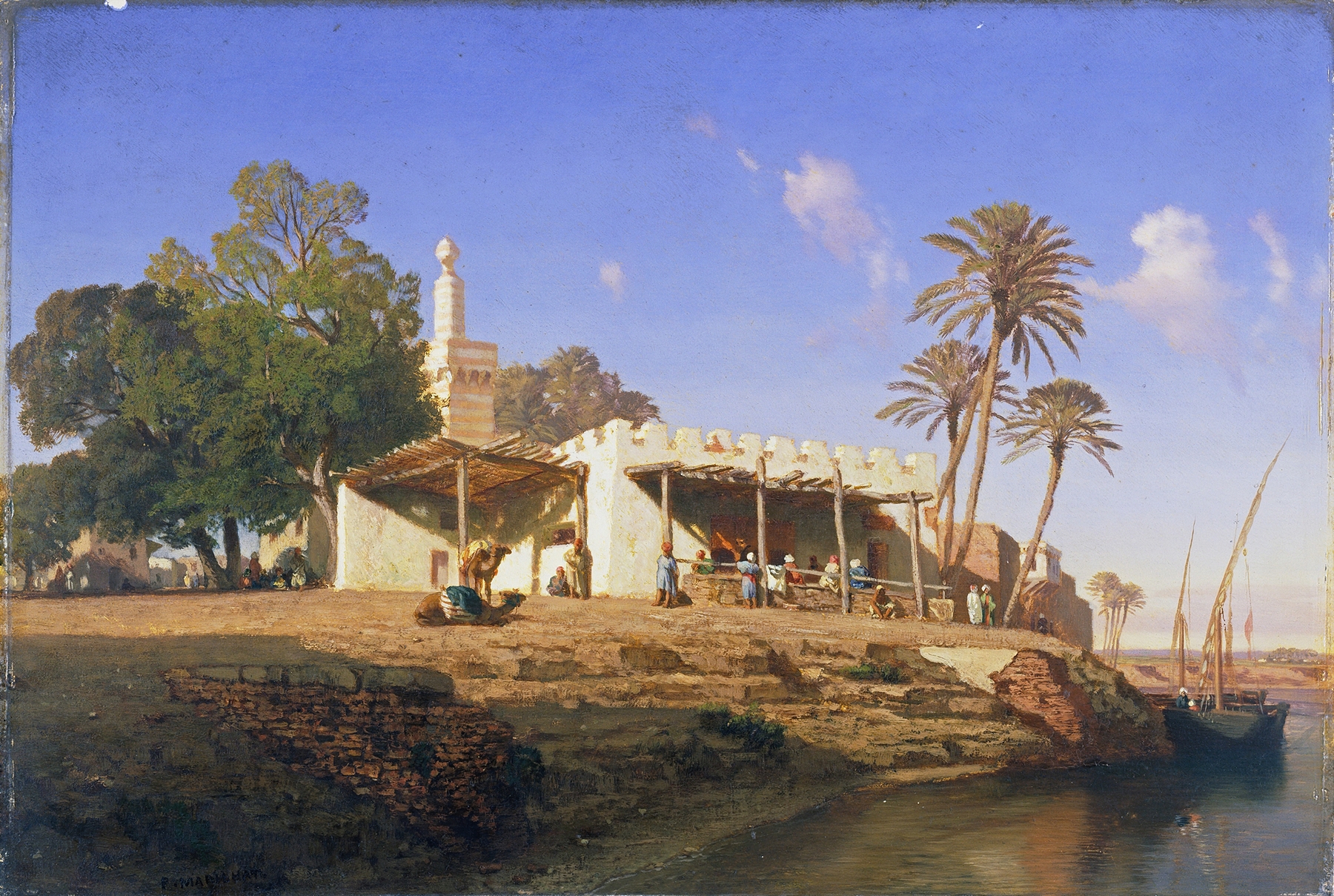
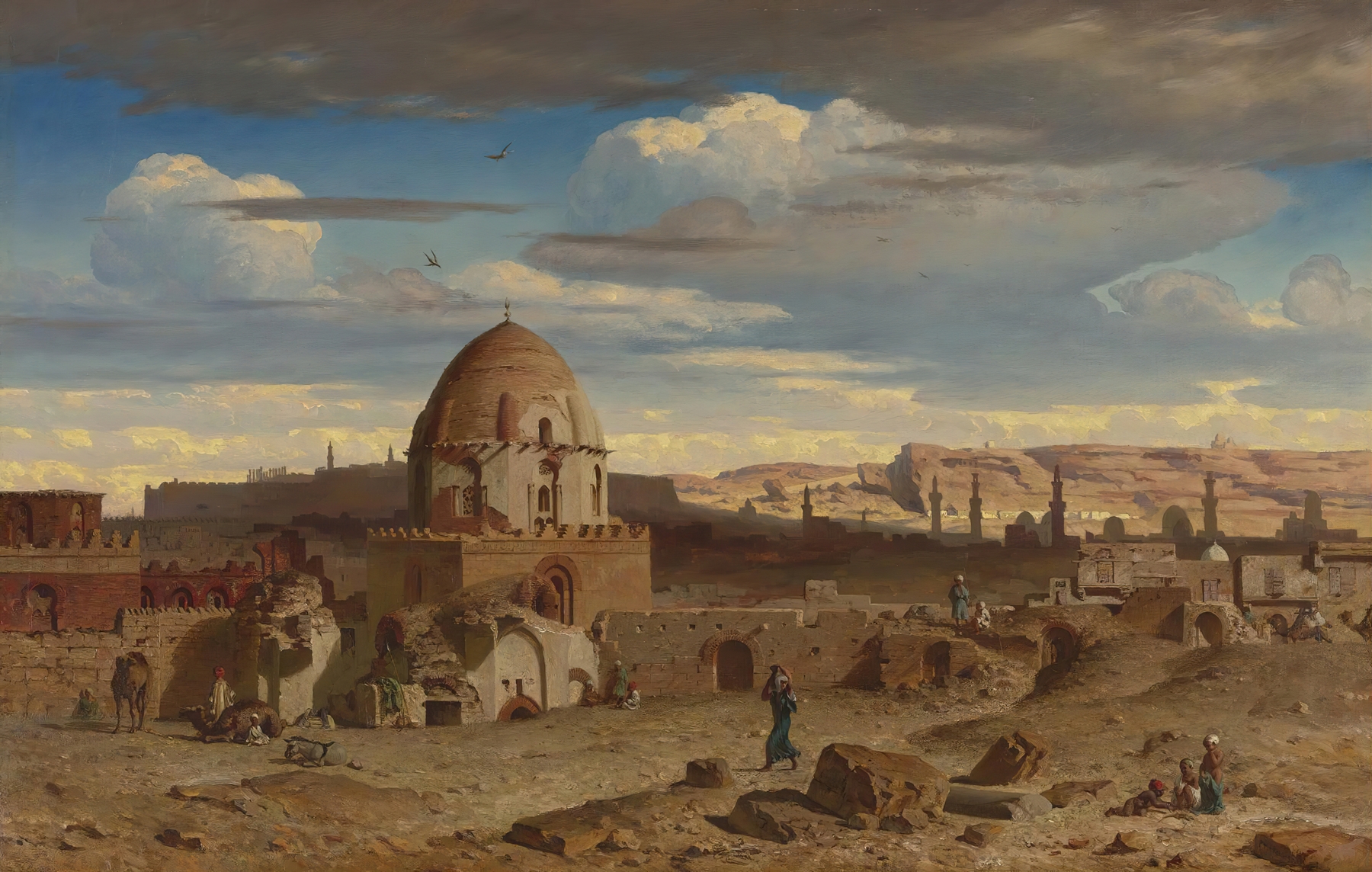
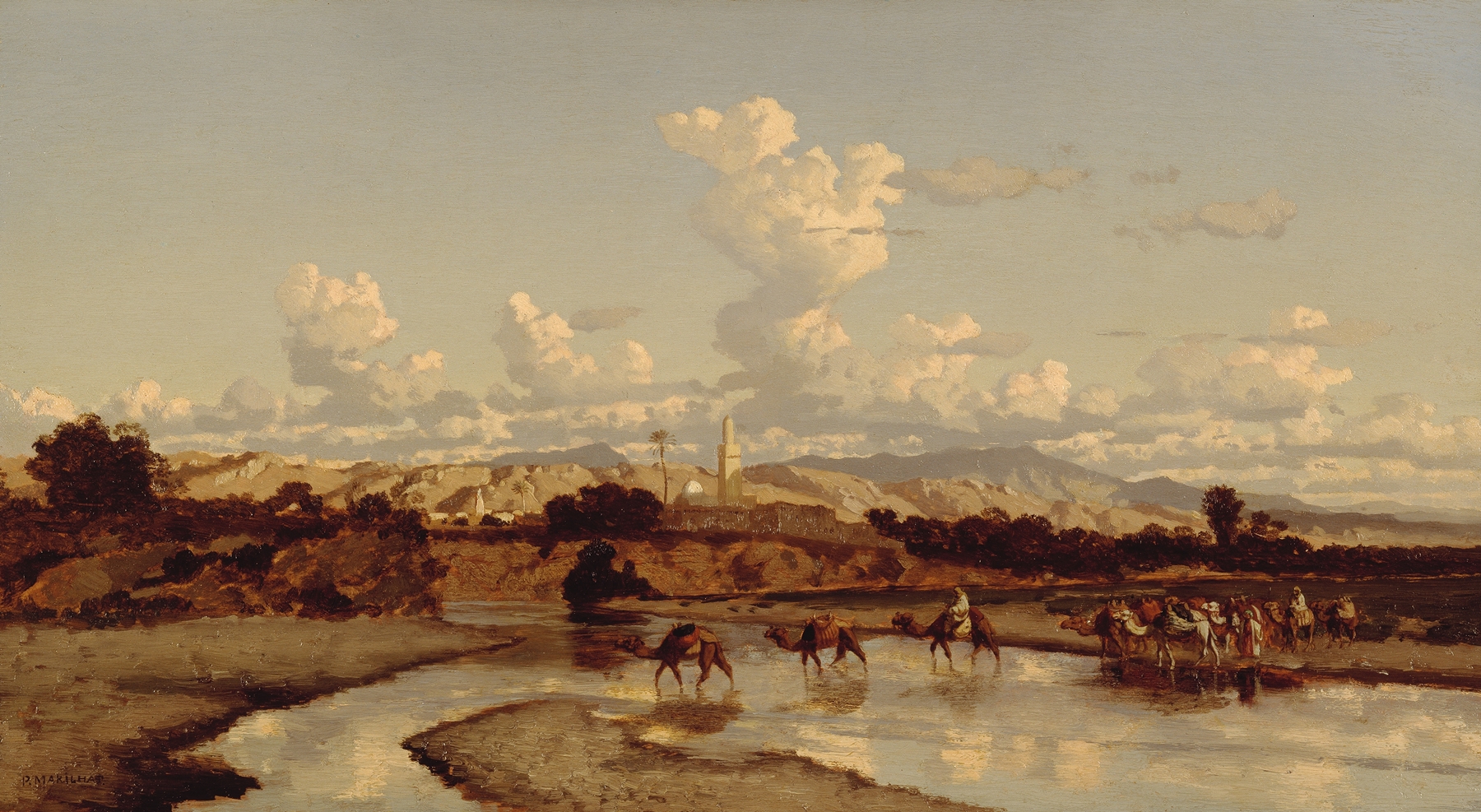
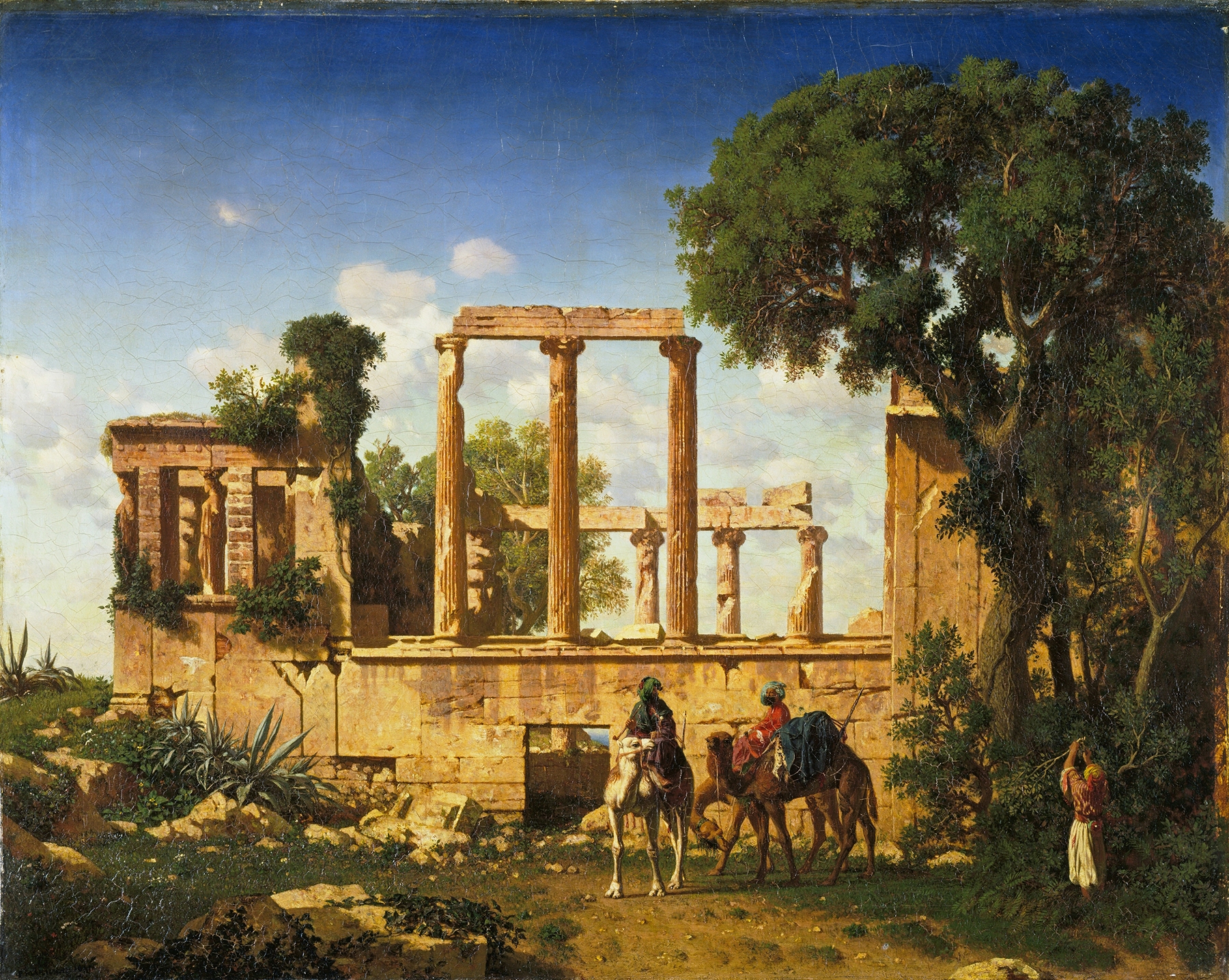
Prosper Marilhat painted this remarkable work between 1821 and 1847, a period marked by a growing fascination in Europe with the exoticism of the East. While living in Paris, he traveled extensively, capturing the vibrancy and complexities of different cultures. The interplay of Eastern and Western artistic influences during his time underscored a shift in how artists approached the representation of foreign landscapes and peoples, with this painting serving as a testament to that evolving narrative.