In Fontainebleau Woods (Fontainebleau Forest) — History & Analysis
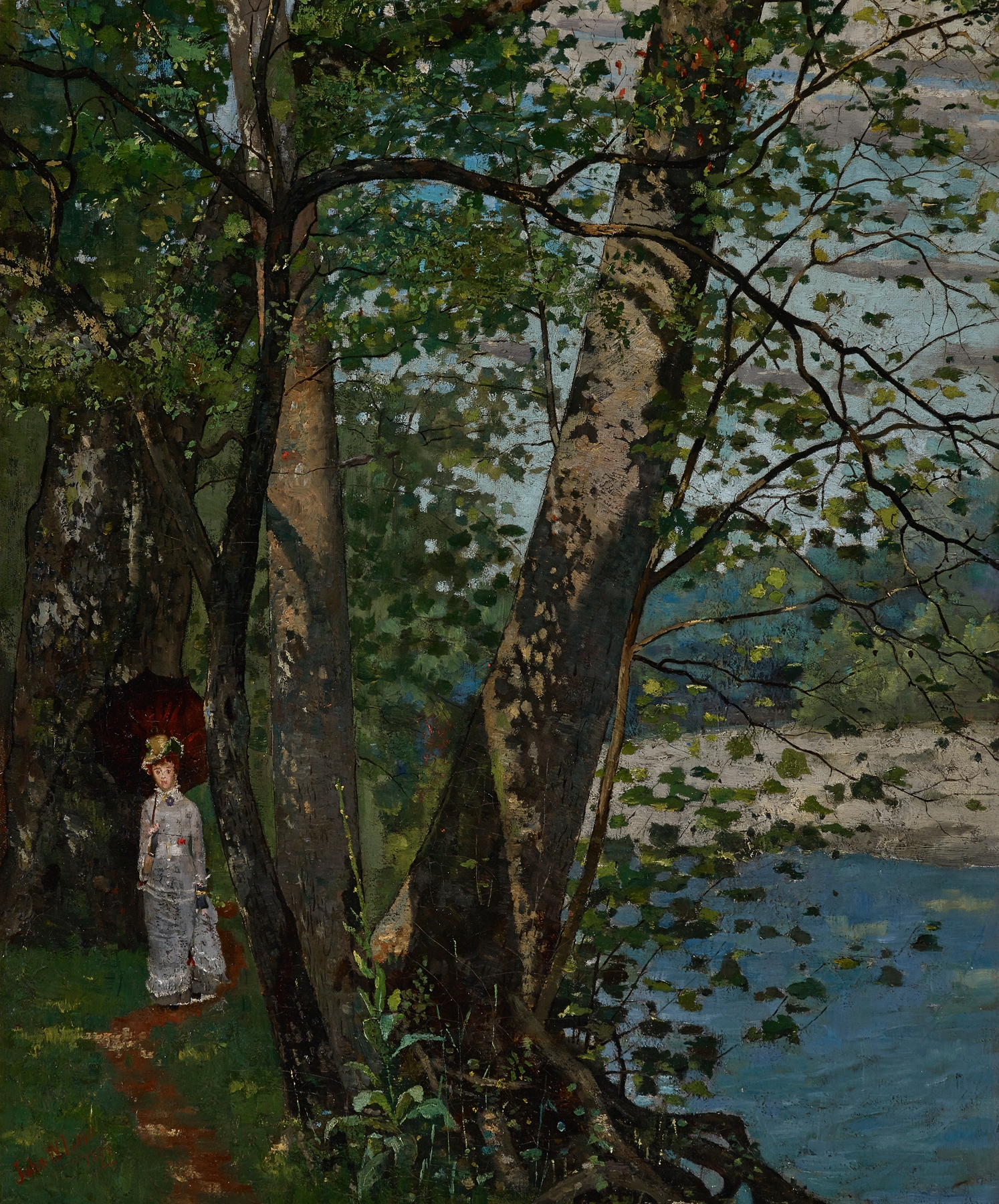
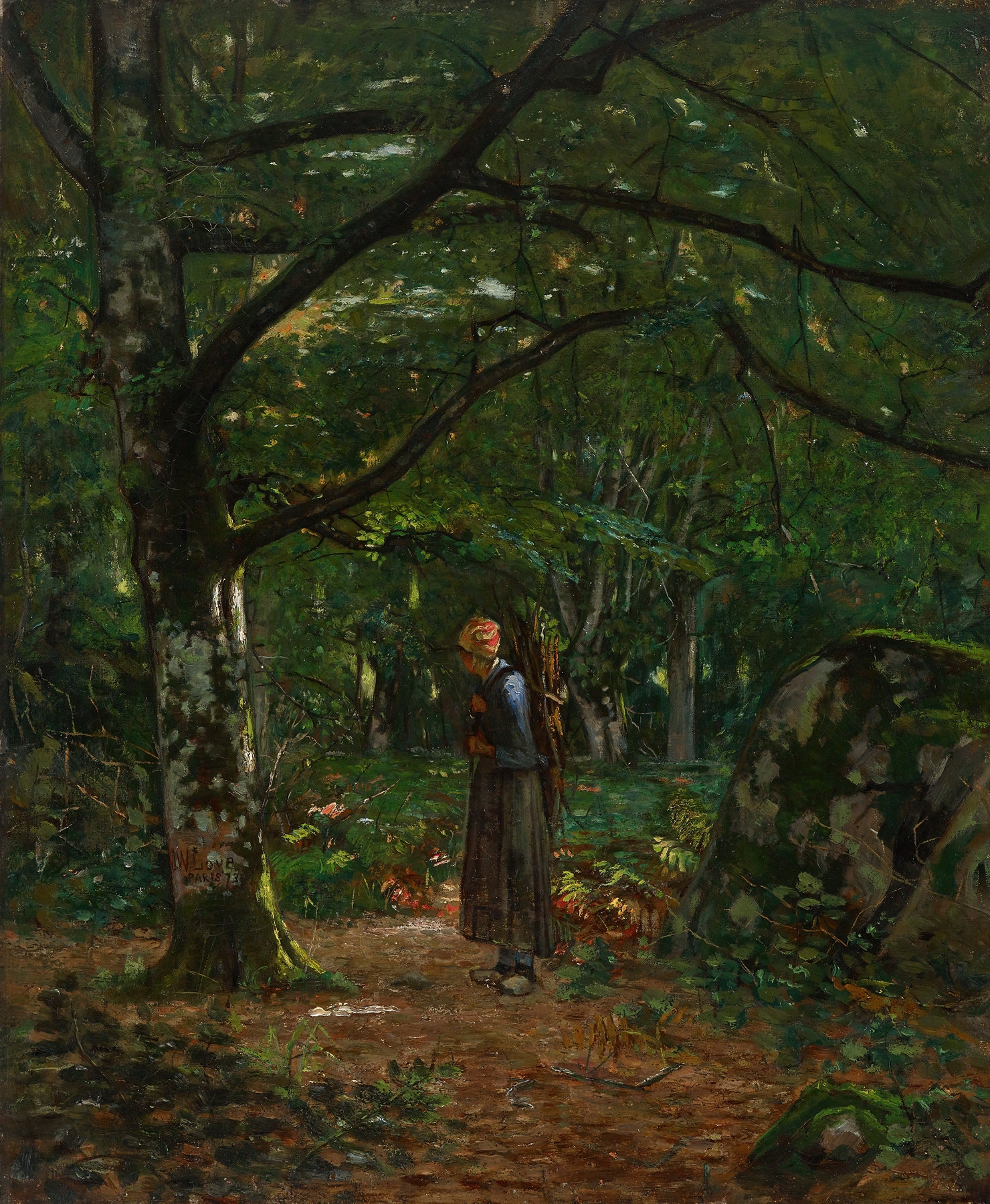
“To paint is to remember what time wants us to forget.” In In Fontainebleau Woods, this sentiment resonates vividly, inviting us to lose ourselves in the forest's embrace, where memories linger like whispers among the trees. Look to the center, where a dappled path winds through the verdant foliage, beckoning the viewer to step into an oasis of tranquility. Notice how the light filters through the canopy, casting a gentle glow on the carpet of fallen leaves, creating a mosaic of warm ochres and deep greens. The soft brushstrokes evoke the rustling of leaves, while the cool shadows suggest a deeper mystery hiding just beyond the sunlit clearing.
Embedded within the serene landscape lies a subtle tension between solitude and the interconnectedness of nature. The towering trees stand as sentinels of time, their gnarled branches echoing the life cycles of those who walk beneath them. The interplay of light and shadow hints at the passage of time, contrasting the fleeting moments of existence with the enduring strength of the forest. This duality invites contemplation, urging viewers to reflect on their own place within the vast tapestry of life.
John Washington Love created this piece in 1873 while living and working in France, a time when the Impressionist movement was gaining momentum. His surroundings in the Fontainebleau Forest, a popular retreat for artists, offered inspiration and a sense of community amidst the evolving art scene. Love's work reflects the changing perceptions of nature and light, capturing the essence of an era that sought to embrace the beauty of the ephemeral.