
In The Loge — History & Facts
A woman dressed in black sits in a theater box, raising opera glasses to her eyes as she gazes across the auditorium. The woman’s profile is sharply defined against the dark background, her hair gathered high and covered by a black hat or veil. Behind her, the curved golden rail of the balcony glows under the theater lights, decorated with pale yellow and cream ornamentation.
In the background, several other theatergoers are visible, their faces rendered with quick, loose brushstrokes that suggest movement and conversation. A man in the upper left, also holding opera glasses, turns his attention toward the central woman, while other figures cluster in pairs or groups along the balcony. The composition is dominated by warm browns, ochres, and blacks, with subtle touches of white and yellow highlighting the figures and the ornate railing.
Mary Cassatt paints with visible, energetic brushwork, especially in the background figures and the textured surface of the balcony. The subject is a bourgeois woman attending the opera, a setting that served as a social gathering place for the upper classes in the nineteenth century. The woman’s elegant costume and accessories, including her gloves, fan, and hat, signal her upper-class status. A man in the background looks directly at her, introducing a dynamic of observation and social interaction within the public space of the theater. Cassatt was introduced to Impressionism by Edgar Degas, and the loose brushwork and depiction of modern life in this painting reflect the movement’s influence.
Like other Impressionists, Cassatt chose contemporary subjects and captured fleeting moments, here focusing on the experience of women in public spaces. In the Loge stands among several paintings by Cassatt that depict women at the opera, emphasizing their evolving roles in society.
Sources: Museum of Fine Arts Boston, record 10.35 · Wikidata Q14915747 · Wikipedia: In the Loge
More Artworks by Mary Cassatt

The Child's Bath
Mary Cassatt
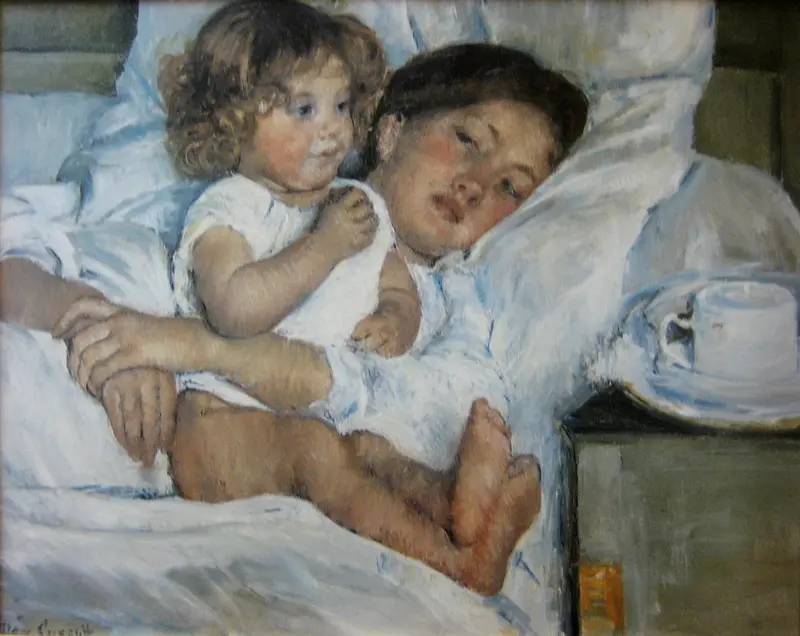
Breakfast in Bed
Mary Cassatt

Mother and Child (Baby Getting Up from His Nap)
Mary Cassatt
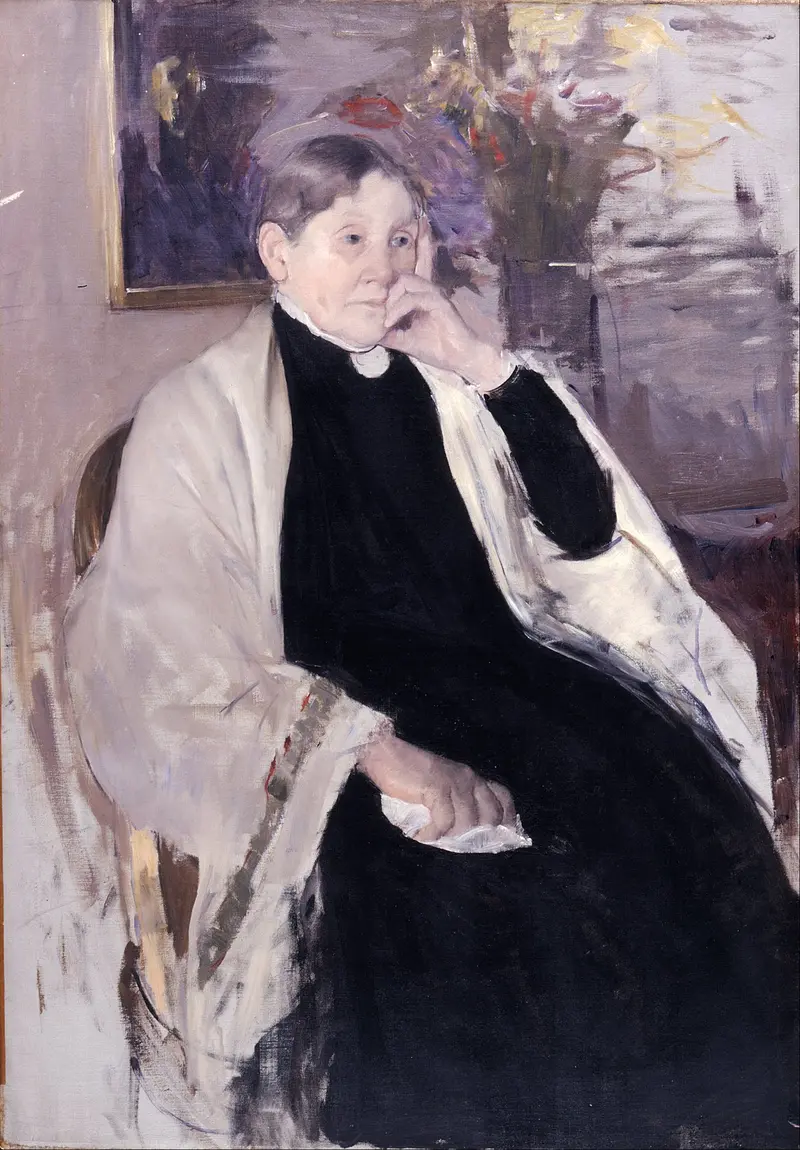
Mrs. Robert S. Cassatt, the Artist's Mother
Mary Cassatt
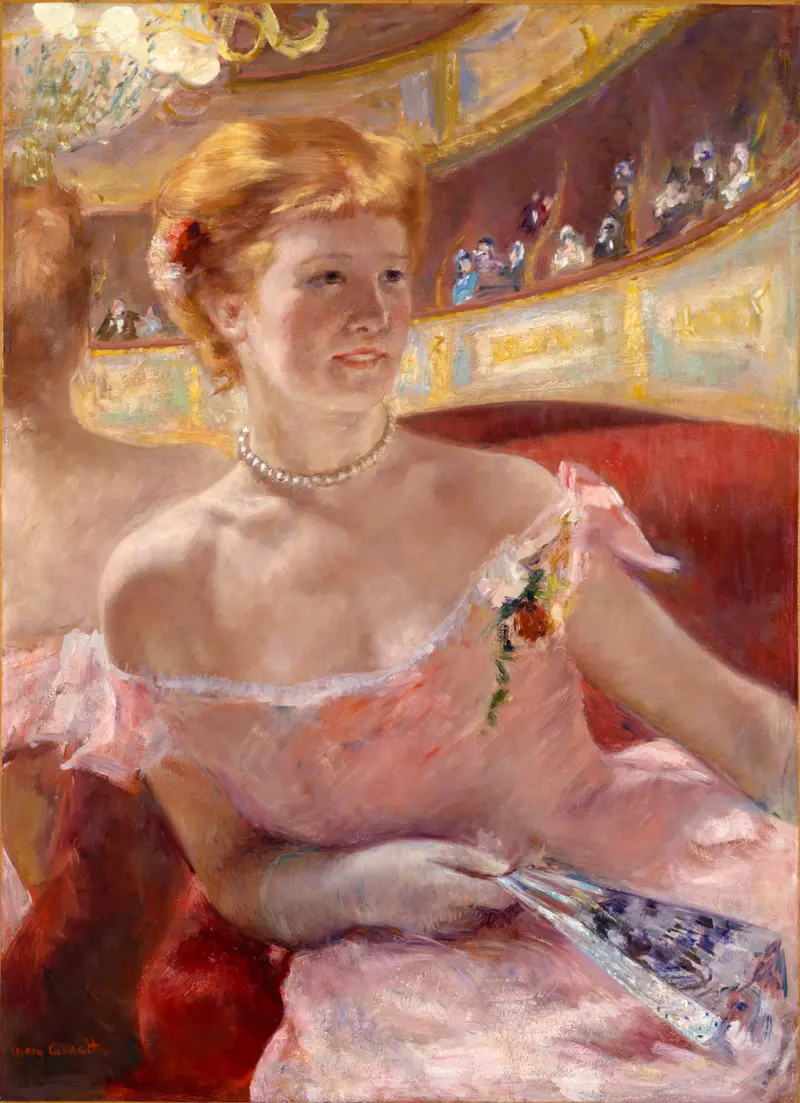
Woman with a Pearl Necklace in a Loge
Mary Cassatt
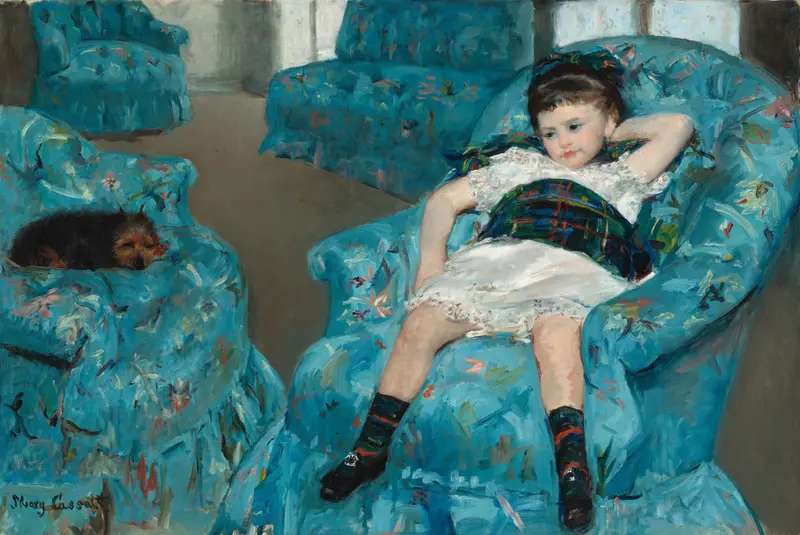
Little Girl in a Blue Armchair
Mary Cassatt
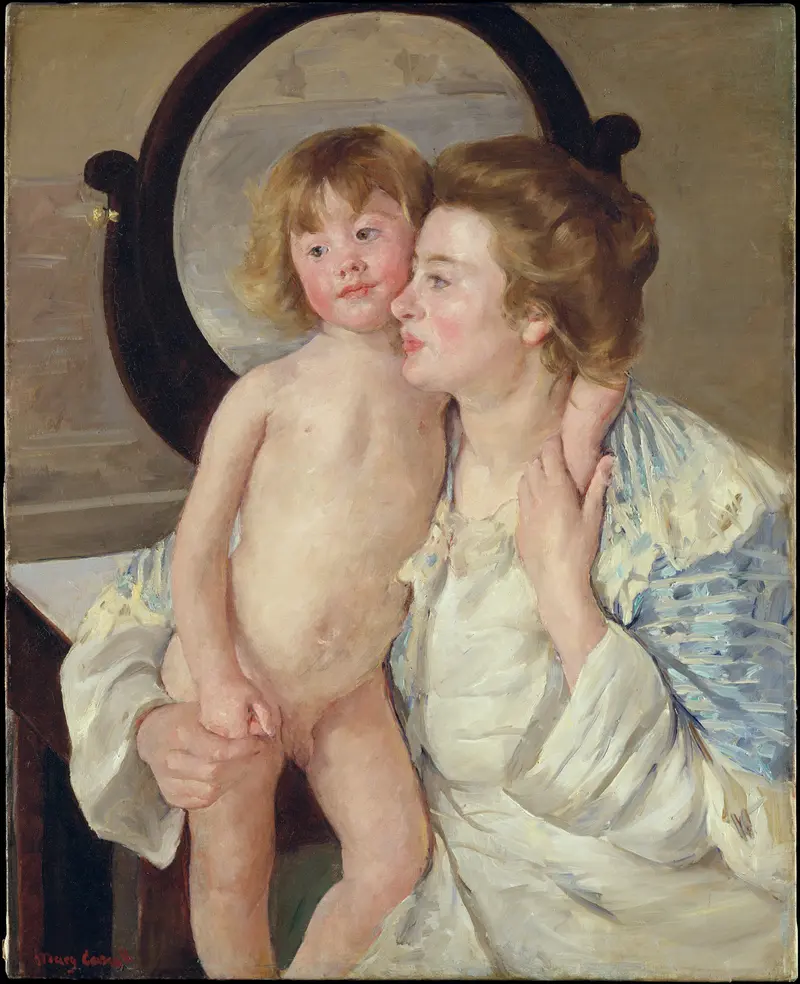
Mother and Child (The Oval Mirror)
Mary Cassatt
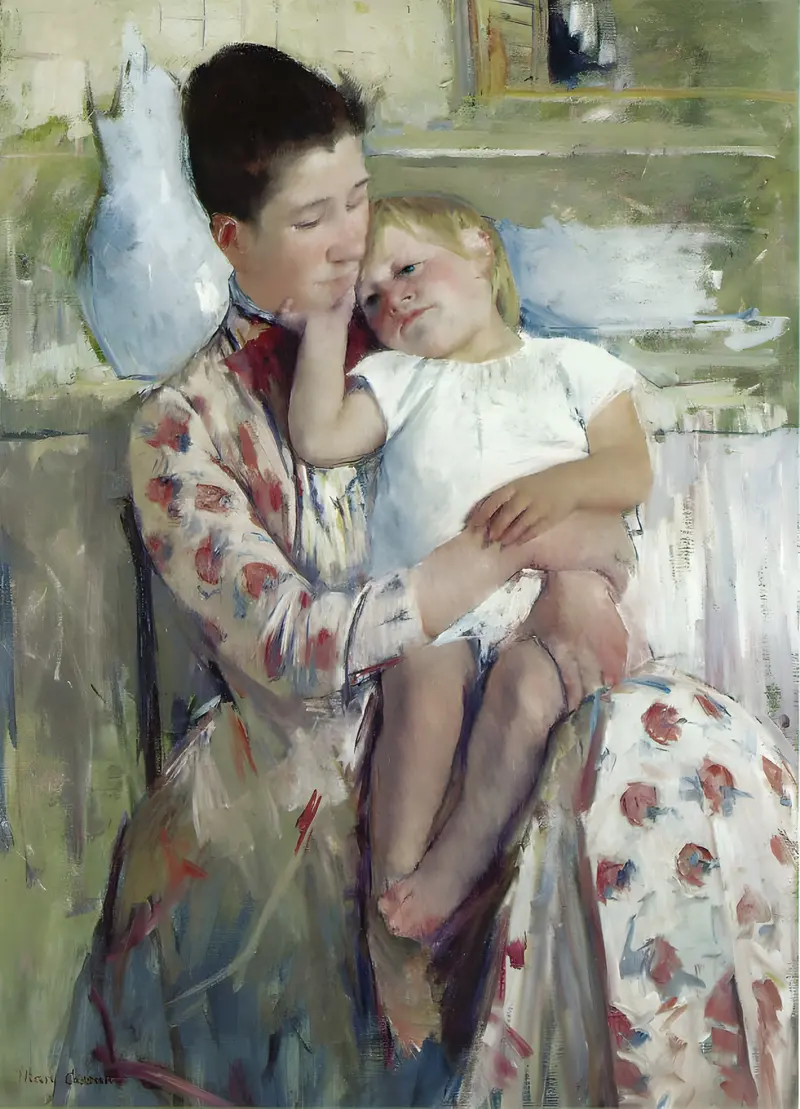
Mother and Child
Mary Cassatt
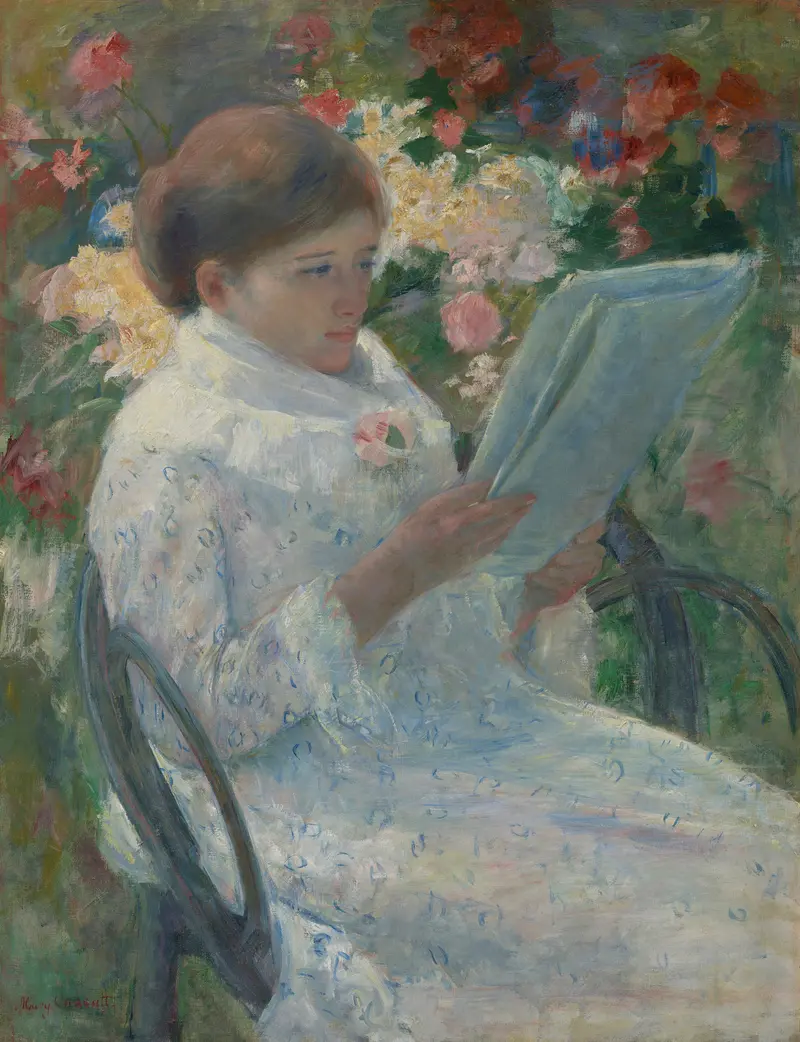
On a Balcony
Mary Cassatt
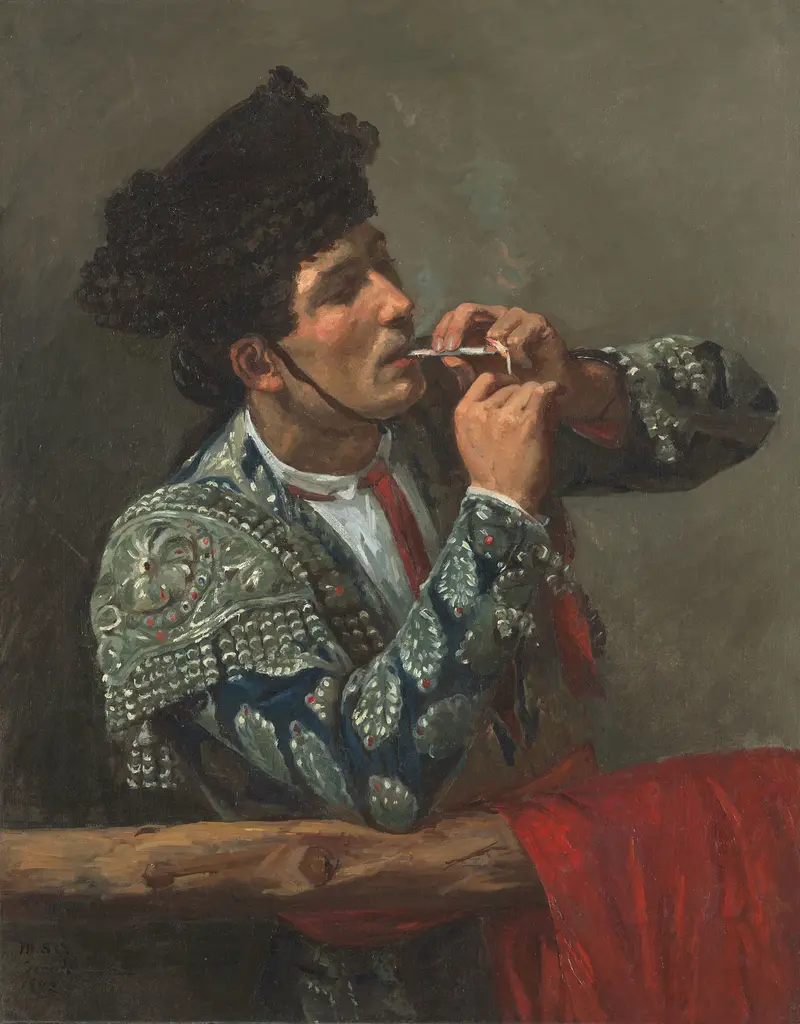
After the Bullfight
Mary Cassatt
More Genre Scene Art

Banquet of the Officers of the St George Civic Guard
Frans Hals

Rembrandt and Saskia in the Scene of the Prodigal Son
Rembrandt van Rijn

Bal du moulin de la Galette
Pierre-Auguste Renoir

Quadrille at the Moulin Rouge
Henri de Toulouse-Lautrec

A Burial at Ornans
Gustave Courbet

When Will You Marry?
Paul Gauguin