The Child's Bath — History & Analysis
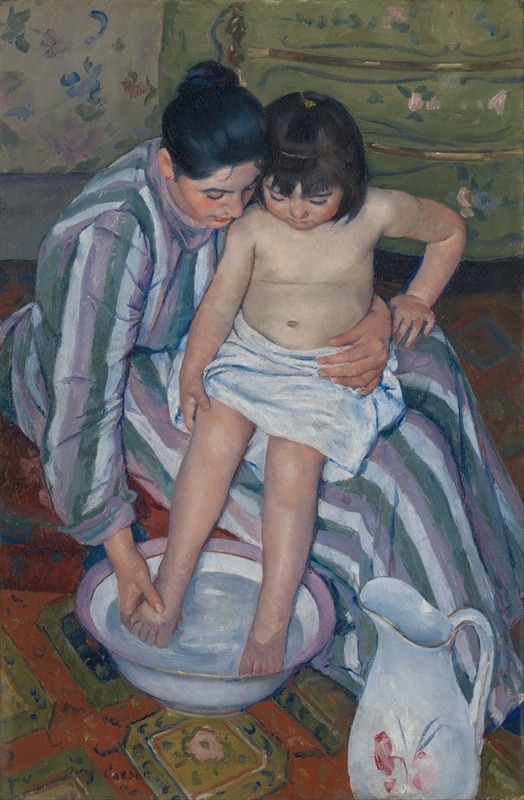
Could a single brushstroke hold eternity? In The Child's Bath, moments of tenderness are suspended in time, inviting us to reflect on the bonds that shape our existence. Focus on the gentle curves of the figures — the mother and child entwined in a dance of care. Notice how the light spills softly across the scene, illuminating the mother’s serene face while casting delicate shadows on the water’s surface.
The pastel palette underscores the intimacy of the moment, with soft blues and pinks that evoke a sense of calm and affection. Each stroke conveys a quiet yet profound connection, drawing you into their shared world. Digging deeper, the contrasting elements speak volumes — the delicate vulnerability of the child against the steady presence of the mother. The water, a symbol of purity, serves as both a literal and metaphorical cleansing, suggesting renewal and growth.
The viewer can't help but contemplate the fleeting nature of childhood, encapsulated in this peaceful yet poignant ritual, a reminder that these moments, though ephemeral, are eternally cherished. In 1893, Mary Cassatt painted this masterpiece while living in Paris, a time when she was increasingly recognized as a leading figure in the Impressionist movement. Amidst her artistic evolution, she grappled with societal expectations of women and sought to elevate the depiction of intimate female experiences. This period marked a pivotal shift in her work as she focused on the warmth and subtleties of domestic life, capturing the essence of motherhood with profound sensitivity.