On a Balcony — History & Analysis
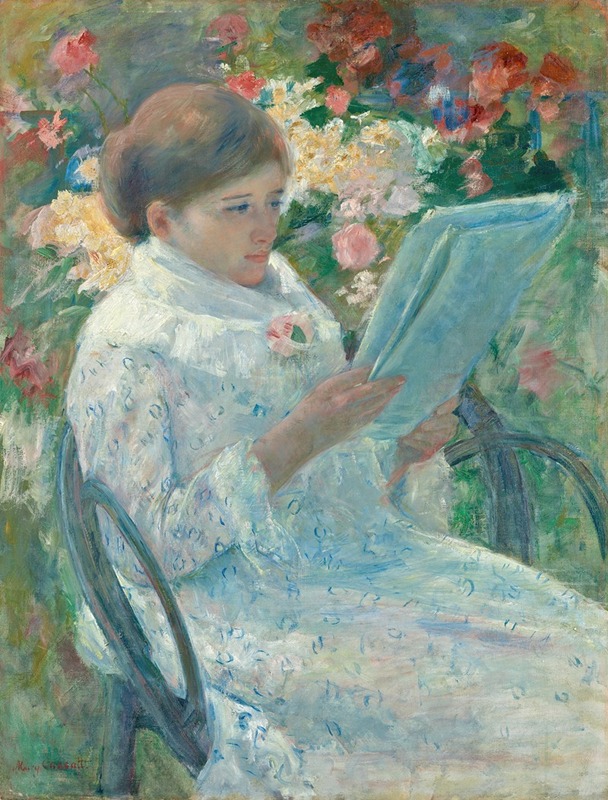
“To paint is to remember what time wants us to forget.” In a world where moments slip through our fingers like sand, this sentiment echoes deeply within the canvas. On a Balcony encapsulates the essence of destiny, where a quiet scene becomes a vessel of memory and contemplation. Look to the left at the young woman poised elegantly on the balcony, her posture both relaxed and introspective. The soft, dappled light spills across her dress, accentuating the delicate brushstrokes that reveal the texture of her fabric. The muted palette of blues and greens harmonizes beautifully with the warm tones of her skin, creating a sense of serenity that envelops the viewer.
Notice how her gaze drifts beyond the railing, hinting at a world just out of reach, while the architectural elements frame her, both isolating and connecting her to the vibrant life below. Within this moment, Cassatt deftly intertwines themes of solitude and introspection. The balcony, a metaphorical threshold, signifies the spaces between personal desire and societal expectation. The viewer is invited to ponder the thoughts that linger in the woman's mind—perhaps aspirations, regrets, or dreams unfulfilled.
Each element, from the glimpse of nature in the background to the intricate details of her surroundings, contributes to a profound sense of longing and the passage of time. During the late 1870s in Paris, Cassatt was deeply immersed in the Impressionist movement, seeking to redefine the portrayal of women. This period marked a significant transition in her artistic journey as she explored new techniques and styles. While establishing herself amongst her contemporaries, she aimed to capture the complexities of female experience, making On a Balcony not just a personal reflection but an enduring commentary on the nature of existence itself.