Interlaken Hotel d’Interlaken — History & Analysis
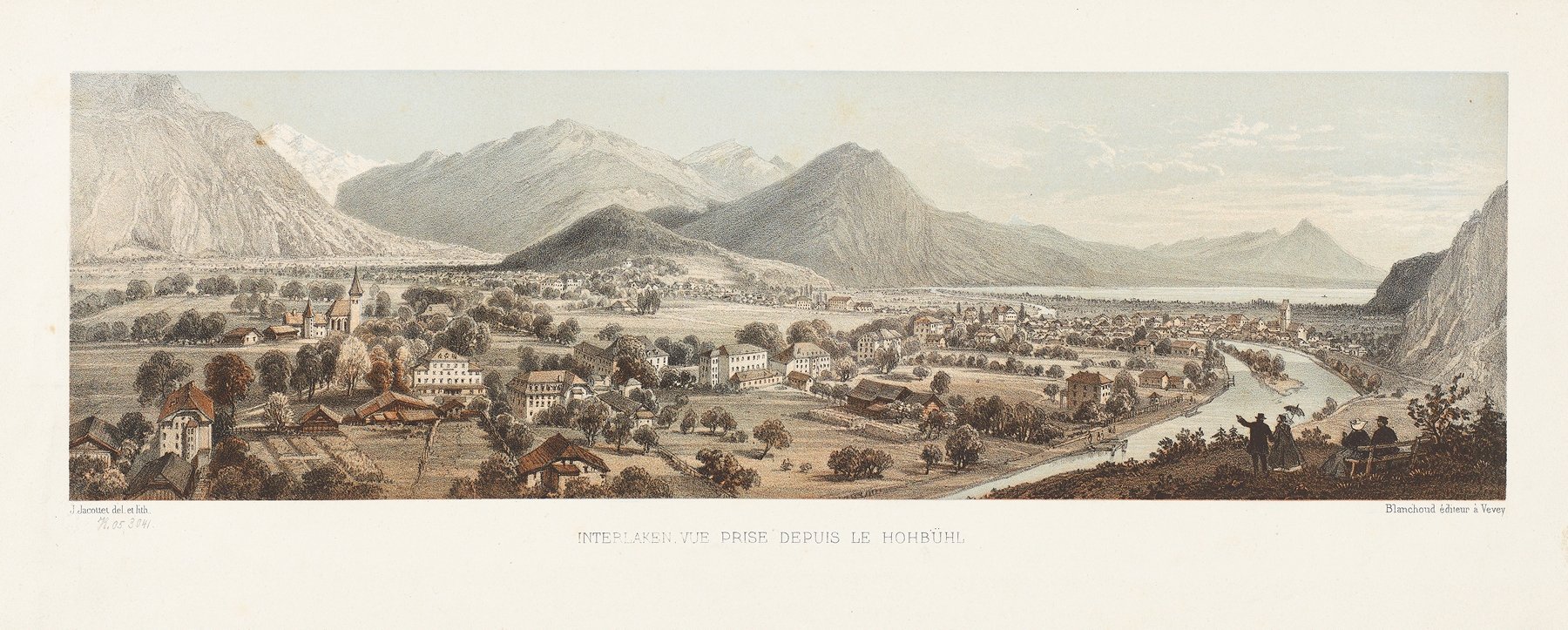
“Art reveals the soul when the world turns away.” In moments of solitude, fear lurks just beneath the surface, waiting to be acknowledged. It is in the quiet spaces of existence that true emotion emerges, often masked by routine and the mundane. To enter this artwork, focus on the serene façade of the hotel, which stands as a daunting yet inviting presence. The viewer's gaze is drawn first to the intricate details of the architecture, with its delicate balustrades and steep gables that rise against a backdrop of foreboding mountains.
Notice the interplay of soft light and shadow on the building's surface, each stroke revealing the artist’s mastery in capturing the fragile beauty of the scene, while hints of dark colors suggest an undercurrent of unease. Within the composition, the juxtaposition of the vibrant colors of nature against the stark, rigid structure creates a palpable tension. The lush greenery surrounding the hotel contrasts sharply with the oppressive stillness of the building, invoking a sense of isolation and fear of the unknown. Each brushstroke seems to whisper secrets of the past, inviting the viewer to ponder the stories hidden within its walls and the unsettling emotions that linger in the air.
Jean Jacottet painted this piece during a period marked by introspection and a growing interest in capturing the complexity of human emotion. Active in the late 19th century, his works often explored themes of solitude and existential dread. It was a time when many artists were beginning to reflect on the psychological dimensions of their subjects, paving the way for future explorations into the darker corners of human experience.