Landscape with Adam and Eve — History & Analysis
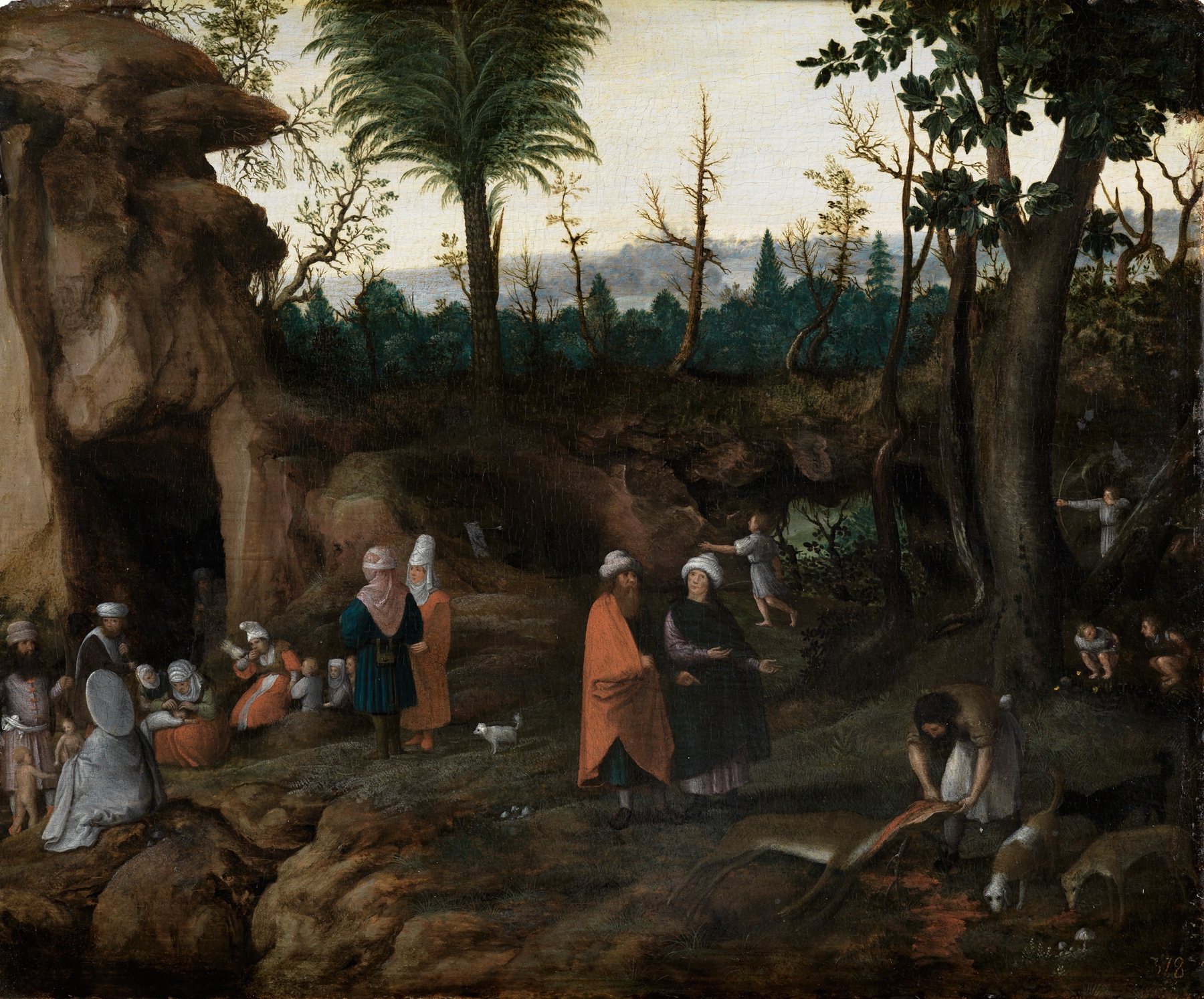
When did color learn to lie? In the delicate interplay of hues, beauty conceals deeper truths, transforming perception into a captivating illusion. Focus your gaze on the lush greenery that stretches across the canvas, a verdant expanse that invites serenity yet hides profound narratives. Notice how the sunlight dapples through the foliage, illuminating the figures of Adam and Eve, who stand poised at the center.
The rich earth tones contrast with the ethereal blues of the sky, creating an atmosphere that feels both inviting and deceptive, as if nature itself is orchestrating a serene facade. In this landscape, the figures’ idyllic surroundings mask an impending tension—innocence teeters on the brink of knowledge. The serpent, discreetly coiled within the foliage, embodies the lurking threat of temptation and the fall from grace. Shadows blend with light, suggesting that beauty can be transient and even perilous, urging viewers to ponder the cost of desire and awareness in a seemingly perfect world.
Cornelis van Dalem painted this masterpiece between 1559 and 1569, during a period when Northern Europe was experiencing a shift in artistic expression. He was influenced by the burgeoning interest in naturalism and the symbolic complexities of biblical themes. As artists sought to balance realism with moral undertones, van Dalem's work reflects the intricate dialogue between appearance and reality, masterfully capturing the tension that underlies the serene landscape.