McKean Buchanan (1798-1872) — History & Analysis
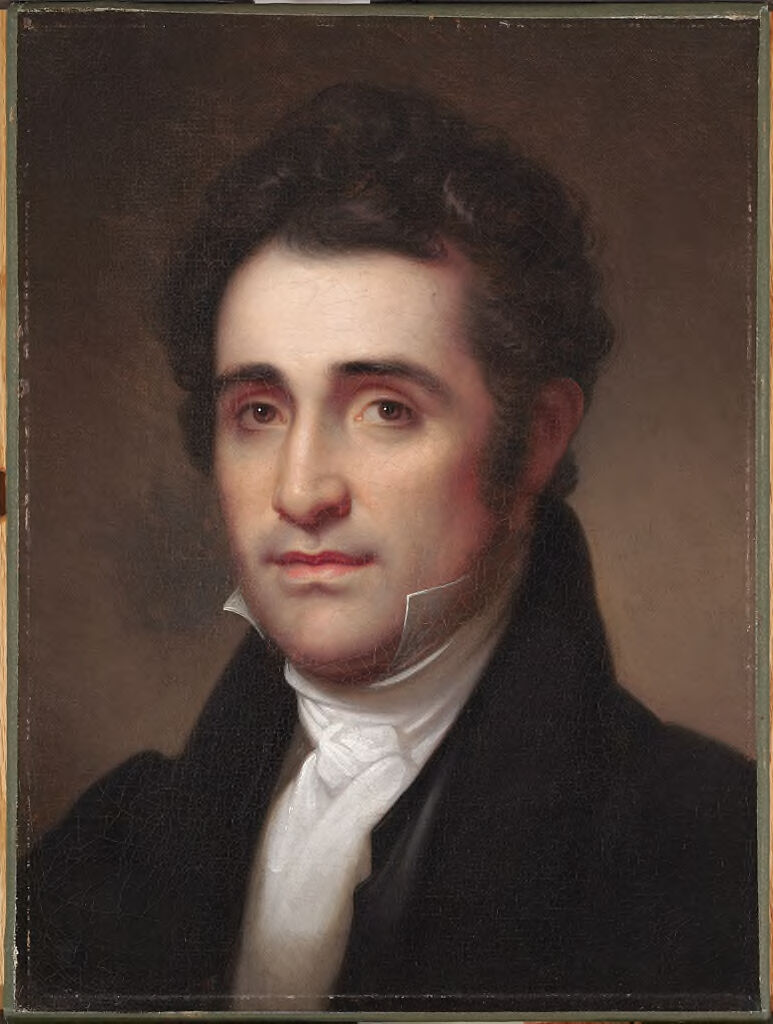
Could a single brushstroke hold eternity? In the delicate art of portraiture, each stroke is a whisper of beauty, a fleeting moment captured forever. Look closely at the gaze of the subject, McKean Buchanan, centered in the composition with an intensity that draws you in. His soft features are illuminated by a gentle light cascading from the upper left, creating a captivating chiaroscuro effect that heightens the depth of his expression.
Notice the intricate details of texture in the fabric of his attire, the subtle play of color ranging from deep burgundy to muted earthy tones, all harmonizing to form a lifelike presence that seems to breathe within the canvas. Beneath the surface, the tension between the subject’s poised demeanor and the underlying vulnerability speaks volumes. The slight arch of his brow hints at a complex inner world, while the soft smile suggests a profound understanding of beauty and existence. This duality evokes a contemplative mood, inviting viewers to reflect on the nature of identity and the passage of time, as if Buchanan is both a man of his era and an enduring symbol of grace.
Rembrandt Peale painted this portrait around 1830-1835 during a time of great personal and professional transition. Living in Philadelphia, he was deeply immersed in the American art scene, striving to establish a distinct American identity in portraiture. The era was marked by a growing appreciation for individualism, and this work exemplifies Peale’s commitment to capturing the essence of his subjects with a blend of realism and emotional depth, echoing the ideals of beauty that defined his life’s work.