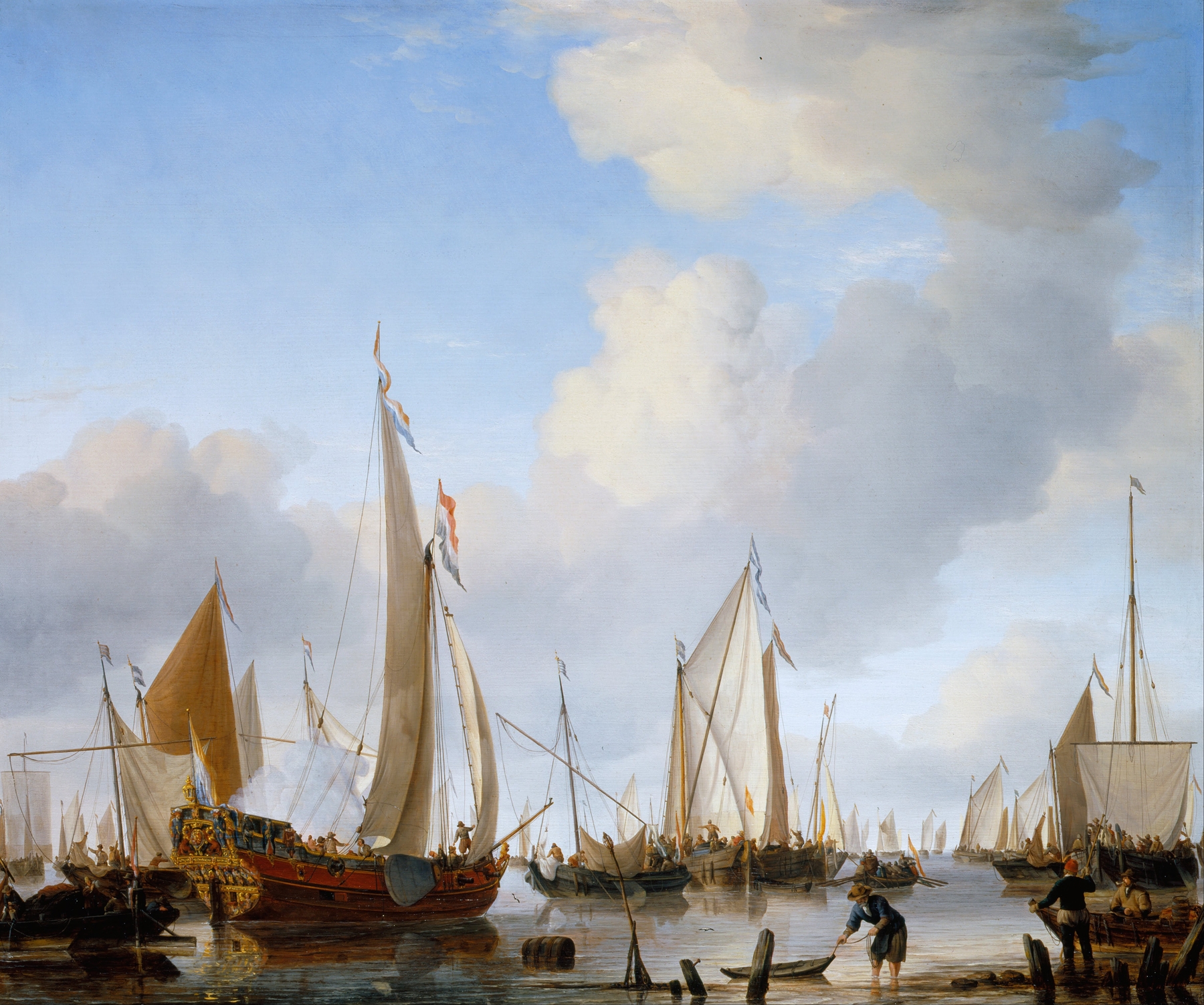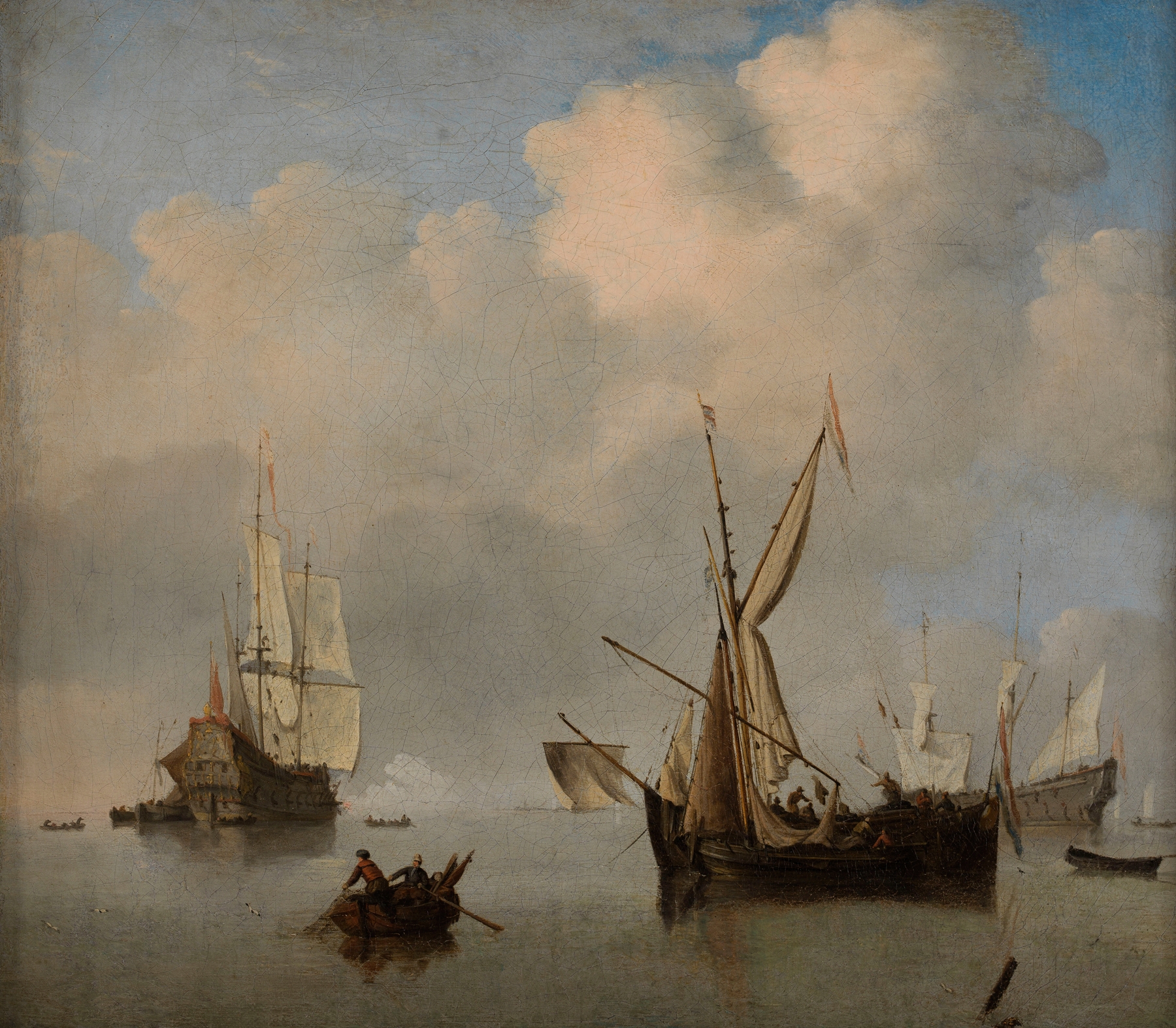
Mer calme; deux petits cabotiers néerlandais à l’ancre bord-à-bord. Marine — History & Analysis
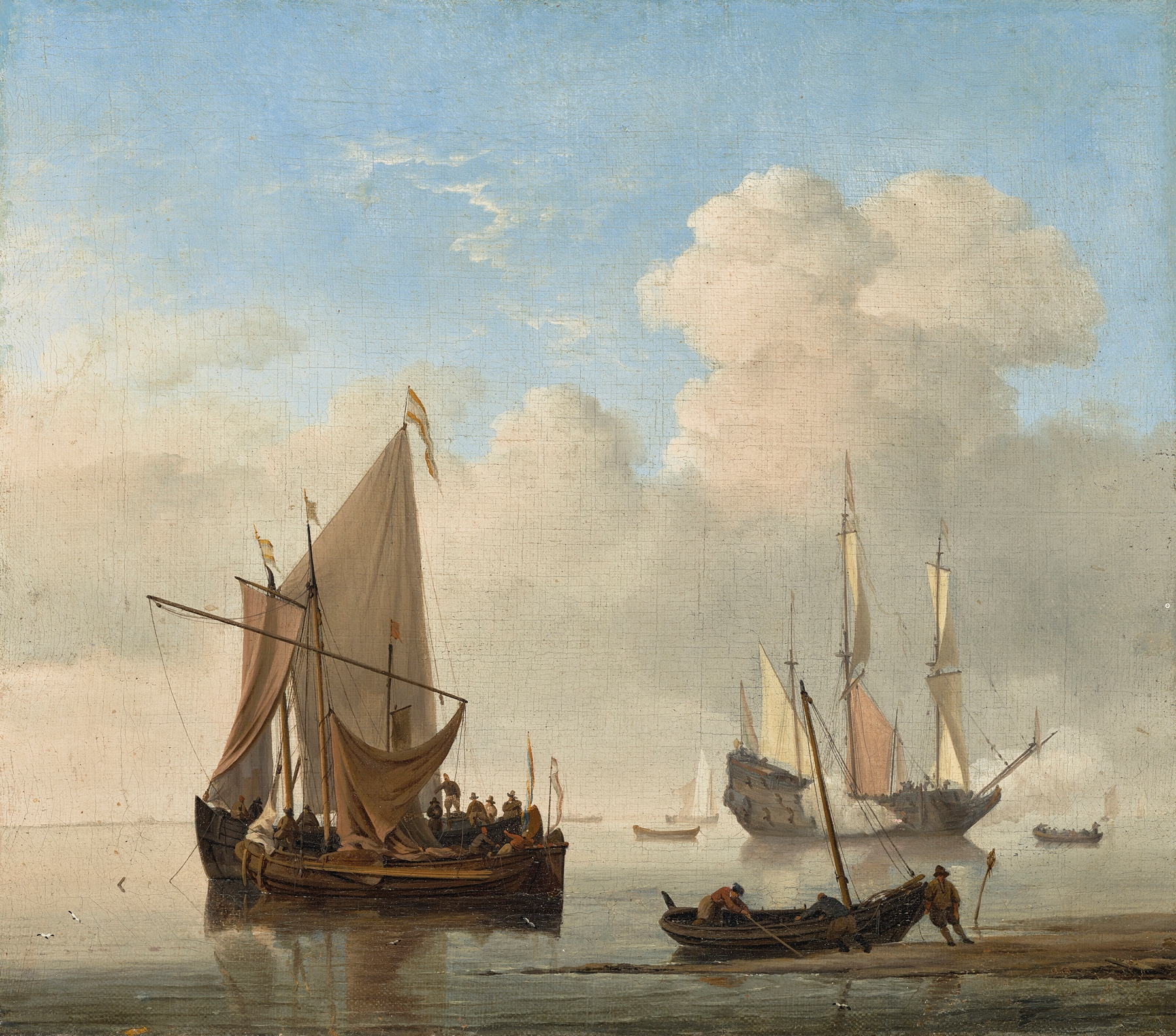
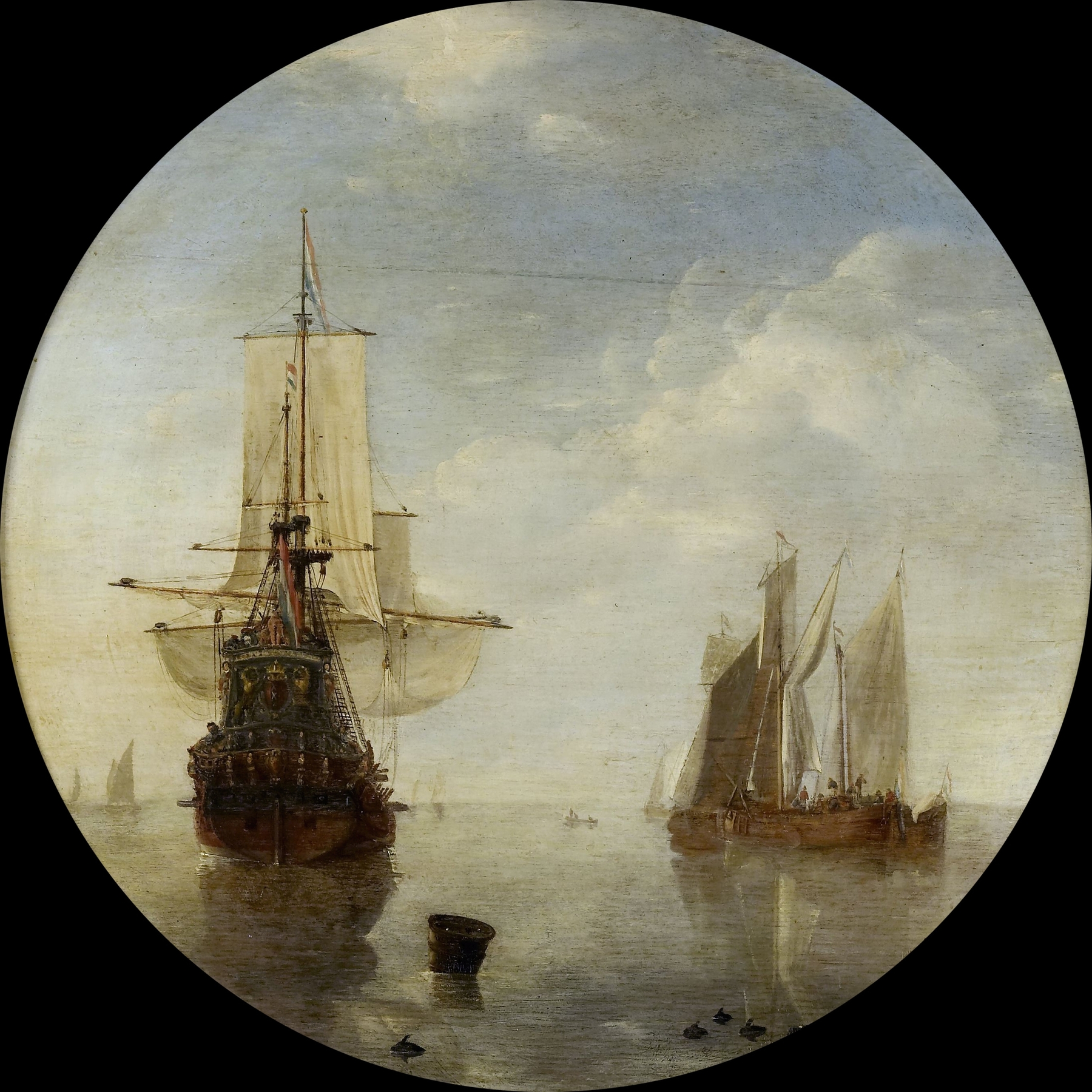
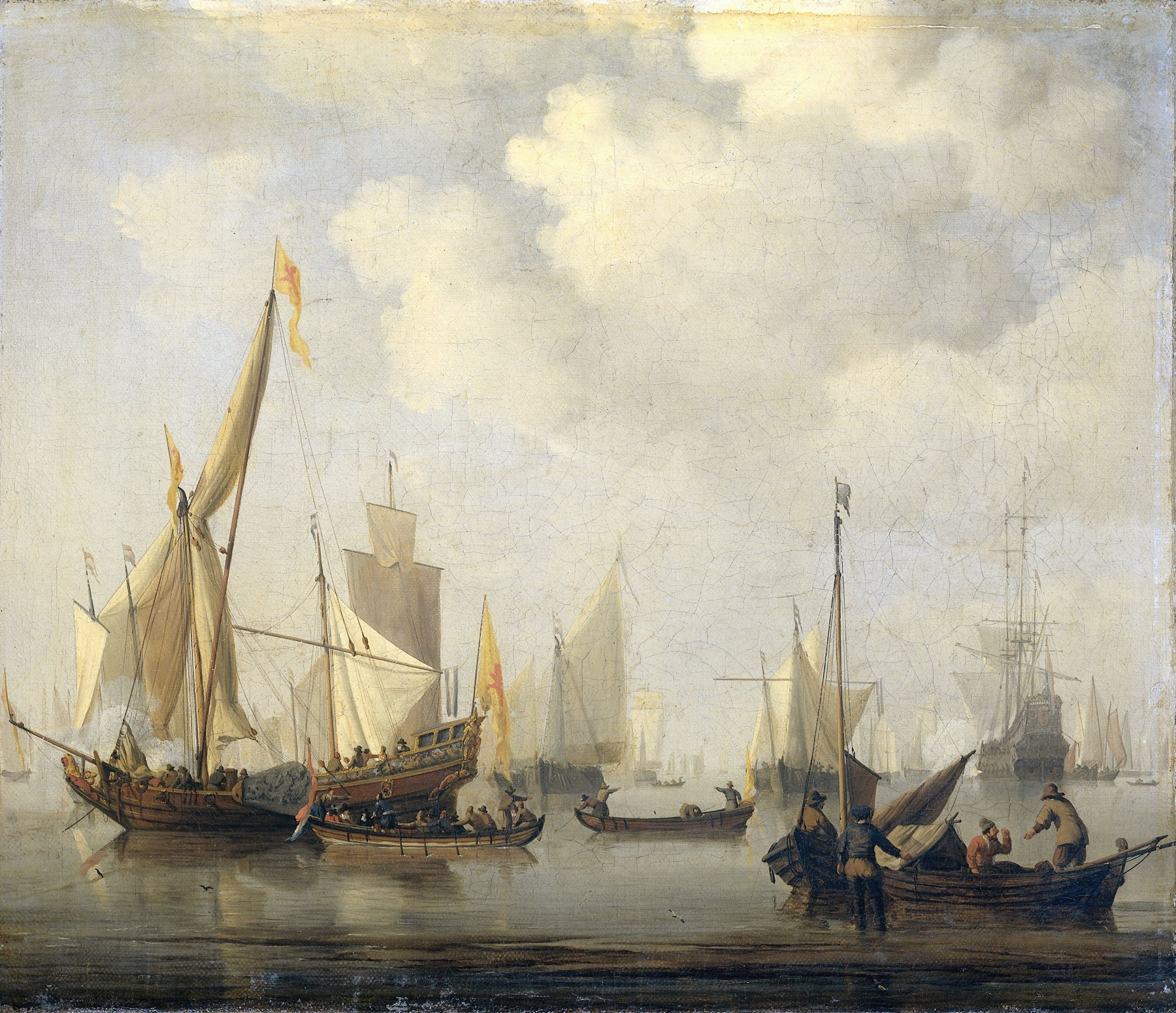
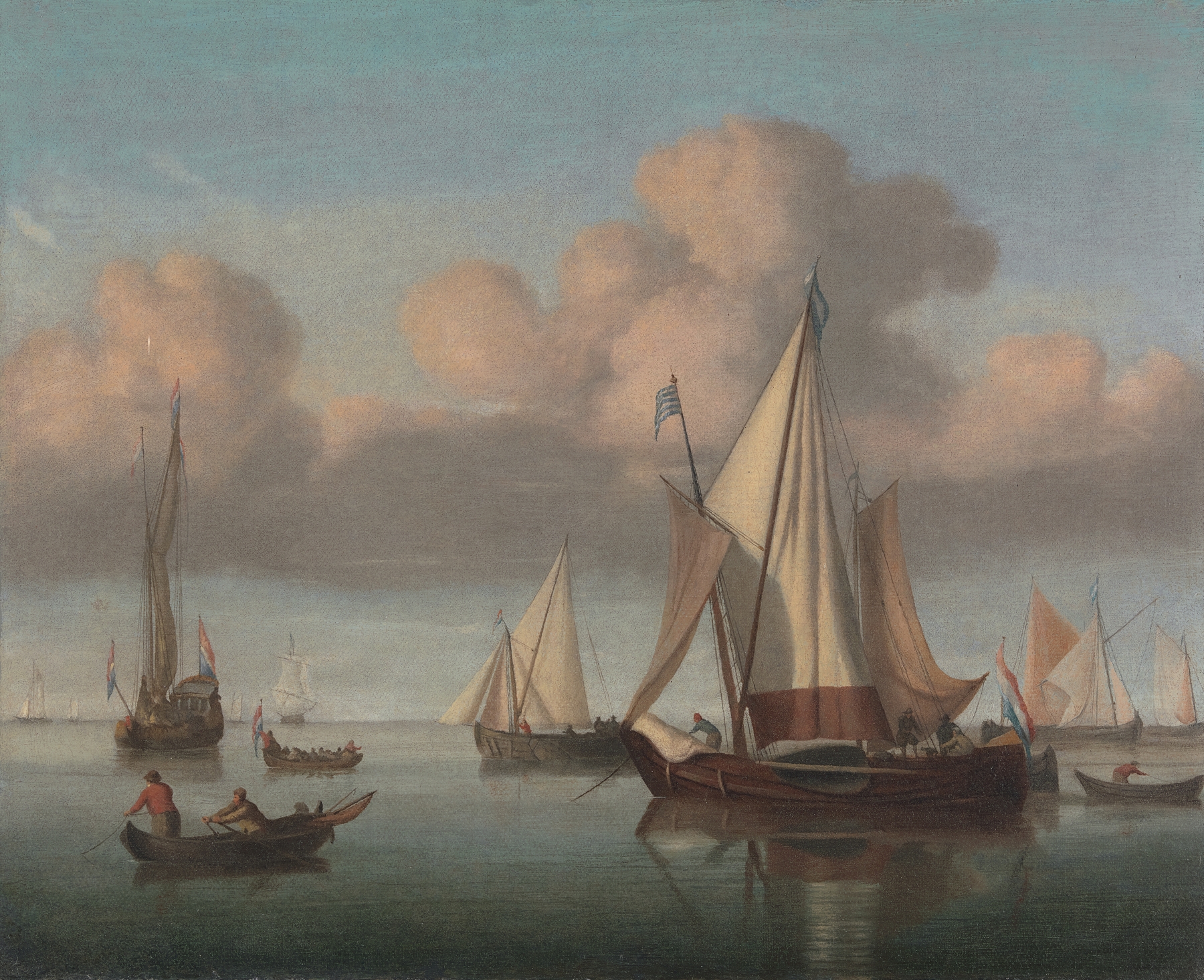
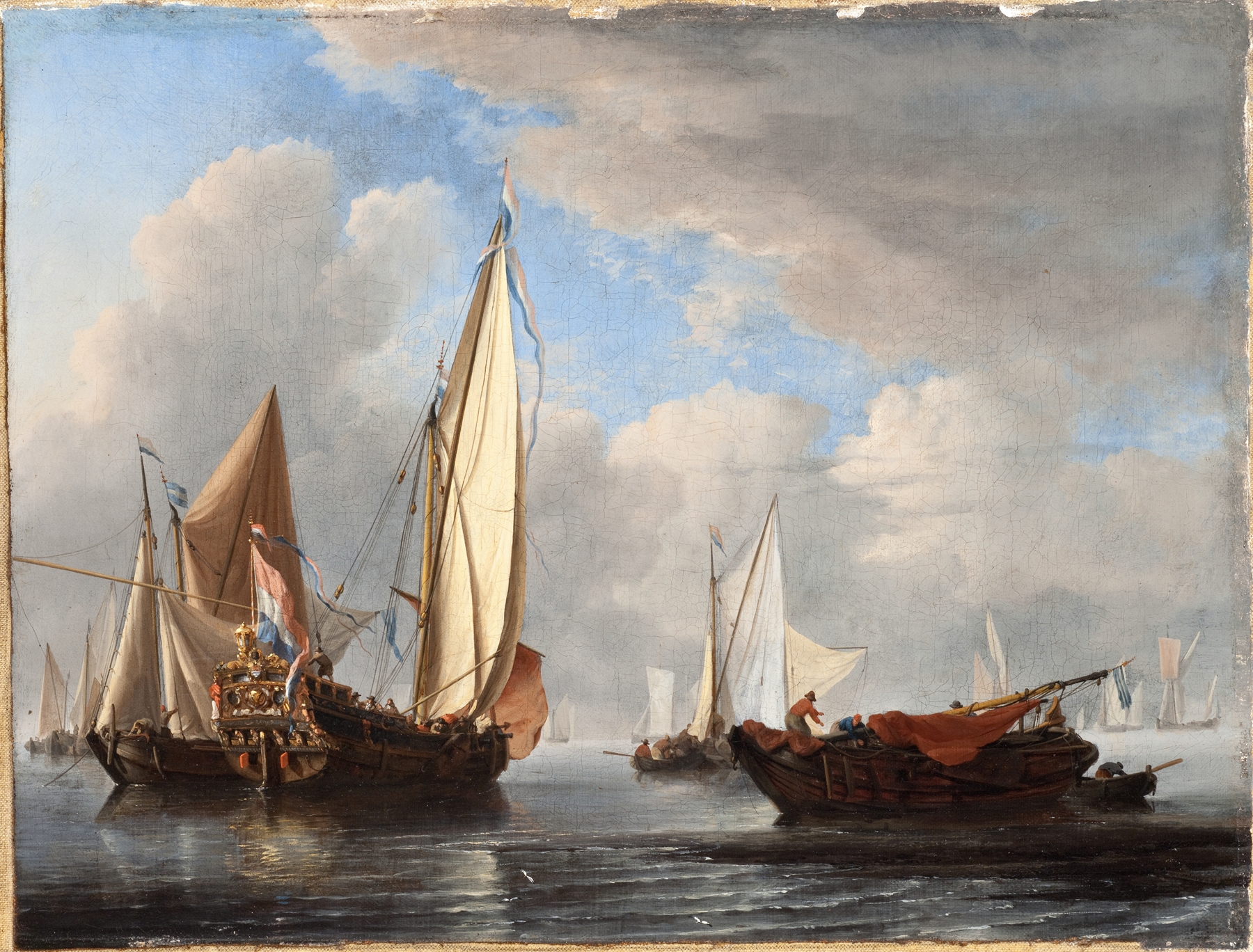
Did the painter know this moment would outlive them? In Mer calme; deux petits cabotiers néerlandais à l’ancre bord-à-bord. Marine, a tranquil marine scene unfolds, whispering secrets of time and tide, captured forever in oil. Focus on the left edge, where two modest Dutch skiffs float serenely, their sails furled in submission to the calmness of the water. The subtle palette of soft blues and muted greens invites a sense of peace, while the gentle ripples mirror the pale clouds above.
Notice how the light dances across the water’s surface, creating a shimmering path that draws the eye toward the horizon, blurring the boundaries between sea and sky. In this delicate composition lies a juxtaposition of stillness and the ever-present potential for movement. The anchored boats suggest a pause in the hustle of life, perhaps even a moment of reflection for the sailors aboard. The gentle brushstrokes evoke a sense of nostalgia, as if the viewer is privy to a fleeting moment of harmony that belies the tumultuous history of maritime pursuits.
Each detail, from the textured hulls of the boats to the soft clouds, weaves together a narrative of solitude and companionship amid vastness. Willem van de Velde the Younger painted this piece in 1675 during his time in Amsterdam, a hub for maritime trade and exploration. At this period, the art of marine painting flourished, influenced by the artist’s passion for the sea and his command of the genre’s intricacies. The tranquility of his work reflects both personal and societal themes, capturing a moment that resonated with the world around him, imbuing it with enduring significance.