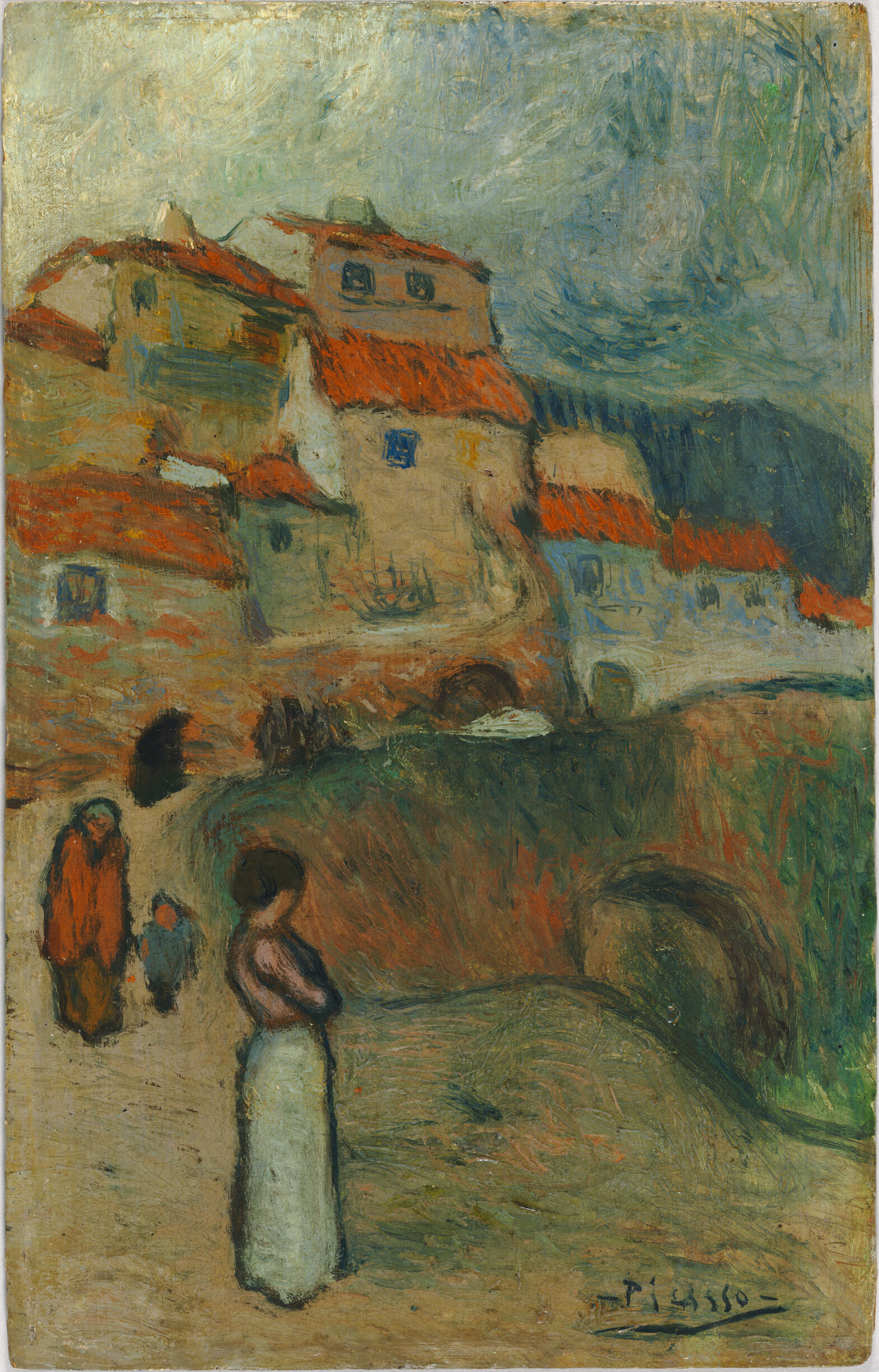
Mother and Child — History & Analysis
Can paint confess what words never could? In Mother and Child, the delicate nuances of silence and serenity resonate, inviting the viewer into a world where love transcends language. Look to the left at the gentle curve of the mother’s arm, cradling her child in a tender embrace. The soft, muted palette of blues creates an atmosphere of tranquility, while the gentle brushstrokes lend a sense of warmth and intimacy to the figures. Notice how the child’s head rests comfortably against the mother’s shoulder, as if seeking refuge in her presence.
This composition, with its harmonious balance, draws your eye inward, creating a sacred space that feels both personal and universal. Within this intimate scene, layers of meaning emerge. The juxtaposition of the mother’s steadfast gaze and the child’s innocent repose hints at the complexities of nurturing—the weight of responsibility, the purity of love, and the quiet strength that sustains both. The rounded forms contrast with sharp angles in the background, suggesting the chaos of the outside world, which fades into insignificance when faced with this profound bond.
Picasso captures not just a moment, but the essence of motherhood itself—a blend of serenity and the unspoken challenges it encompasses. Created in the early 20th century during a period of personal turmoil for the artist, this work emerged in the context of his "Blue Period," when he explored themes of melancholy and human connection. Painted in Barcelona around 1901, Mother and Child reflects both a response to his surroundings and a deep introspection that would shape his future artistic endeavors. The artwork serves as a poignant reminder of the enduring strength found in familial love amidst life’s uncertainties.