On the Clyde, 1917-1918; Lifting an Oil Tank into a Train Ferry — History & Analysis
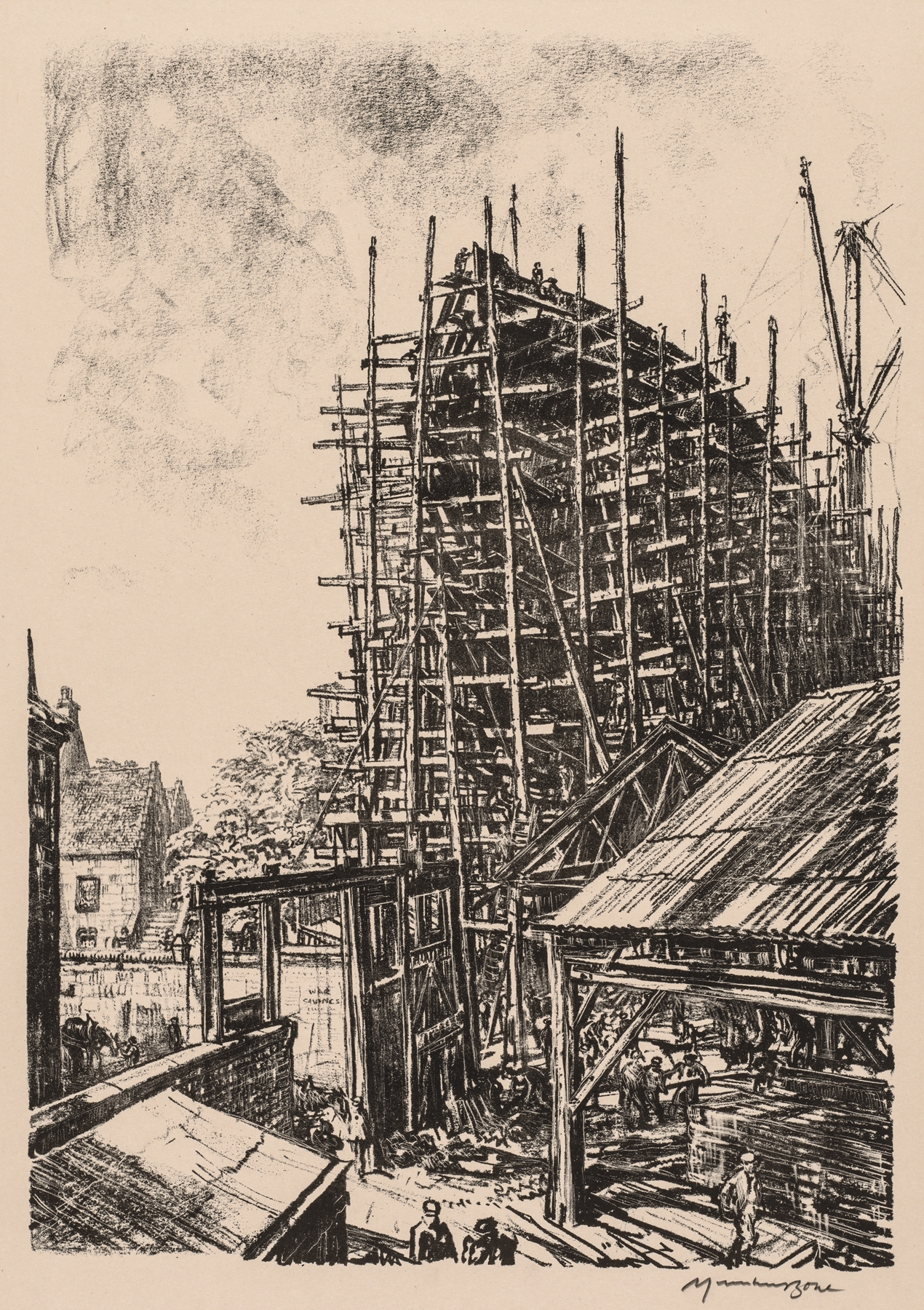
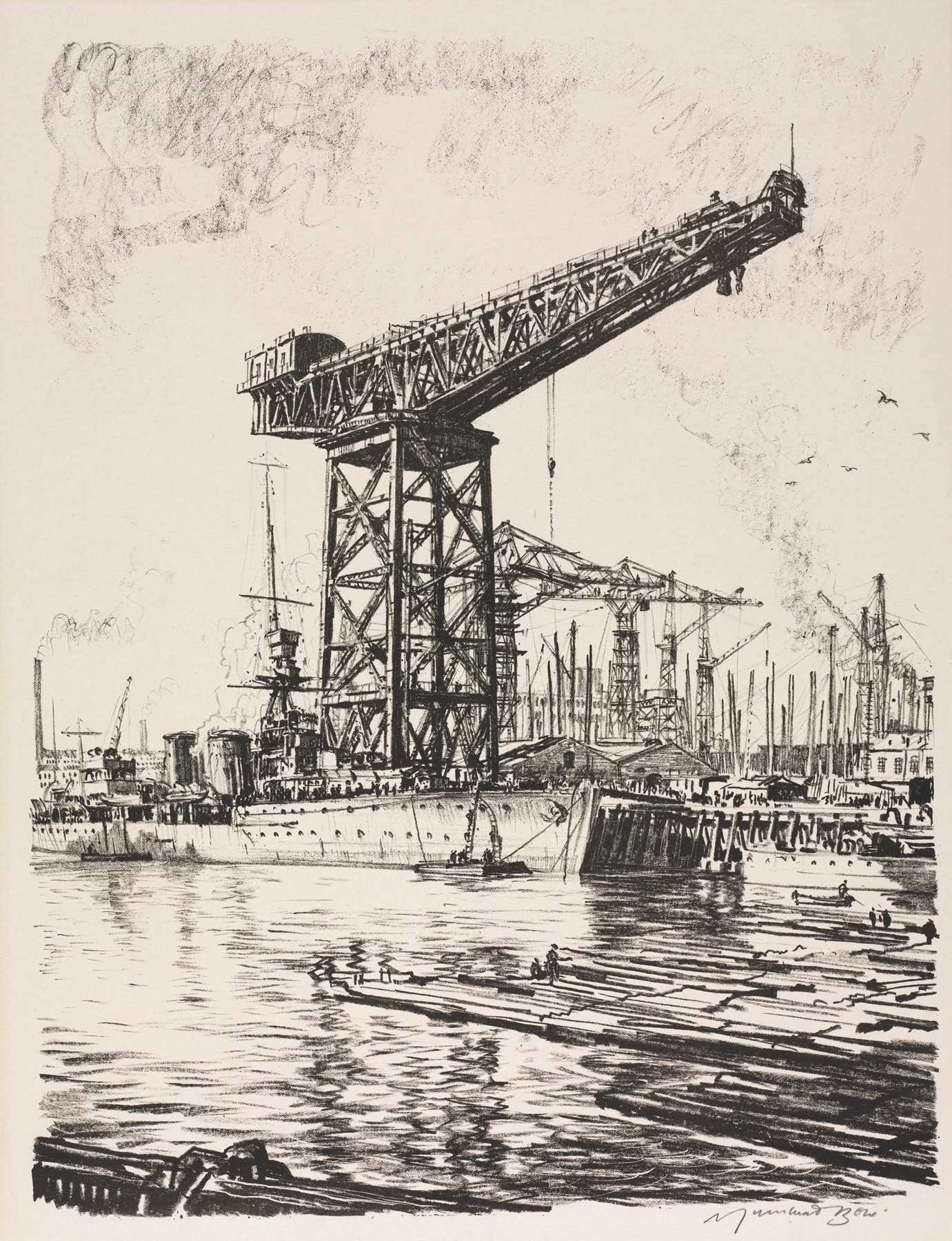
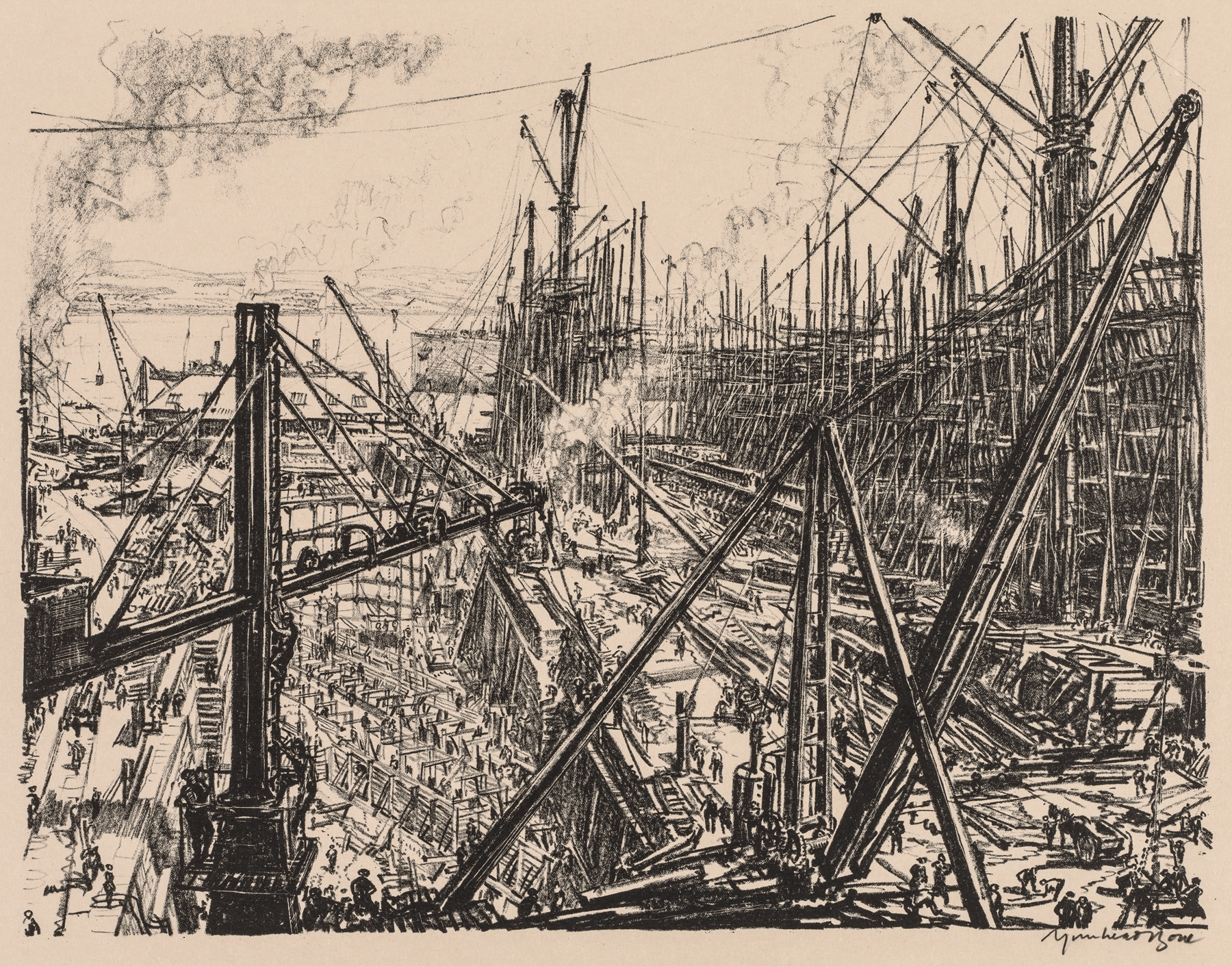
Could beauty survive in a century of chaos? In On the Clyde, 1917-1918; Lifting an Oil Tank into a Train Ferry, a stark yet striking interaction between man and modernity unfolds amid a backdrop of industry and emptiness. Look to the center of the composition, where the colossal oil tank teeters, suspended momentarily between the steel cables of the crane above and the waiting train ferry below. The muted earth tones blend seamlessly with the shadows, accentuating the metallic sheen of the tank and the robust structure of the machinery.
The artist balances the heavy forms with gentle washes of color, evoking a harmony that contrasts sharply with the tension of the moment. As you explore further, notice the figures of workers, dwarfed by the machinery's scale, embodying both vulnerability and resilience in this mechanized world. Their smallness against the backdrop of the tank speaks to a tension between human endeavor and the overwhelming forces of industrial progress.
The emptiness of the surrounding landscape, void of trees or life, underscores a haunting solitude — a reminder of the era's sacrifices during wartime, where the beauty of creation is often overshadowed by the chaos of destruction. Muirhead Bone painted this work during the tumultuous years of World War I while living in Scotland, a time when industry surged to meet the demands of war. The early years of the 20th century saw a shift in art, where traditional themes began to yield to the realities of modern life, and Bone's focus on industrial subjects reflected the changing dynamics of society and the unyielding march of progress amidst global turmoil.