On the Clyde, 1917-1918; The Floor of the Train Ferry — History & Analysis
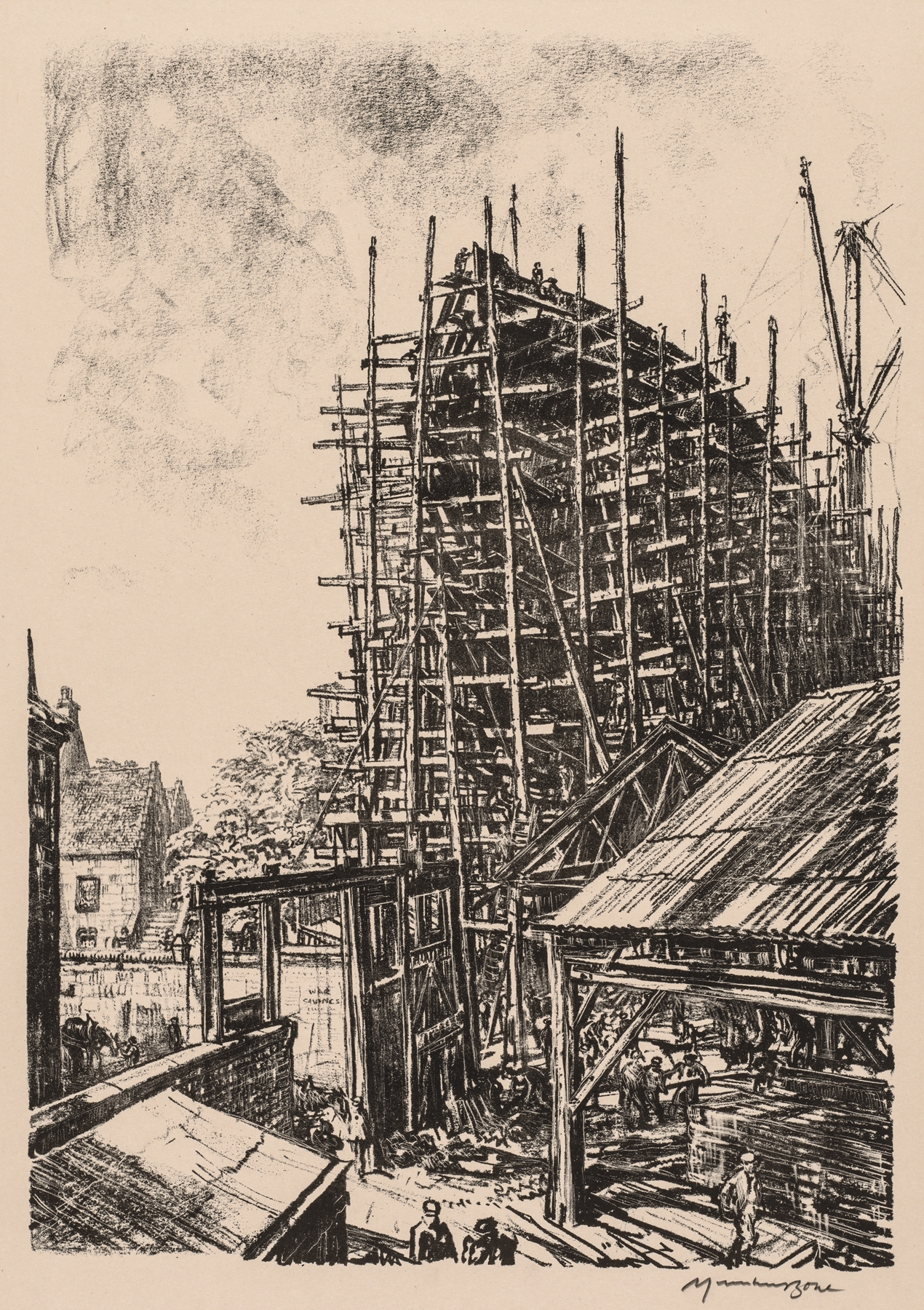
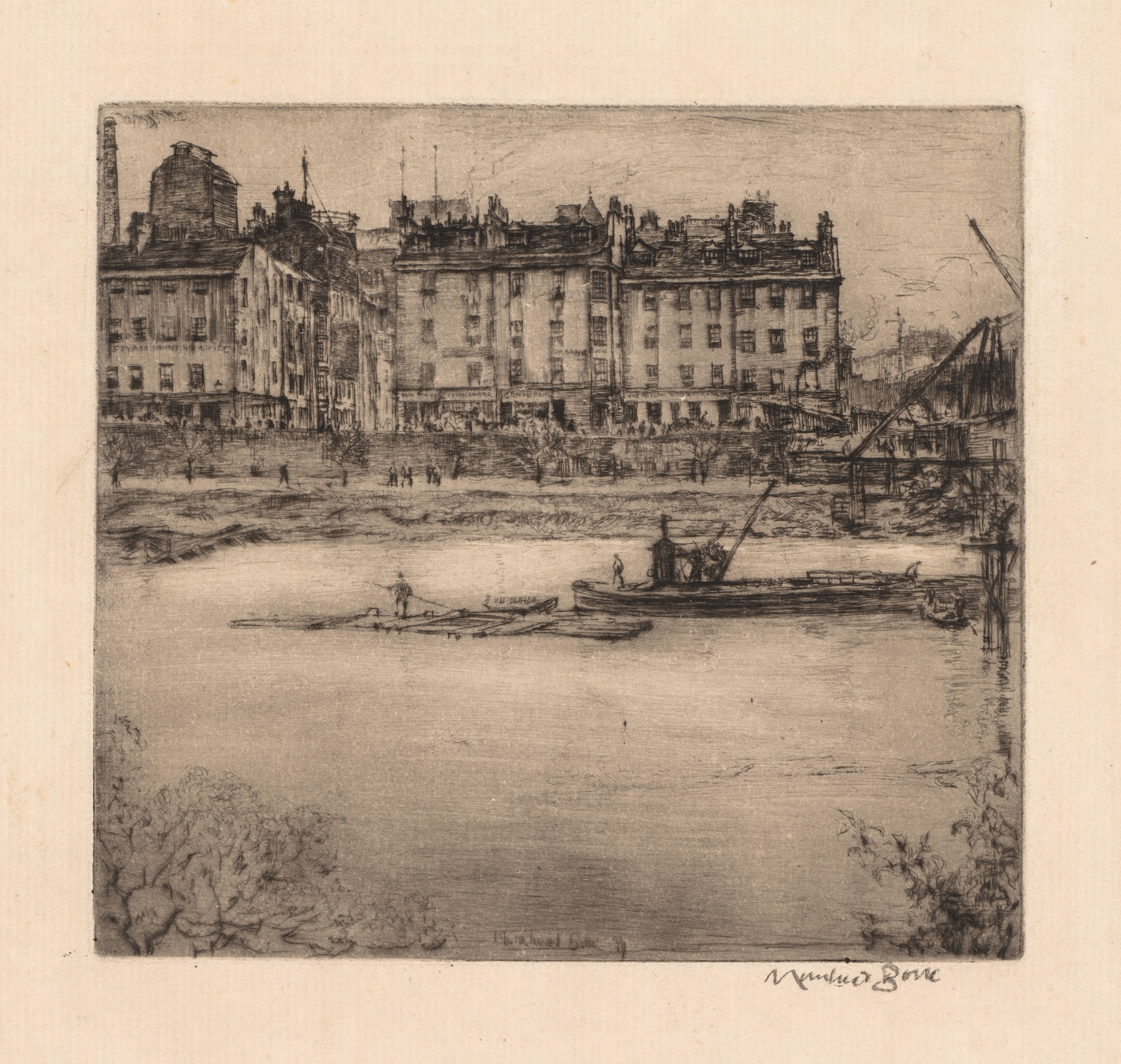
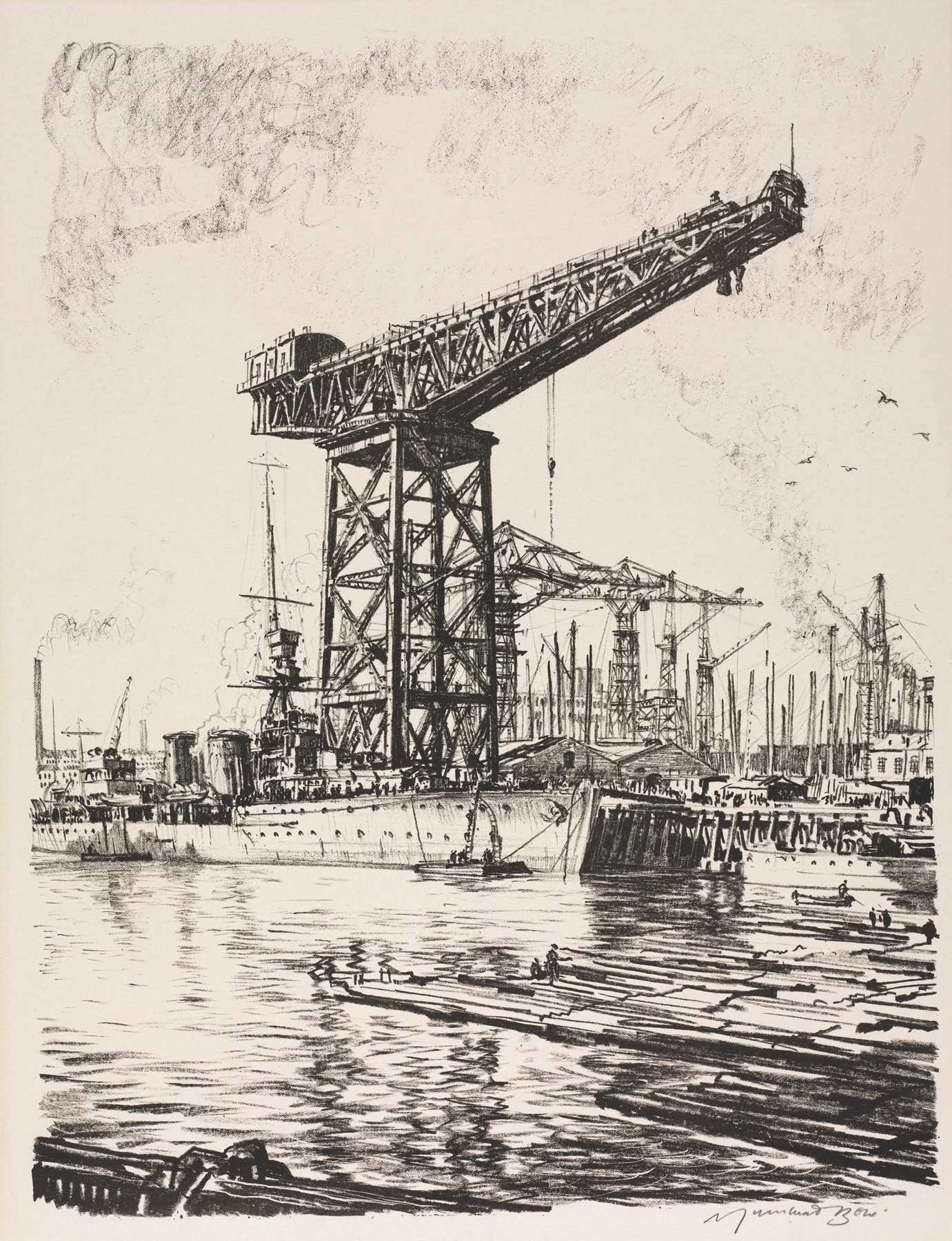
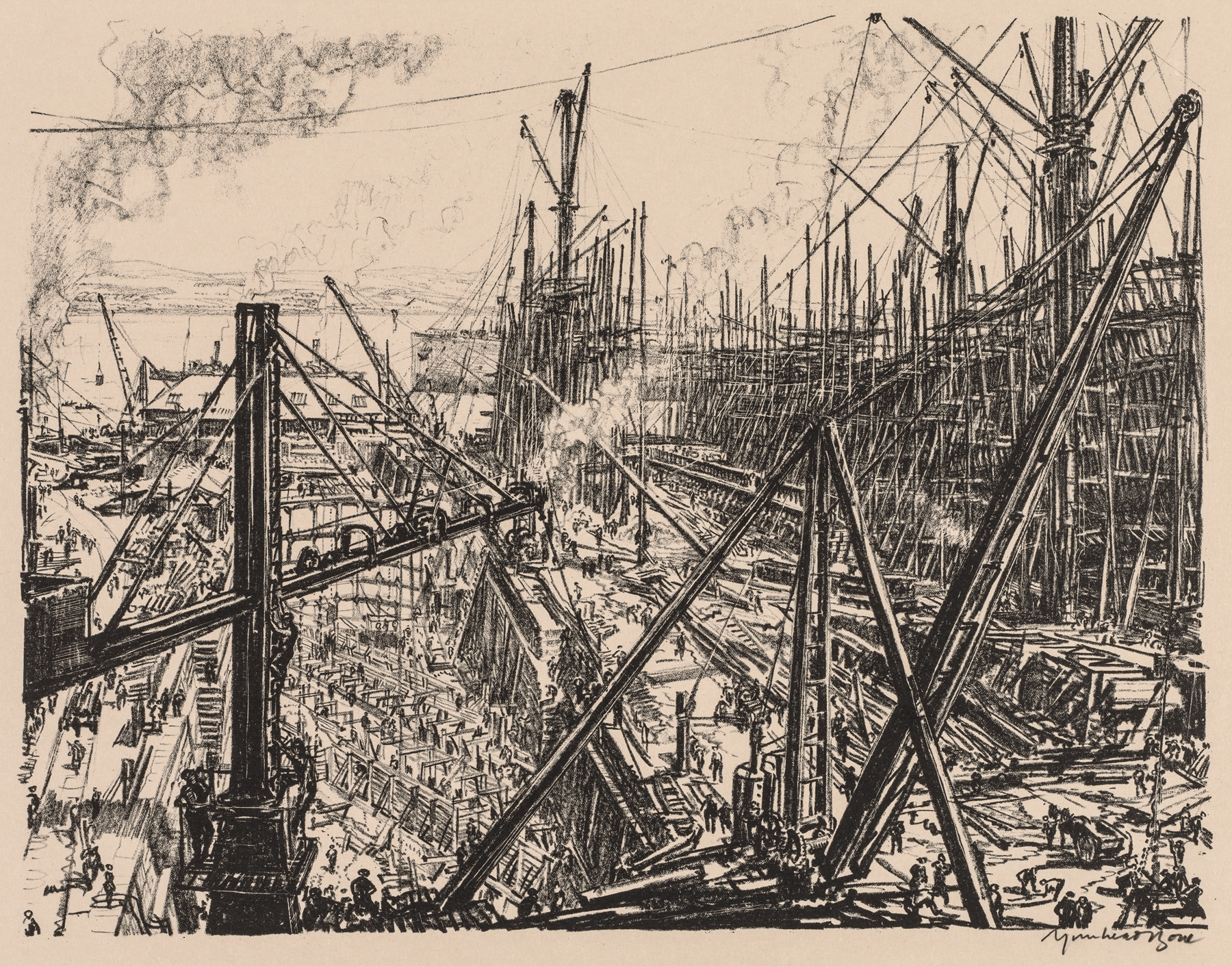
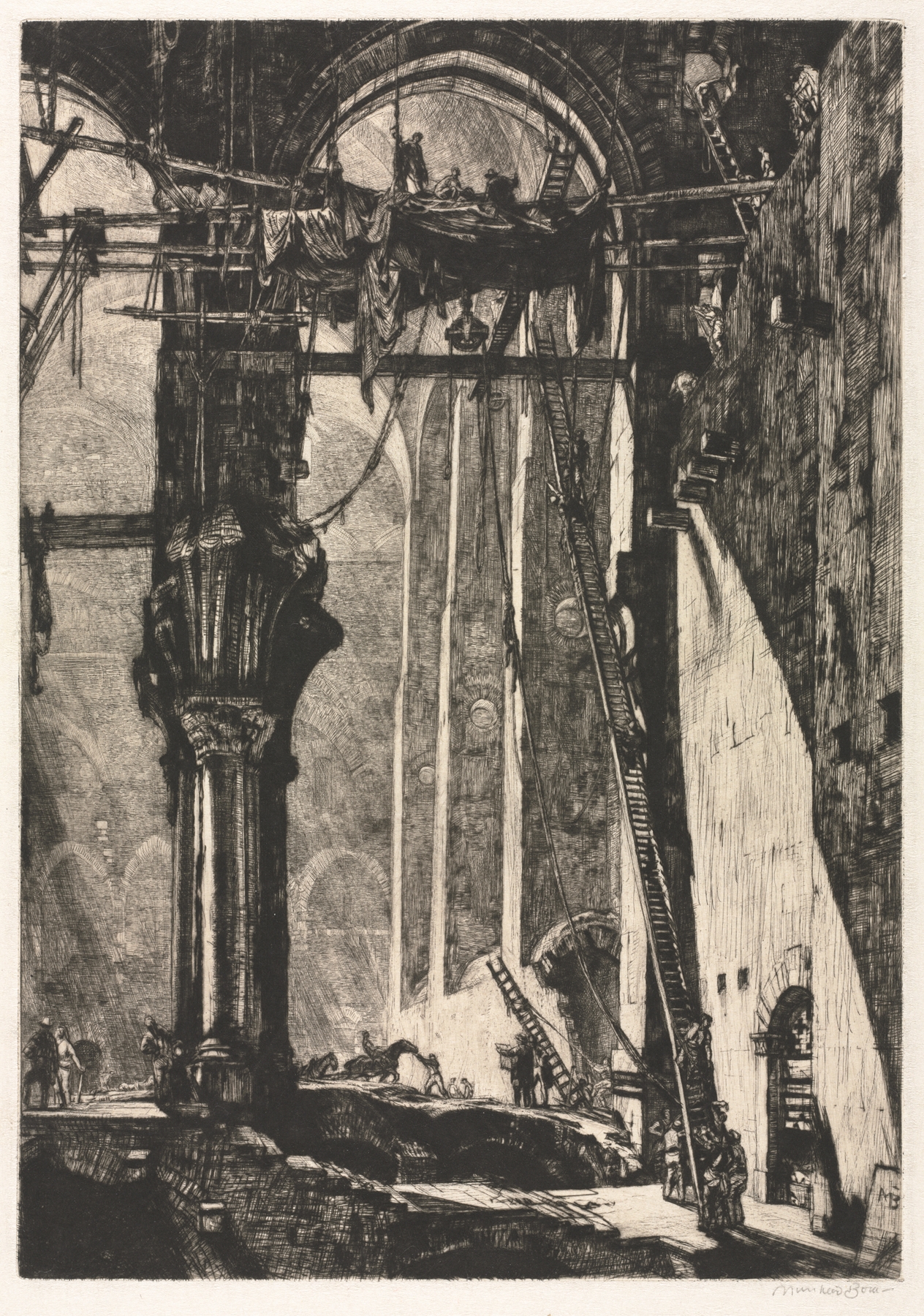
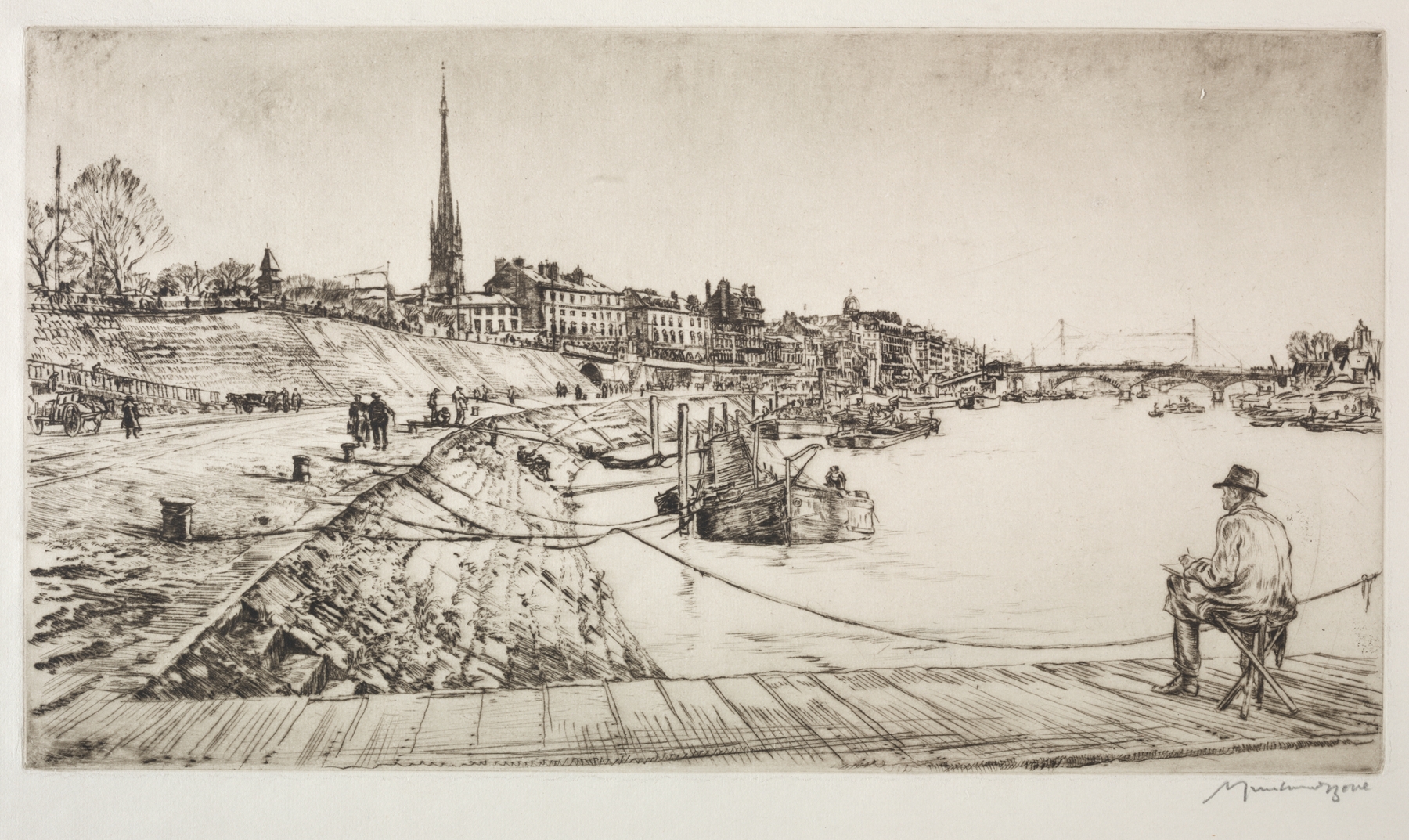
What if beauty was never meant to be finished? In Muirhead Bone's On the Clyde, 1917-1918; The Floor of the Train Ferry, the transient allure of a moment is captured, leaving viewers to ponder the nature of incompletion and obsession. Look to the center, where the floorboards stretch across the canvas, a patchwork of wood revealing the passage of time. The warm browns and rich ochres create a texture that invites touch, while soft shadows play beneath the cracks, suggesting depth. Notice how the diagonal lines lead the eye toward the edges, framing a space where the mundane meets the poetic.
The light spills across the surface, accentuating the imperfections that evoke a sense of both nostalgia and longing. Amidst this surface beauty lies a deeper emotional resonance. The interplay of light and shadow reflects the fleeting nature of life and memory, as if the very floorboards are whispering stories of journeys embarked upon. The obsession with detail reveals a fascination with the ordinary; the artist elevates the humdrum into something sublime.
Each knot and blemish on the wood speaks to the impermanence of both the setting and the experience of those who traverse it. Muirhead Bone painted this work during a time of great upheaval, between 1917 and 1918, as World War I raged on. He was in Scotland, deeply engaged in capturing the industrial landscape and its relationship to human endeavor. The art world was shifting, with a growing recognition of the power of realism, and Bone's focus on everyday scenes was a response to the tumultuous reality around him, grounding beauty in the familiar amidst chaos.