Palermo Harbor with a View of Monte Pellegrino — History & Analysis
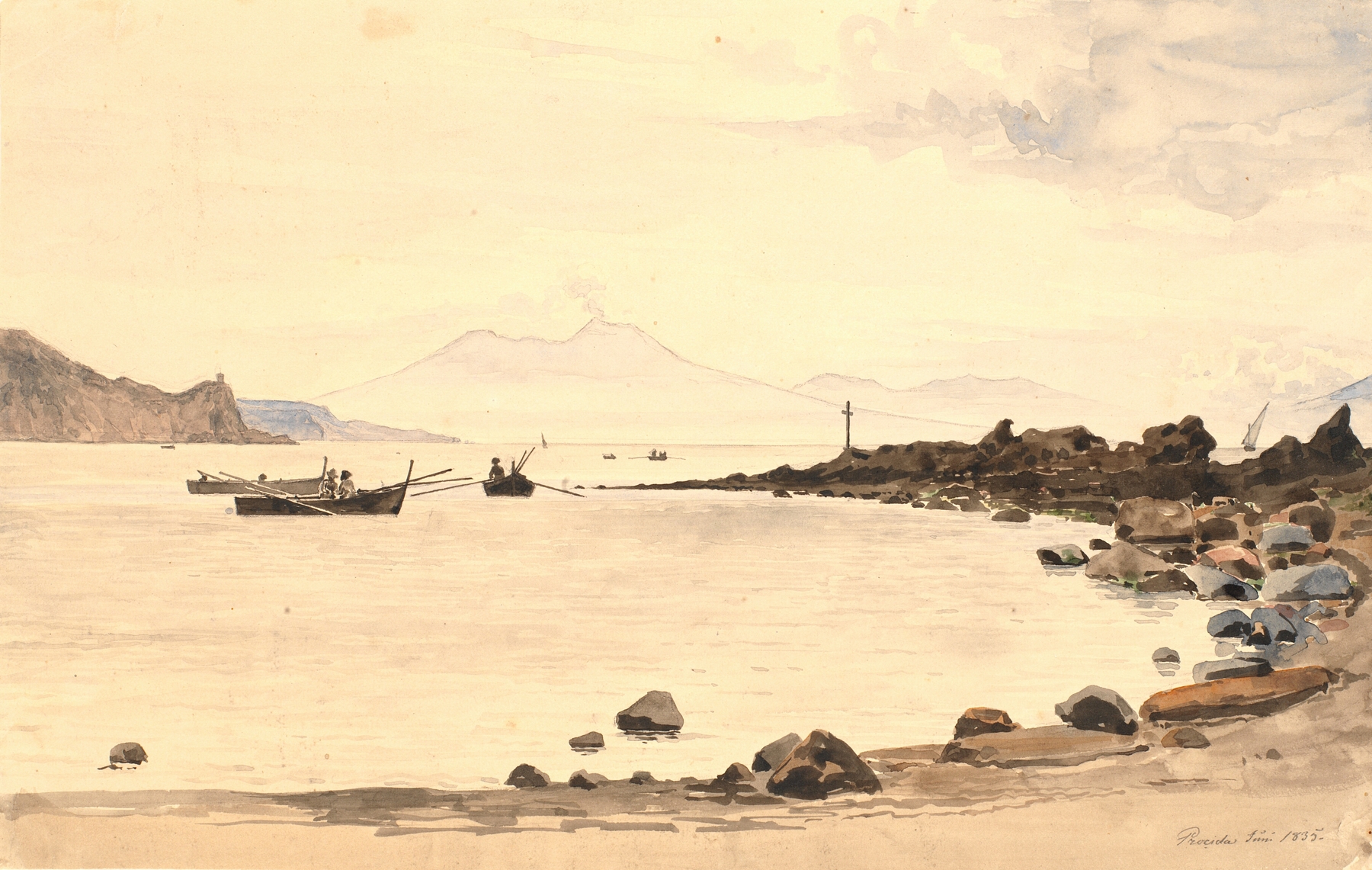
“Every brushstroke is a heartbeat remembered.” In the depths of serenity, there lies an undercurrent of violence, a tension woven into the fabric of memory and landscape. Look to the left, where the rugged silhouette of Monte Pellegrino looms, its jagged peaks piercing the sky like shattered glass. The soft hues of the harbor's waters reflect a palette of blues and greens, contrasting sharply with the darker tones of the mountain. Notice how the light catches the edges of the sailboats, their billowing white sails appearing almost ghostly against the backdrop, conveying a delicate balance between calm and chaos.
The gentle brushwork harmonizes with the rich texture of the scene, inviting you to linger on its surface yet urging you to uncover its depths. Yet, beneath the tranquil surface lies a more profound dialogue. The boats, seemingly at rest, represent fleeting moments of peace, while the looming mountain embodies the weight of history, a reminder of the violent past that shaped the land. The sky, painted with both warmth and foreboding clouds, hints at turning tides—an unseen storm brewing just beyond the horizon, echoing the duality of beauty and peril.
In 1840, while capturing Palermo Harbor with a View of Monte Pellegrino, Rørbye navigated the complexities of a changing Europe, marked by political upheavals and shifting artistic movements. He found inspiration in the scenic vistas of Italy, reflecting a yearning for connection between nature and the human experience. This work emerged from a period where Romanticism elevated emotion and nature, revealing an artist deeply engaged with both the serene and the tumultuous threads of life.