Udsigt mod Vesuv fra Procida — History & Analysis
Where does light end, and longing begin? In Udsigt mod Vesuv fra Procida, Martinus Rørbye captures this delicate balance, inviting viewers to contemplate the intersection of nature's grandeur and human desire. Look to the horizon where the sun casts a golden glow across the undulating waves. The vibrant blues of the sky and sea are expertly contrasted by the warm earth tones of Procida’s quaint buildings, creating a harmonious yet dynamic composition. The sky, brushed with soft clouds, draws your gaze towards the majestic silhouette of Mount Vesuvius, dominating the backdrop.
Rørbye’s delicate brushwork and thoughtful layering of colors evoke a sense of depth, allowing the viewer to feel the warmth of the sun and the coolness of the ocean breeze. Beneath this serene surface lies a tension between the beauty of the landscape and the faint hint of danger embodied by the volcano. Vesuvius stands not just as an awe-inspiring natural landmark but as a reminder of nature’s unpredictable power. The tranquil scene is imbued with a sense of longing, suggesting both the pull of paradise and the underlying threat it harbors.
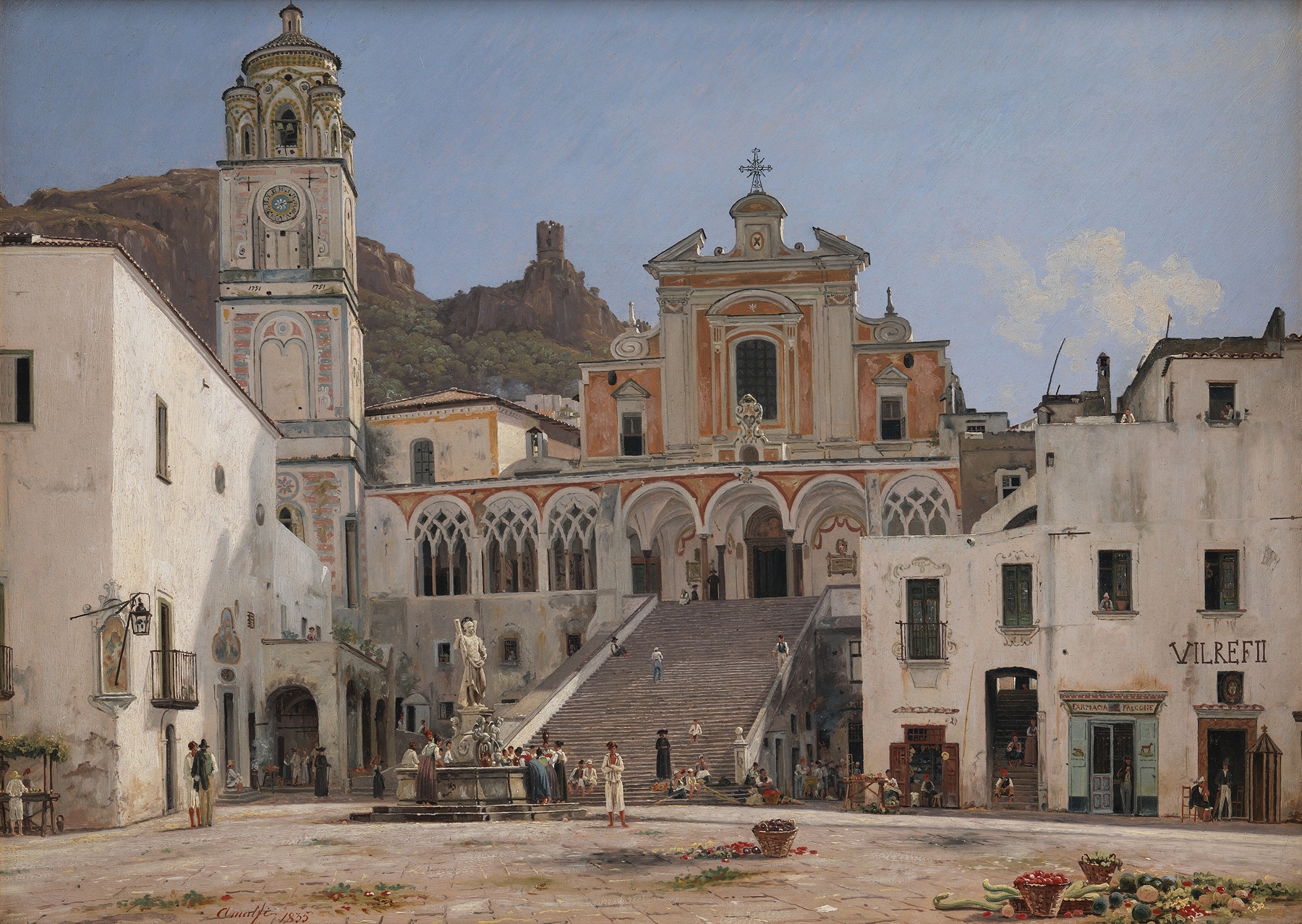
Each element, from the tranquil waves to the distant mountain, whispers narratives of desire and peril. In 1835, Rørbye painted this piece while residing in Italy, a time when he sought to immerse himself in the vibrant art culture flourishing in the region. Influenced by the Romantic movement, he explored themes of nature, emotion, and the sublime. This period marked significant developments in landscape painting, particularly in how light and atmosphere evoke deeper emotional responses, a technique Rørbye mastered in his evocative portrayal of the Italian coast.