Parti fra Terøen — History & Analysis
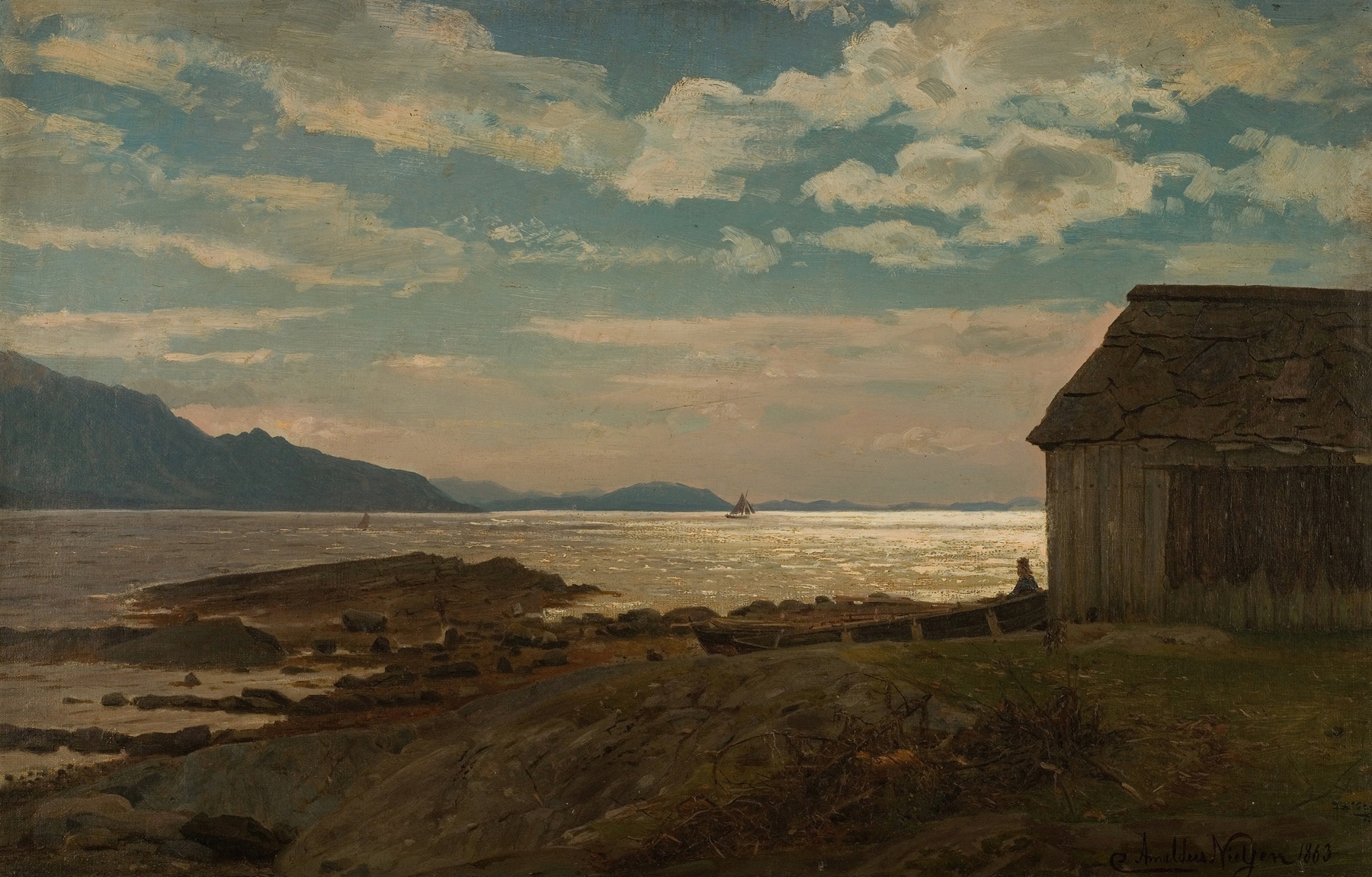
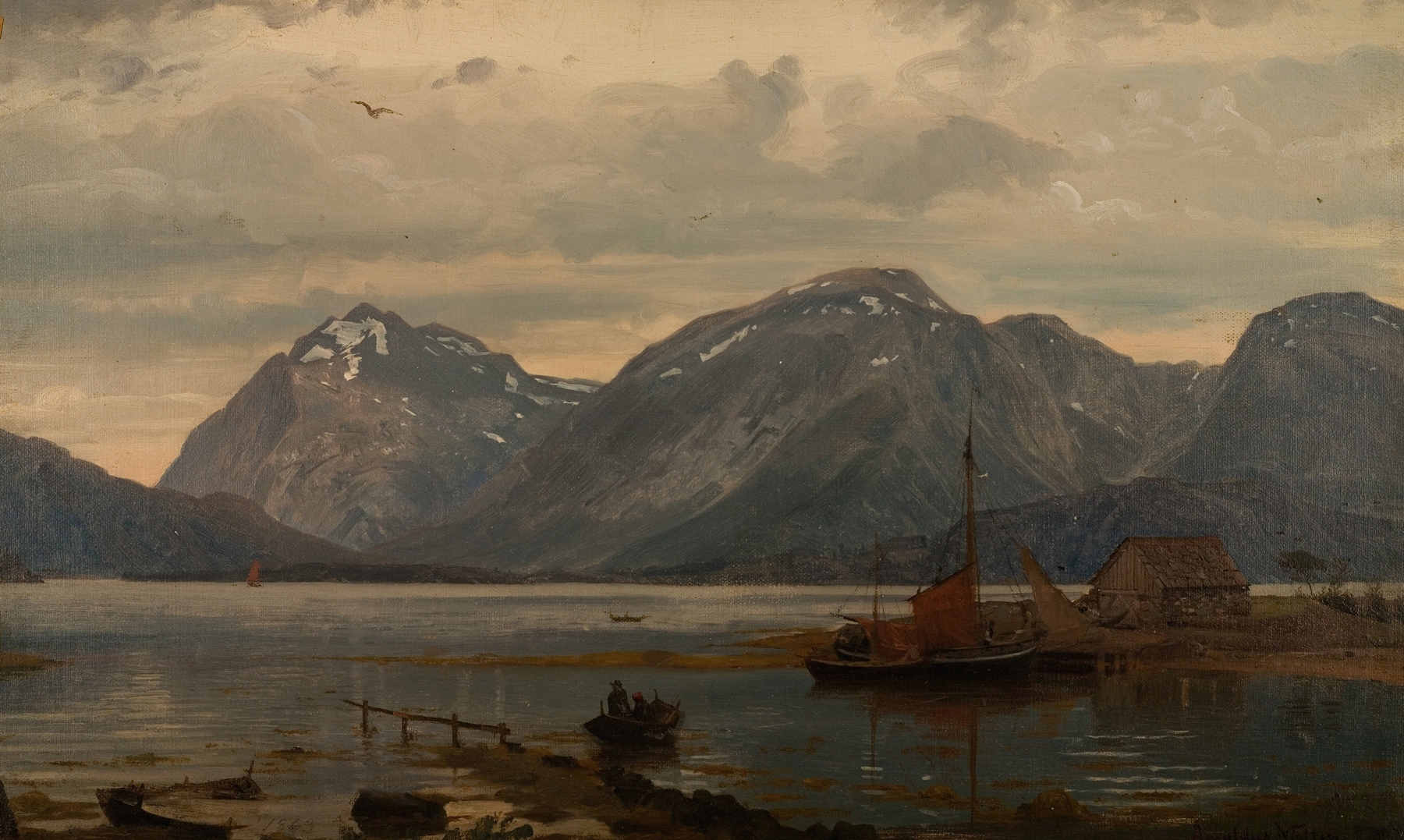
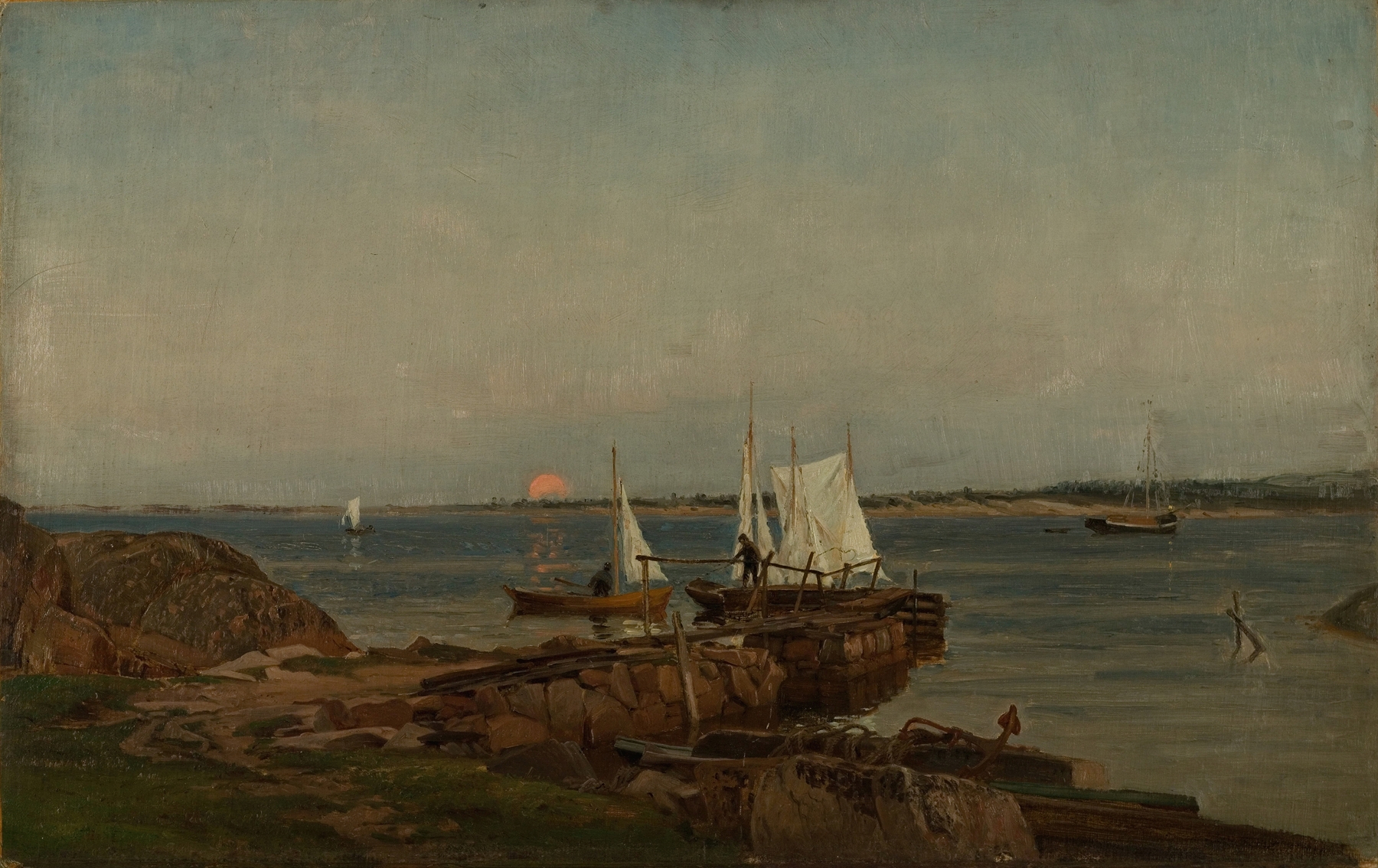
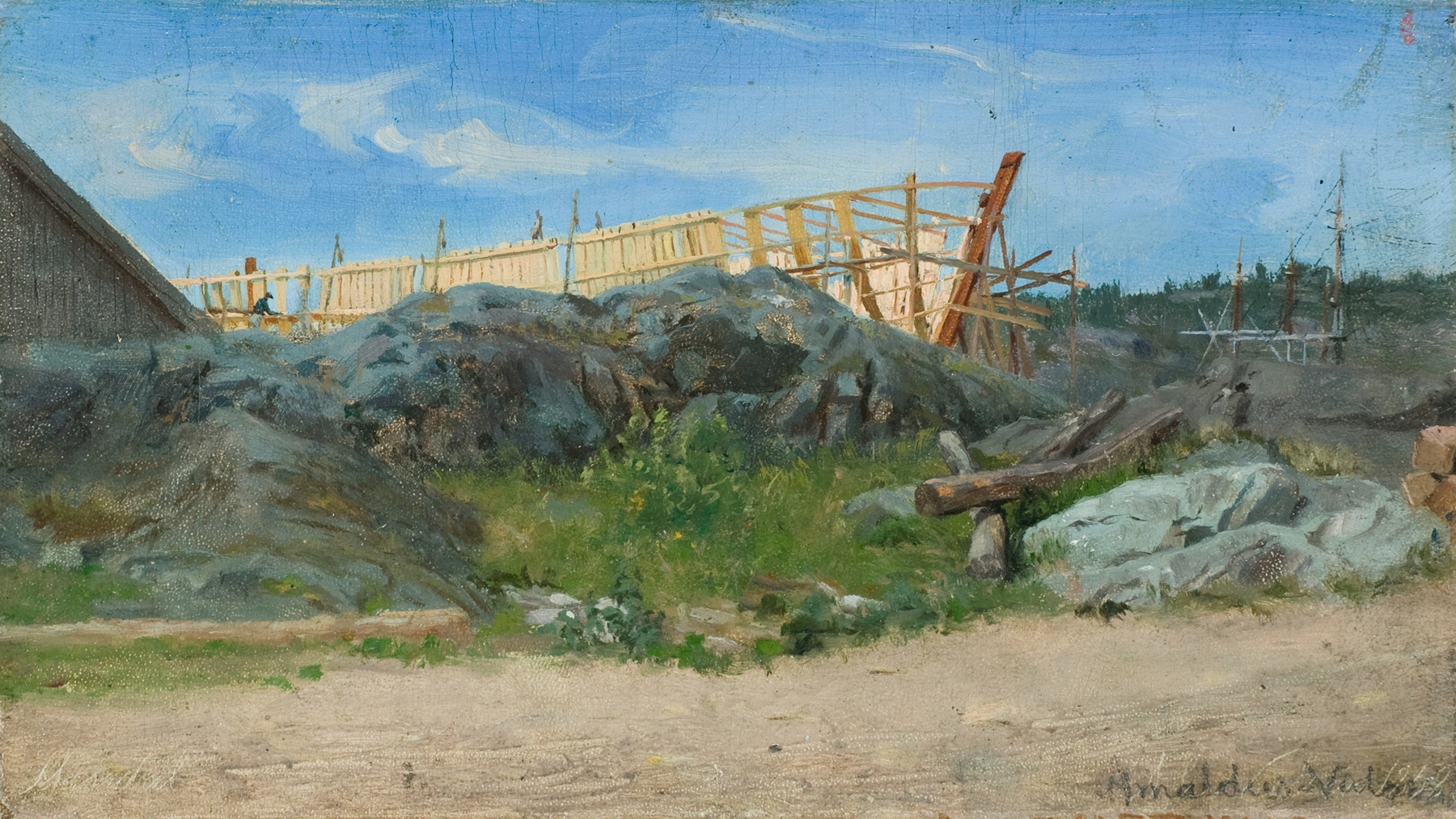
“The canvas doesn’t lie — it simply waits.” In this stillness, we find a profound trust in the act of creation, as faith becomes a dialogue between the artist and the viewer. Focus first on the tranquil waters that dominate the foreground. The surface reflects the tender hues of twilight, inviting your gaze to dance across the gentle ripples. Notice how the warm oranges and deep blues blend seamlessly, a masterful play of color that evokes an ethereal quality.
The distant islands, shrouded in soft mist, hint at the mysteries beyond the known, drawing you further into this serene landscape. In the careful arrangement of light and shadow, one can find deeper meanings of isolation and connection. The quiet boats tethered by invisible threads to the shore symbolize both mobility and restraint, embodying the tension between freedom and the weight of expectation. Each brushstroke, deliberate and thoughtful, suggests a contemplation on faith — not just in nature's beauty, but in the unseen forces that tether us to one another and to our own journeys.
Amaldus Nielsen painted Parti fra Terøen in 1863, a period marked by his exploration of Norwegian landscapes as a reflection of personal and national identity. At this time, he was immersed in the burgeoning Norwegian romantic movement, seeking to capture the untouched beauty of his homeland amidst a rapidly modernizing world. This work stands as a testament to his commitment to portraying not only the aesthetic but also the emotional landscapes that resonate with the human experience.