Paysage effet de neige, le Val près de Giverny — History & Analysis
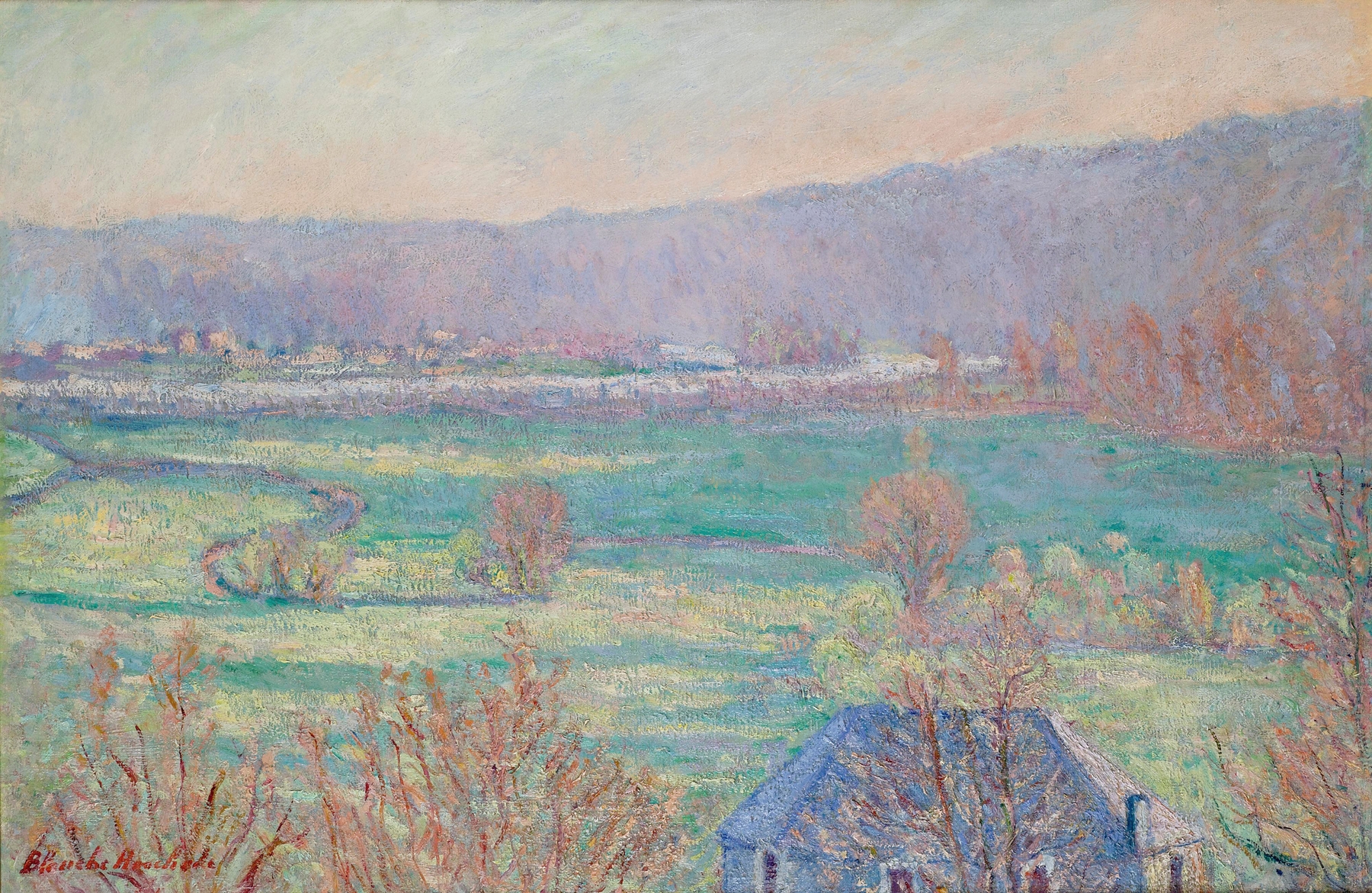
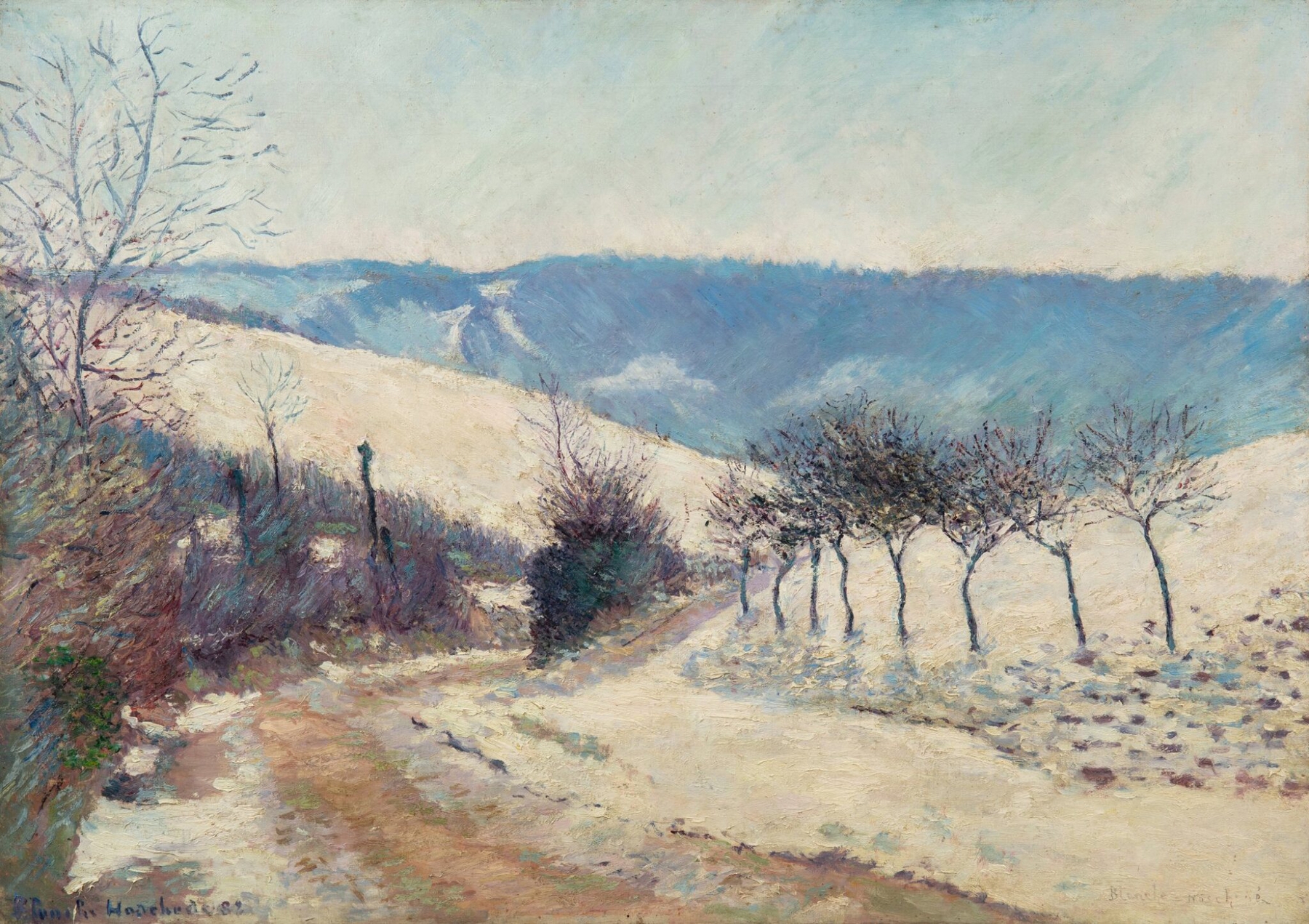
Where does light end, and longing begin? In the artistry of winter landscapes, the very essence of dreamlike stillness mingles with the tangibility of the world around us. Look to the foreground, where shimmering snowflakes blanket the ground in a delicate whisper of white. The soft hues of cobalt and lavender in the sky merge with the starkness of the snow, creating a serene atmosphere that draws the eye inward. Notice how the brushstrokes evoke a sense of movement—the swirling clouds above dance with the muted palette, while the trees stand sentinel, their branches heavy with frost.
Here, the play of light and shadow reveals not just the scene, but an emotional landscape. Beneath this tranquil exterior lies a tension between solitude and connection. The trees, though isolated, hint at the presence of life—a reminder of the warmth that resides beneath the cold. The varying tones of blue and gray inspire a meditative state, prompting reflection on the transient nature of both seasons and emotions.
This painting captures a moment where the mundane transforms into the extraordinary, inviting viewers to lose themselves in the dreamscape. Blanche Hoschedé-Monet created this piece in 1888 while living in the vicinity of Giverny, a time when she was deeply influenced by her mentor and father-in-law, Claude Monet. The late 19th century was a period rich with the Impressionist movement's experimentation, pushing boundaries of color and light. Hoschedé-Monet’s work reflects her personal journey as an artist, navigating familial ties and the quest for her own artistic identity amidst the evolving world of art.