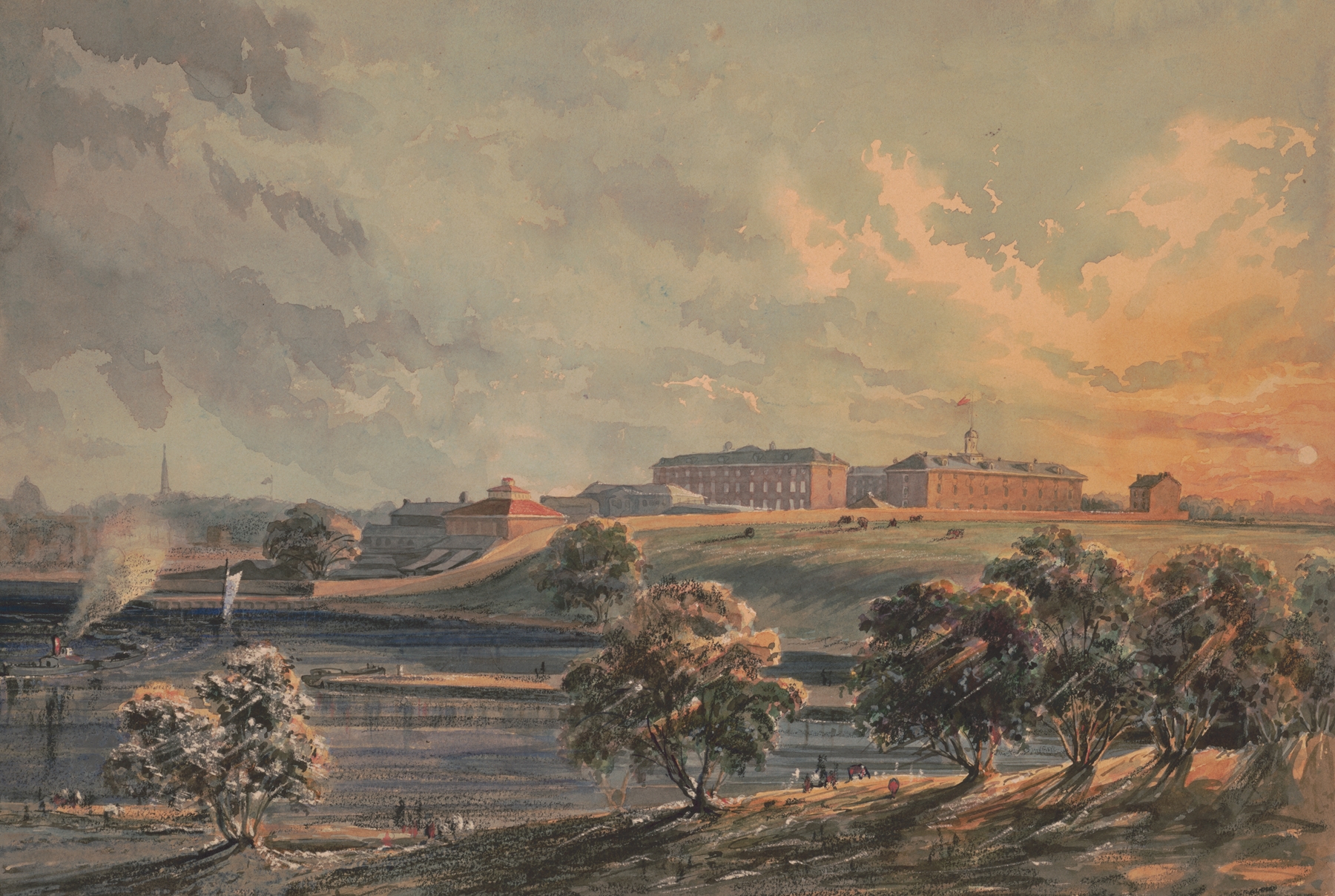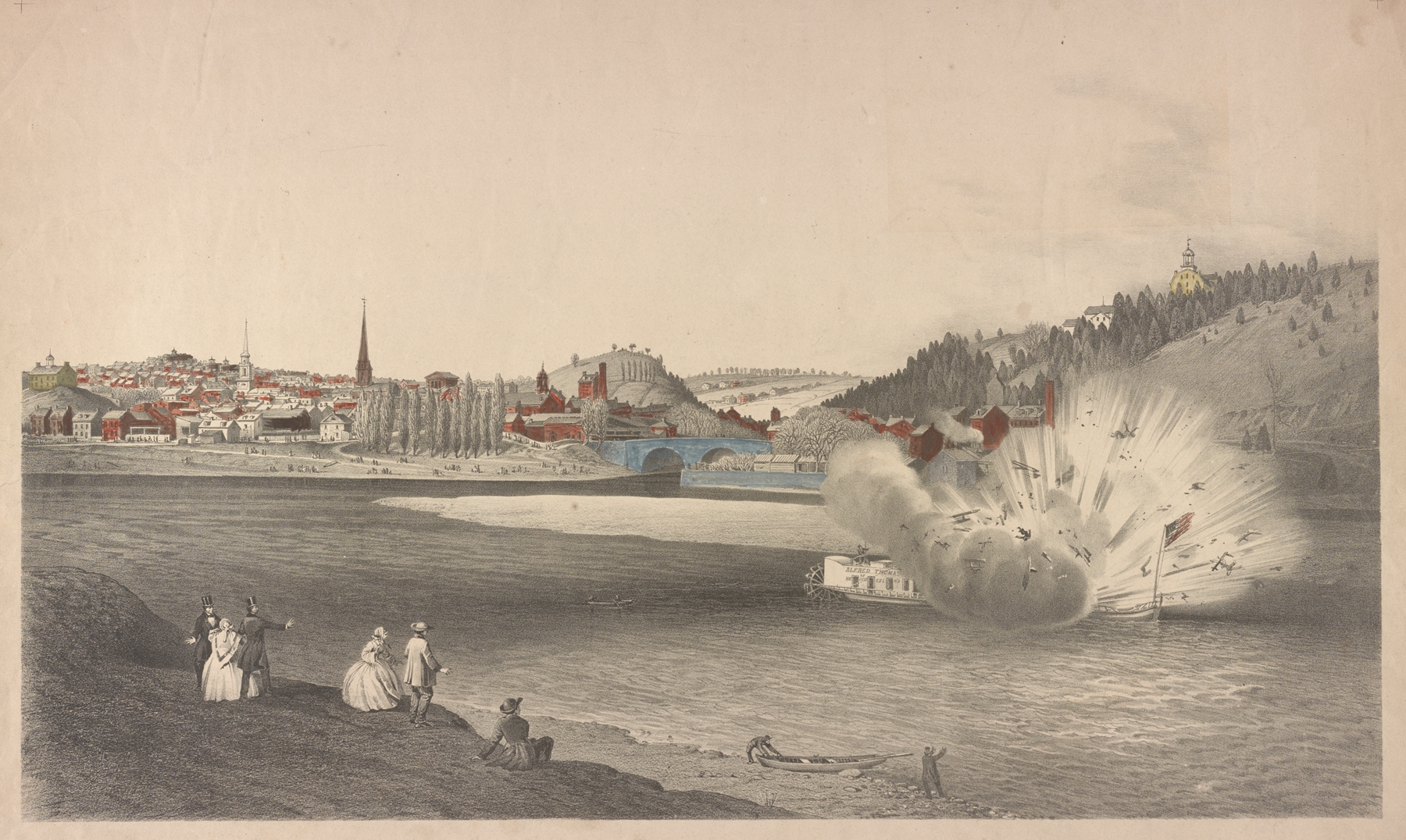
Philadelphia or possibly Camden, probably from the banks of the Delaware, given the steam ferry boat at left — History & Analysis
“Every silence here is a confession.” In the stillness of the moment, the weight of absence hangs heavy over the landscape, whispering tales of what once was. The horizon stretches out, a canvas of muted grays and browns, where the river's edge meets the city, and the ghostly outlines of buildings loom like fading memories. Look to the left at the steam ferry boat, its smoke curling into the air as it glides silently across the water, a quiet testament to the passage of time. Notice how the muted palette, composed of soft earth tones, envelops the scene in nostalgia, evoking a sense of lingering loss.
The gentle ripples of the Delaware reflect a desolate beauty, guiding your gaze to the distant shoreline, where life seems to fade into the haze of a bygone era. The interplay between the river and the city hints at the duality of existence—life bustling on one side, and the quiet void on the other. Here, the absence of figures speaks volumes; the emptiness is almost palpable, echoing the unresolved emotions tied to both place and memory. Each brushstroke captures the fragile transience of life, as the viewer is left to ponder what has been lost amid the relentless march of progress.
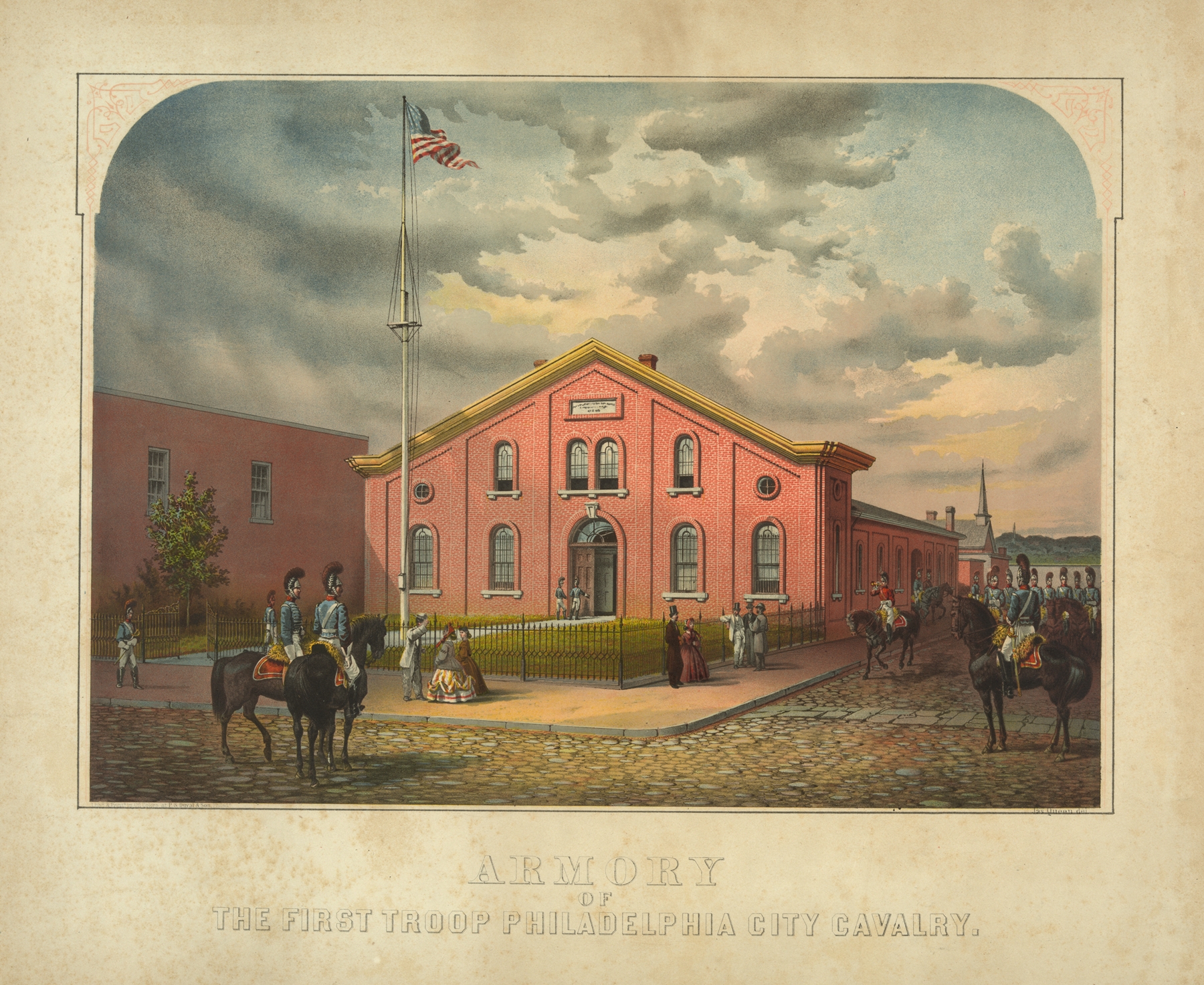
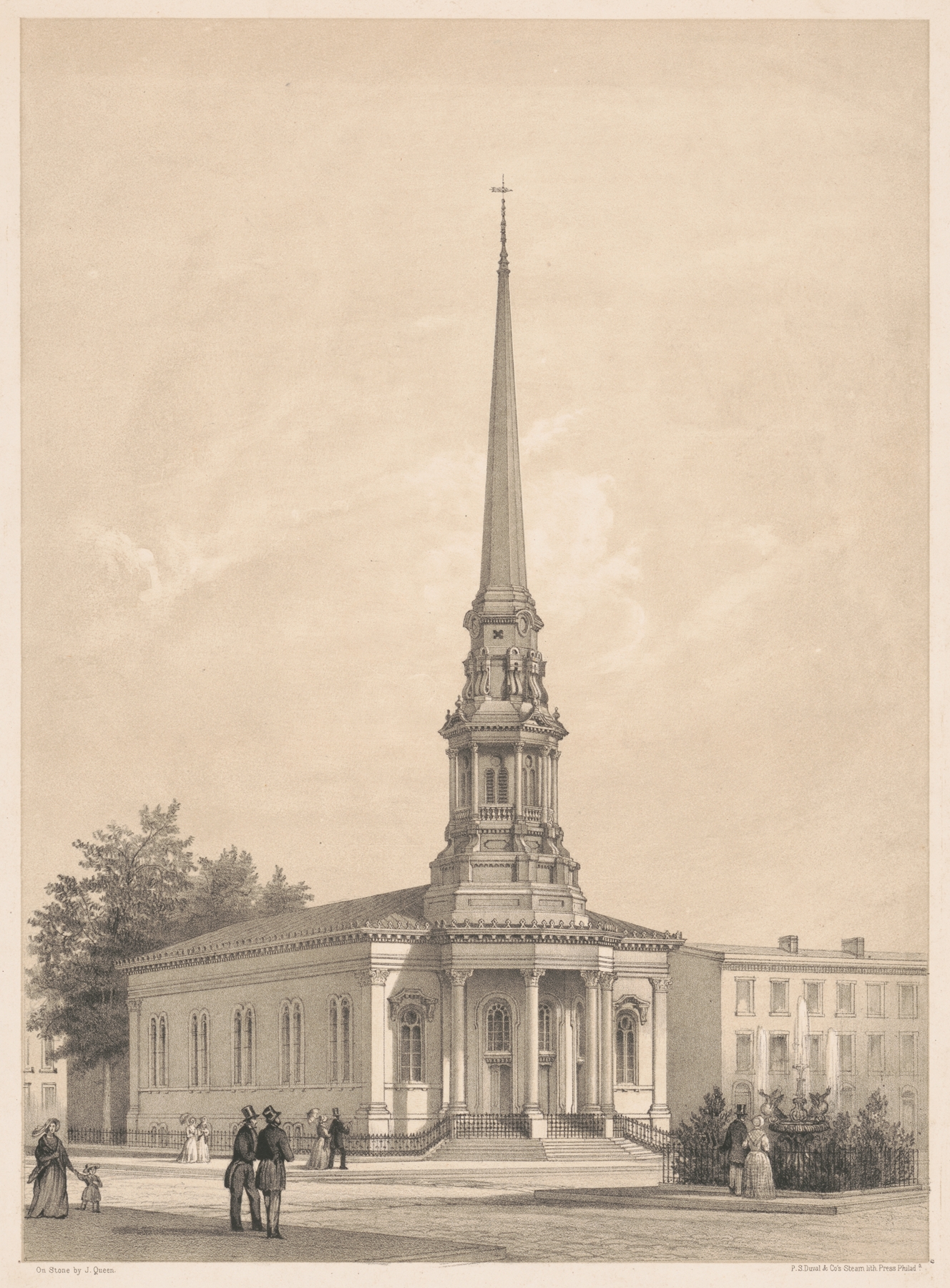
James Fuller Queen painted this work between 1843 and 1860, a time marked by significant industrial growth along the Delaware River. As he observed the changing landscape, he wrestled with the complexities of urbanization and the emotional toll it exacted on communities tied to the river’s banks. In this transitional period, his art became a poignant reflection of both the promise and the loss that accompanied modernity.