River View by Moonlight — History & Analysis
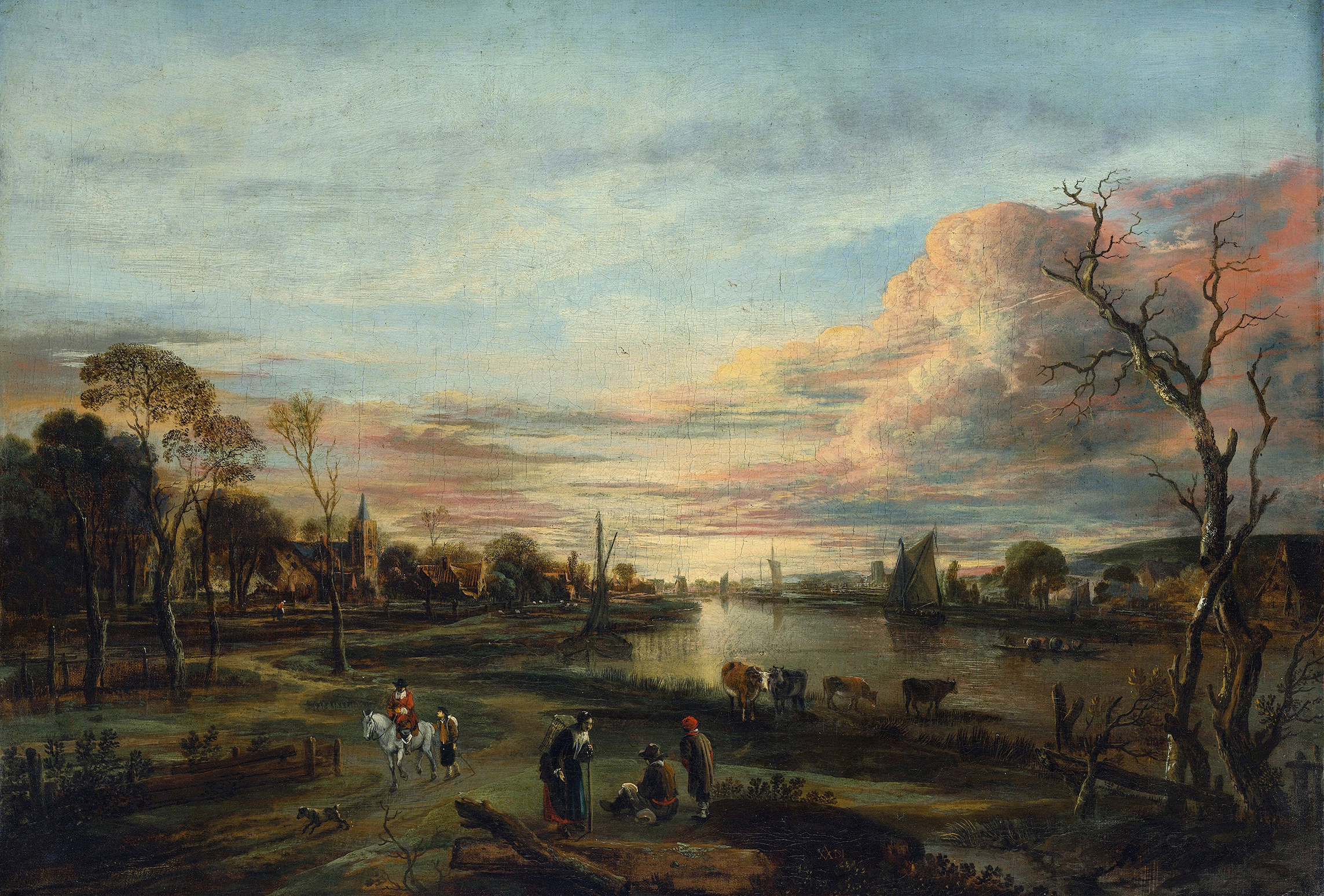
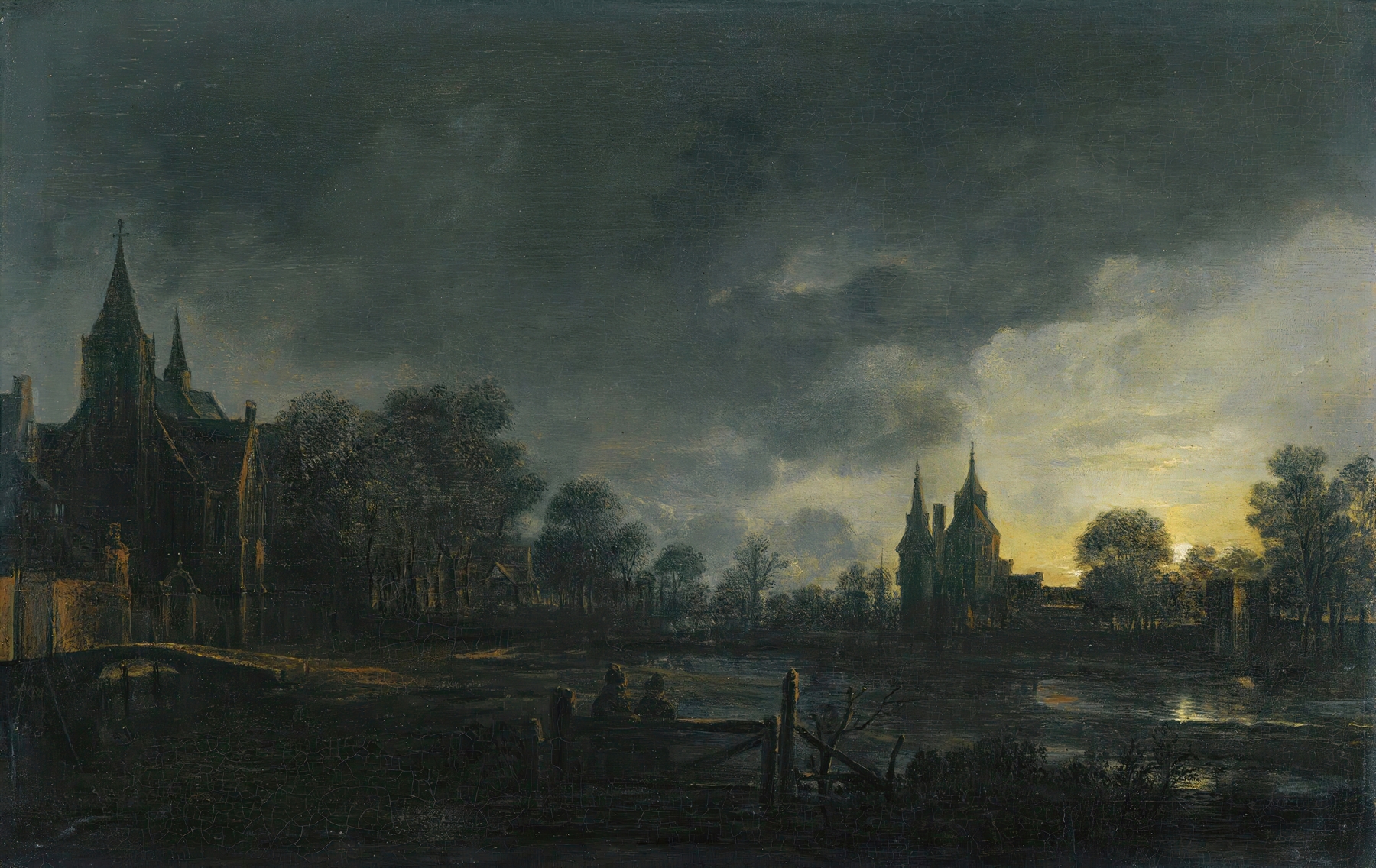
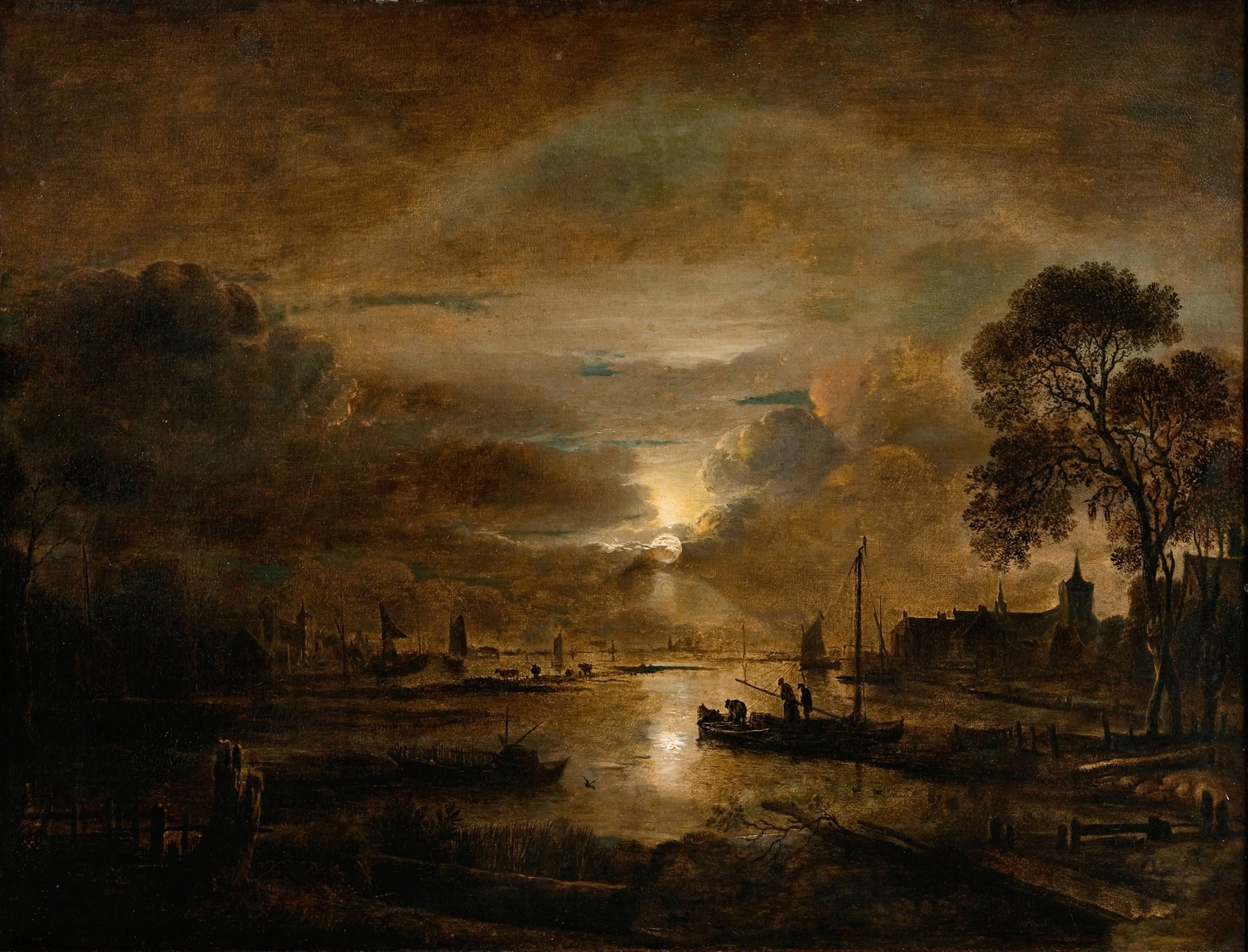
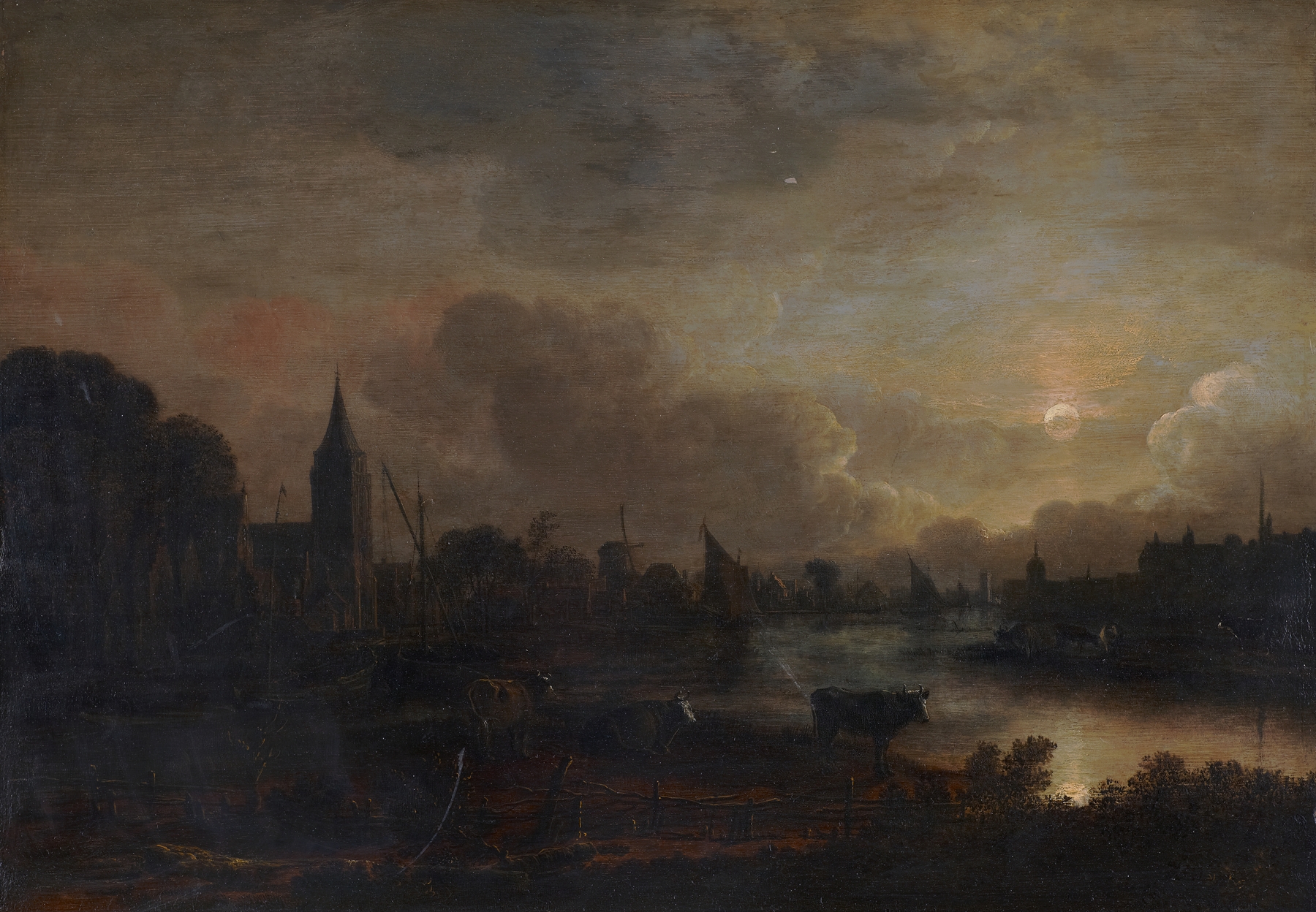
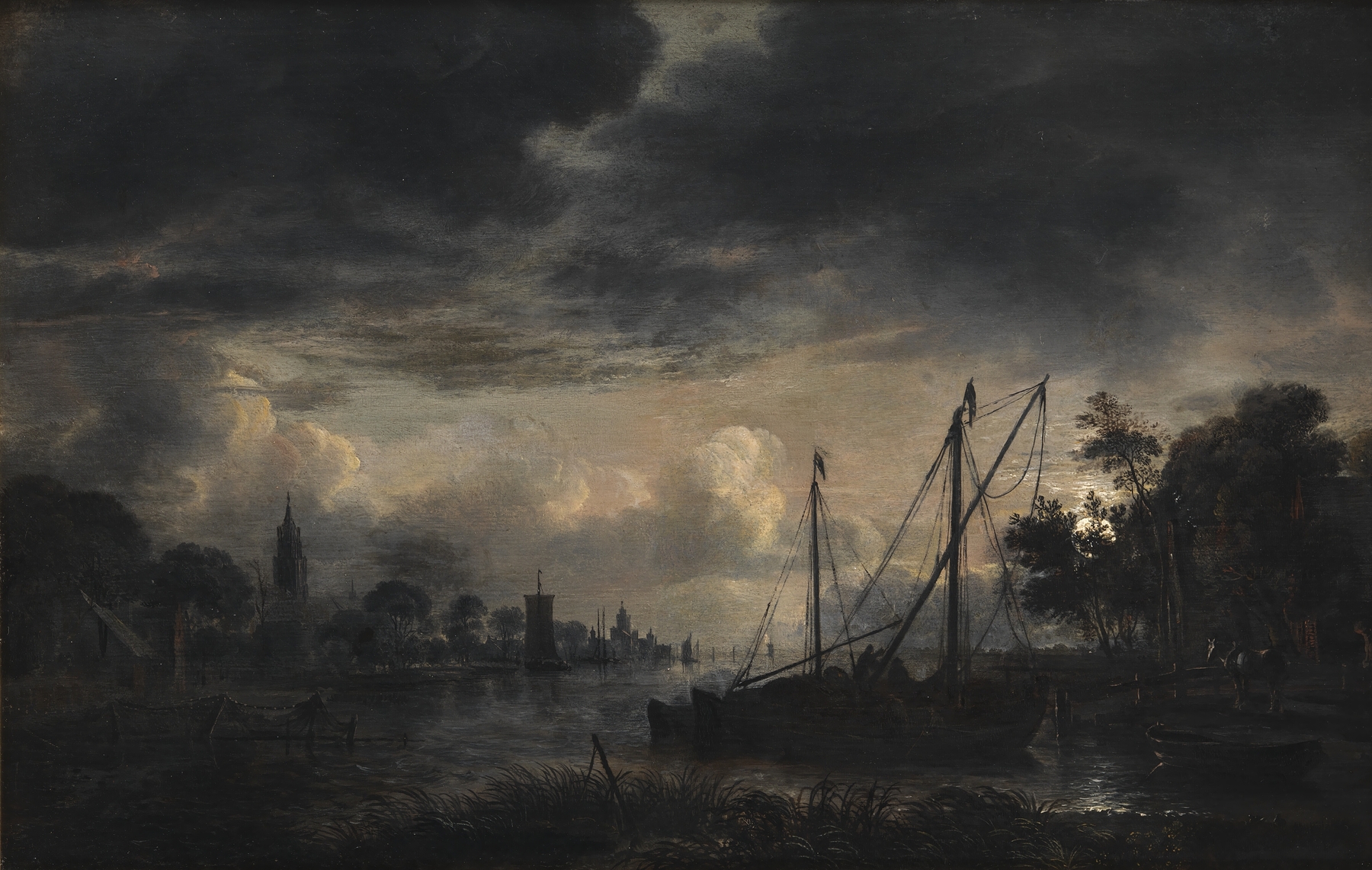
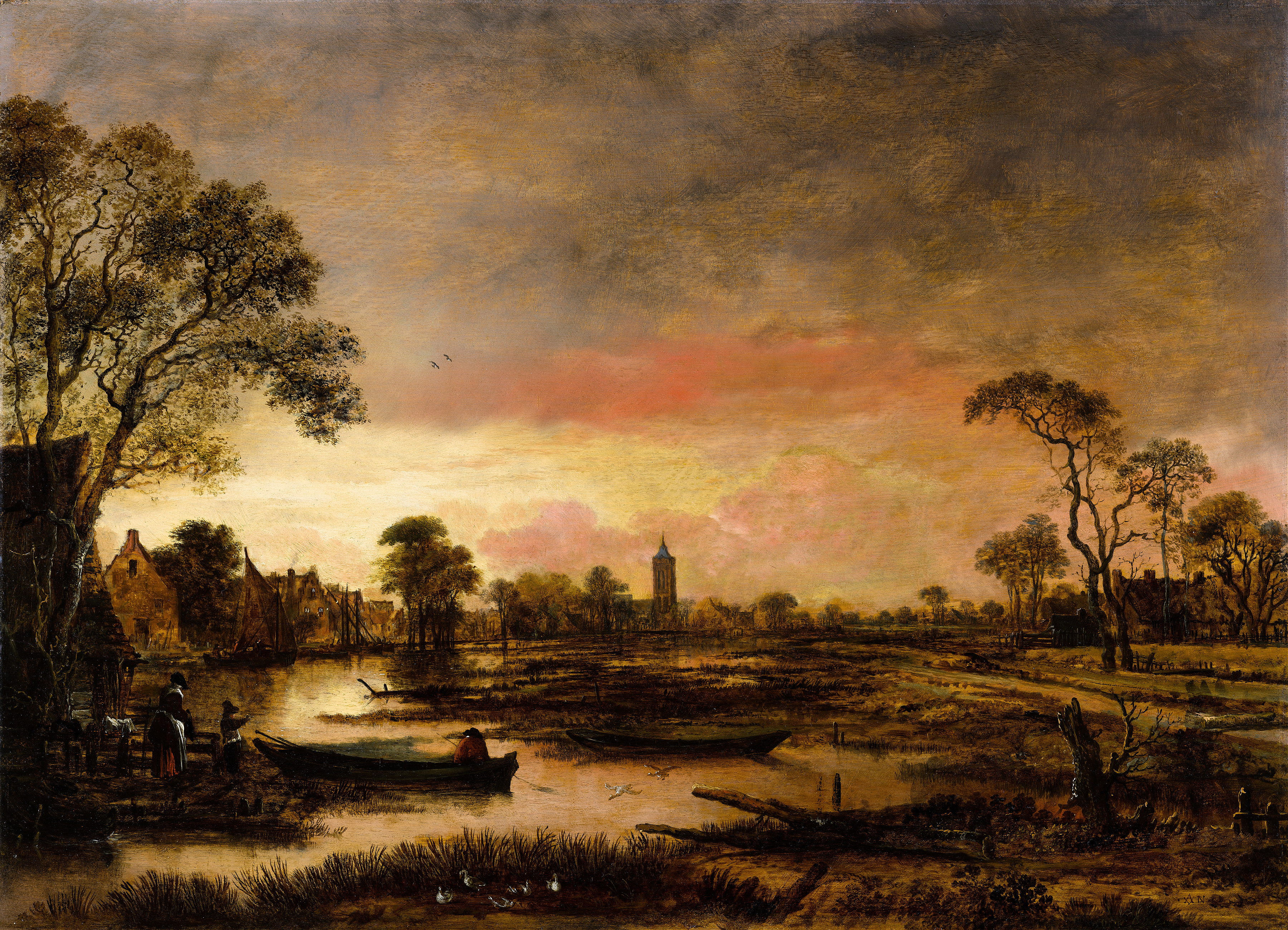
What if silence could speak through light? In the tranquility of night, ethereal beams dance upon water, whispering secrets long held by the universe. Look to the left, where the moon casts a silvery glow, illuminating the gentle ripples of the river. Notice how the cool blue-gray palette envelops the scene, evoking a serene stillness. The horizon, a delicate line between earth and sky, draws the eye towards the calm depths, while trees and boats silently frame the composition.
Each element, meticulously rendered, invites the viewer into a moment suspended in time. As you explore further, contemplate the contrast between the darkness of the surrounding landscape and the luminous water. This juxtaposition evokes a sense of transcendence, suggesting a bridge between the earthly and the divine. The soft, almost ghostly reflections hint at unseen depths and the mysteries lying beneath the surface, echoing the quietude of the night.
In these details, the artist captures not just a scene but a profound emotional resonance, inviting introspection and soothing the spirit. Created between 1650 and 1655, this work emerged during a pivotal period in the Dutch Golden Age, when artists increasingly sought to explore themes of light and atmosphere. Aert van der Neer, influenced by the burgeoning interest in nocturnal landscapes, painted this piece in a time marked by both artistic innovation and personal struggle. The serene scene belies a lifetime of experiences, reflecting the artist's search for both solace and meaning amid the evolving world around him.