Saint Helen Testing the True Cross — History & Analysis
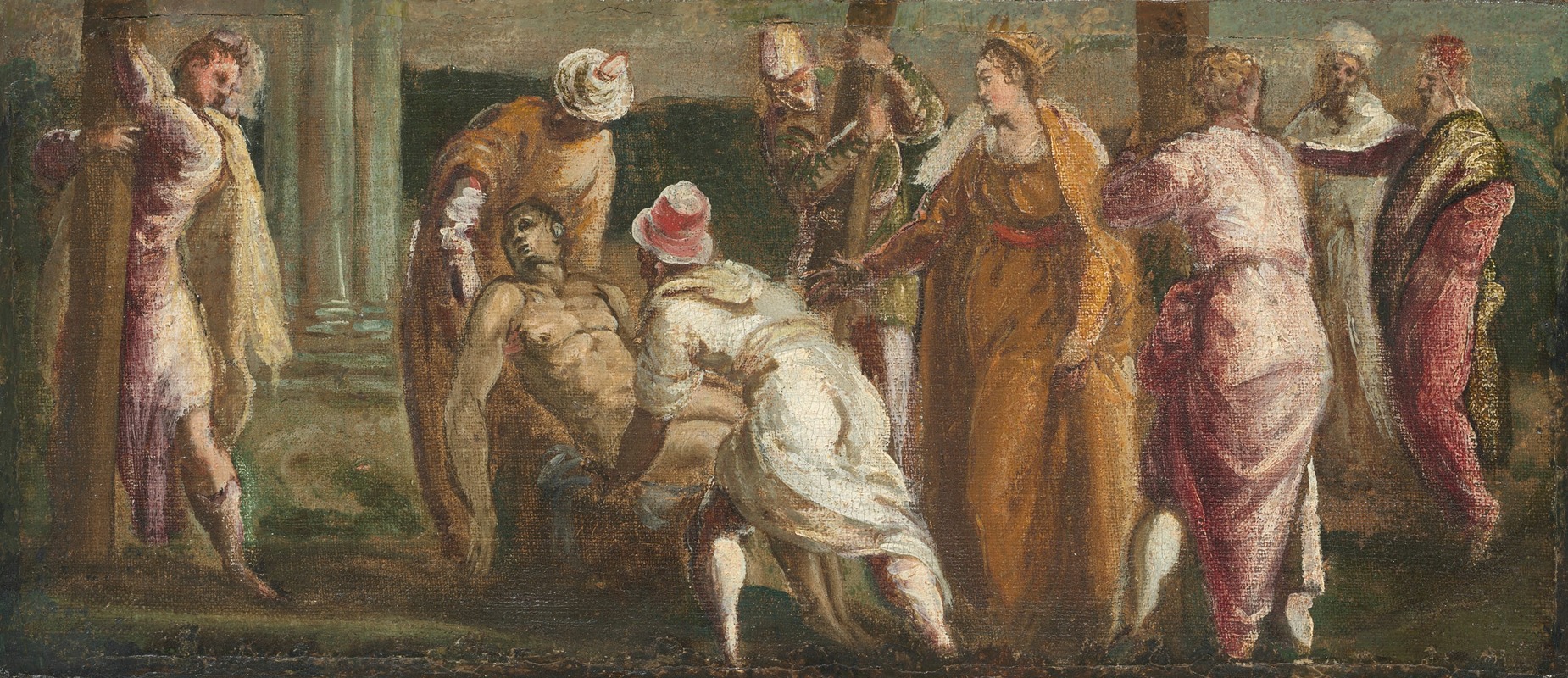
What if silence could speak through light? In the chaotic stillness of Saint Helen Testing the True Cross, the viewer is invited to explore a moment brimming with tension, where certainty and doubt dance in an intricate ballet of shadows and illumination. Look to the center of the canvas, where the figure of Saint Helen is poised, her outstretched hand hovering over the cross, an act of both reverence and inquiry. The luminous golden hues illuminate her figure, contrasting sharply with the surrounding darkness.
Notice how the light accentuates her facial expressions, revealing a profound mix of determination and vulnerability. The swirling composition draws your eye to the other figures, whose varied gestures and postures contribute to the chaotic energy of the scene, each one embodying a different response to this pivotal moment. This painting encapsulates more than a solitary quest for truth; it expresses the tumultuous nature of faith itself. The chaotic interplay of light and shadow mirrors the internal struggles of belief—how the search for divine truth can evoke both comfort and turmoil.
Tiny details, such as the anxious expressions of the onlookers and the faint glimmer of the cross, amplify the emotional weight, suggesting that in this quest lies both the potential for enlightenment and a haunting sense of uncertainty. Tintoretto created this work around 1545 during a time of significant tension in religious art, balancing the demands of the Counter-Reformation while carving out his own expressive style. Residing in Venice, he was deeply influenced by the Mannerist movement, which promoted dramatic compositions and emotional depth. This painting reflects his innovative approach, challenging viewers to confront the chaos of faith and the profound questions surrounding it.
