
Tarquin and Lucretia — History & Analysis
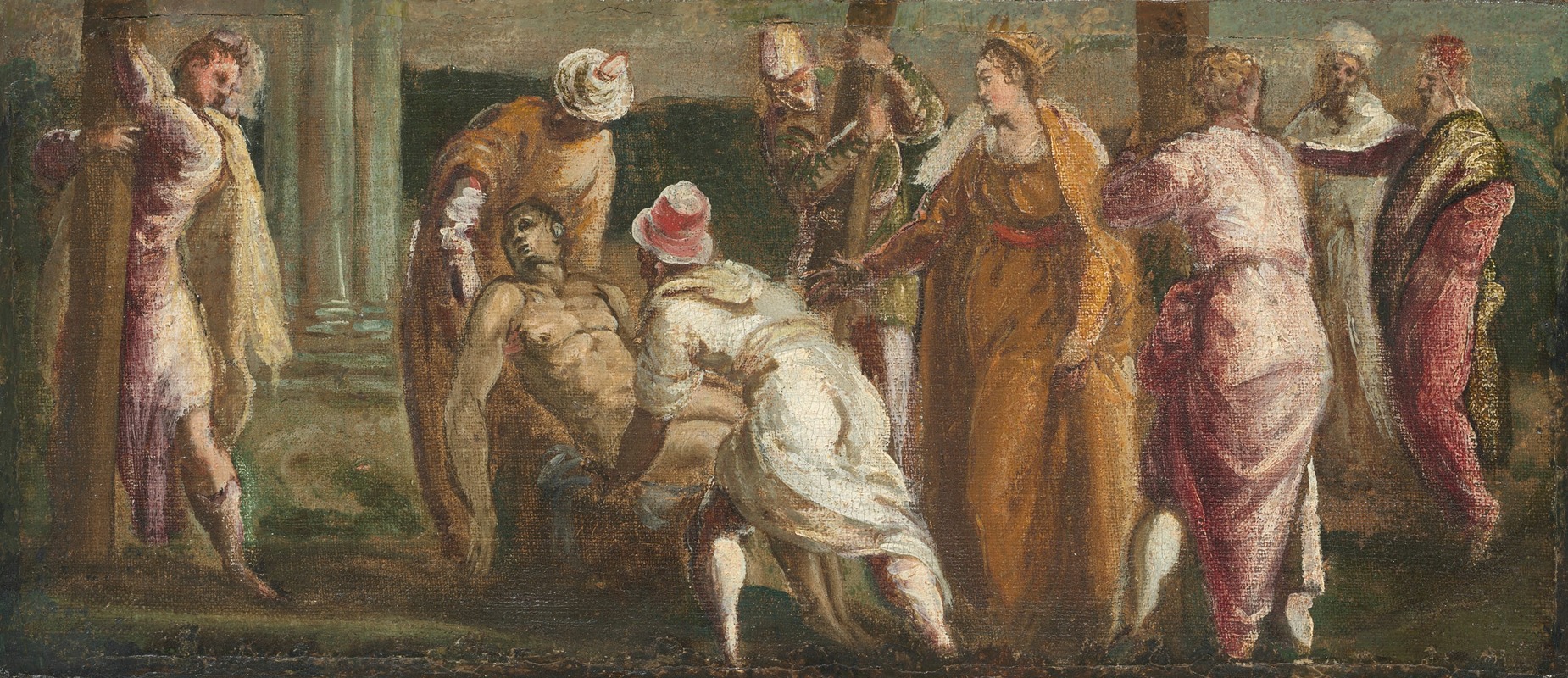
“Between color and silence, truth hides.” Ecstasy pulses through the canvas, a potent reminder of raw human emotion and the complexities of desire and betrayal. Look to the left at Lucretia, her hair cascading around her like a dark waterfall, her expression a tumultuous mix of fear and resignation. The figures are arranged in a triangular composition, drawing the eye toward the tension of the moment. Notice how the vibrant reds and deep greens contrast sharply with the muted background, illuminating Lucretia’s plight against the shadowy context of her fate.
The light bathes Tarquin, cloaked in opulence, as he approaches her, embodying both allure and menace. Delve deeper into the painting, and you’ll find a rich tapestry of emotional contrasts. The struggle between lust and virtue is palpable, with Lucretia’s delicate hand clutching her breast in distress, while Tarquin’s bold stance signifies determination. The space between them is charged; their fates are intertwined yet tragically disparate.
In the background, subtle figures whisper of the onlookers, enhancing the sense of impending doom and societal judgment that looms over the scene. Tintoretto painted this compelling work between 1578 and 1580 during a period marked by a shift towards dramatic narratives in art. Working in Venice, he was at the forefront of the Mannerist movement, where emotional intensity and dynamic compositions reigned. This piece reflects not only the tumult of the subject matter but also the artist's innovative style, showcasing his ability to capture the essence of human experience against a backdrop of historical narrative.