Set design for ‘La Belle au Bois Dormant’; La Poussée des Lilas — History & Analysis
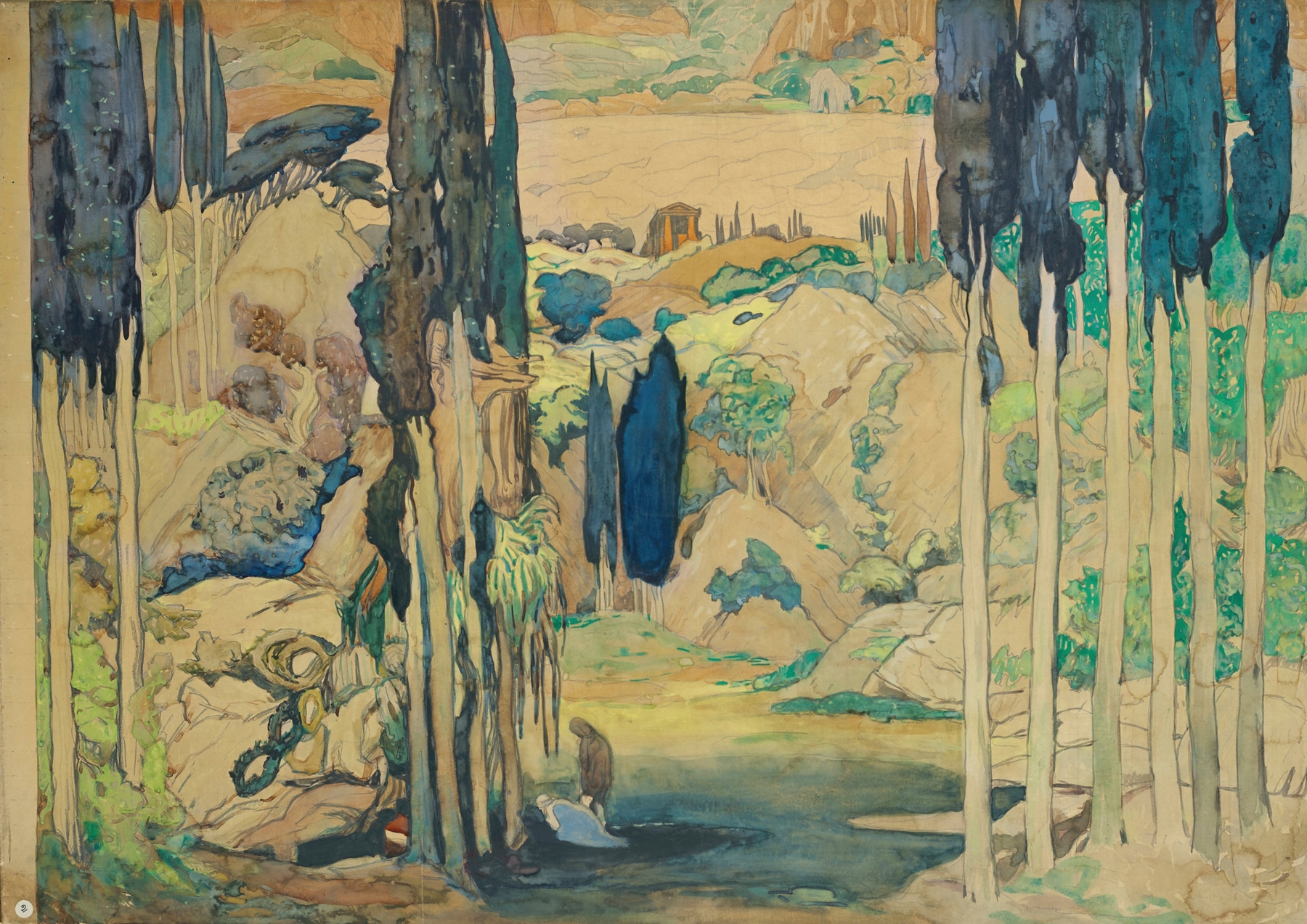
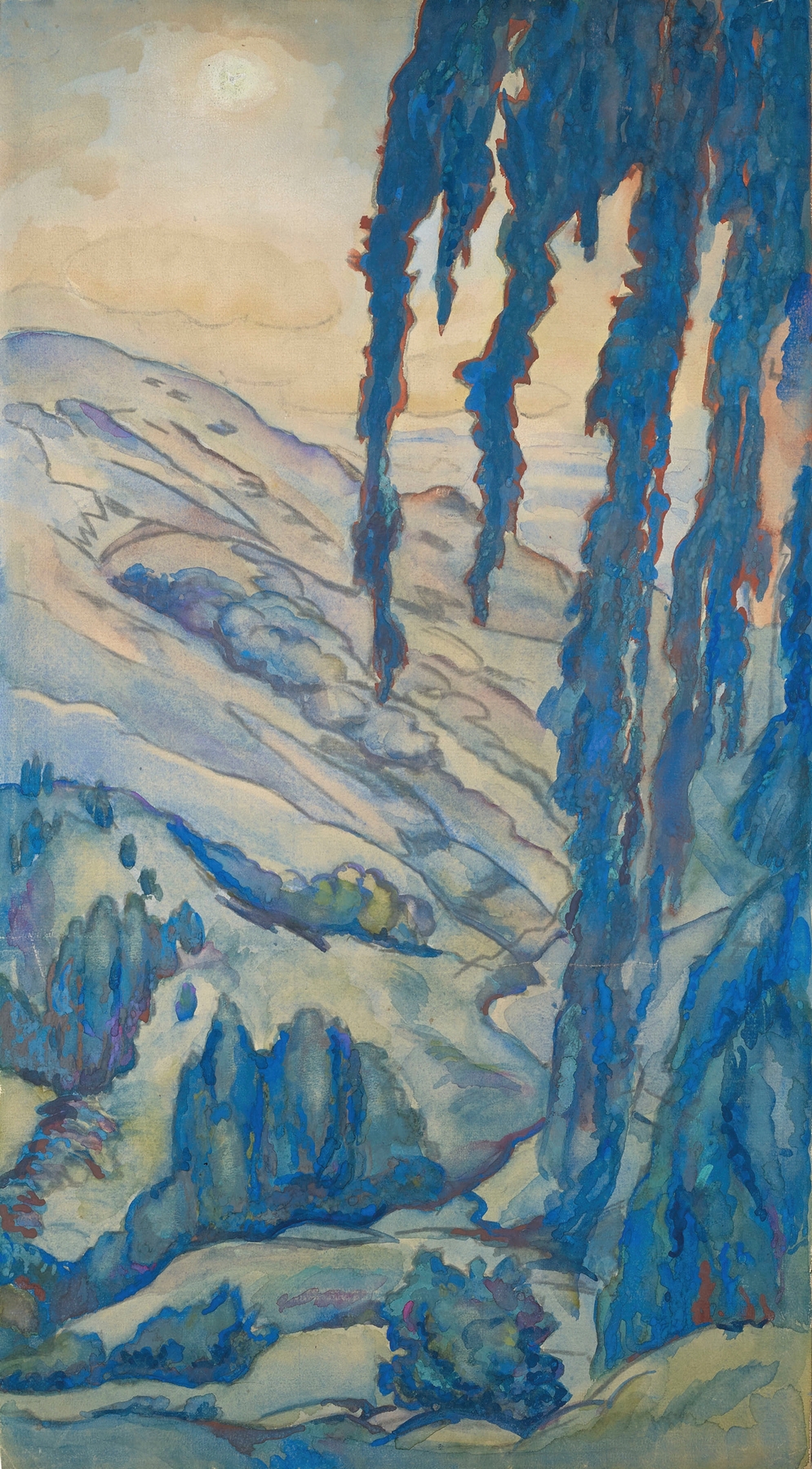
What secret hides in the quiet of the canvas? A tension thrums beneath the surface of Set design for ‘La Belle au Bois Dormant’, as if the colors and shapes are plotting an untold story. Look to the center of the composition, where the swirling forms of lilacs burst forth in a riot of purple and green. The vivid brushstrokes pulse with intensity, drawing the eye away from the more subdued background that cradles the scene.
Notice how Bakst expertly balances chaos and order, with delicate floral arrangements encroaching upon a dreamlike landscape, each petal infused with a sense of urgency and movement. As you explore further, observe the contrast between the exuberance of the lilacs and the serene figures awaiting their awakening. This duality highlights a hidden narrative—the beauty of nature juxtaposed against the stillness of slumber, suggesting a world where passion teeters on the edge of tranquility. The wildness of the blossoms hints at chaos lurking just beneath the calm surface, a reminder that beauty often conceals turmoil.
In 1921, Bakst was deeply immersed in the avant-garde movement, designing for theatrical productions that pushed the boundaries of visual storytelling. This period was marked by a fascination with the interplay of form and color, as well as a desire to evoke emotion through theatrical settings. The artist's work during this time reflected not only his personal vision but also the broader embrace of modernism in the arts, capturing the intersection of dreams and reality.