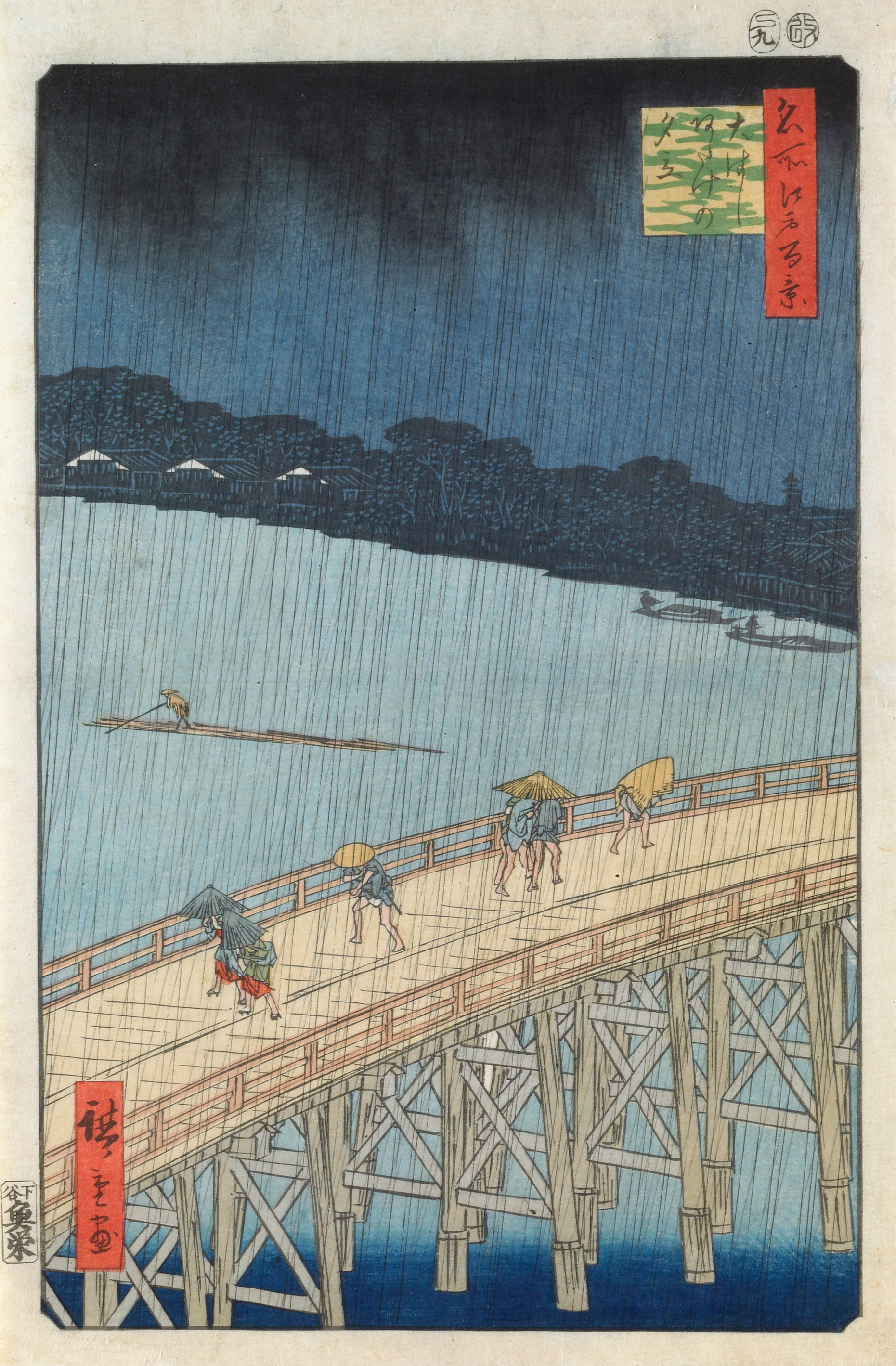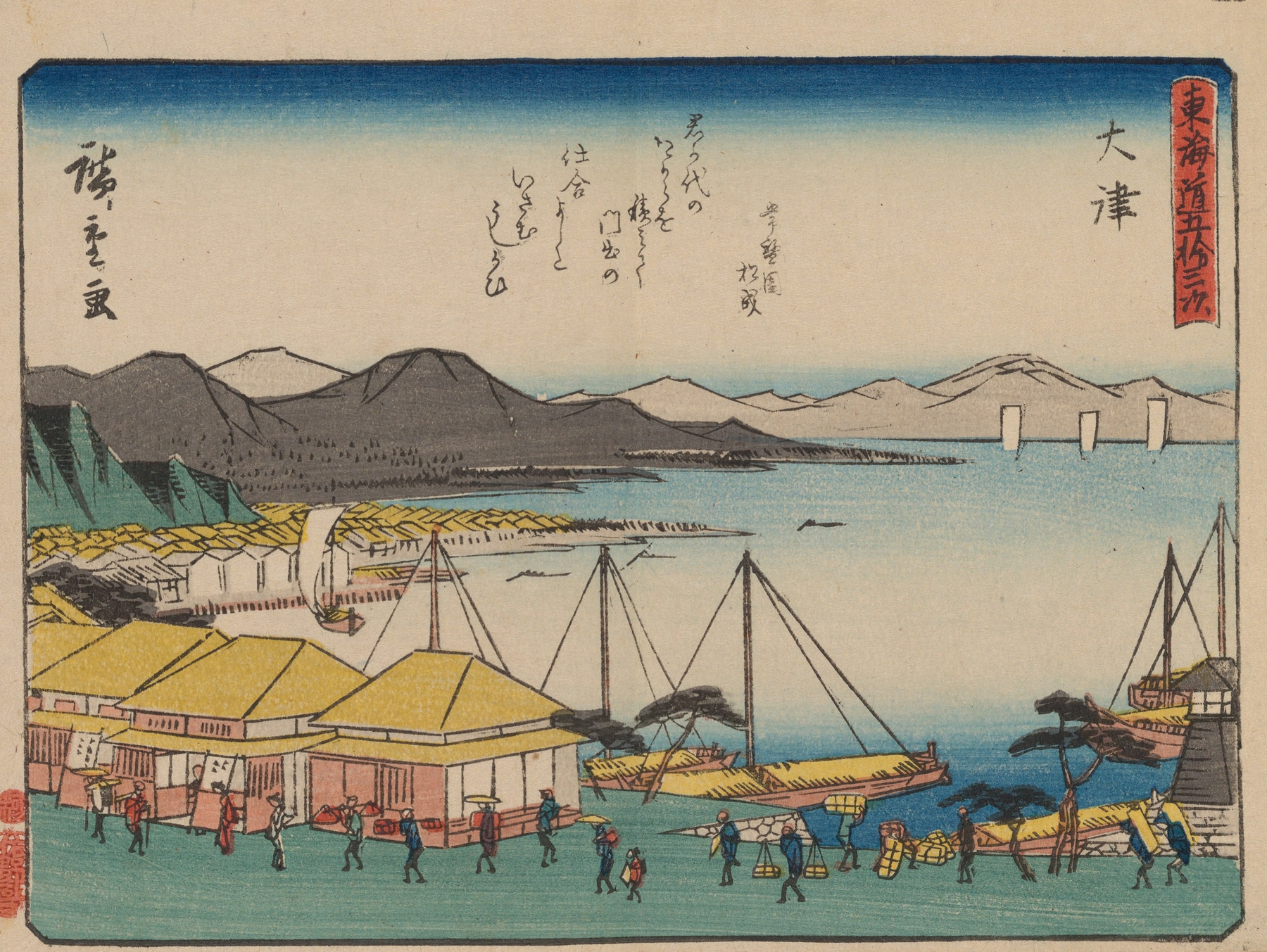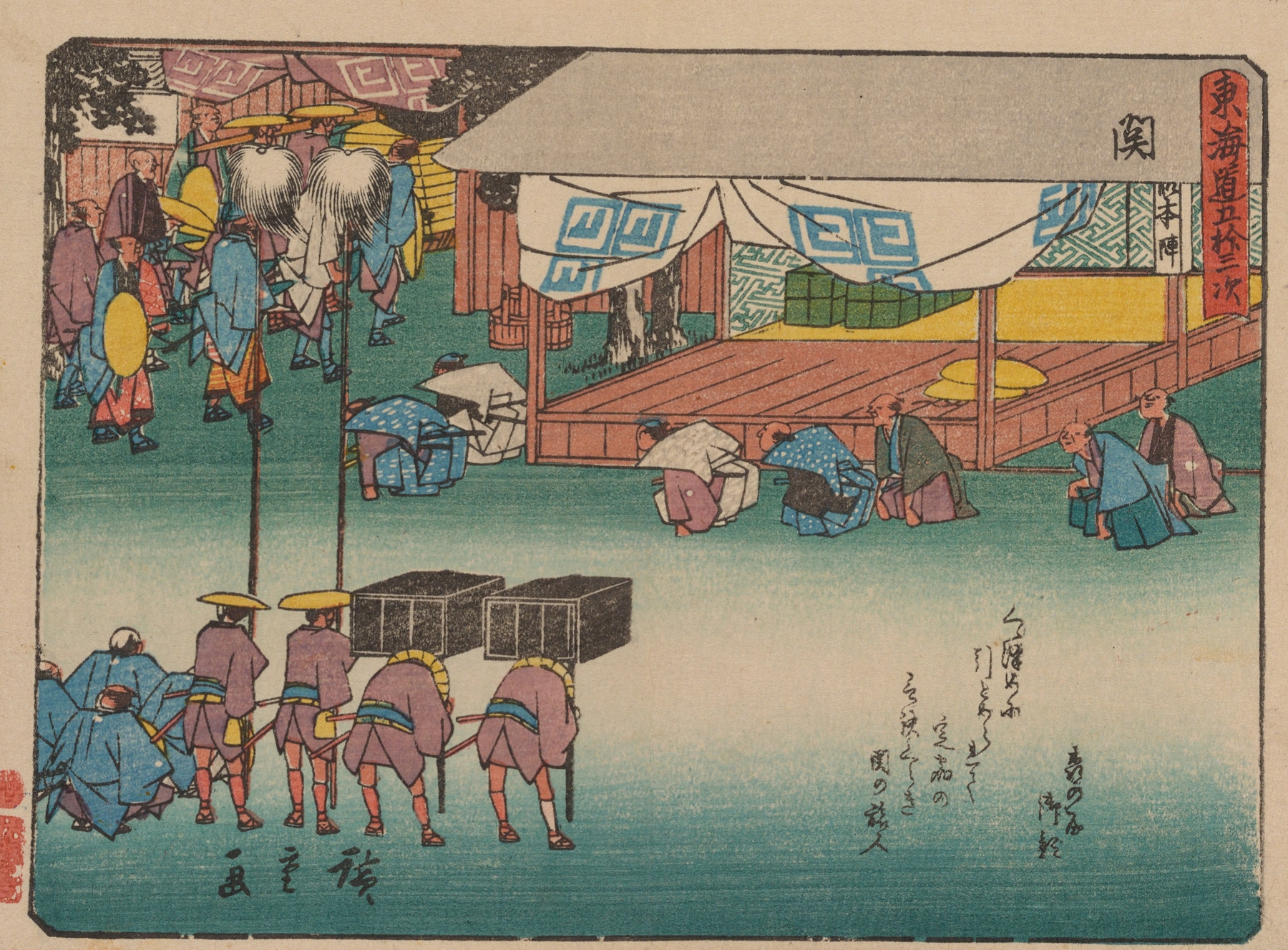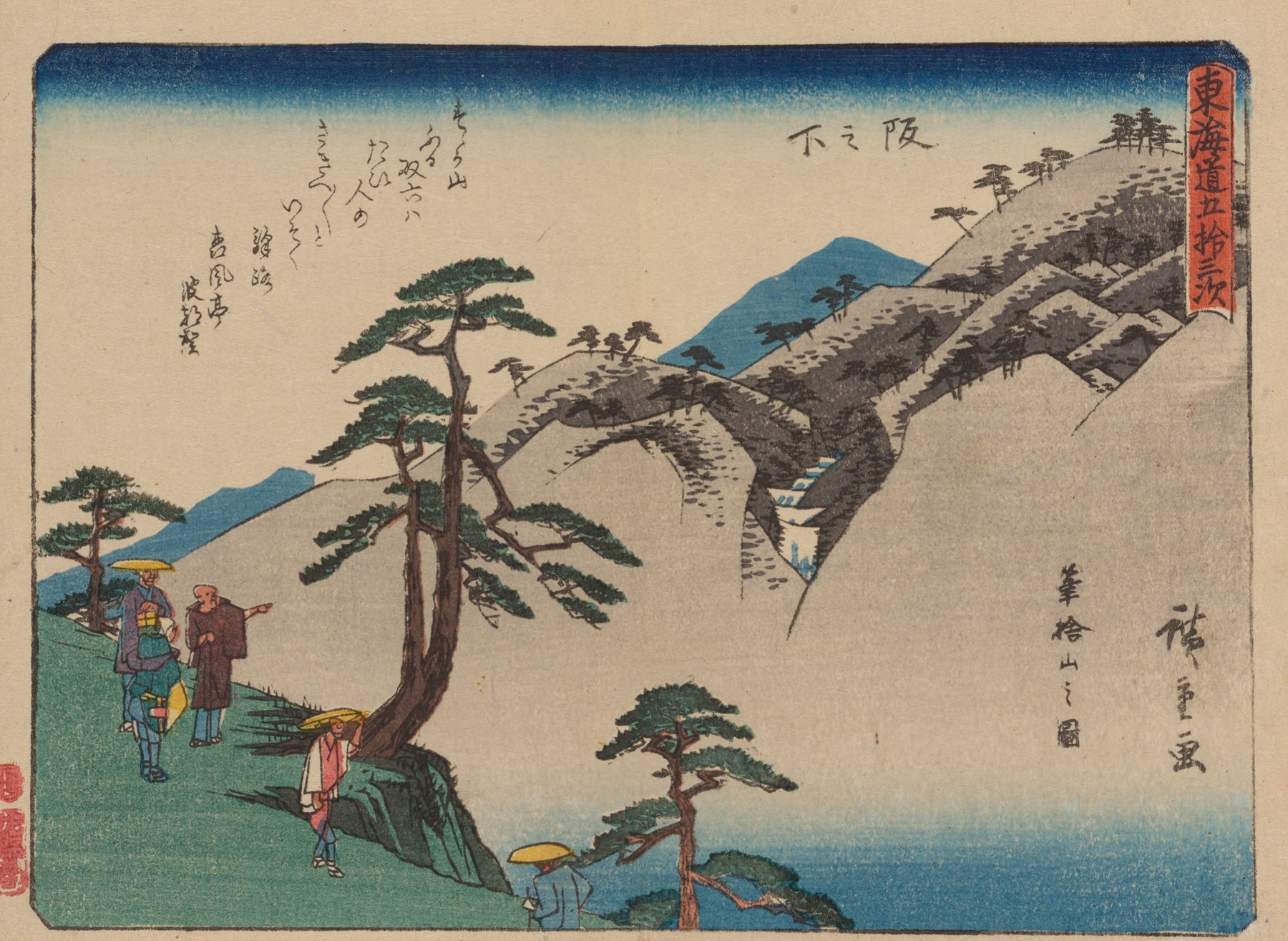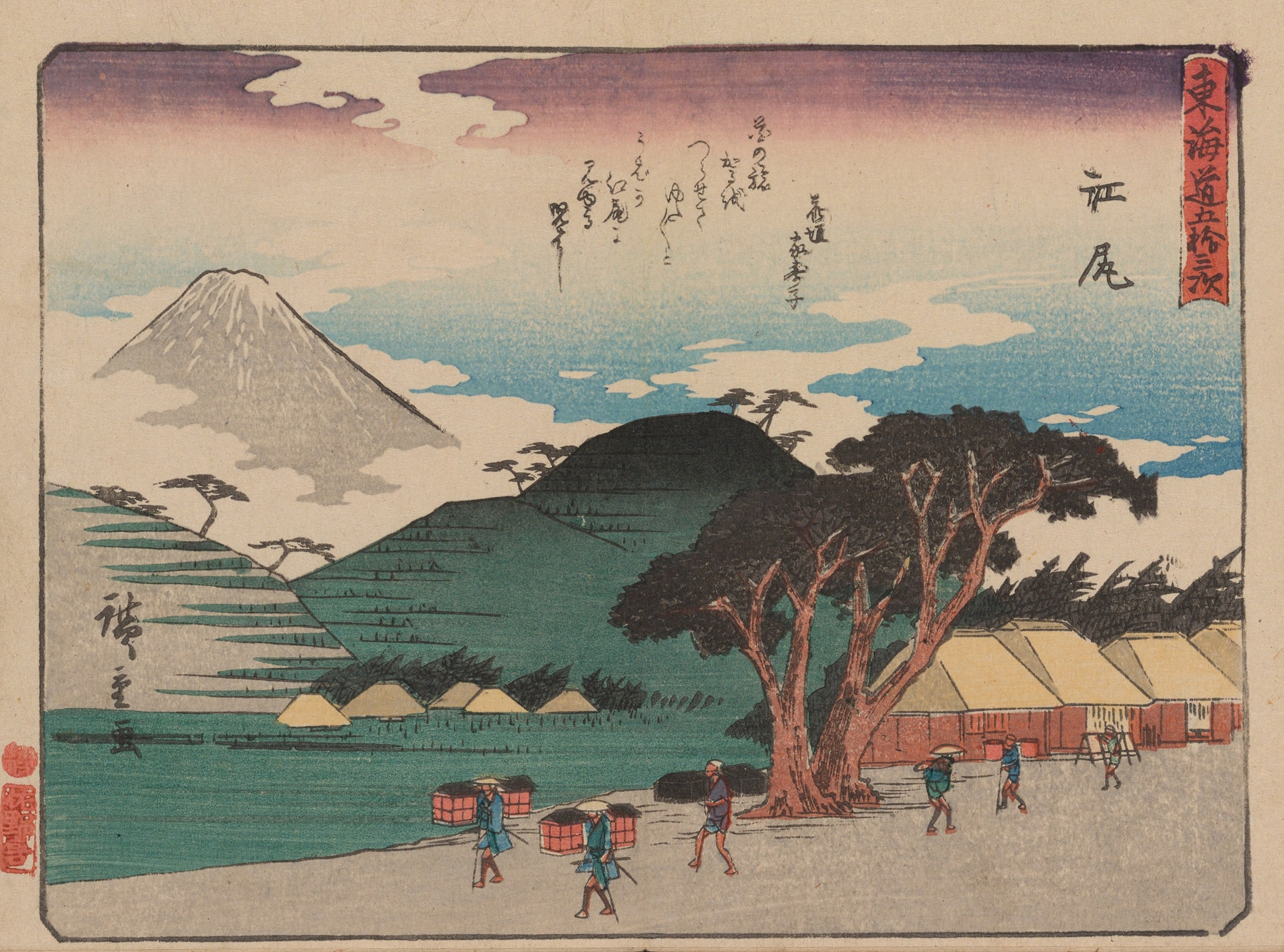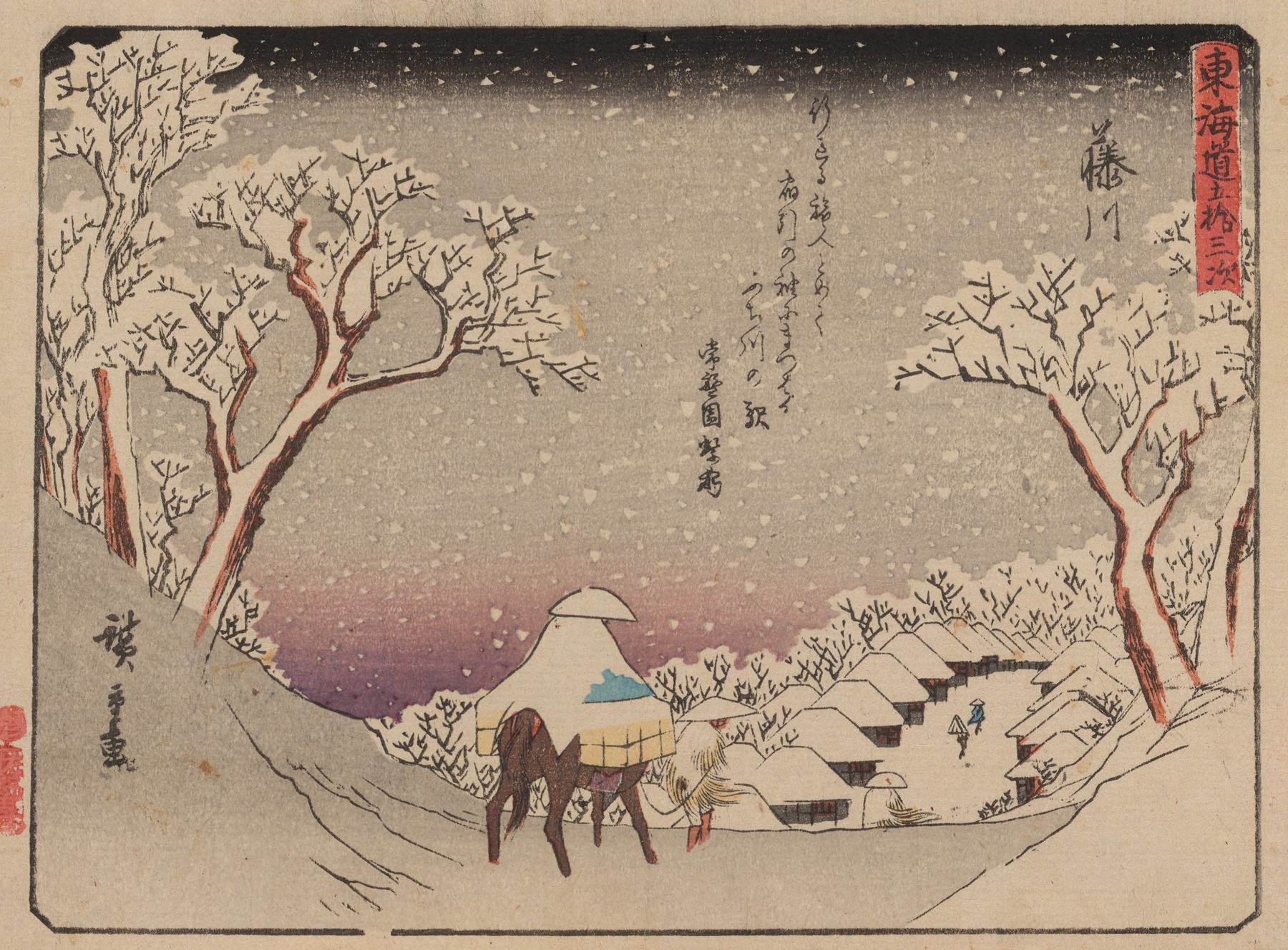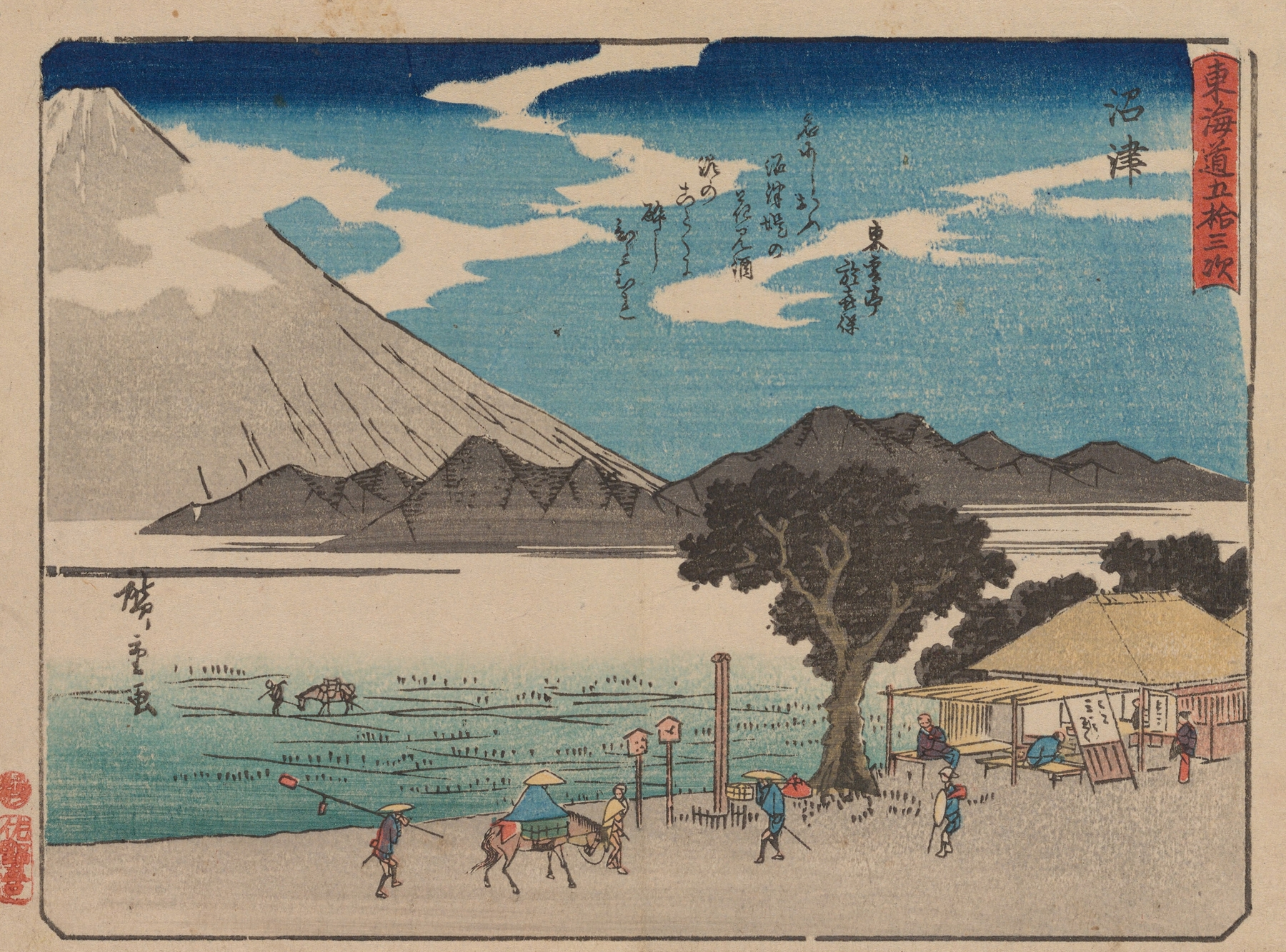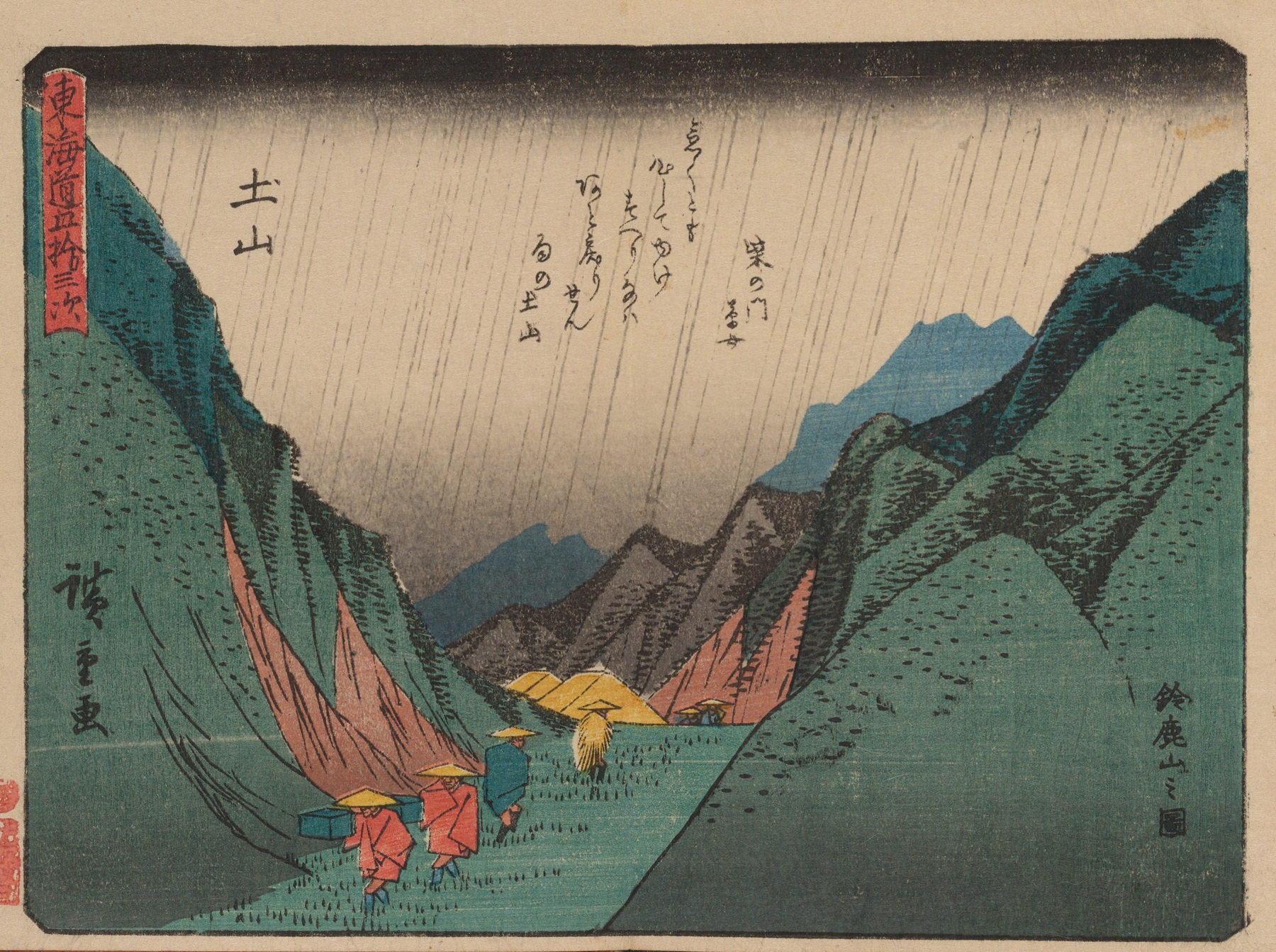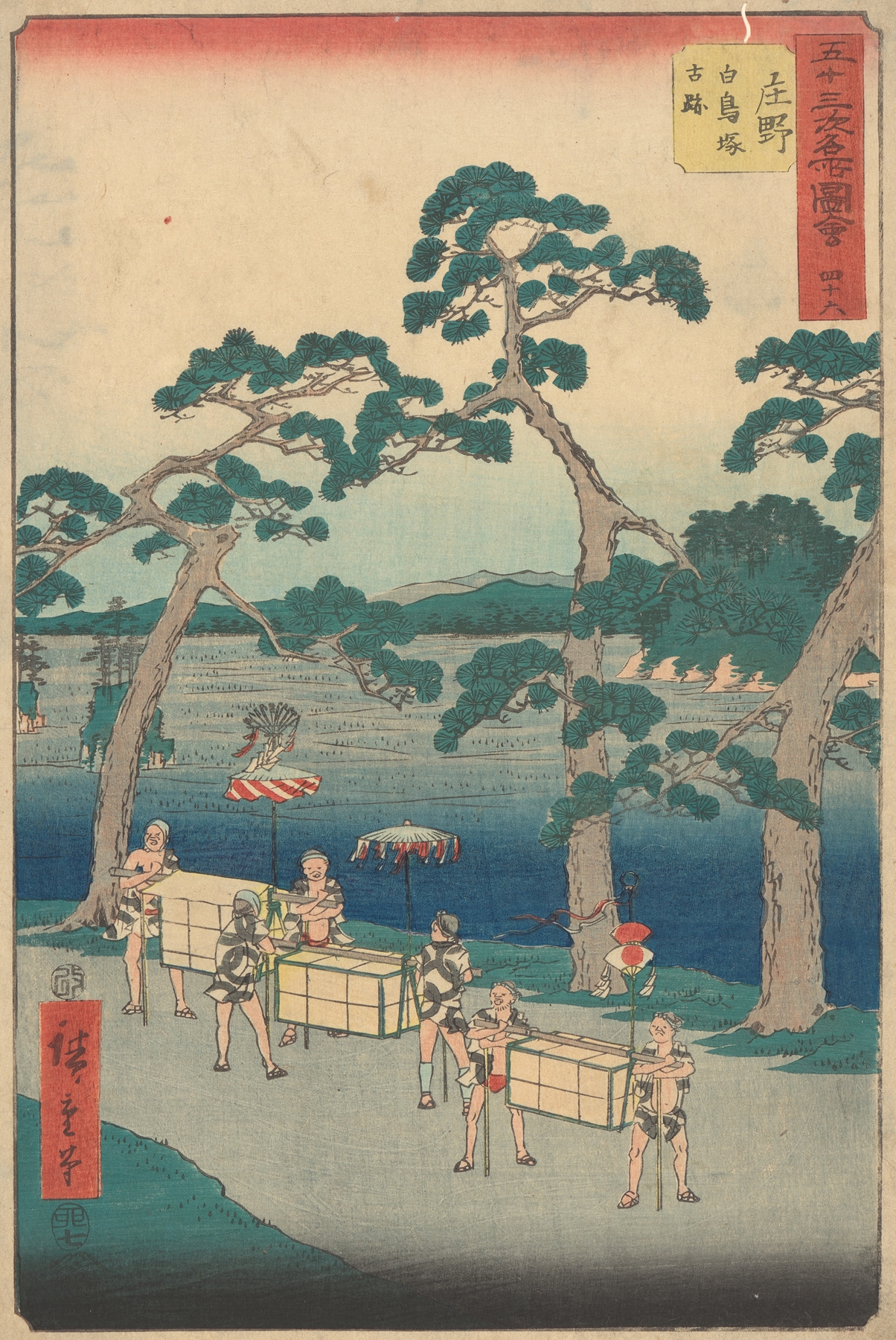

Can beauty exist without sorrow? In Utagawa Hiroshige's *Shono*, the delicate balance between calm and chaos unfolds within a serene landscape that captivates the viewer’s heart. Look to the bottom left at the gently flowing river, where reflections dance across the water’s surface, echoing the tranquility of the scene. The soft blues and greens create a sense of harmony, drawing your gaze upward towards the distant mountains, which loom with a subtle intensity. Notice how the clouds, wispy and ethereal, seem to cover more than just the sky; they envelop the horizon in a shroud of mystery, suggesting an unseen turmoil that lies beneath the idyllic facade. Diving deeper into the image, the juxtaposition of the tranquil river and the turbulent clouds reveals a narrative of dualities. The gentle curves of nature’s beauty starkly contrast with the more angular, chaotic shapes of the sky, hinting at an underlying tension between peace and disorder. This duality mirrors the human experience, where moments of joy are often shadowed by whispers of sadness, reminding us that beauty is often inextricably linked with the chaos of life. Created in 1855, during a period of artistic innovation in Edo, *Shono* reflects Hiroshige’s mastery of landscape and the ukiyo-e tradition. Known for his stunning depictions of nature, Hiroshige was influenced by the shifting societal values and increased appreciation for the natural world in a rapidly modernizing Japan. This work is not just a visual delight but a poignant expression of the complexities of life itself, captured through exquisite detail and profound simplicity.