Sitzendes Paar in einer Landschaft — History & Analysis
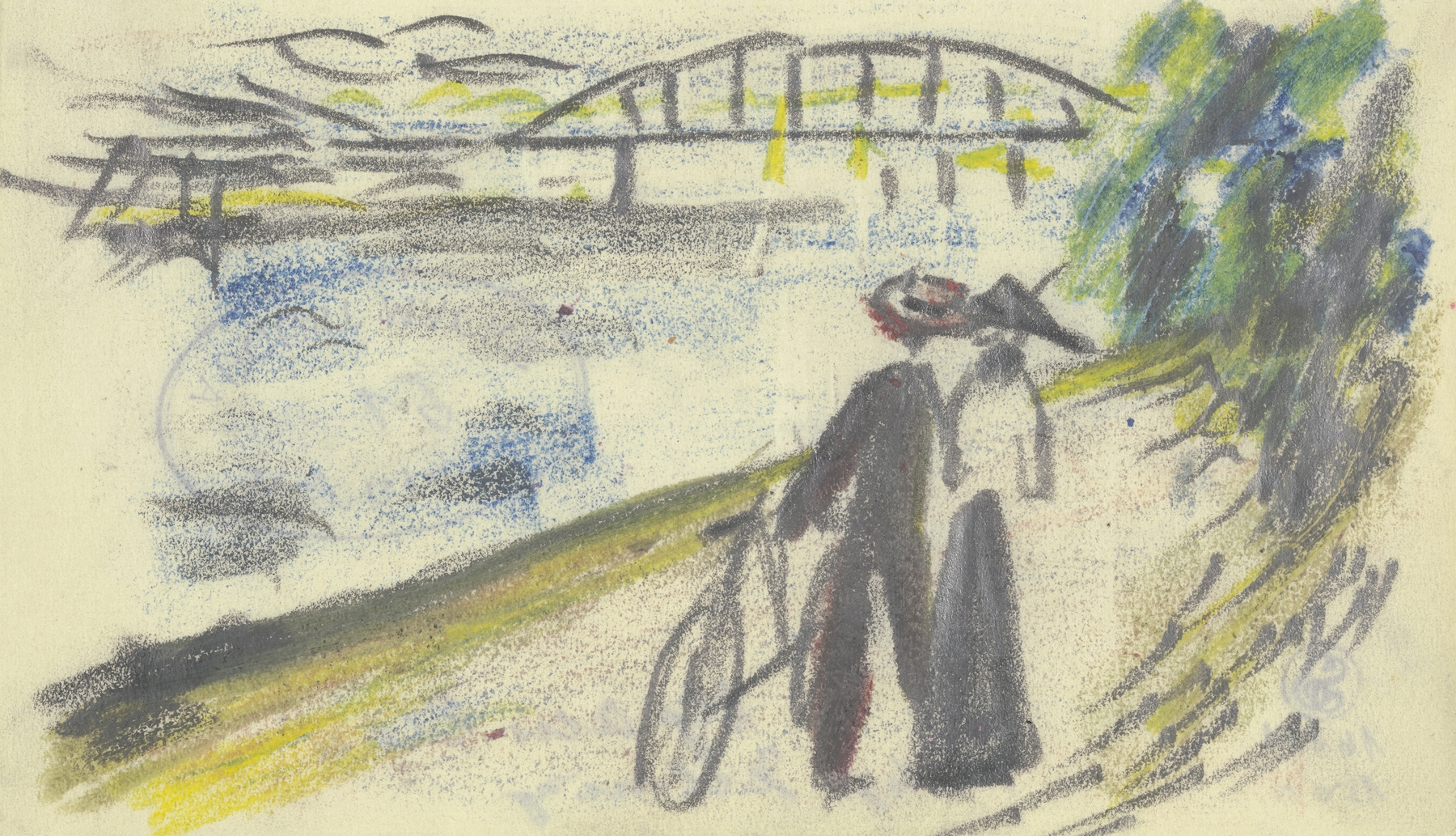
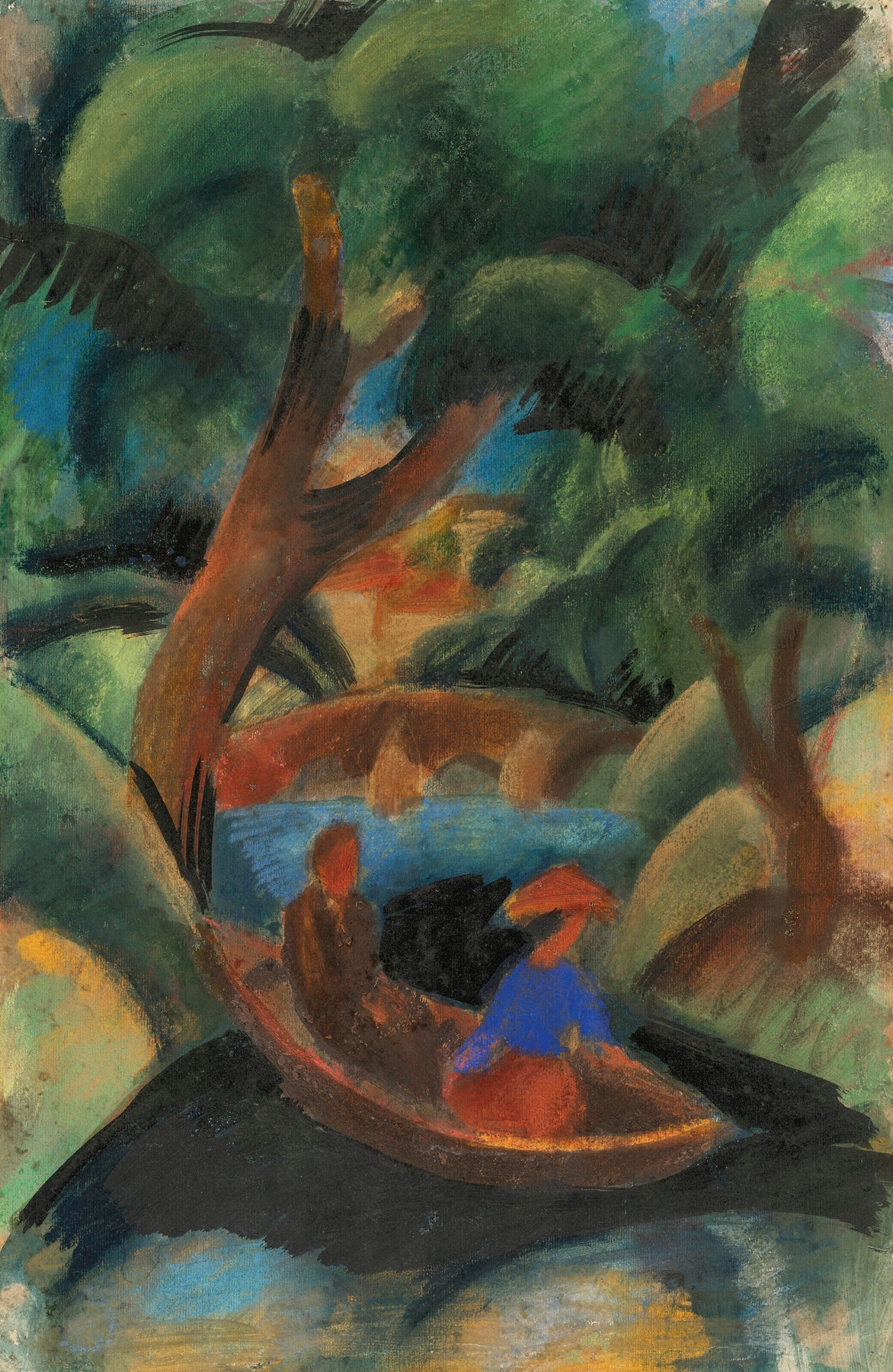
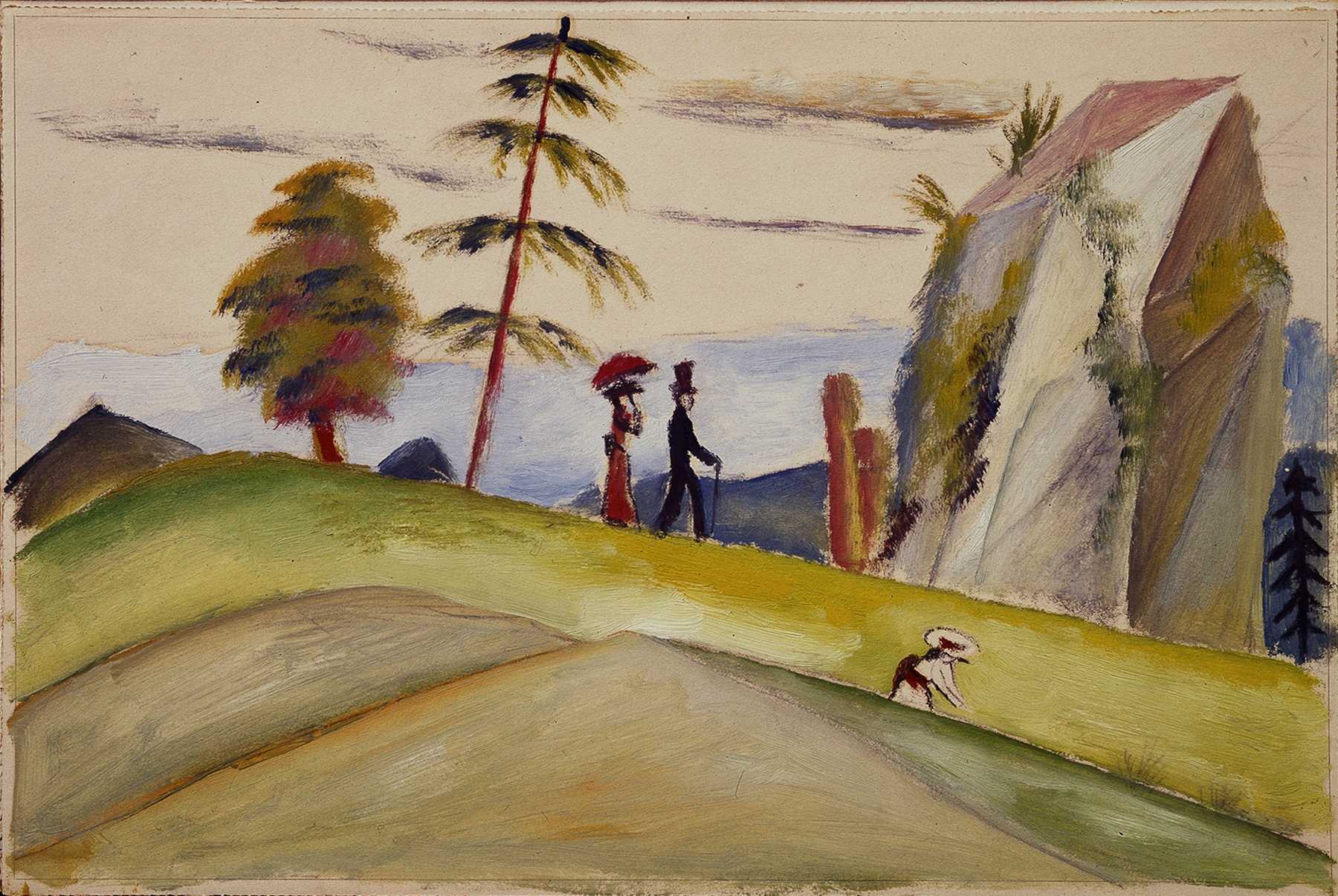
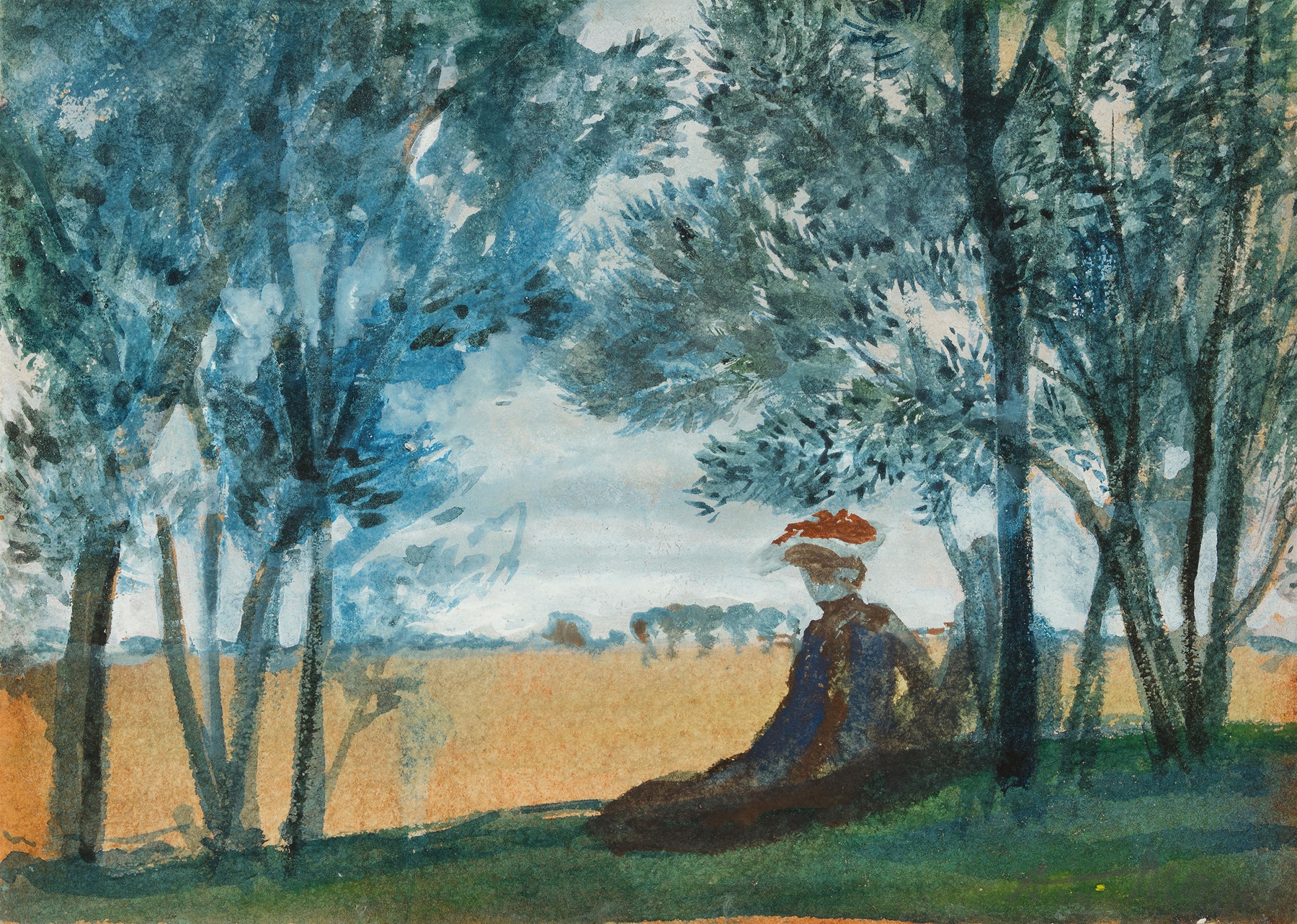
“To paint is to remember what time wants us to forget.” In Sitzendes Paar in einer Landschaft, the transient beauty of a moment is immortalized, revealing a deeper truth hidden beneath the surface. Look to the left at the couple enveloped in each other’s embrace, their forms gliding seamlessly against the soft, verdant backdrop. The vibrant palette of greens and blues creates a serene atmosphere, punctuated by splashes of red and yellow that suggest warmth and connection. Macke’s brushstrokes dance across the canvas, guiding the viewer's eye to the couple's tender gestures, the interplay of their relaxed postures, and the gentle curvature of the landscape that cradles them.
Yet, the emotional tension lies beneath this idyllic scene. The couple embodies intimacy and separation, their closeness seemingly shielding them from the outside world, while the distant trees loom like sentinels. The contrast between the vivid hues surrounding them and the muted tones of the background hints at a deeper sense of longing and the fragility of such moments. Each stroke of Macke’s brush reveals not just a depiction of love, but an exploration of existential vulnerability.
In 1904, the artist, then residing in Bonn, was part of the Expressionist movement, grappling with the realities of modern life and seeking new modes of expression. This work came during a period of personal exploration, as Macke sought to blend abstraction with the emotional resonance of his subjects. The painting captures a transient moment, reflecting both the artist’s journey and the societal shifts occurring in Germany at the turn of the century.