Snow Storm, Scarbro’ — History & Analysis
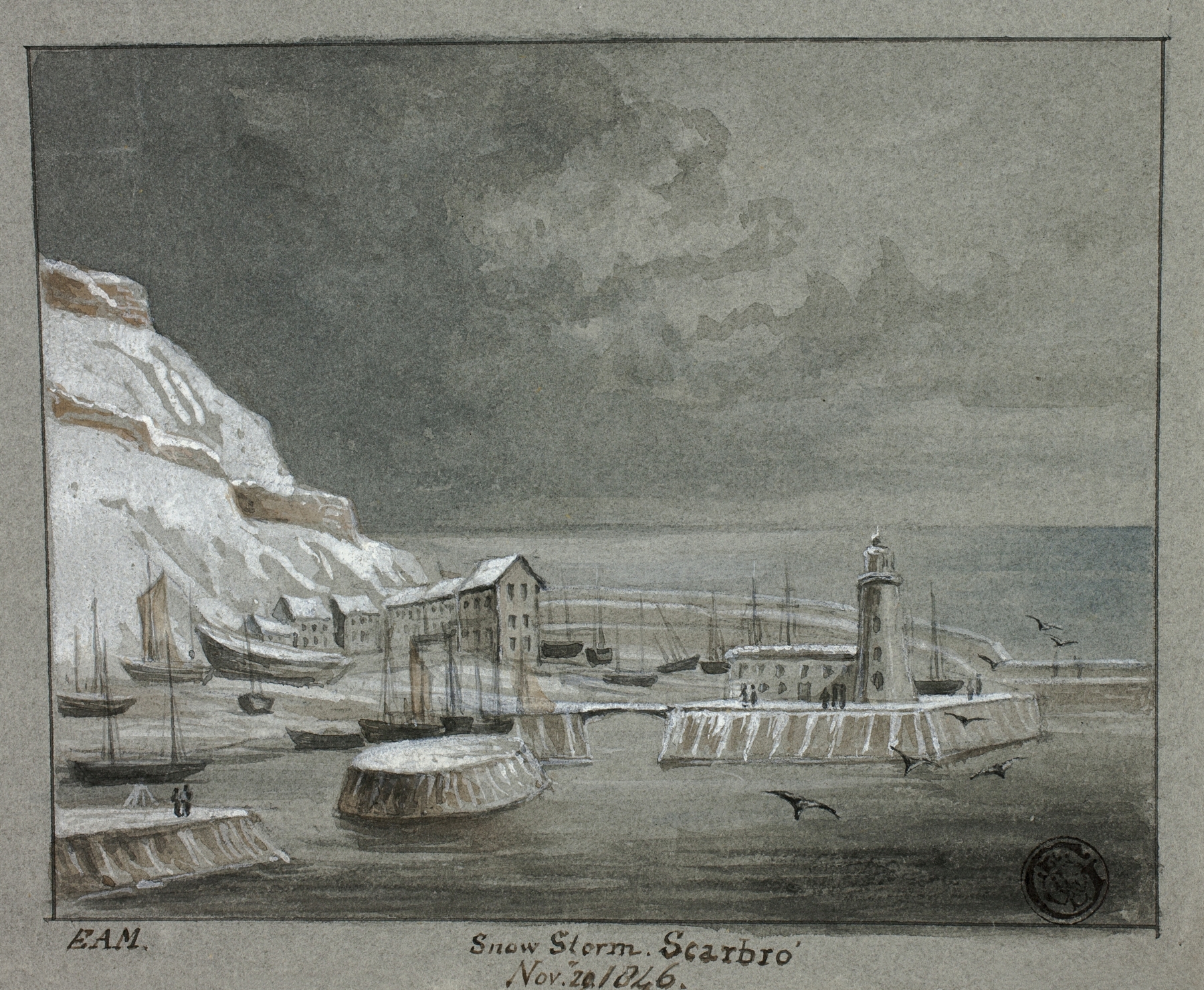
Did the painter know this moment would outlive them? In Snow Storm, Scarbro’, the essence of a fleeting winter tempest is captured with an intensity that echoes through time, beckoning viewers to ponder the nature of creation itself. Look to the swirling chaos at the center of the canvas, where gusts of white and blue merge into a tumultuous dance. The strokes, both vigorous and delicate, evoke the frigid winds that whip through the landscape, while the muted tones ground the scene with a somber yet vibrant energy.
Notice how the horizon blurs, inviting the eye to wander into the storm's embrace, while the foreground remains steadfast with dark, rugged terrain that anchors the viewer amidst the stormy turmoil. Beneath the surface, this work speaks to the duality of nature's ferocity and fragility. The tempest may represent life's unpredictable trials, yet the resilient landscape hints at the enduring spirit of life. The interplay of light and shadow amplifies the emotional tension, suggesting that even in chaos, beauty can emerge.
Each brushstroke pulsates with the painter's battle against nature’s ephemeral qualities, signifying a quest to capture what is fleeting. In 1846, Elizabeth Murray painted this piece while living in Scarborough, England, drawing inspiration from her surroundings as she faced the challenges of being a female artist in a male-dominated field. This period was marked by a growing interest in landscape painting, aligning with the Romantic movement’s emphasis on emotion and the sublime. In this work, she deftly combined technical skill with a profound appreciation for the natural world, aiming to create an enduring testament to the beauty and fury of weather.