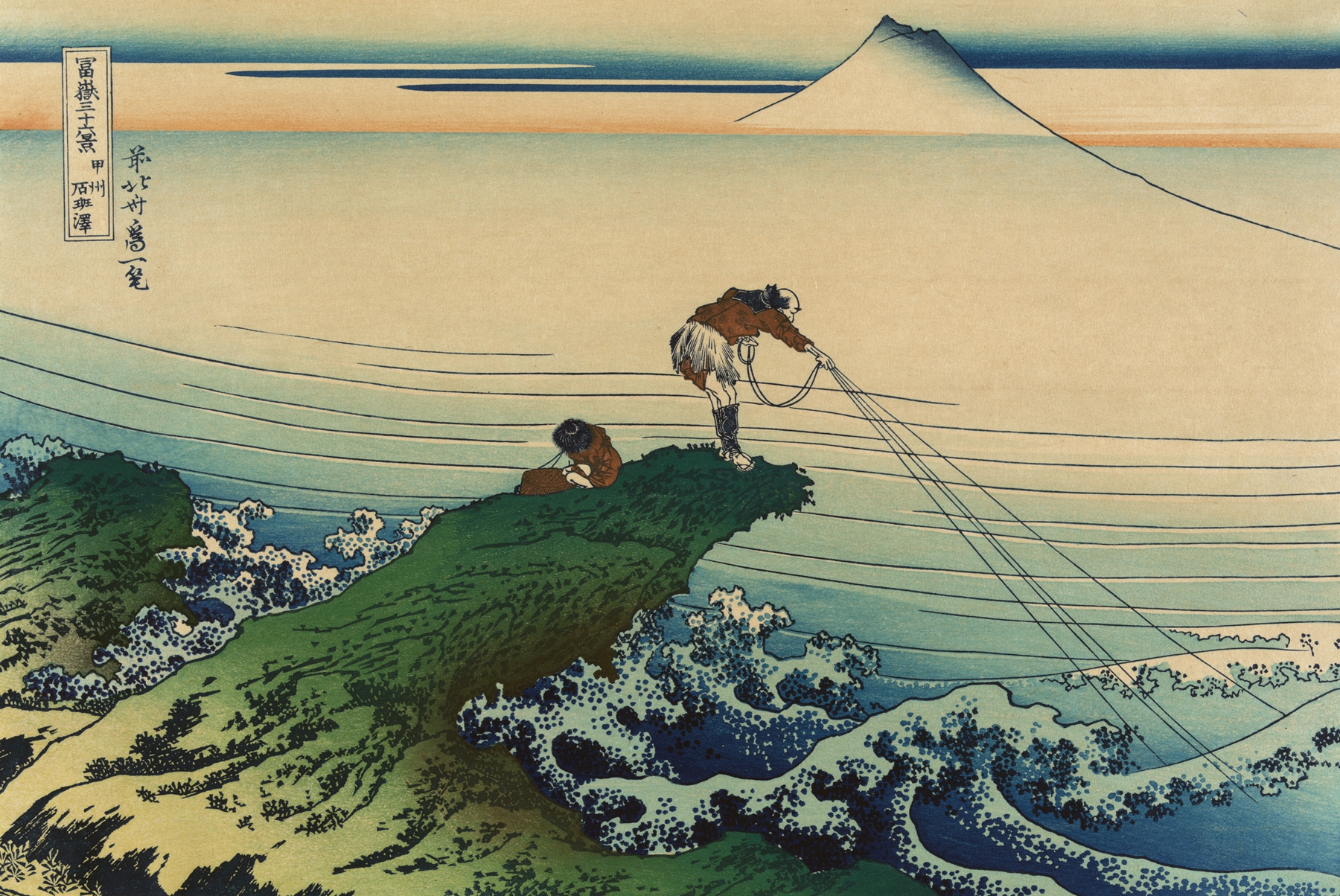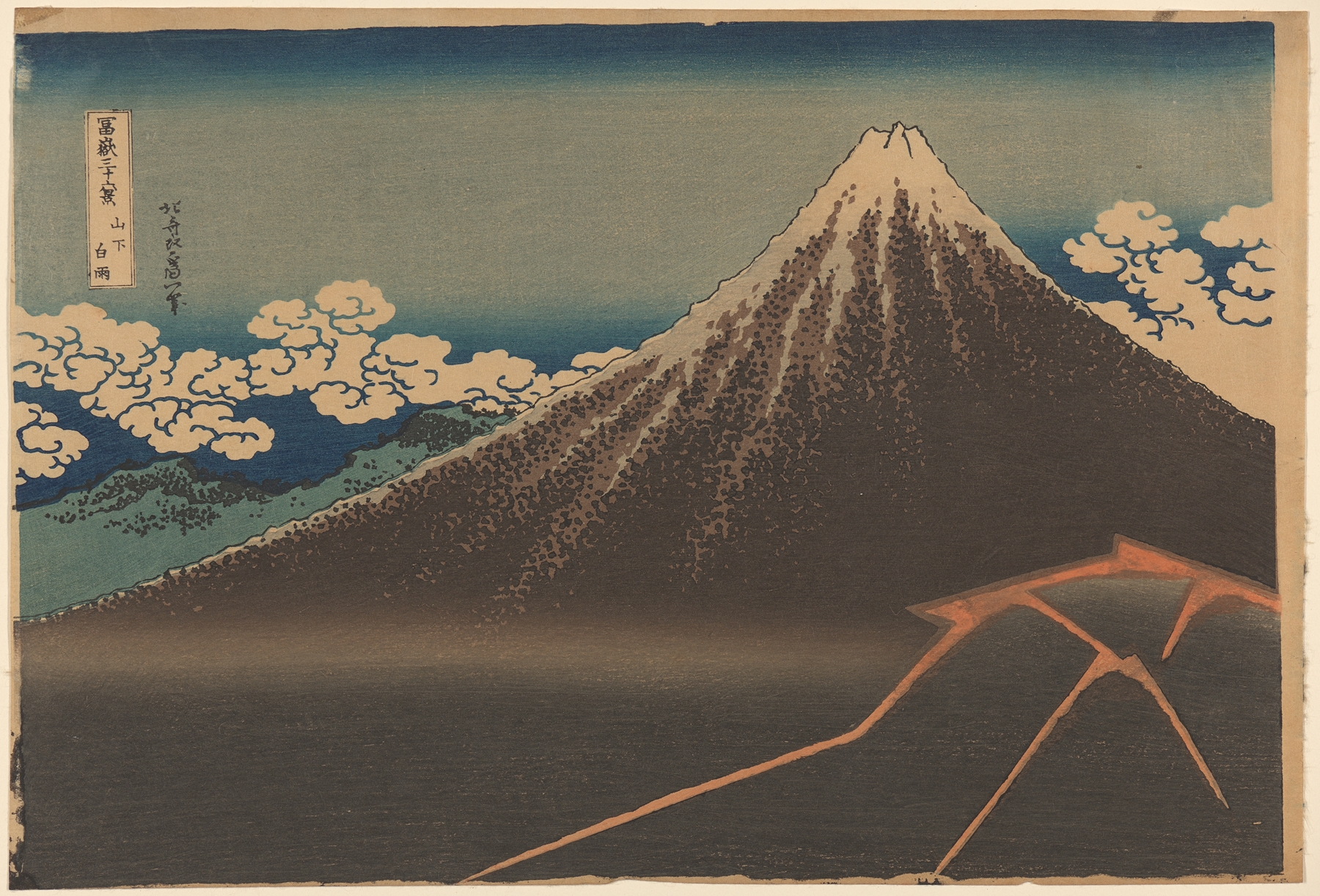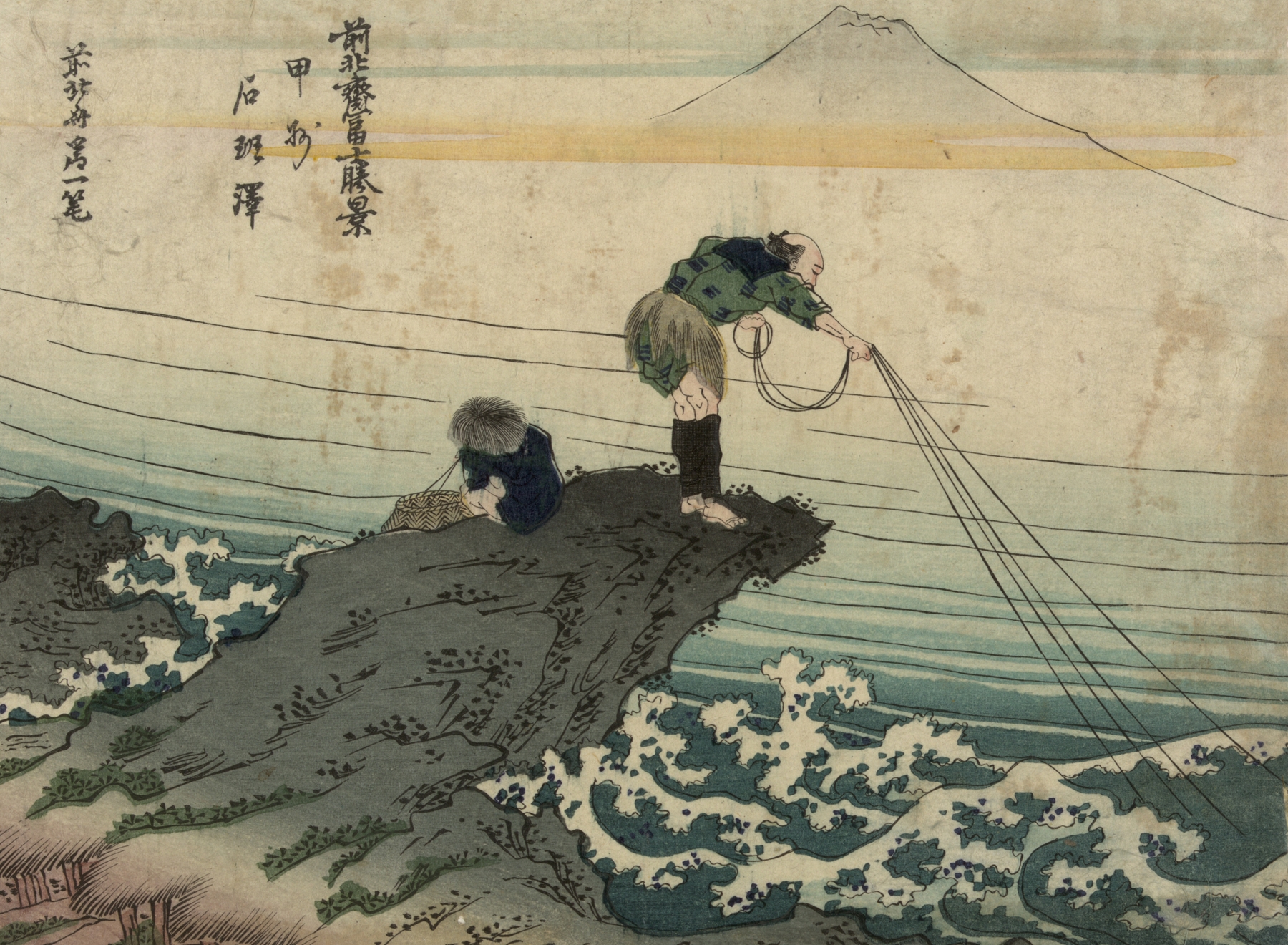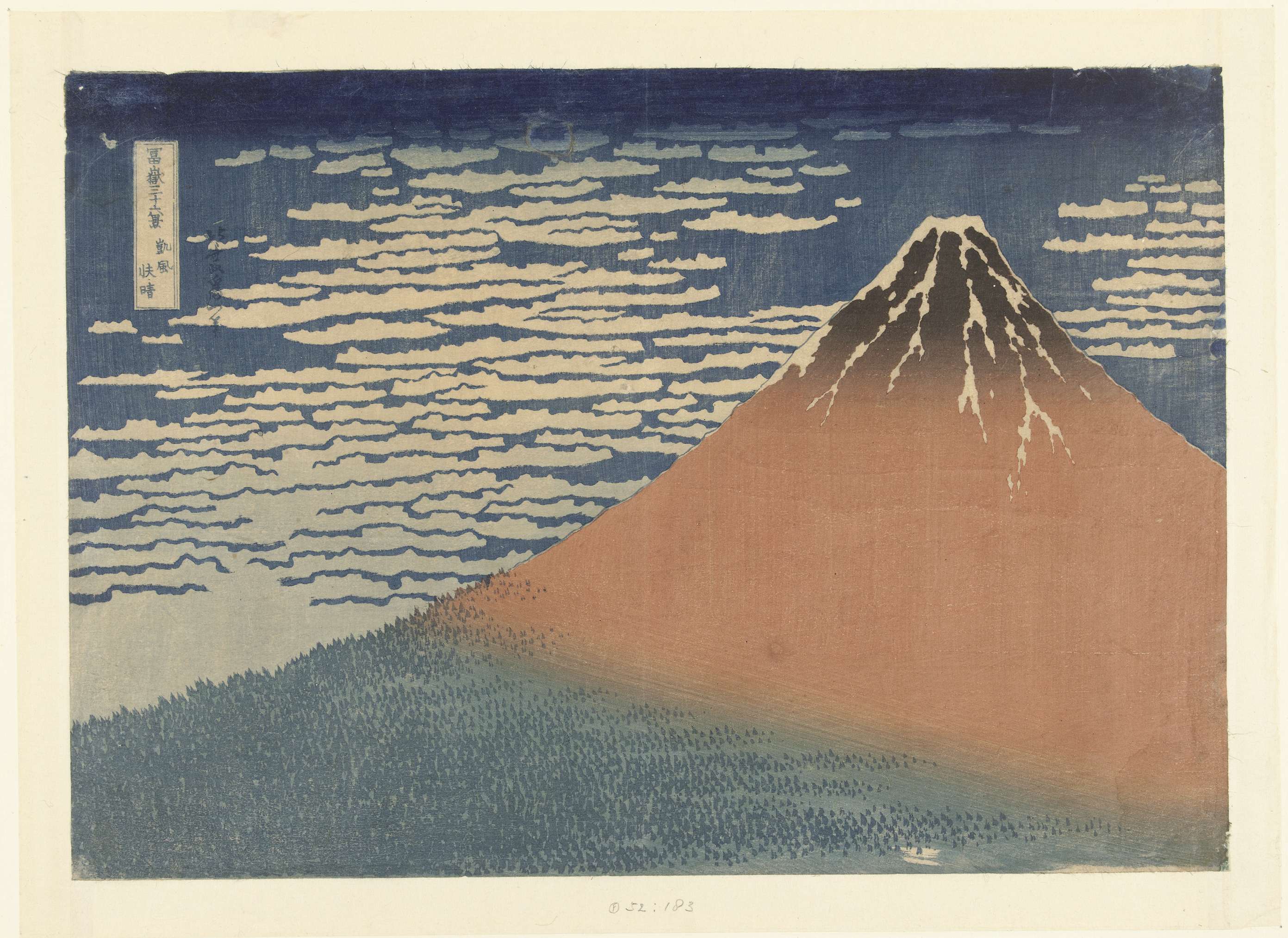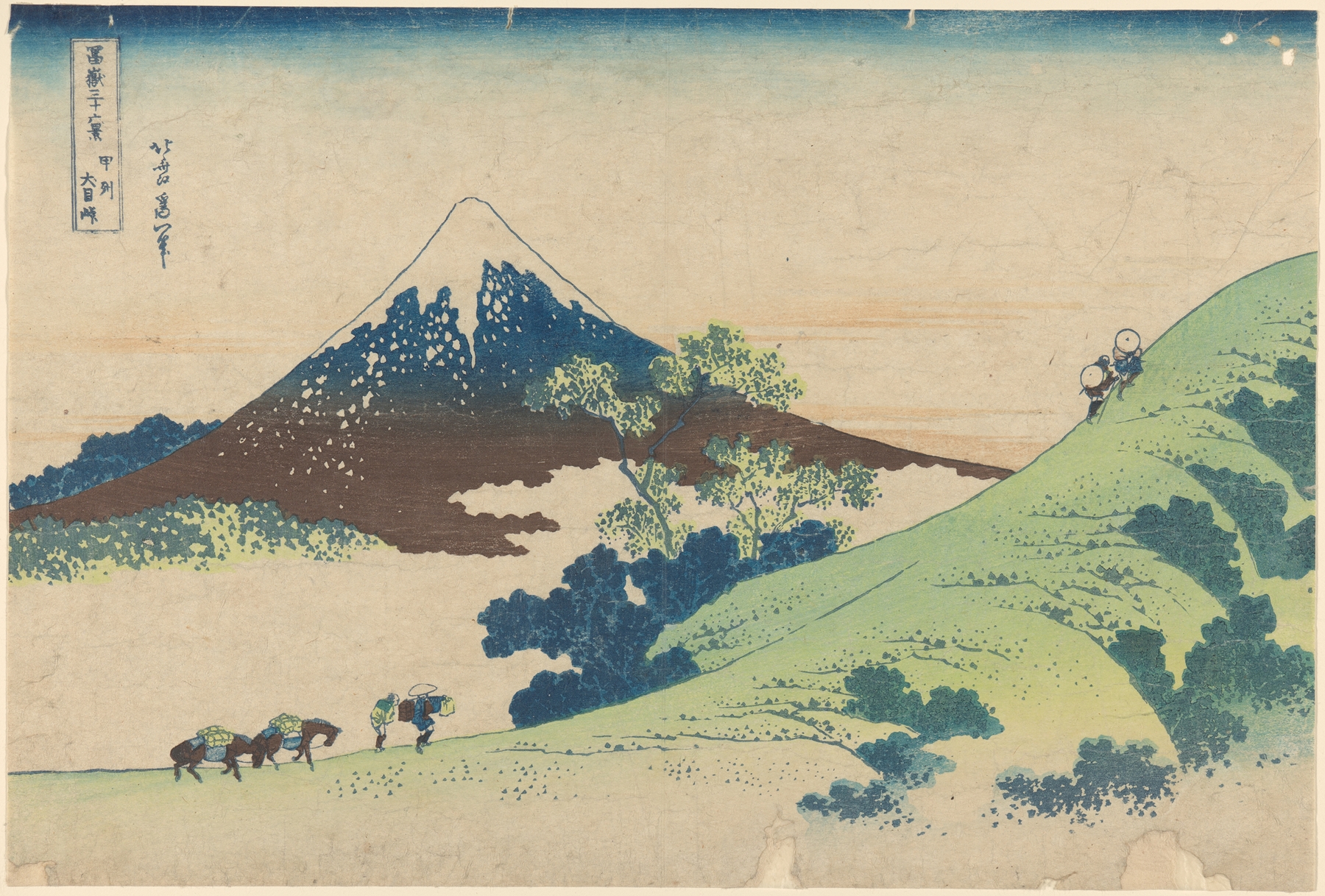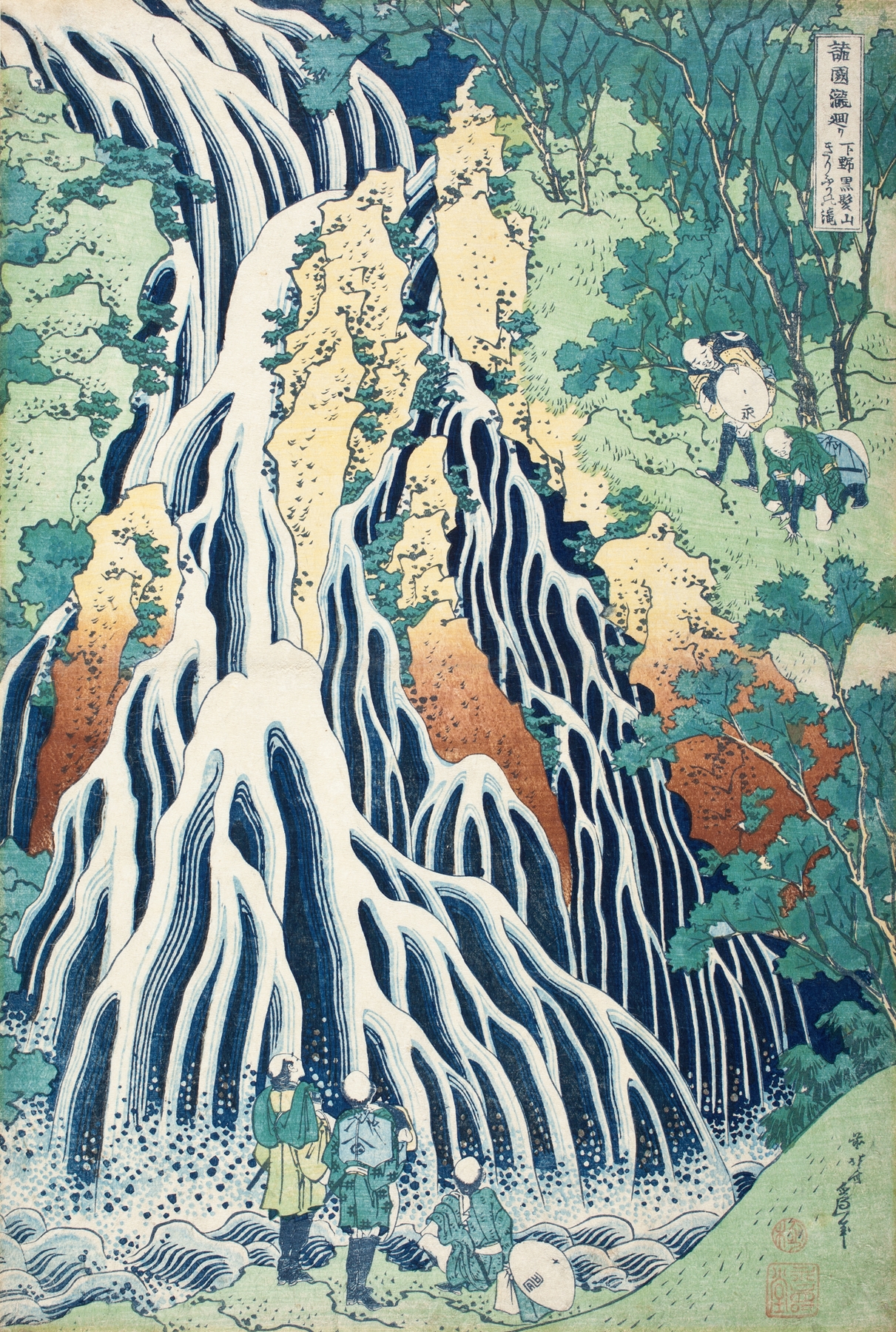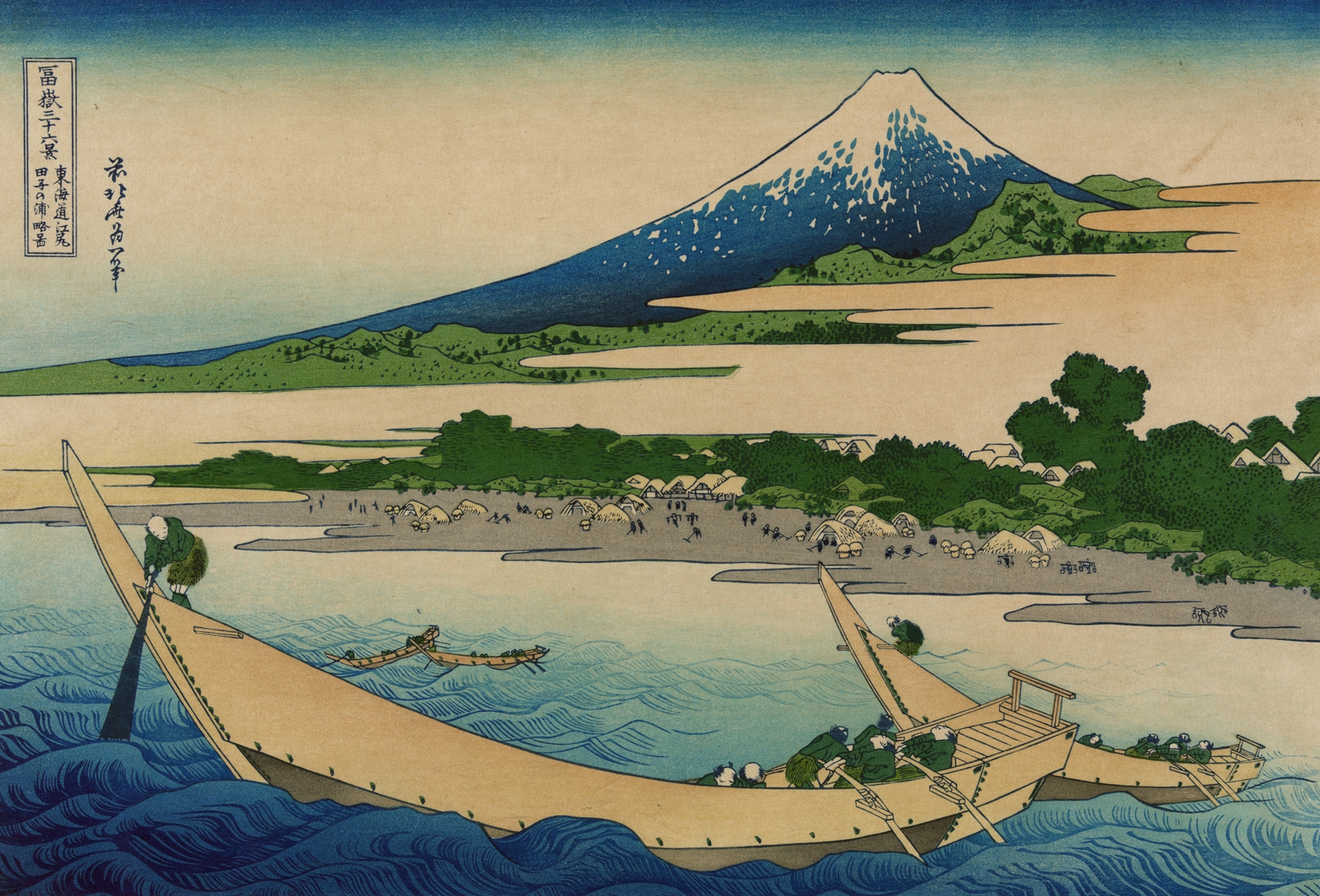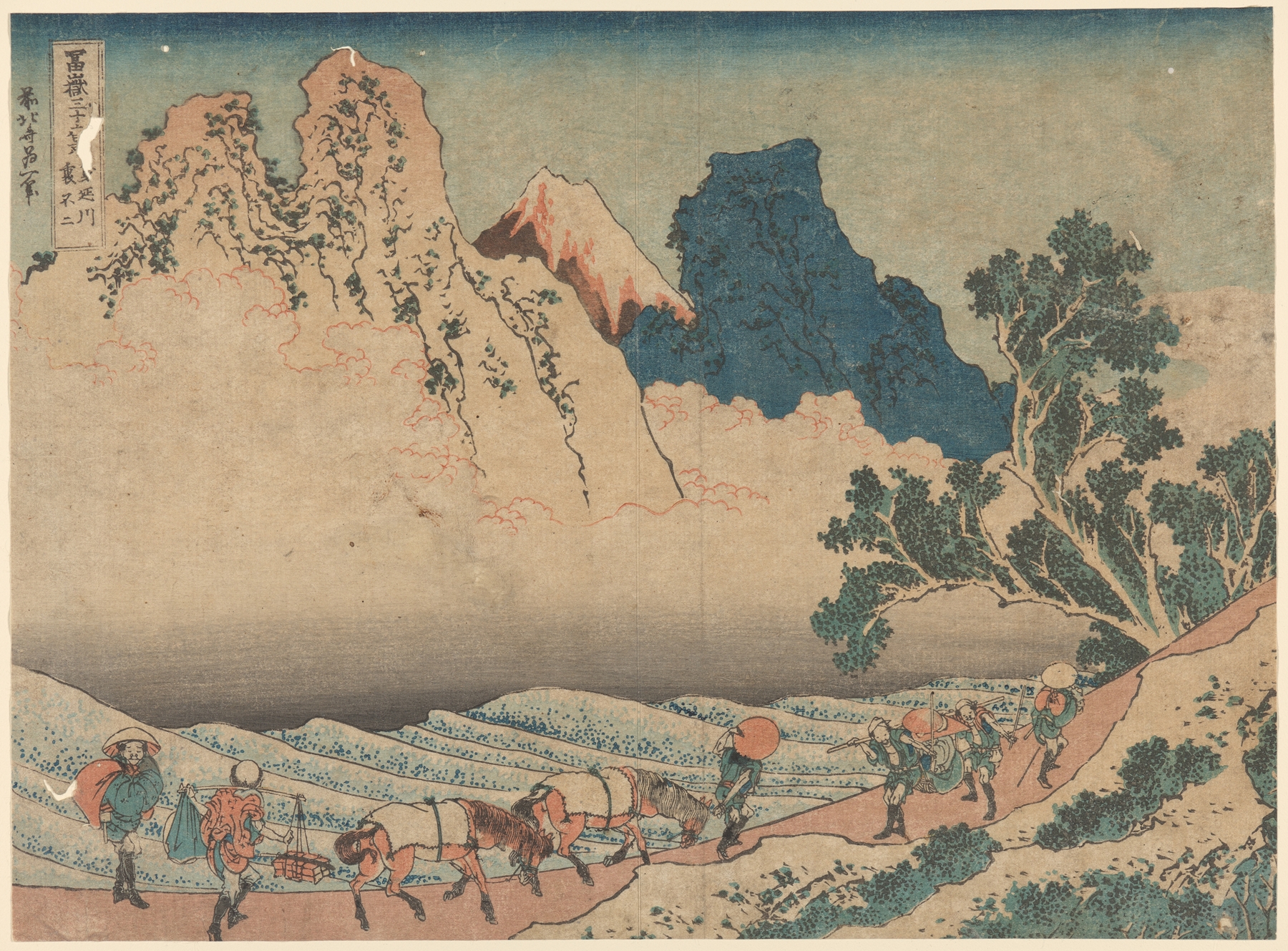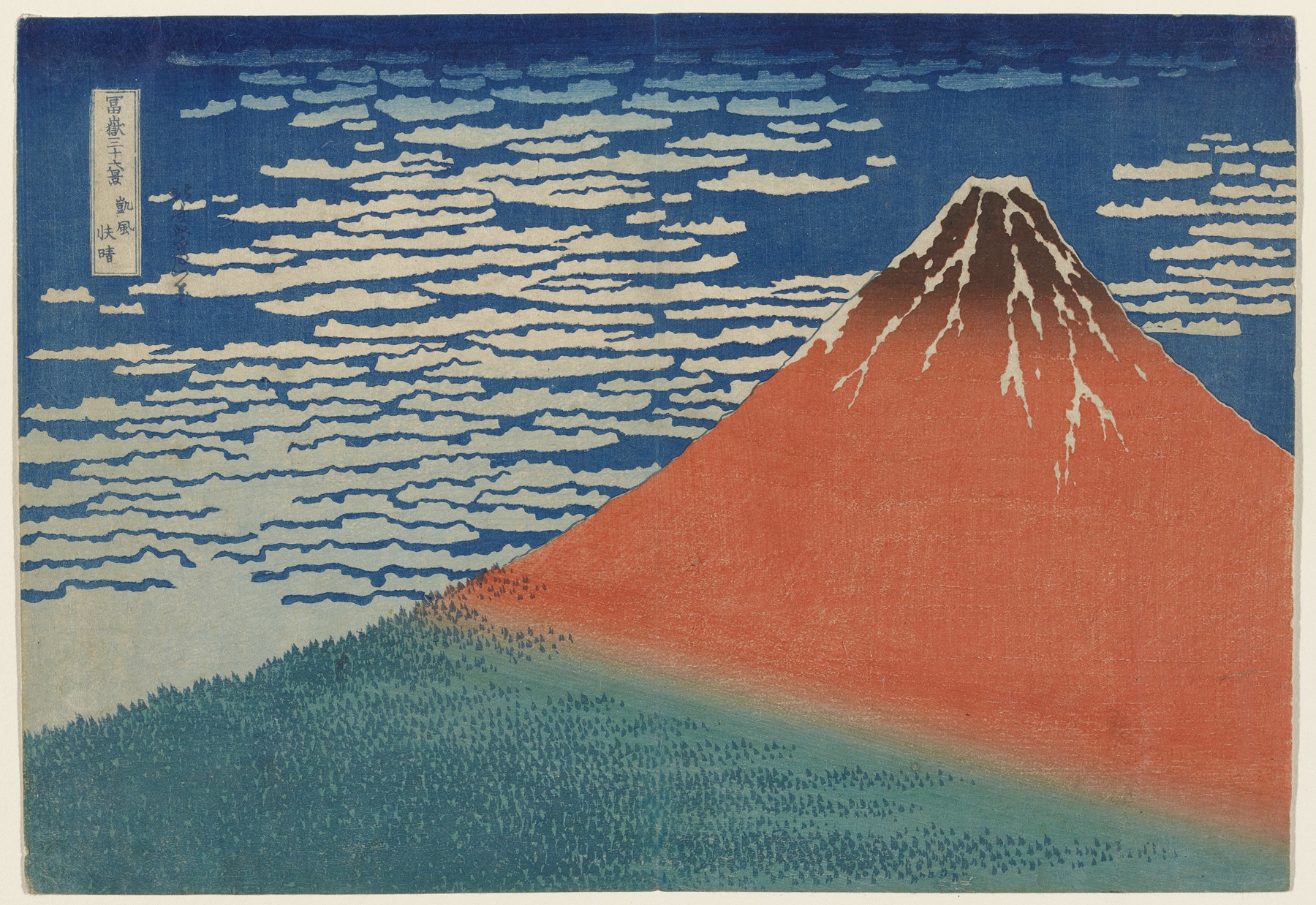
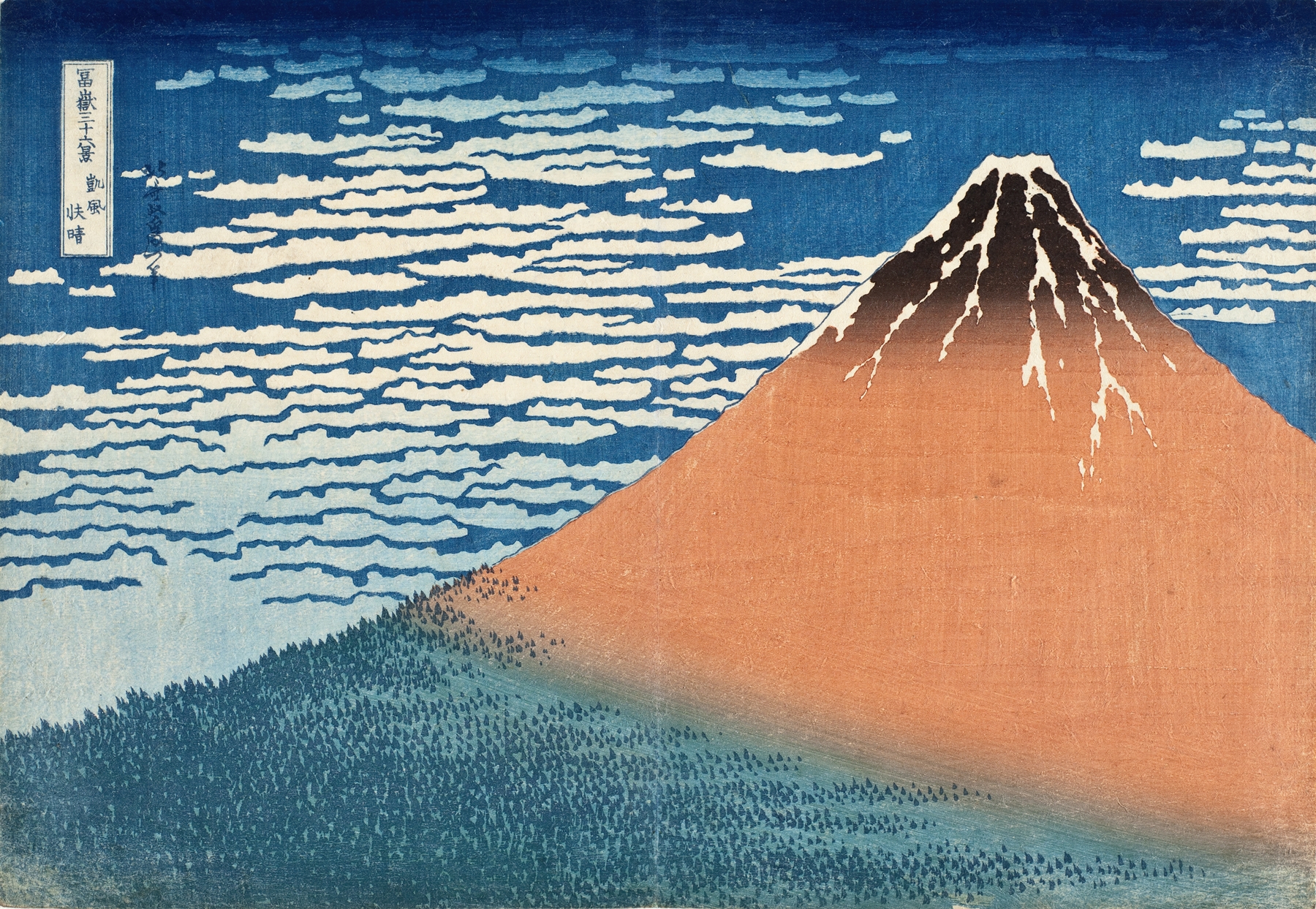
“Every silence here is a confession.” In the stillness of nature, longing breathes through the air, palpable yet elusive, inviting contemplation of what lies beyond the horizon. Look to the muted blue tones of the sky, stretching endlessly above the distant mountains. Notice how the wisps of clouds blend seamlessly with the vibrant greens of the landscape below, creating a harmonious gradient that pulls the eye outward. The careful placement of figures—fishermen in their boats, their oars delicately casting ripples on the tranquil water—invites a sense of movement, yet everything feels suspended in a moment of serene anticipation. Hokusai’s meticulous attention to detail reveals the artist's mastery in capturing the interplay of light and shadow, evoking a world beyond mere observation. Within this tranquil scene, contrasts emerge—the tension between stillness and action, nature and humanity. The fishermen’s quiet labor speaks to an age-old connection with the earth, while the expansive sky suggests an infinite longing, a space that yearns to be explored. Each brushstroke speaks to both the mundane and the sublime; it becomes a reflection on the ephemeral nature of life and the dreams that linger just out of reach. During the early 1830s, Hokusai was experiencing both personal challenges and artistic evolution. Living in Edo, he grappled with financial pressures and the death of loved ones, yet this period also saw him revitalizing his vision, moving towards landscapes that combined realism with imagination. Emerging from the shadows of his earlier ukiyo-e prints, *South Wind, Clear Weather* embodies this transitional phase, offering a glimpse into his profound engagement with the world around him and the eternal human quest for fulfillment.