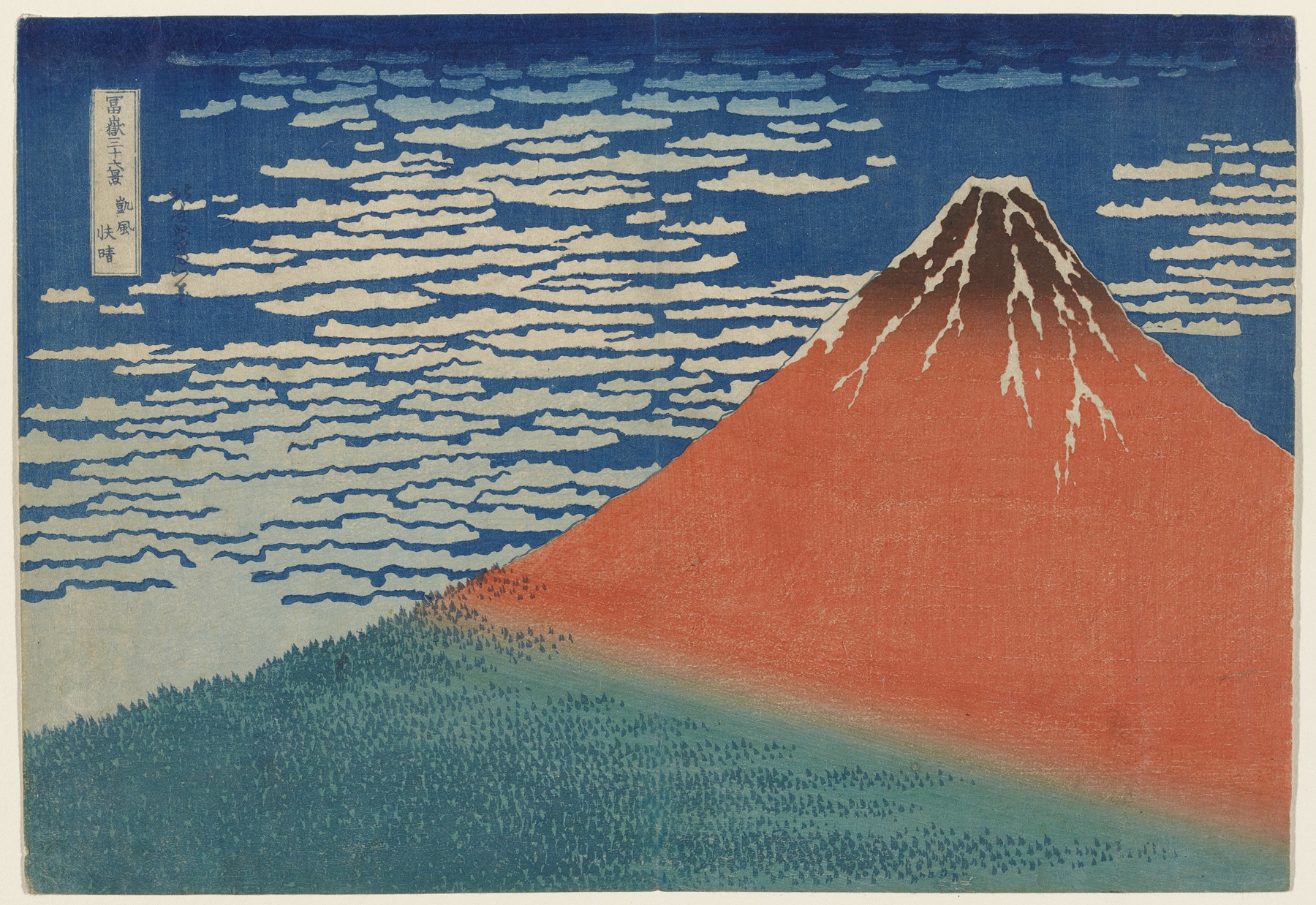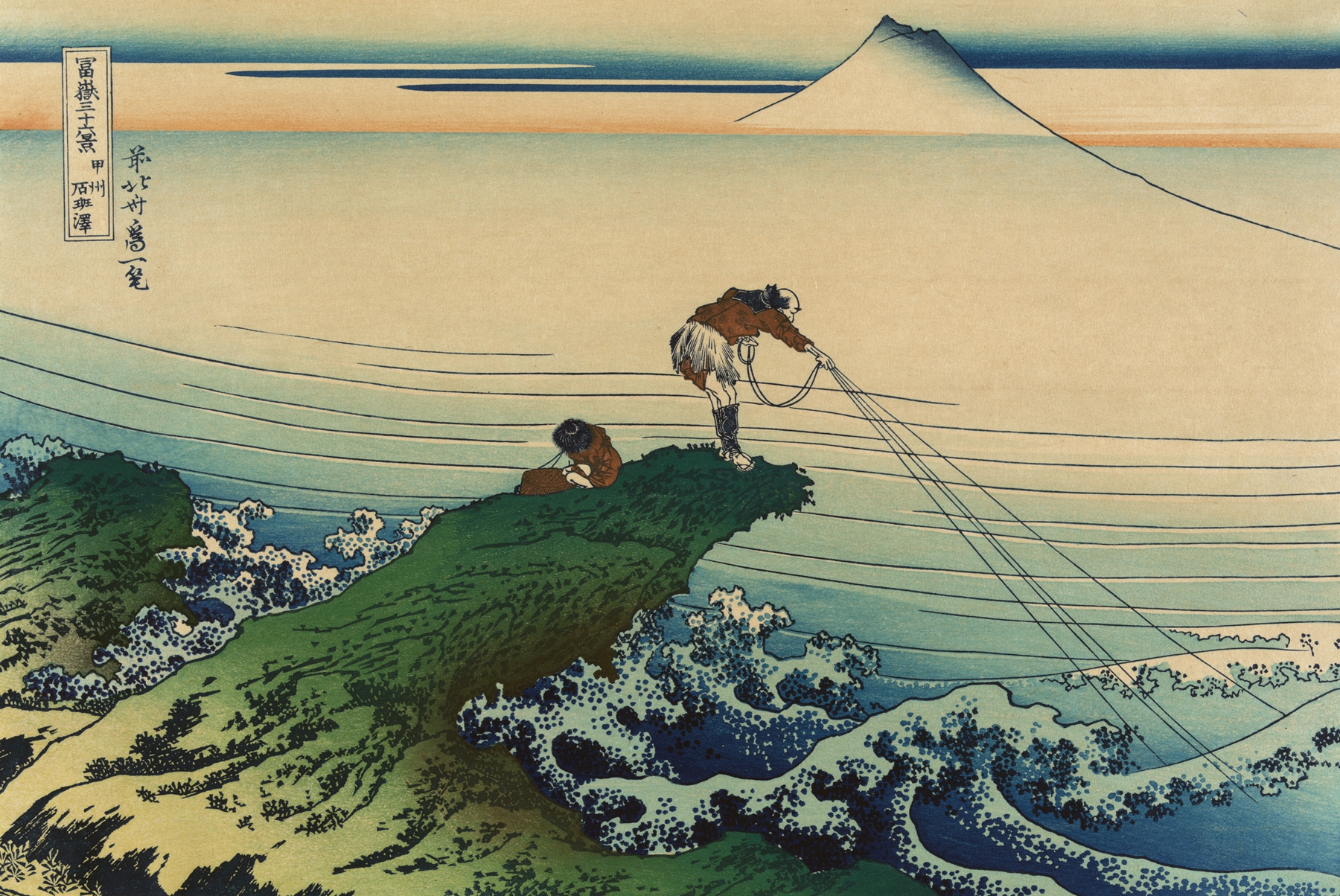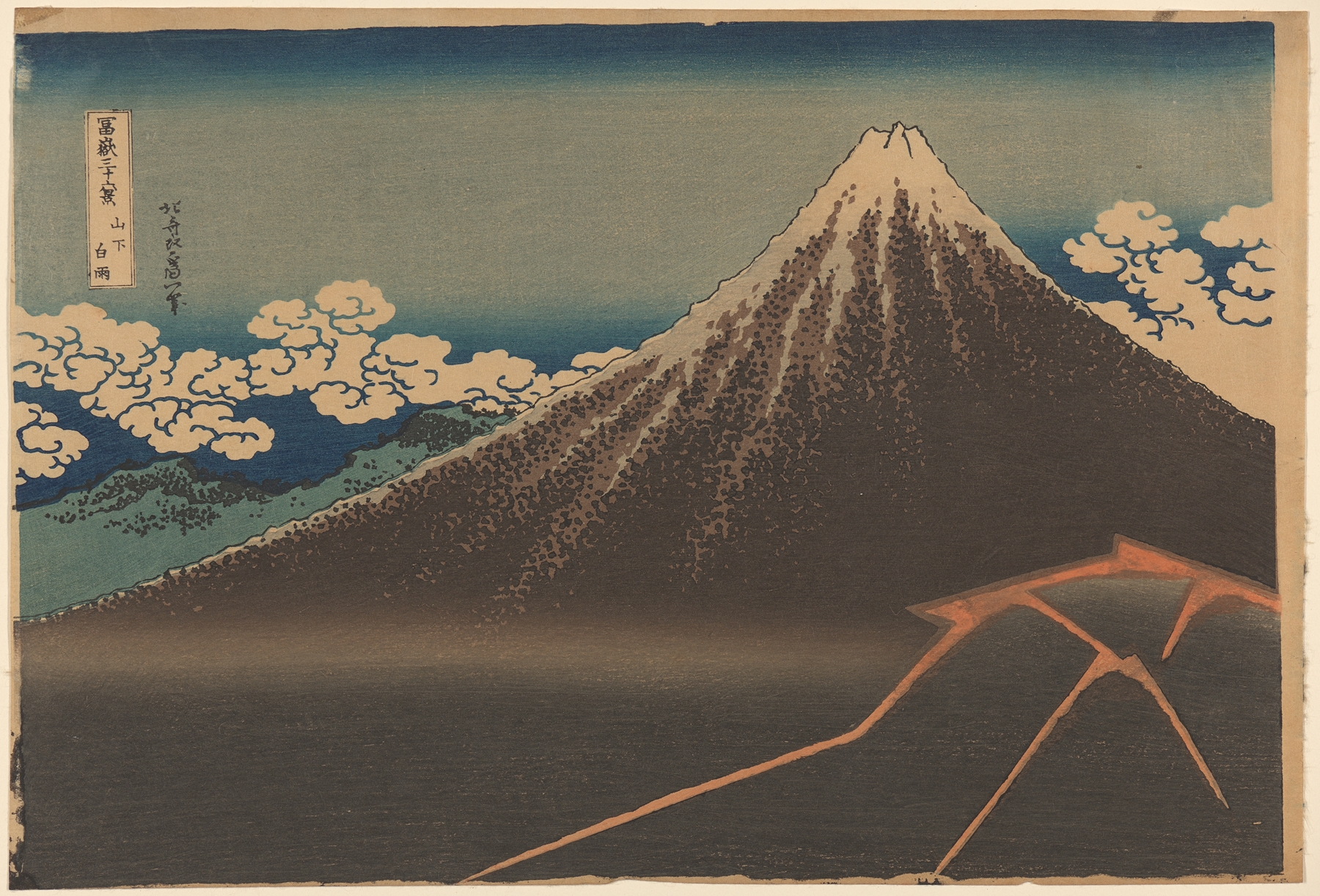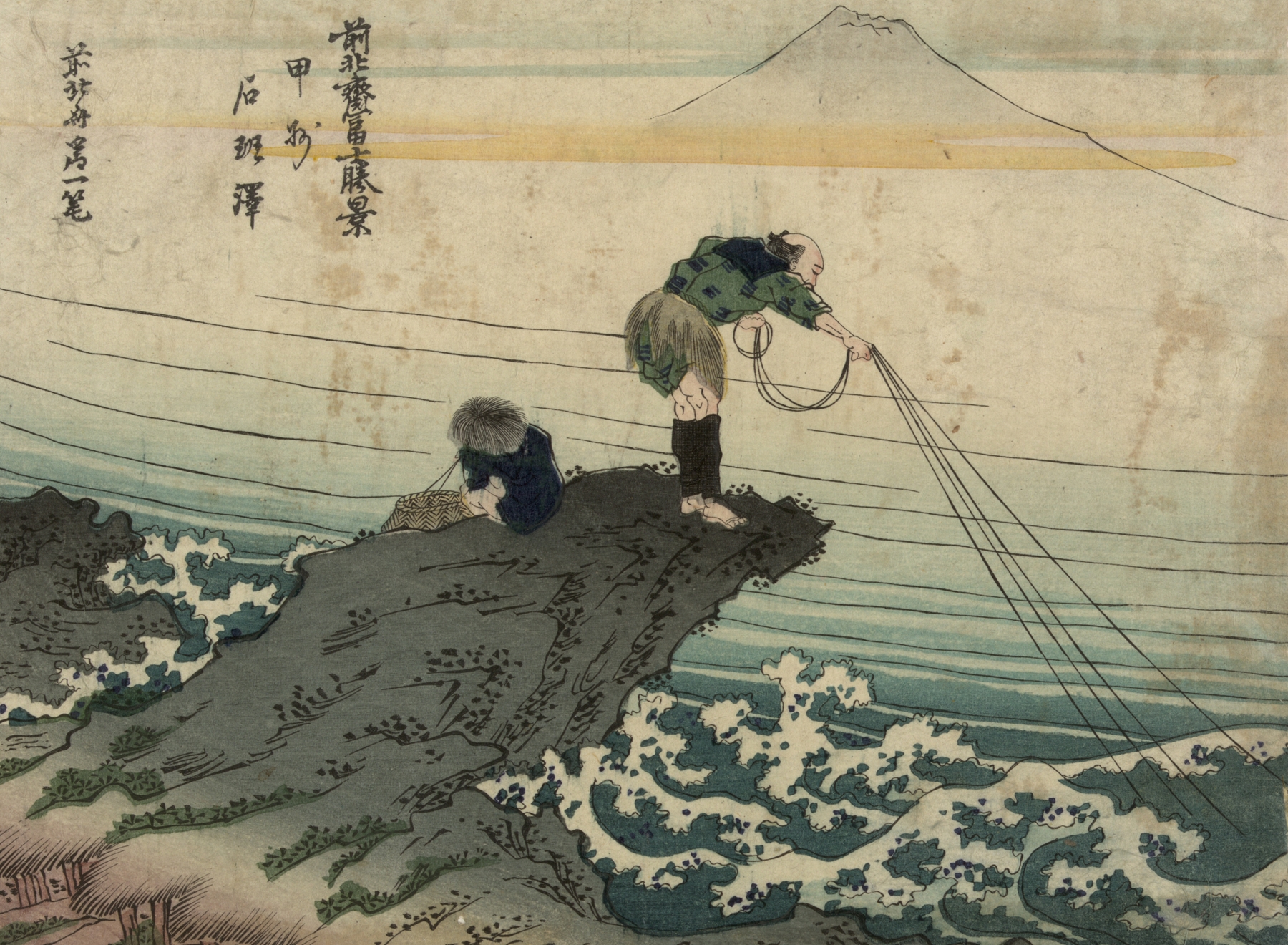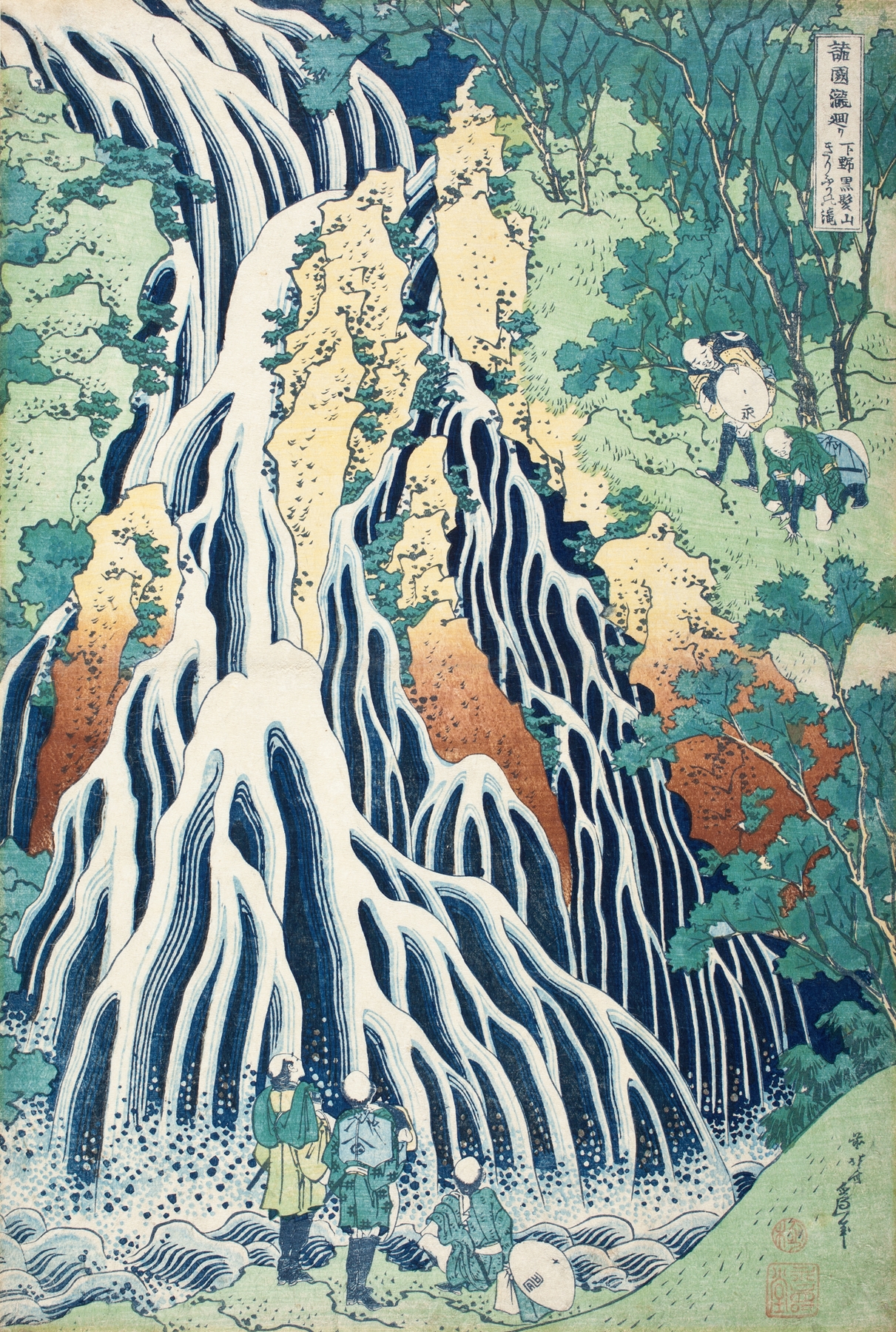
Who listens when art speaks of silence? In *Falls of Kirifuri at Mt. Kurokami, Shimotsuke Province*, the artist captures the thunderous yet serene dialogue between nature and emotion, where violent waters cascade down the rocks, and the tranquility of the landscape lays bare an unspoken tension. Look to the upper left, where the waterfall plunges into the depths below, swirling with energy and intensity. The dynamic lines of the cascading water draw your eyes downward, contrasting with the calm, verdant mountainside that cradles it. Notice how the subtle shades of blue and green entwine, suggesting both vibrant life and the shadows of encroaching chaos. Hokusai's use of color creates a sense of depth, inviting the viewer into a world that feels both inviting and fraught with the potential for unrest. Delving deeper, the artwork suggests a duality of existence. The roaring falls symbolize nature’s raw power, yet the surrounding landscape conveys a sense of peace—an irony that hints at the violence often found in one's inner world. The juxtaposition of turbulent water against the stillness of the trees and sky evokes a tension between chaos and calm, whispering of struggles that resonate within the viewer. Such contrasts compel reflection on the violent realities that inhabit our own lives, suggesting that even within beauty, there lies an undercurrent of turmoil. Katsushika Hokusai created this piece in 1832 during a period marked by both personal and artistic transformation. Living in Edo, he was exploring new styles, moving away from traditional Ukiyo-e to invigorate his art with unprecedented depth and emotion. This era of Japanese printmaking was flourishing, yet Hokusai's focus on nature and the human condition would lay the groundwork for later movements, intertwining the serenity of landscape with the complexities of life.