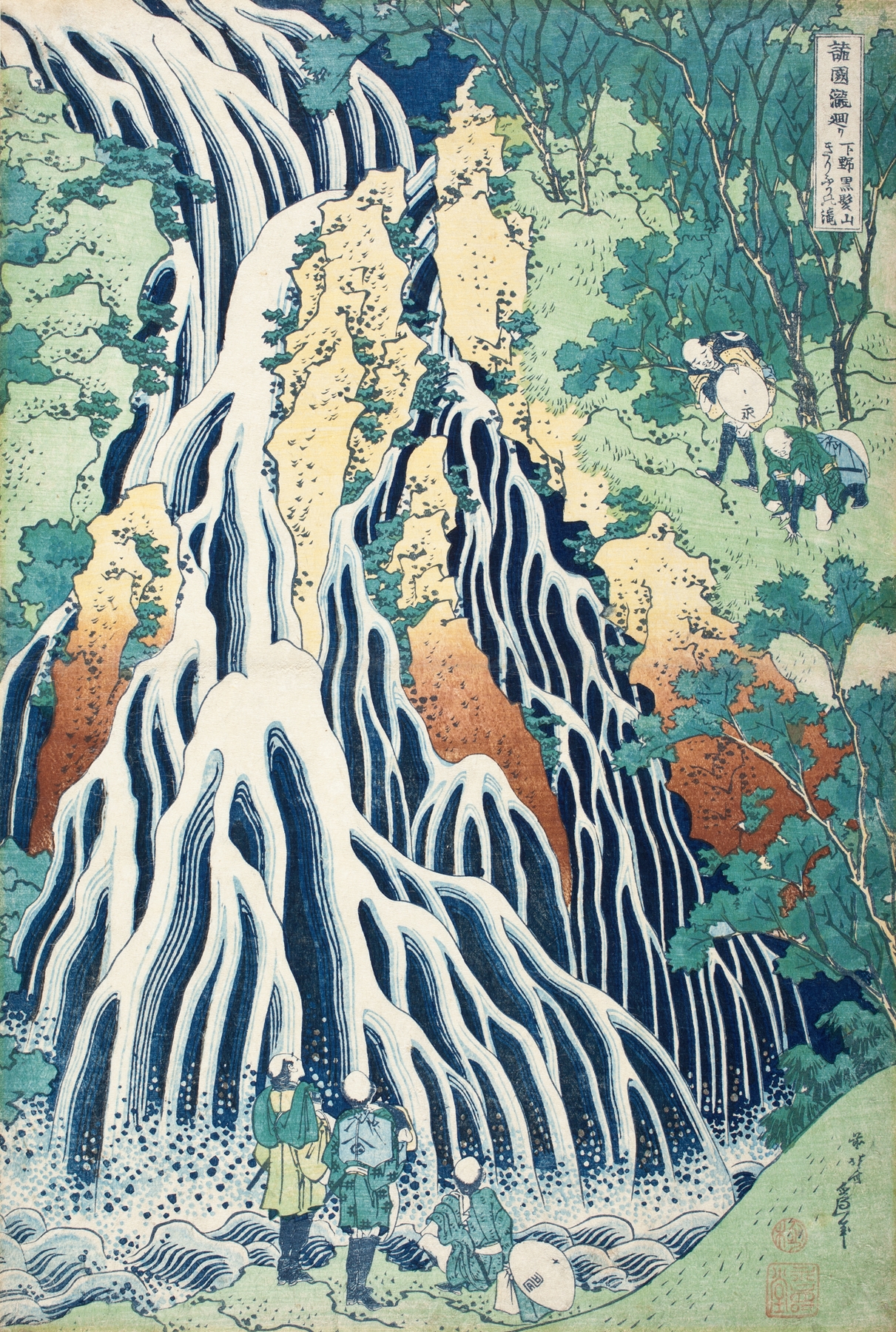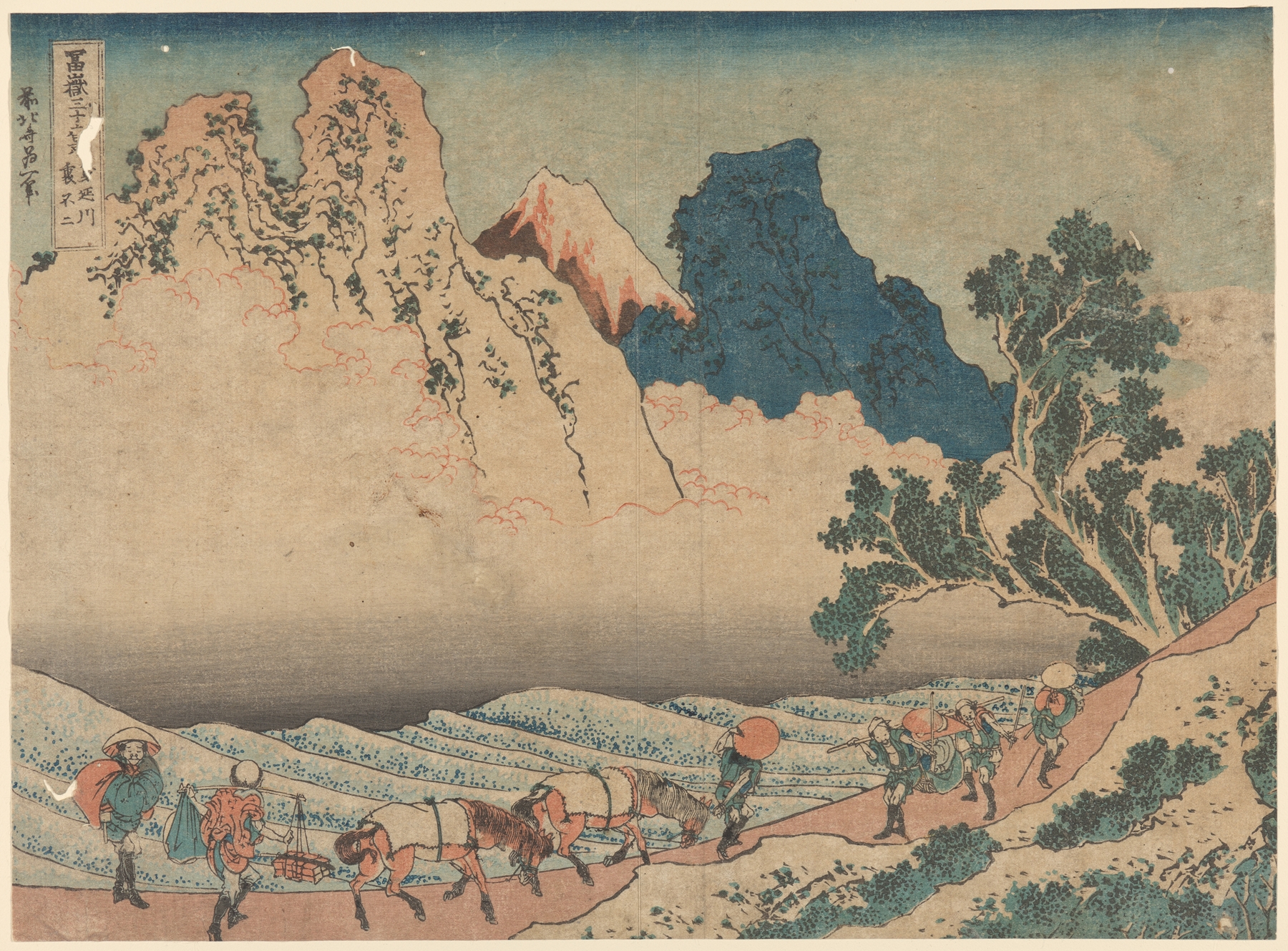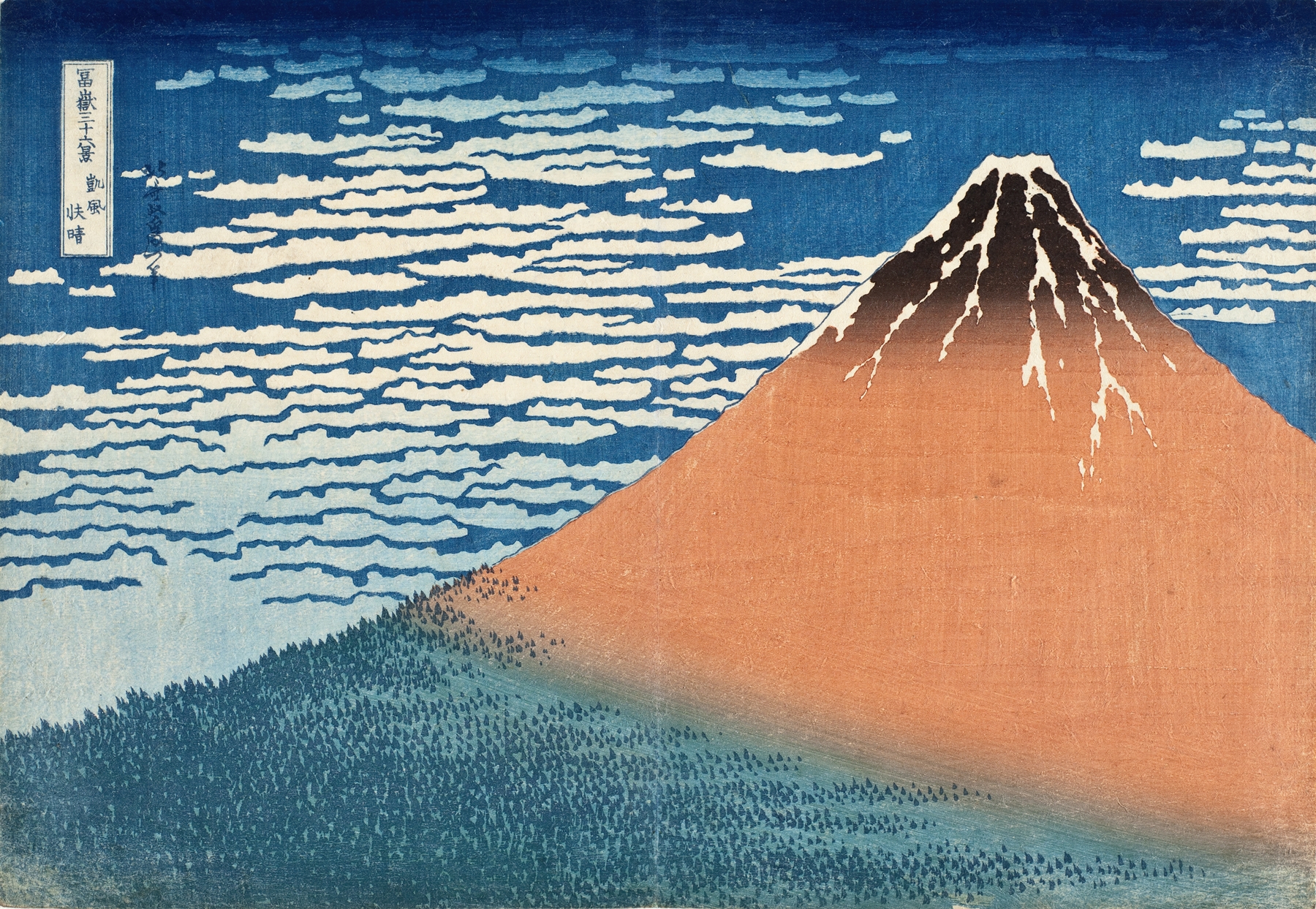
Who listens when art speaks of silence? In *Yoro Falls in Mino Province*, the viewer is beckoned into a tranquil world where nature's whispers drown out the chaos of life. Look to the left, where a group of figures is captured in quiet reverence, their bodies framing the majestic cascade of water. Notice the intricate lines and soft gradients that Hokusai employs, blending shades of blue and green to create a sense of depth and movement. The delicate detailing of the foliage and the textured rocks invites the viewer's gaze to travel down the fall, where the water seems to dance gracefully, echoing the rhythm of distant memories. Amidst the serenity lies a contrast of emotion. The figures, though small and seemingly insignificant against the grandeur of the waterfall, embody a shared experience of awe and nostalgia. The interaction between the flowing water and the solid earth symbolizes the fleeting nature of life and the permanence of memory. This juxtaposition evokes a profound sense of longing, as if the scene captures a moment suspended in time, urging contemplation of both the beauty and transience inherent in existence. In 1833, Katsushika Hokusai executed this piece during a period of innovation in Japanese art, while exploring new themes beyond traditional ukiyo-e. At this juncture, he was deeply immersed in the study of landscapes and nature, influenced by the changing cultural landscape of Japan. The series from which this work derives sought to not only depict natural beauty but also to enhance the viewer’s connection with the landscape, marking a pivotal moment in the evolution of Japanese printmaking.