Still Life — History & Analysis
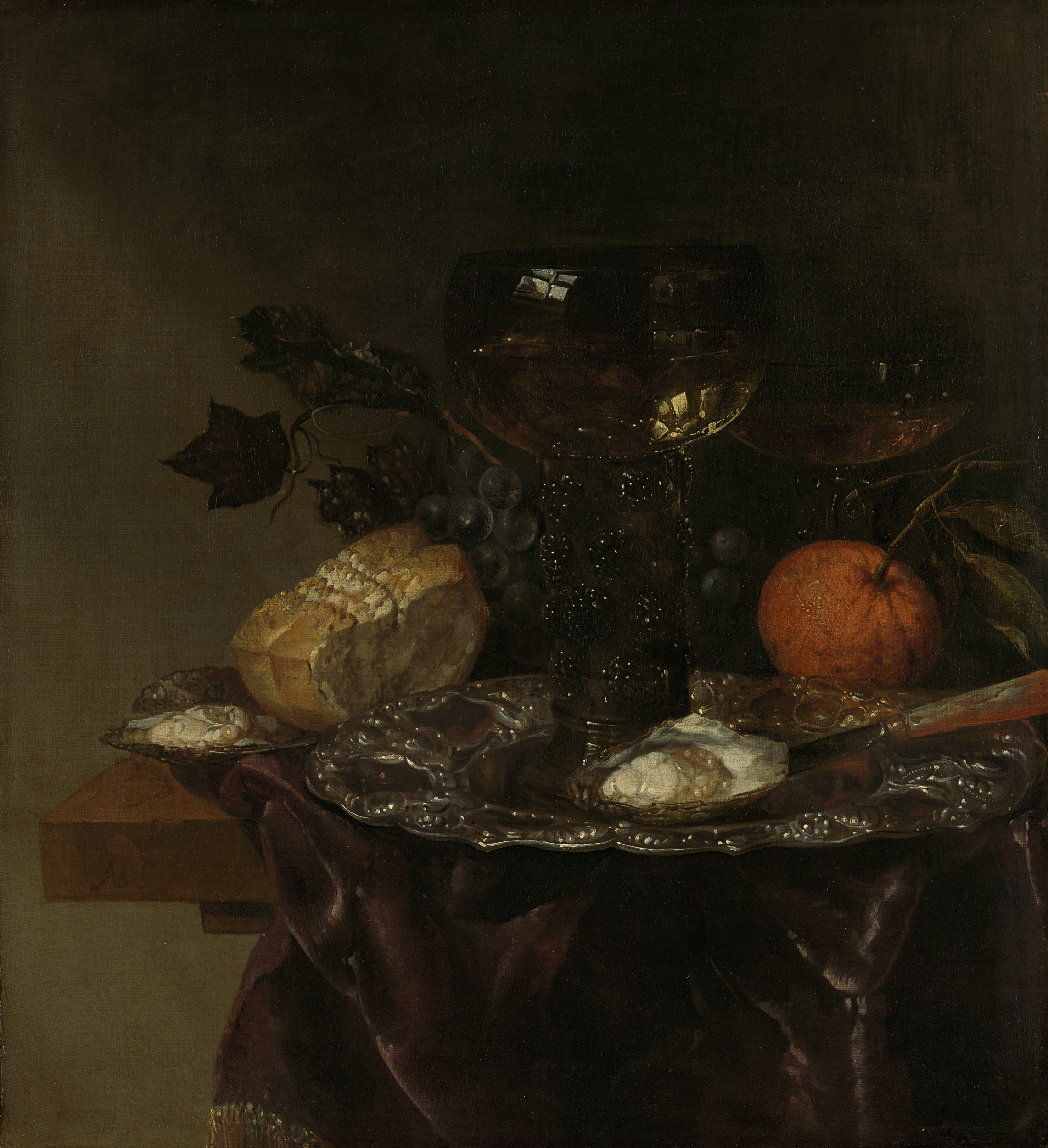
What if silence could speak through light? In the stillness of Still Life, light dances delicately across polished surfaces, whispering stories of fleeting moments and forgotten treasures. Look to the center, where a cascade of vibrant fruits and glistening glassware beckons your gaze. Notice how the sunlight penetrates the scene, casting mesmerizing reflections and shadows that add depth to the arrangement. The rich hues of ripe grapes and the golden sheen of a freshly cut lemon create a visual symphony, while the meticulous brushwork showcases the artist's virtuosity.
Each object appears almost alive, suspended in time, inviting you to explore their textures and colors. Yet, beneath this opulent display lies a poignant tension. The juxtaposition of the lavish bounty against the somber backdrop subtly hints at the transience of life. The fleeting nature of beauty is echoed in the soft decay of a single wilted flower, reminding us that even in abundance, time's passage is inevitable.
This balance between richness and impermanence reveals a deeper meditation on existence, drawing the viewer to consider their own relationship with materiality and time. Abraham van Beyeren painted Still Life in the years following 1655, a period marked by the flourishing of Dutch still-life painting. During this time, the Netherlands experienced economic prosperity, which translated into a deep appreciation for art that celebrated the beauty of everyday objects. Van Beyeren, known for his masterful technique and attention to detail, skillfully captured the essence of this moment in his work, reflecting not only the bounty of his era but also its inherent fragility.