Still Life — History & Analysis
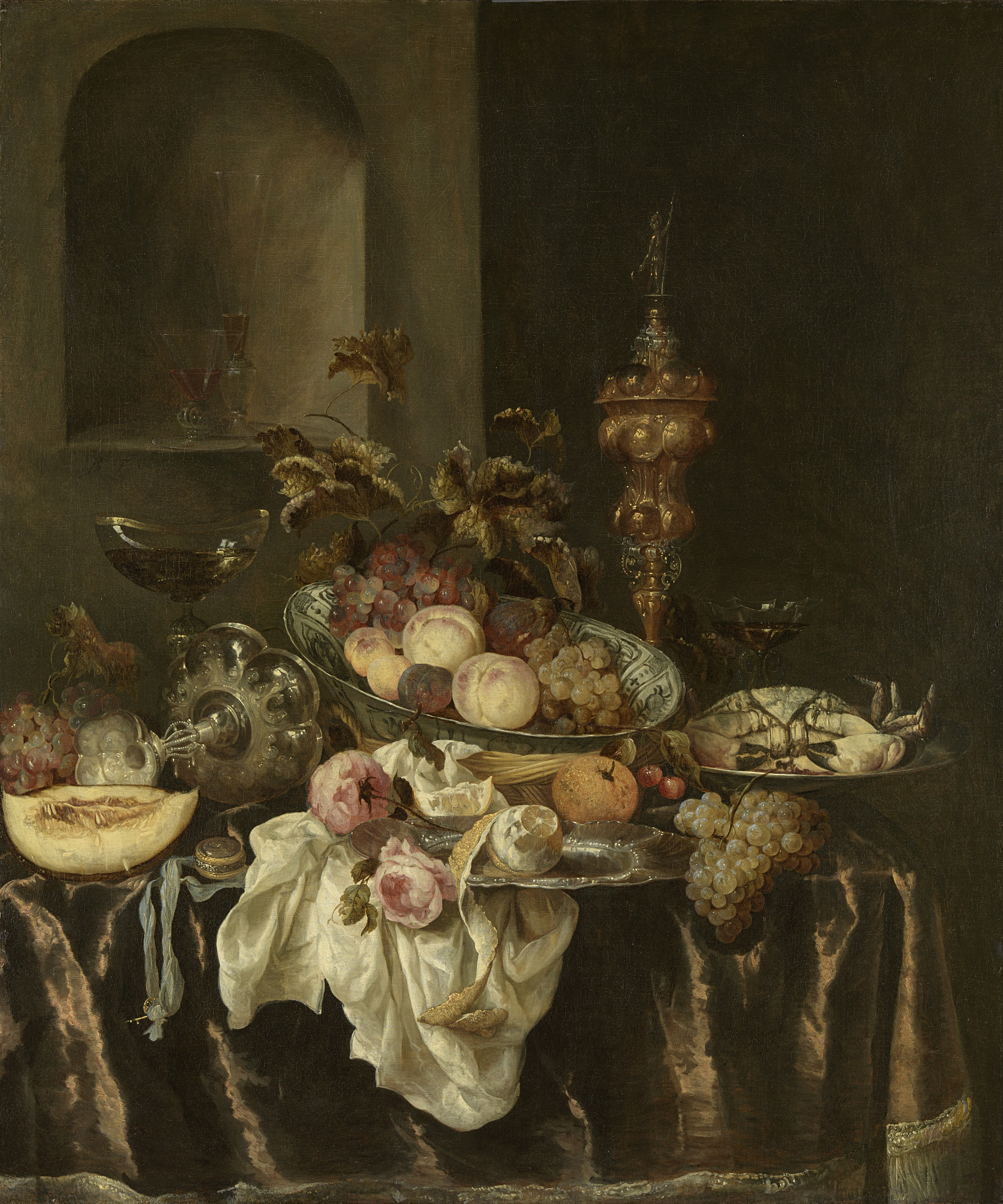
Did the painter know this moment would outlive them? In Still Life, chaos is captured with exquisite precision, transforming ordinary objects into an eternal celebration of beauty and transience. Focus first on the intricate arrangement of fruits spilling over the table's edge, a cascade of color that draws your eye into the luscious reds, deep greens, and vibrant yellows. Notice how the light falls upon each item, highlighting the glossy surface of the grapes and the feathery texture of the plums, while shadows lurk in the background, hinting at the passage of time.
The dramatic contrasts and thoughtful composition infuse the scene with a sense of richness and abundance, framing nature's bounty as both a feast and a fleeting moment. Explore the deeper tension within the painting; the meticulously painted details of decay—a bruised apple, a wilting leaf—whisper of impermanence amid the vibrancy. This interplay of abundance and decay invites reflection on life's transitory nature, prompting contemplations on beauty, mortality, and the chaos that surrounds us even in the most harmonious moments. Each object tells a story of its own, suggesting a celebration of life that acknowledges its inevitable decline.
Abraham van Beyeren painted this work during the Dutch Golden Age, a period marked by artistic innovation and a burgeoning interest in still life as a genre. In the late 17th century, he was navigating a competitive artistic landscape, influenced by the traditions of his contemporaries while simultaneously marking his own distinct path. The choice to immortalize such everyday chaos reflects the cultural fascination with the lavish displays of wealth and the ephemeral nature of existence, offering a contemplative escape from the tumult of daily life.