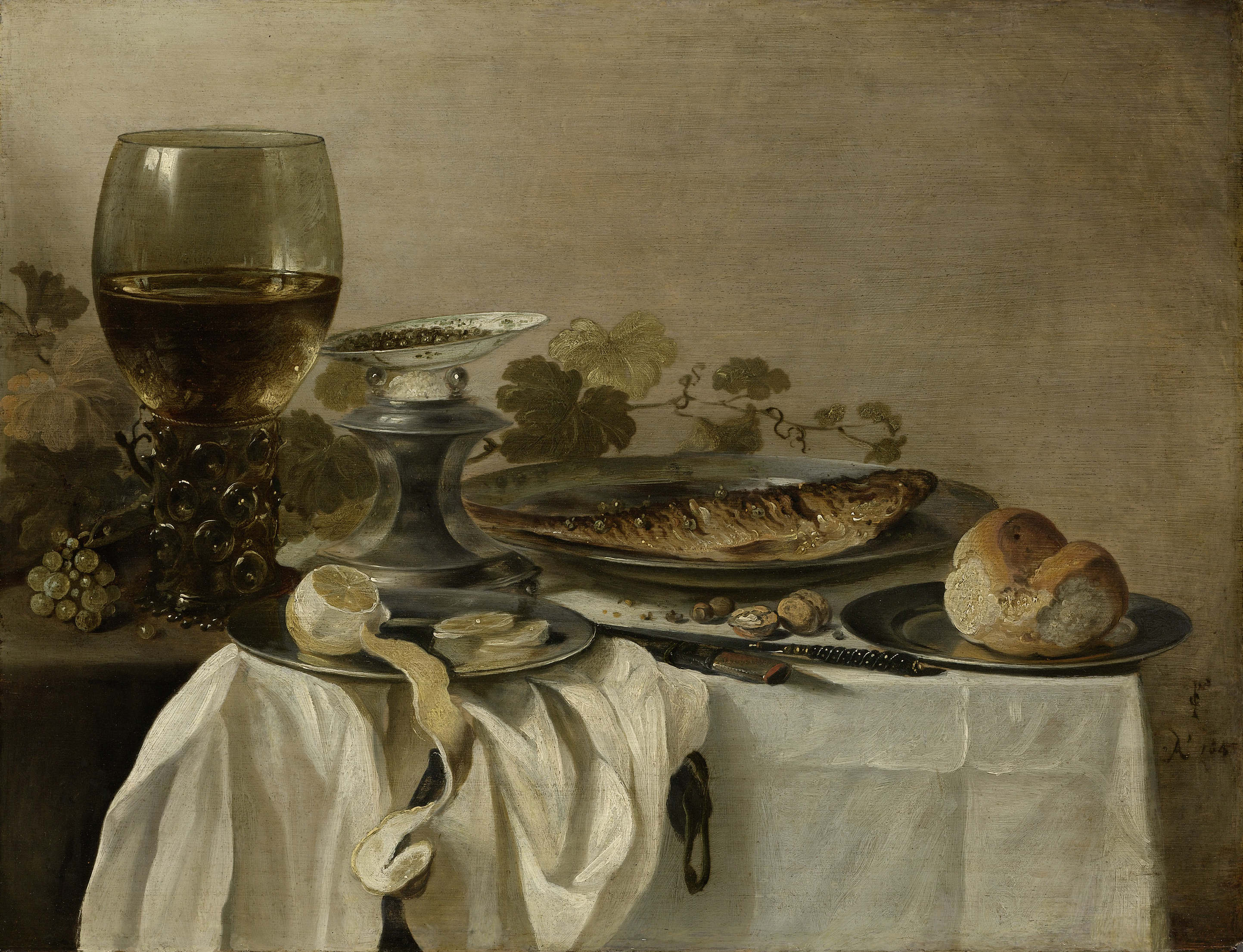

“To paint is to remember what time wants us to forget.” In the stillness of *Still Life with a Fish*, a silent conversation unfolds between forgotten moments and the weight of existence. The objects meticulously arranged in this 1647 masterpiece tell stories lost to the passage of time, holding secrets that linger in the air like an unsaid farewell. Look to the left at the glimmering fish, its scales catching the light in such a way that they shimmer with life, despite its lifelessness. Notice how the transparent glass of the wine goblet reflects the soft illumination, creating an interplay of light and shadow that draws the eye deeper into the composition. Each object, from the finely woven plate to the dark, rich cloth beneath, shares a symbiotic relationship, color choices that evoke both richness and decay—deep umbers and soft whites punctuate the scene, inviting contemplation. Yet, beneath this serene surface lies an emotional tension. The fish, a token of life now transformed into a still image, contrasts sharply with the lushness of the feast around it, hinting at themes of mortality and the ephemeral nature of pleasure. The quietness of the arrangement creates a meditative space where the viewer is invited to ponder not only what is present but also what is inherently absent—time itself ticking away unnoticed. Pieter Claesz created this work in the Netherlands during a time when still life became a significant genre, reflecting the burgeoning middle class's wealth and interests. He was known for his ability to imbue ordinary objects with a sense of grace, and in the mid-17th century, as the art world was shifting towards realism, his mastery allowed him to capture both the elegance and the transience of life through the humble subjects he painted.