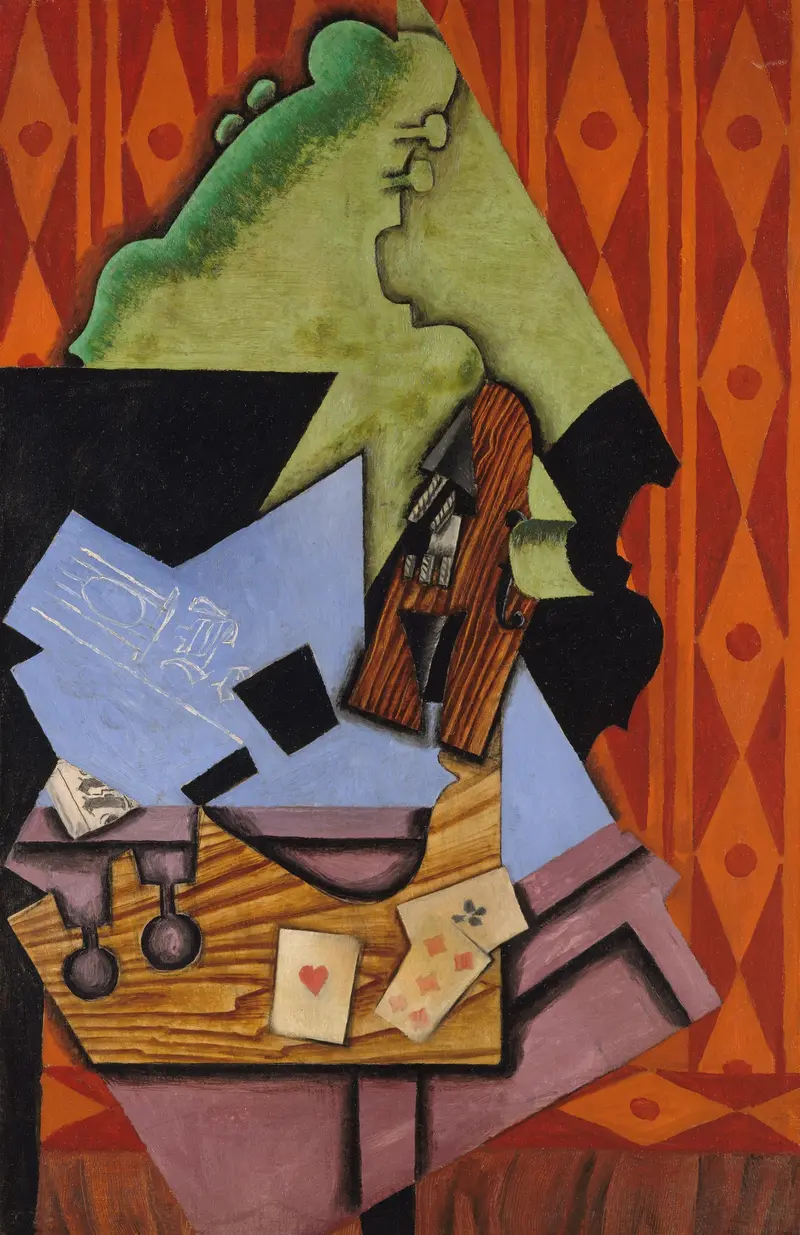
Public domain · Free to download
Famous Still Life Paintings
We curated the 25 most famous still life paintings of all time, from Van Gogh's Sunflowers and Caravaggio's Basket of Fruit to Cézanne's apples, and added the best of the rest: Van Gogh still lifes, famous still life paintings of flowers, of food and fruit, and vanitas paintings with skulls.
For each one you get what it shows, what the objects mean, a detail to look for and where to see it today. Every image is a public-domain reproduction of the real painting, free to download and free to use.
A still life looks simple: a few flowers, some fruit, a skull. But for four centuries painters used these quiet subjects to show off their skill, to remind us how short life is and, from Cézanne to the Cubists, to reinvent painting itself. Some of the finest were painted by women, from Clara Peeters to Margareta Haverman.
Selected and written by Pavel MazuelasUpdated October 29, 2026
Part of The Most Famous Paintings in the WorldRelated: Botanical Art: Vintage Botanical Prints, Famous Animal Paintings
The 25 most famous still life paintings of all time
Ranked from 1 to 25 by worldwide fame. Click any painting to see it up close and download it free.
No. 1Post-Impressionism
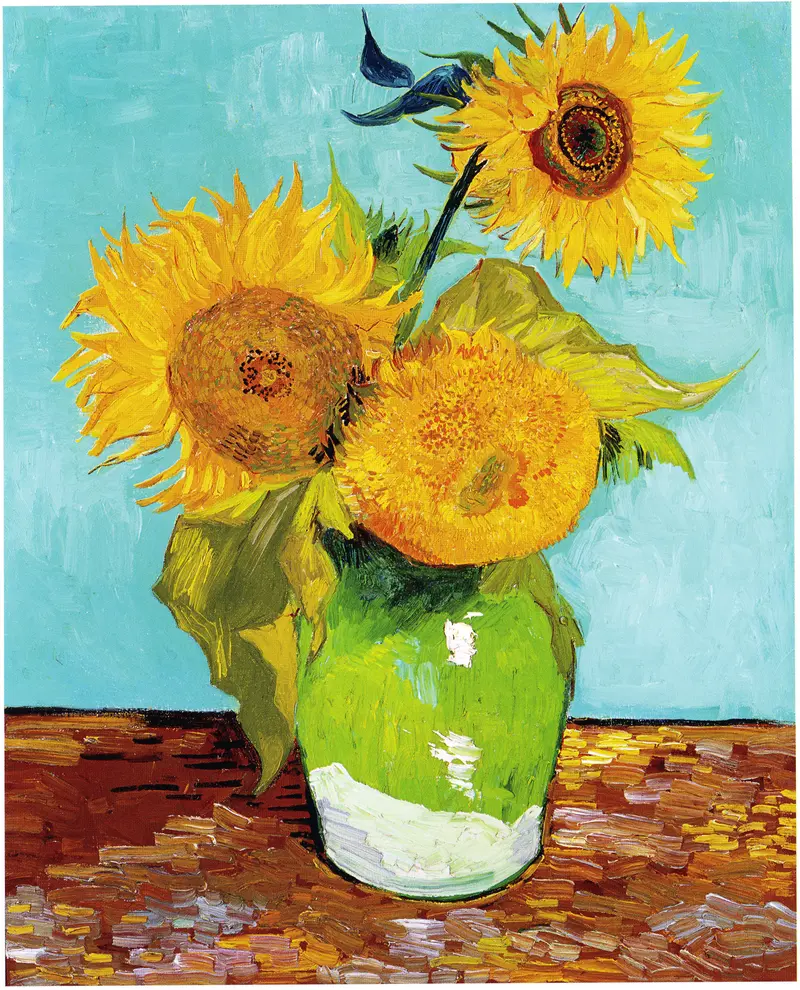
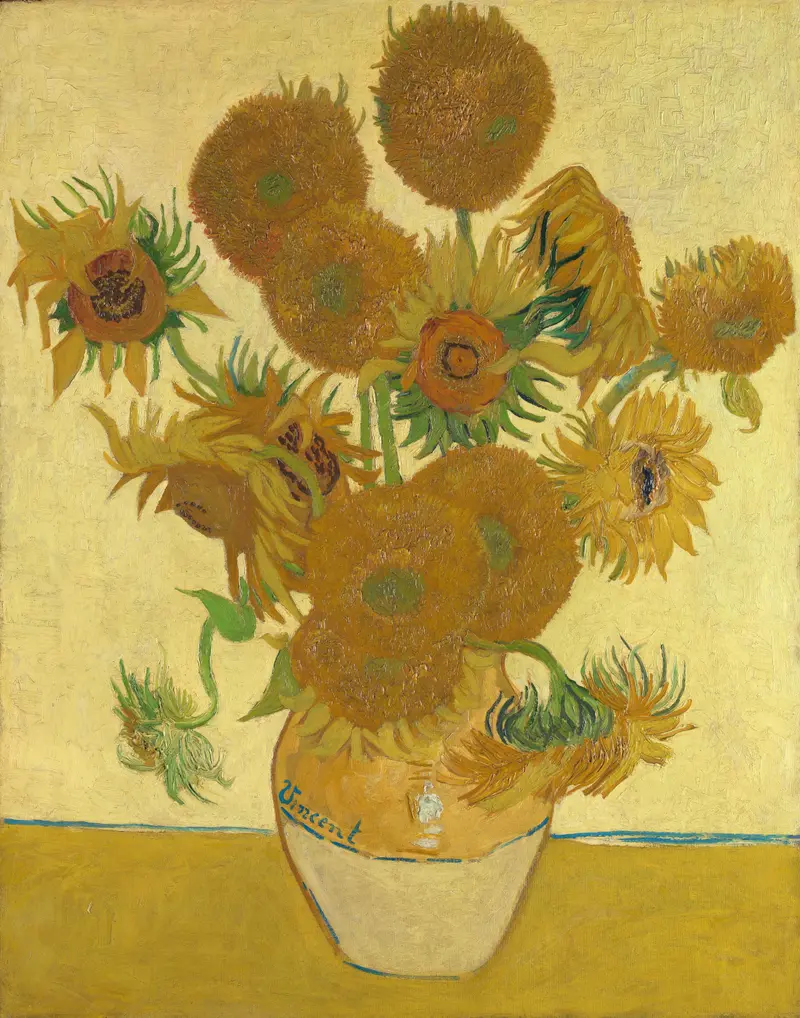
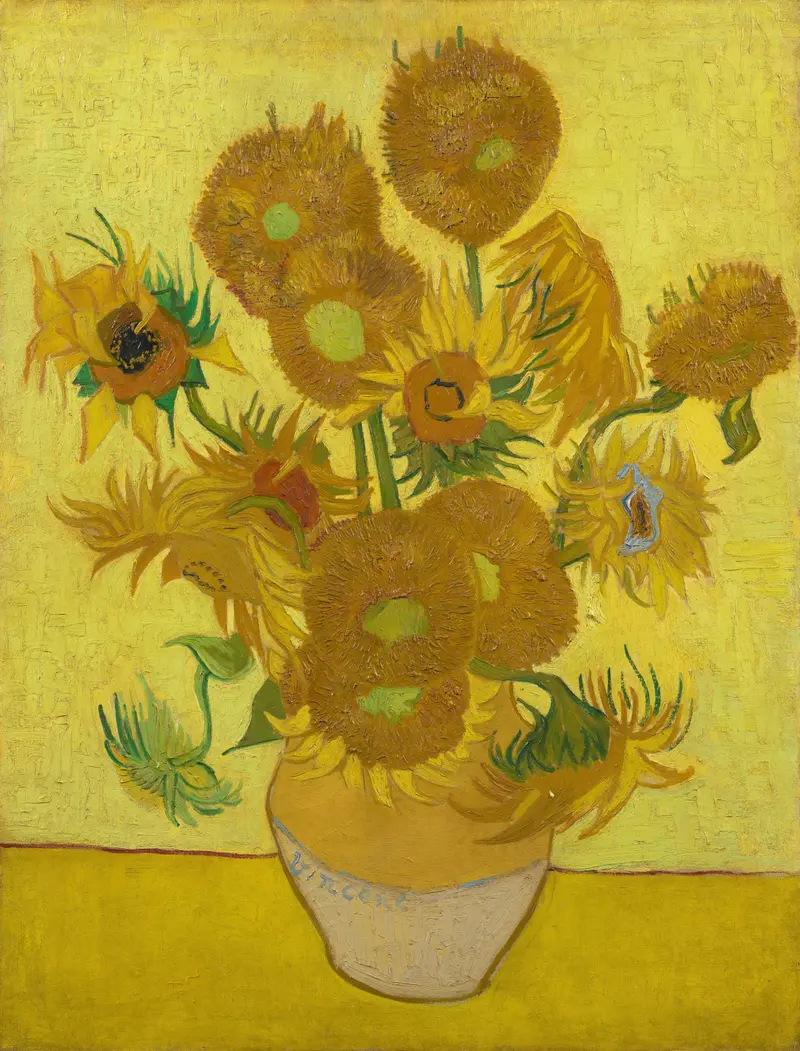
Sunflowers by Vincent van Gogh
Subject: Flowers (sunflowers)
1888 · Oil on canvas · 92.1 × 73 cm
National Gallery, London
Van Gogh painted four Sunflowers in one week of August 1888 in Arles, racing the wilting flowers, to decorate the Yellow House before Paul Gauguin arrived; this one hung in Gauguin's room. Its 15 flowers run from bud to full bloom to seed heads, a life cycle the National Gallery links to Dutch flower painting. He signed it “Vincent” on the vase, because people found his surname hard to say. It is in the National Gallery in London.
Sources: National Gallery
No. 2
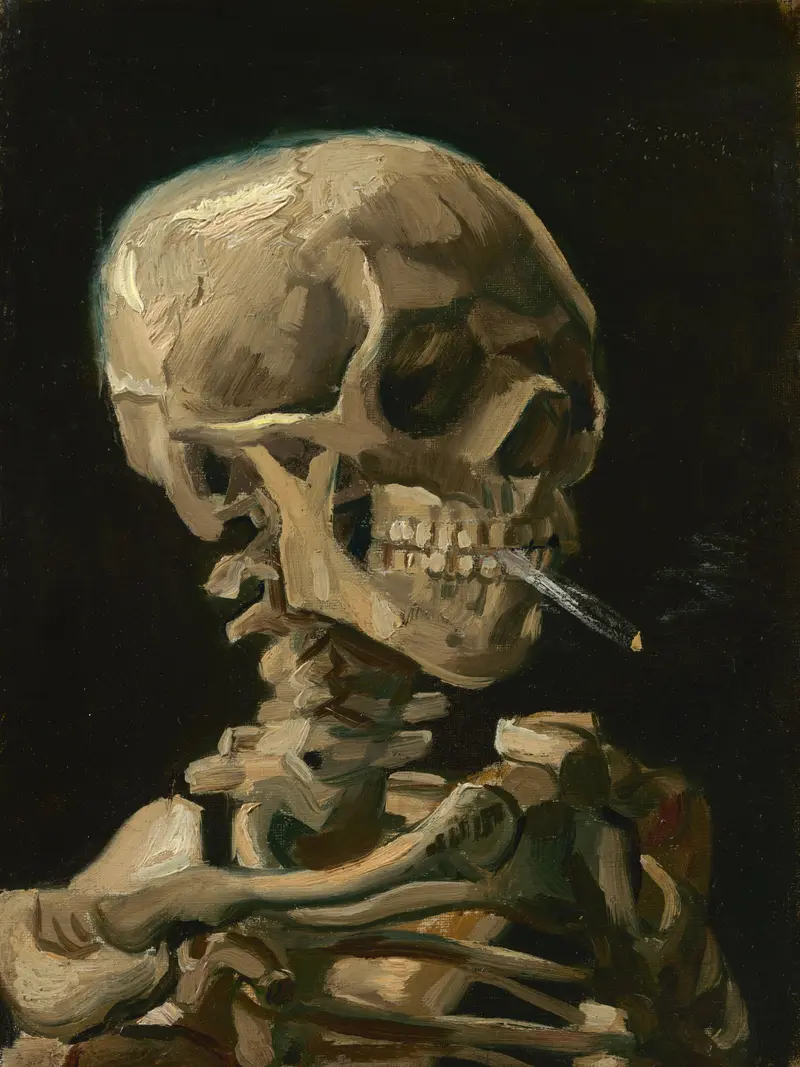
Skull of a Skeleton with Burning Cigarette by Vincent van Gogh
Subject: Vanitas (skull)
1886 · Oil on canvas · 32.3 × 24.8 cm
Van Gogh Museum, Amsterdam
A skeleton with a lit cigarette clenched in its teeth: the Van Gogh Museum calls it a juvenile joke. Van Gogh painted it in early 1886 while studying at the art academy in Antwerp, where drawing skeletons was a standard exercise but painting them was not, so he must have done it between or after lessons. The joke still shows his good command of anatomy. It is in the Van Gogh Museum in Amsterdam.
Sources: Van Gogh Museum
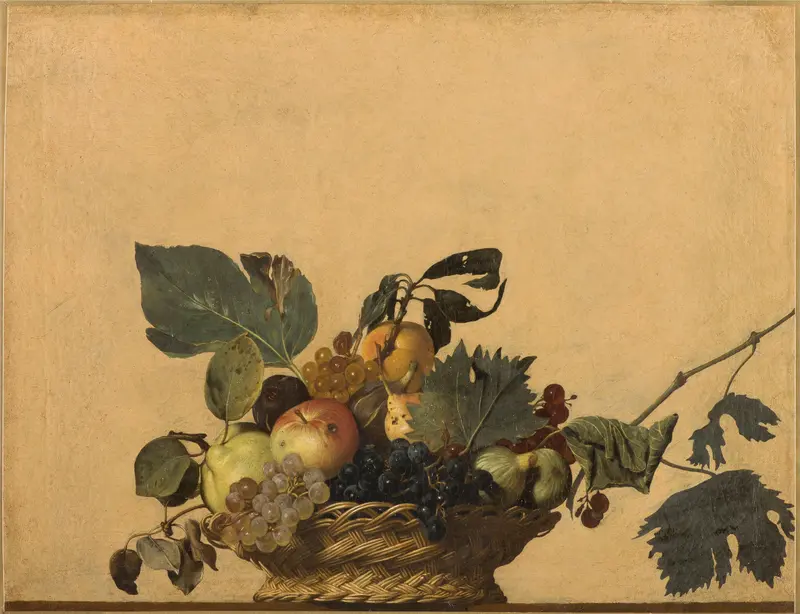
No. 3Baroque
Basket of Fruit by Caravaggio
Subject: Fruit
c. 1597–1600 · Oil on canvas · 47 × 61 cm
Pinacoteca Ambrosiana, Milan
A wicker basket of fruit juts out over a ledge. Look closer: fresh fruit sits beside worm-eaten fruit and drying leaves, which the Ambrosiana reads as an image of time passing. Caravaggio painted it in Rome around 1597–1600, on a reused canvas, and Cardinal Federico Borromeo, who gave it to the Ambrosiana in 1618, wrote that for its beauty it stood alone. It is in the Pinacoteca Ambrosiana in Milan.
Sources: Pinacoteca Ambrosiana
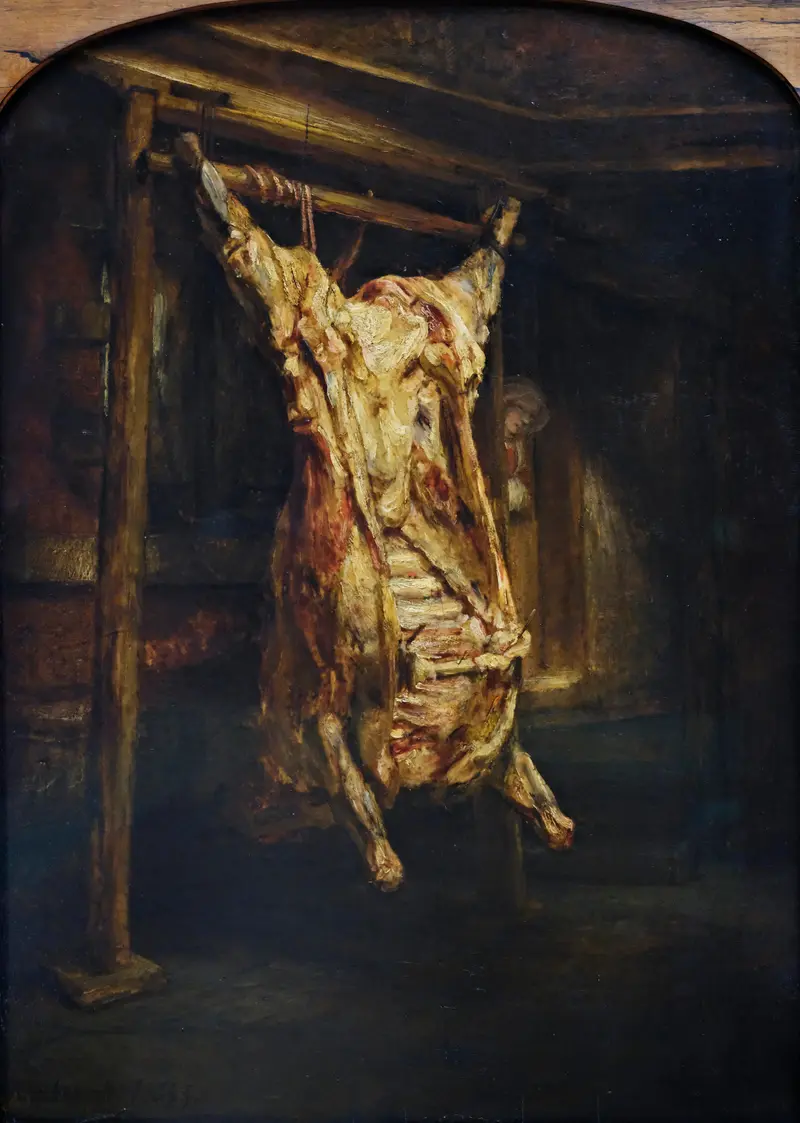
No. 4Dutch Golden Age
The Slaughtered Ox by Rembrandt
Subject: Meat (a flayed ox)
1655 · Oil on beech panel · 94 × 69 cm
Louvre, Paris
A flayed ox carcass hangs from a wooden beam. Rembrandt painted it in 1655, and it is the only painting of this kind still accepted as his own; similar oxen once credited to him are not. The Louvre suggests it may have been made as a butcher's shop sign, and Joshua Reynolds saw it in Amsterdam in 1781. The Louvre bought it in 1857, and it is still in Paris.
Sources: Louvre
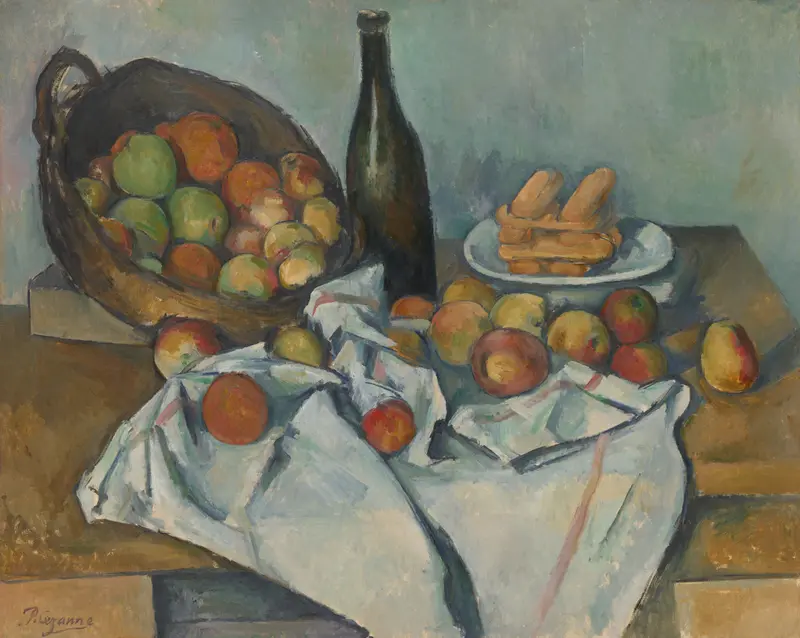
No. 5Post-Impressionism
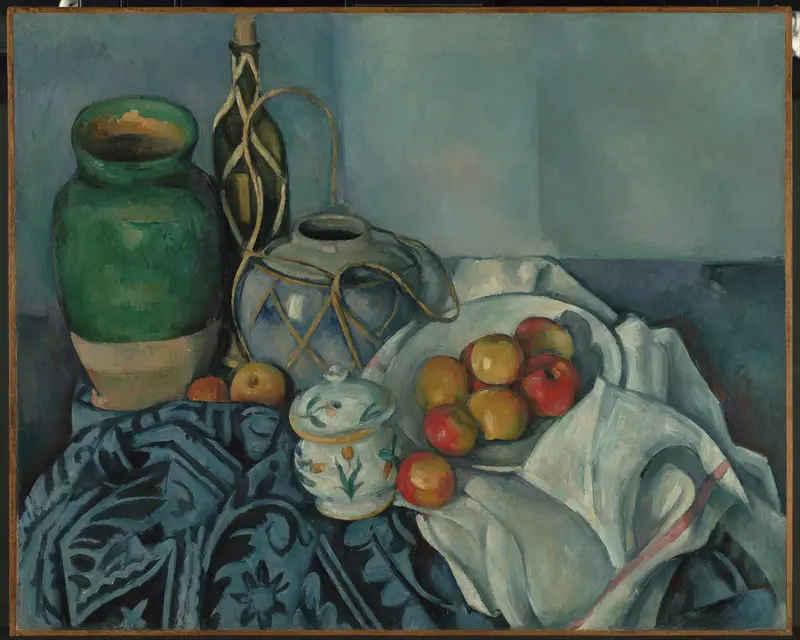
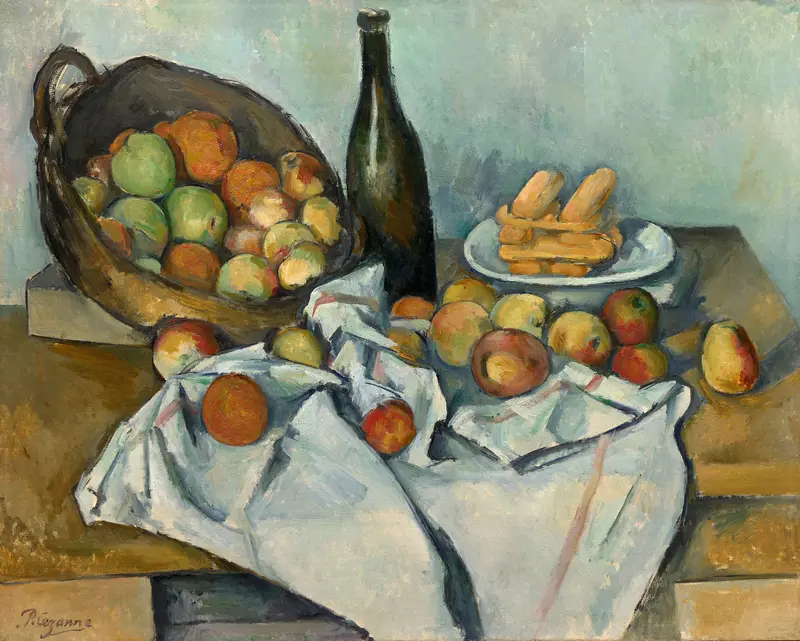
The Basket of Apples by Paul Cézanne
Subject: Fruit
c. 1893 · Oil on canvas · 65 × 80 cm
Art Institute of Chicago, Chicago
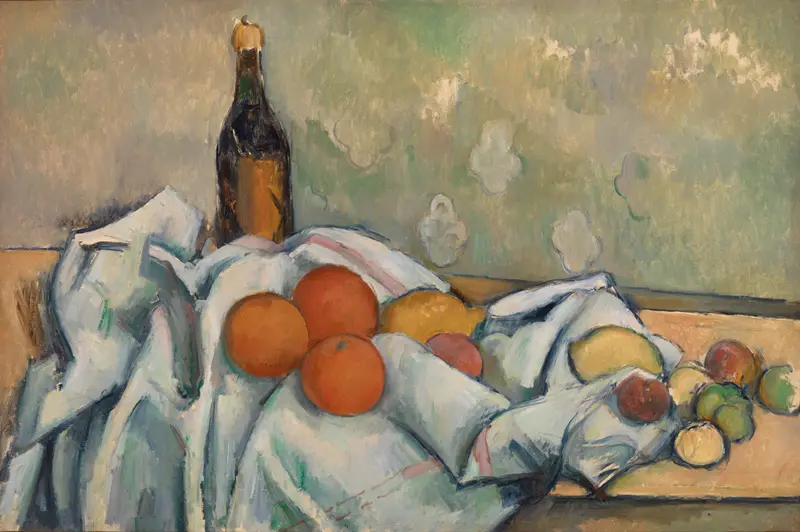
Look closely and the table does not add up: its edges don't line up, the bottle tilts and the apples seem about to tumble. The Art Institute of Chicago points to these as deliberate shifts in reality. Cézanne painted it around 1893; it was shown in Ambroise Vollard's Cézanne exhibition in Paris in 1895 and entered the Art Institute of Chicago in 1926.
Sources: Art Institute of Chicago
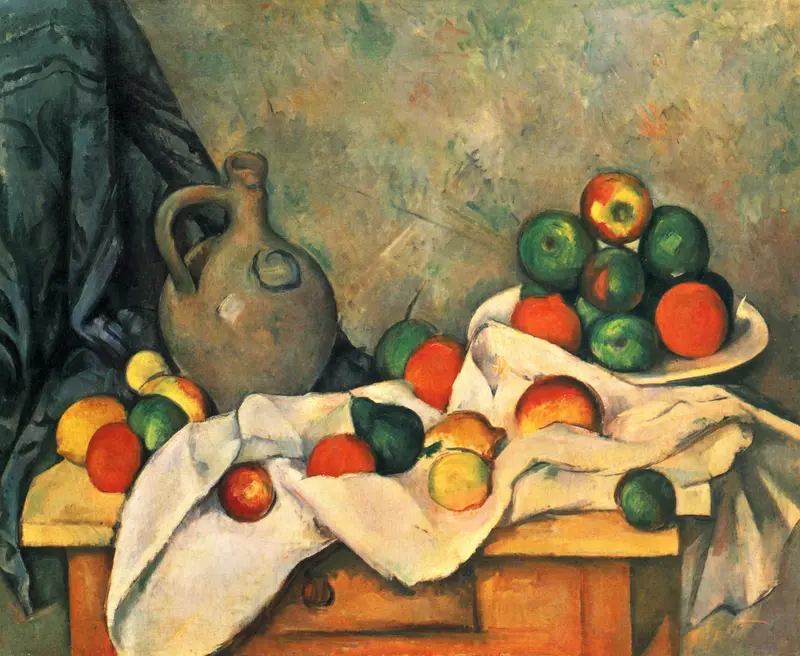
No. 6Post-Impressionism
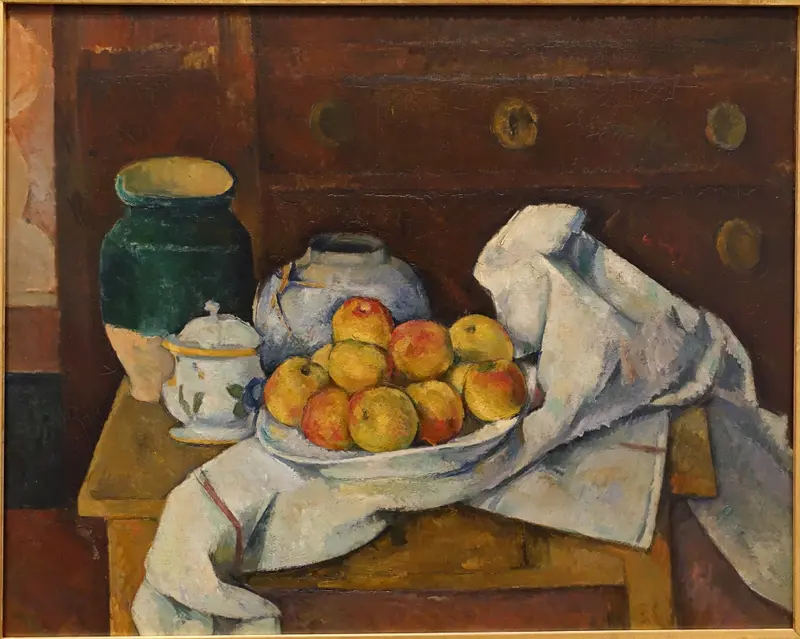
Rideau, Cruchon et Compotier by Paul Cézanne
Subject: Fruit
1893–1894 · Oil on canvas · 59 × 72.4 cm
Private collection
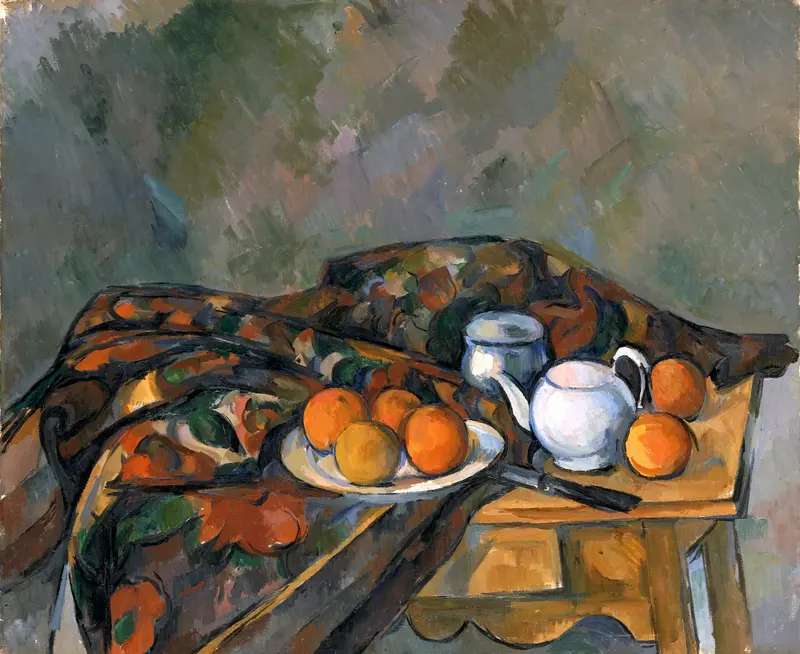
A curtain, a stoneware jug and a fruit dish heaped with apples, pears and a lemon. Cézanne painted it in 1893–1894, and in 1999 it sold at Sotheby's in New York for $60.5 million, an auction record for Cézanne and the most expensive work of art sold at auction that year. It once belonged to the collector Albert C. Barnes and later to John Hay Whitney, and it is now in a private collection.
Sources: Cézanne catalogue raisonné
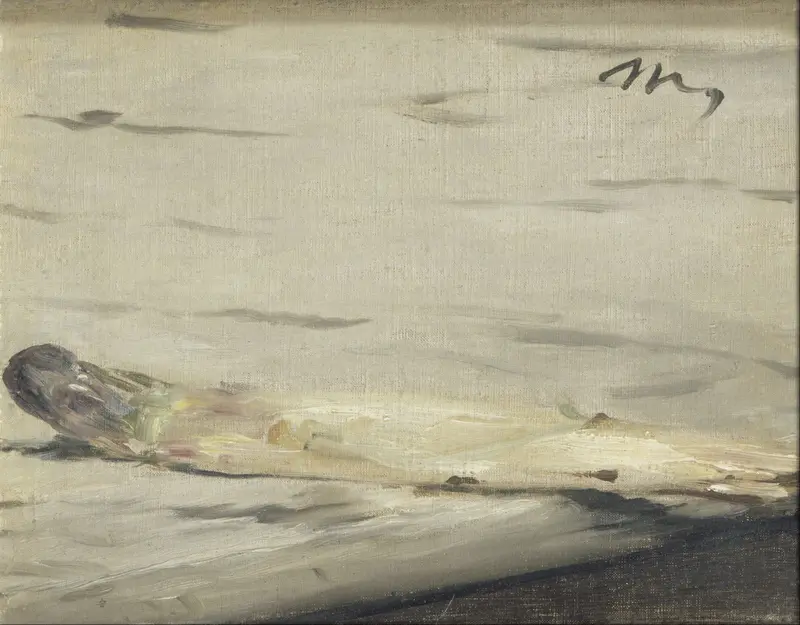
No. 7Impressionism
Asparagus by Édouard Manet
Subject: Vegetables (asparagus)
1880 · Oil on canvas · 16.9 × 21.9 cm
Musée d'Orsay, Paris
A single stalk of asparagus lies on a marble ledge, and there is a story behind it. Manet sold the collector Charles Ephrussi A Bunch of Asparagus (No. 14 on this list) for 800 francs, and Ephrussi sent 1,000. So in 1880 Manet painted this one stalk and sent it with a note saying it had been missing from the bunch. It is in the Musée d'Orsay in Paris.
Sources: Musée d'Orsay
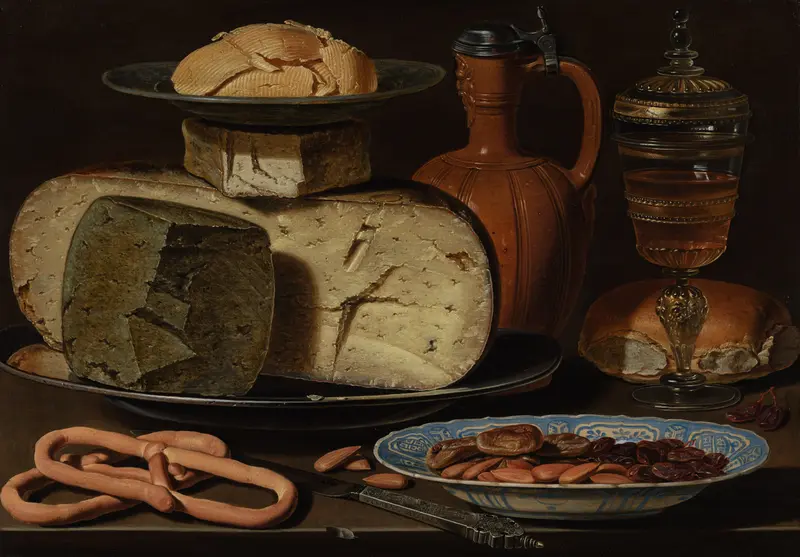
No. 8
Still Life with Cheeses, Almonds and Pretzels by Clara Peeters
Subject: Food
c. 1615 · Oil on panel · 34.5 × 49.5 cm
Mauritshuis, The Hague
Cheeses, pretzels, almonds and figs are laid out with a gilded Venetian glass and a Chinese dish. Clara Peeters, from Antwerp, was one of the first painters of food still lifes. Look for her two signatures: her name on the silver knife, and her own face, in a white cap, reflected in the pewter lid of the jug. Painted around 1615, it was bought by the Mauritshuis in The Hague in 2012.
Sources: Mauritshuis

No. 9
The Ray by Jean Siméon Chardin
Subject: Fish (a ray)
1728 · Oil on canvas · 114.5 × 146 cm
Louvre, Paris
A skinned ray hangs in a kitchen while, on the left, a kitten with its fur on end seems frightened by something we can't see. With its companion, The Buffet (No. 19), this was the picture that got Chardin into the Royal Academy in 1728. Marcel Proust compared the ray's red, blue and white insides to the nave of a cathedral. It is in the Louvre in Paris.
Sources: Louvre
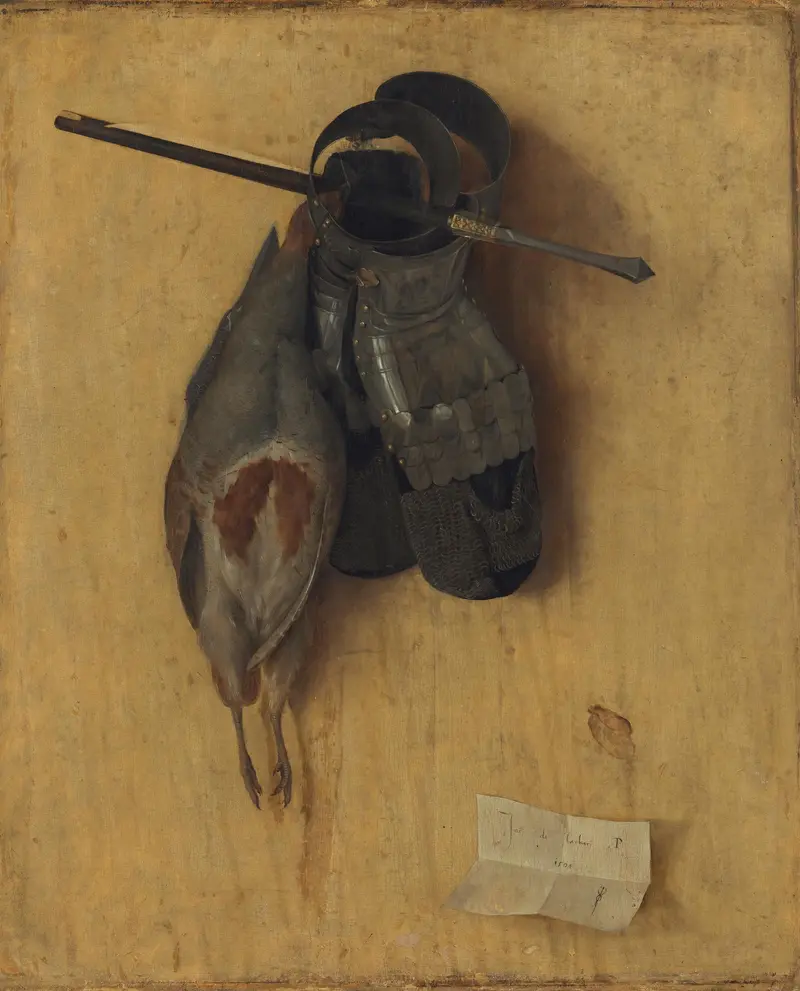
No. 10
Still Life with Partridge and Iron Gloves by Jacopo de' Barbari
Subject: Game (a partridge)
1504 · Oil on limewood · 52 × 42.5 cm
Alte Pinakothek, Munich
A dead partridge hangs beside a pair of iron gauntlets and crossbow arrows, with a folded slip of paper bearing the painter's signature. Painted in 1504, it is, says Munich's Alte Pinakothek, an especially early example of both a still life and a trompe-l'oeil, a picture meant to fool the eye. Jacopo de' Barbari, a Venetian friend of Albrecht Dürer, probably made it for Frederick the Wise, Elector of Saxony. It is in the Alte Pinakothek in Munich.
Sources: Alte Pinakothek
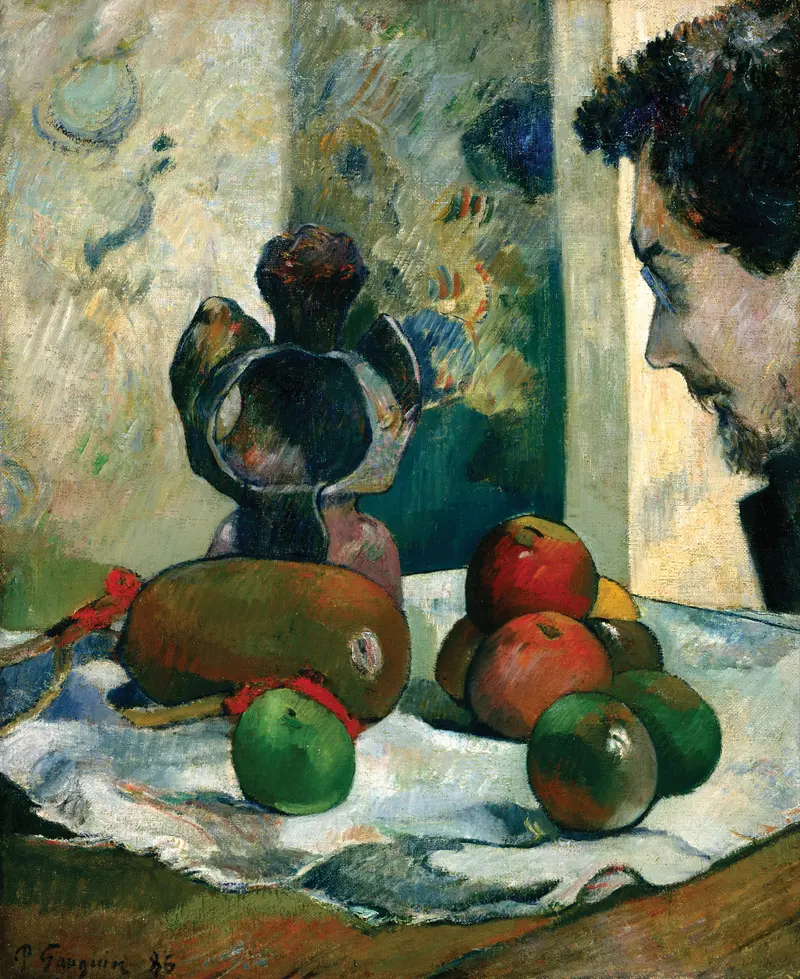
No. 11Post-Impressionism
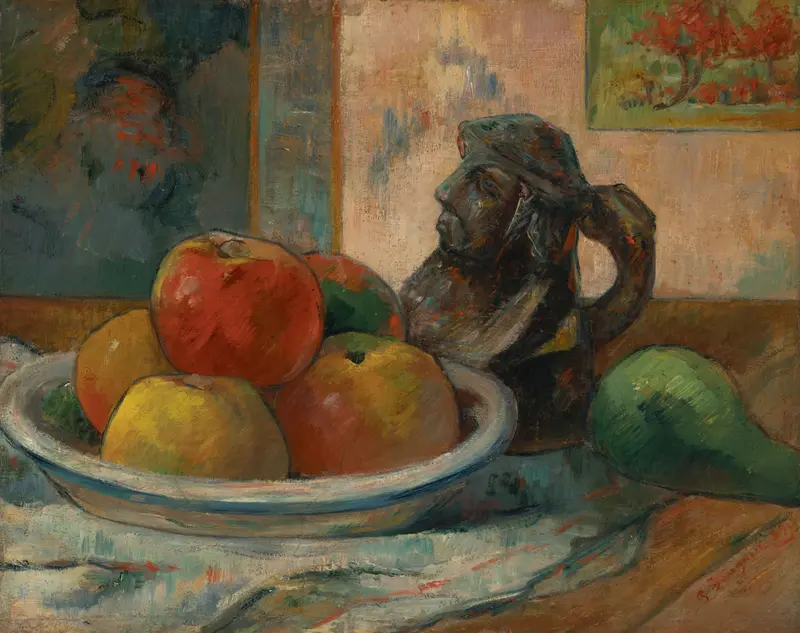
Still Life with Profile of Laval by Paul Gauguin
Subject: Fruit
1886 · Oil on canvas · 46 × 38.1 cm
Indianapolis Museum of Art at Newfields, Indianapolis
The painter Charles Laval peers in from the edge at fruit and one of Gauguin's own experimental ceramic pots. The museum sees Degas in the cropped profile and Cézanne in the outlined fruit. Gauguin painted it in Paris in late 1886 and gave it to Laval. Seized in Hungary in 1944 and recovered by a Monuments Man in 1945, it is now at the Indianapolis Museum of Art at Newfields.
No. 12Baroque
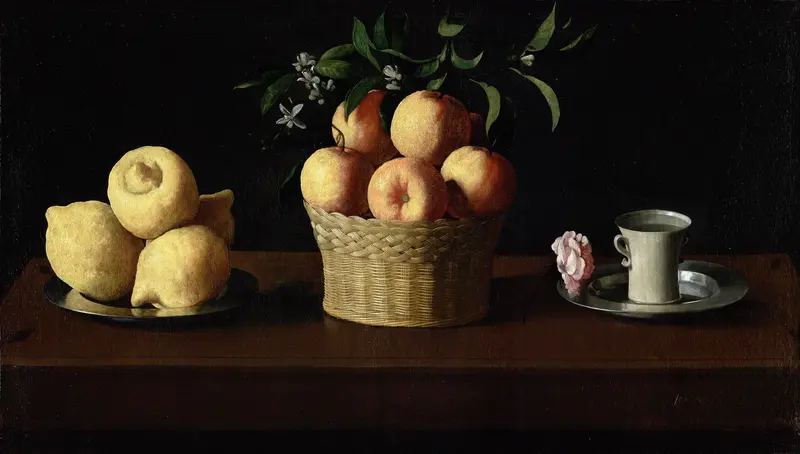
Still Life with Lemons, Oranges and a Rose by Francisco de Zurbarán
Subject: Fruit and flowers
1633 · Oil on canvas · 62.2 × 109.5 cm
Norton Simon Museum, Pasadena
Citrons on a plate, a basket of oranges with blossoms, and a cup of water with a rose stand in a row on a table. The Norton Simon Museum calls it Zurbarán's only signed and dated still life, painted in 1633, and says the three groups would have been read as an allusion to the Holy Trinity; it has also been read as an homage to the Virgin Mary. It is in the Norton Simon Museum in Pasadena, California.
Sources: Norton Simon Museum
No. 13
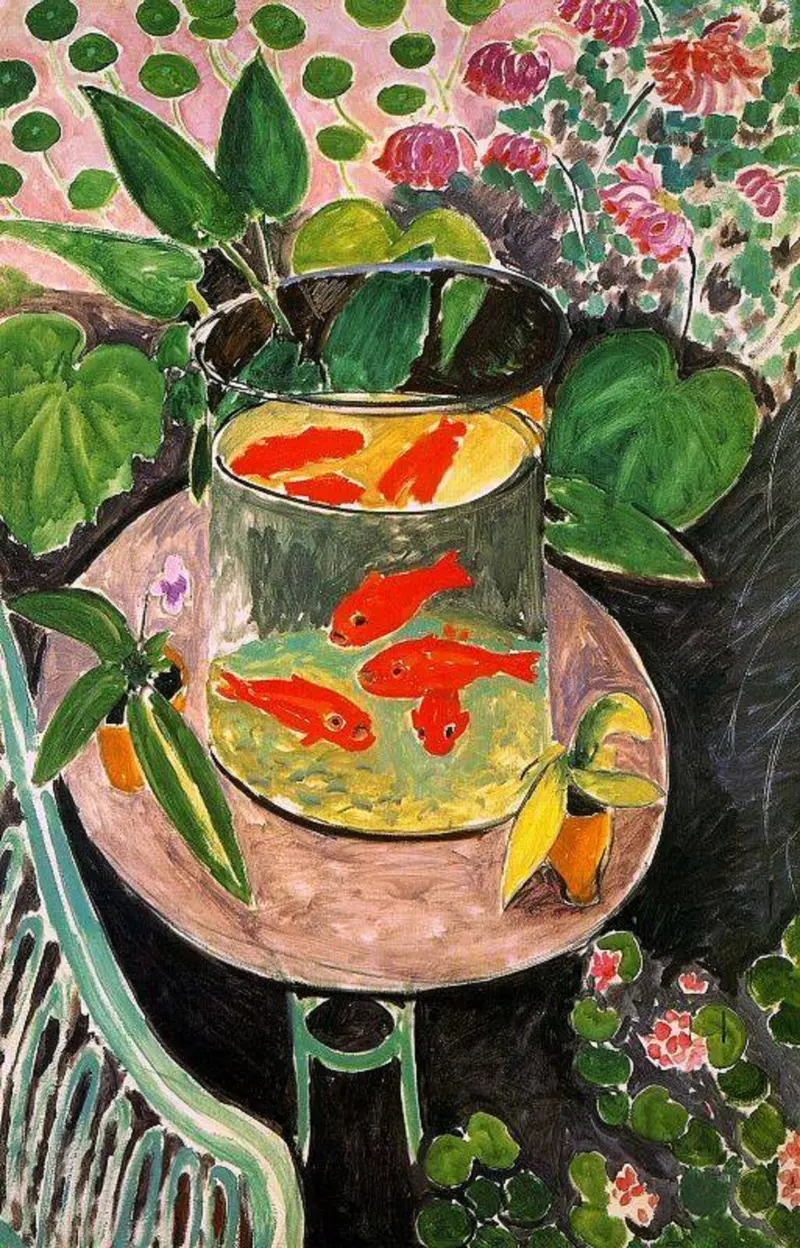
Goldfish by Henri Matisse
Subject: Goldfish and plants
1912 · Oil on canvas · 140 × 98 cm
Pushkin Museum of Fine Arts, Moscow
Red goldfish swim in a glass bowl on a small round table, surrounded by plants. Matisse painted it in 1912 in his studio near Paris, mixing viewpoints: the bowl seen from the side, the tabletop from above. Look at the bare white canvas he left around the fish, which makes their red even brighter. The Russian collector Sergei Shchukin bought it from his studio the same year, and it is in the Pushkin Museum in Moscow.
Sources: Pushkin Museum of Fine Arts
No. 14Impressionism
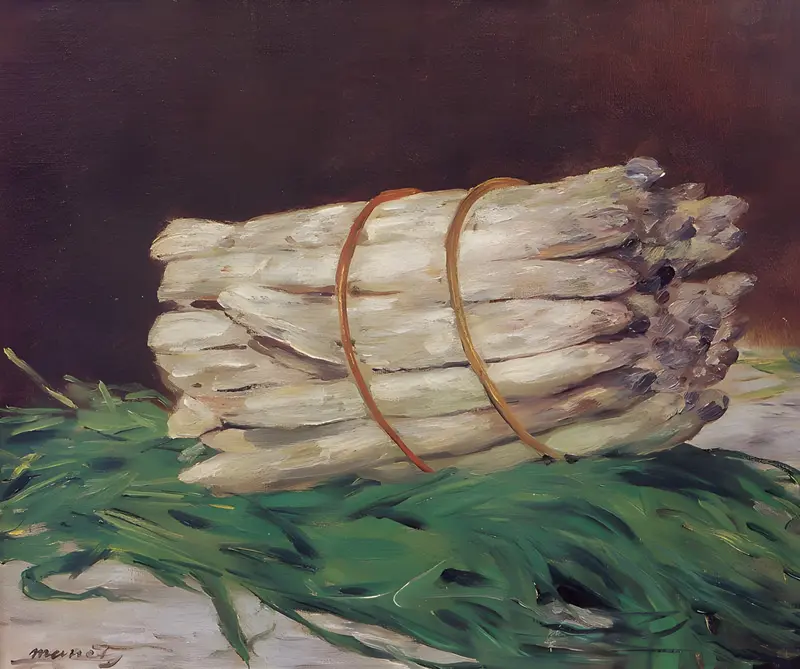
A Bunch of Asparagus by Édouard Manet
Subject: Vegetables (asparagus)
1880 · Oil on canvas · 46 × 55 cm
Wallraf-Richartz-Museum, Cologne
A bunch of white asparagus lies on a bed of greens, painted on a dark background in the manner of Dutch 17th-century still lifes. Manet sold it in 1880 to the collector Charles Ephrussi for 800 francs, but Ephrussi paid 1,000, so Manet painted him a single extra spear (No. 7) with a note: “There was one missing from your bunch.” It is in the Wallraf-Richartz-Museum in Cologne.
No. 15
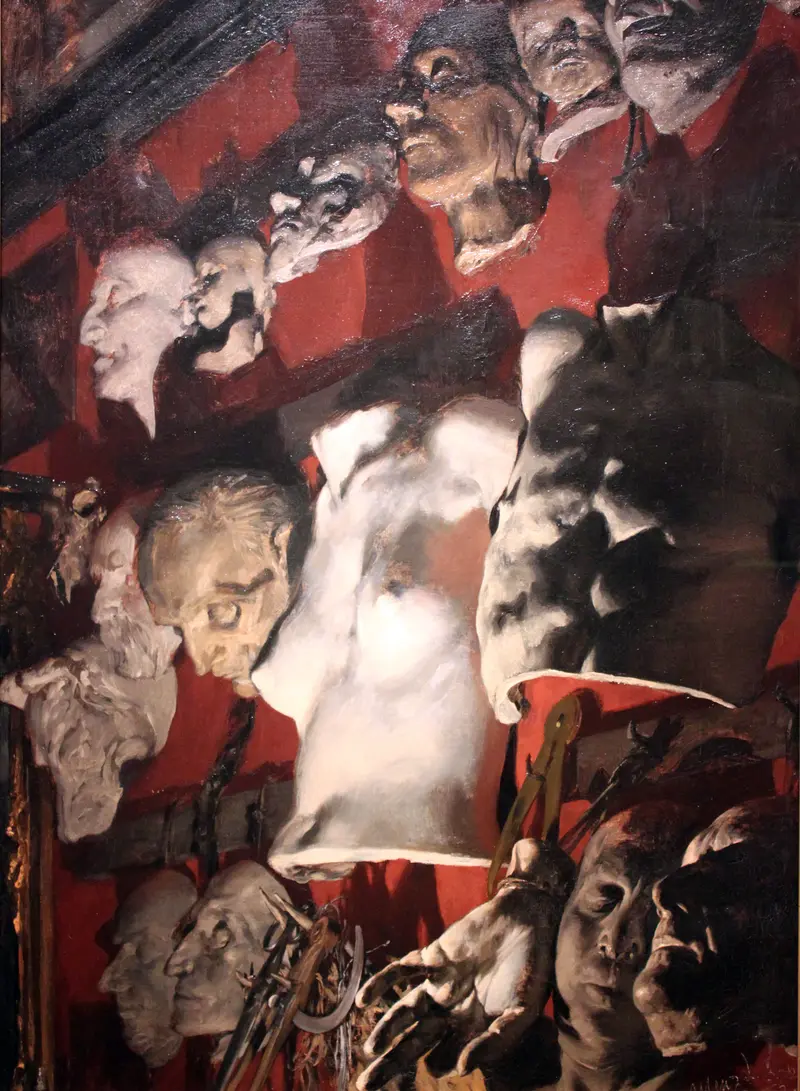
The Studio Wall by Adolph Menzel
Subject: Plaster casts
1872 · Oil on canvas · 111 × 79.3 cm
Hamburger Kunsthalle, Hamburg
Plaster casts and death masks hang on the red wall of Menzel's studio in dim light. The brightest spot is the cast of a female torso, lit from below; just left of it hangs the death mask of the art historian Friedrich Eggers, who died in 1872, the year Menzel painted it, which makes it a kind of memorial. The museum says the picture still poses riddles. It is in the Hamburger Kunsthalle in Hamburg.
Sources: Hamburger Kunsthalle
No. 16Dutch Golden Age
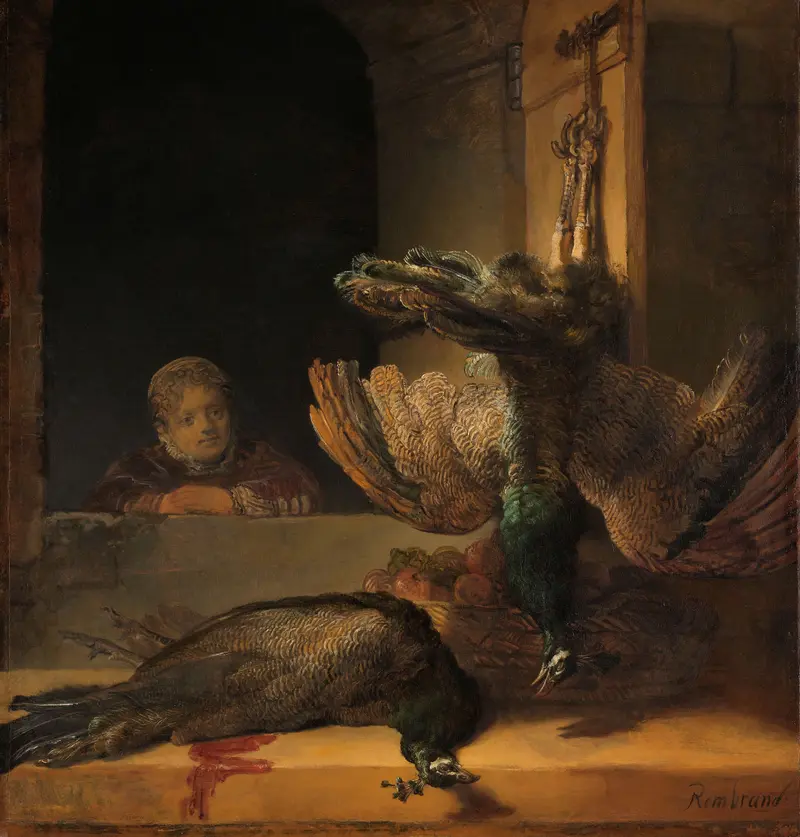
Still Life with Peacocks by Rembrandt
Subject: Game (peacocks)
c. 1639 · Oil on canvas · 145 × 135.5 cm
Rijksmuseum, Amsterdam
A girl leans on a window frame to look at two dead peacocks, one hanging from the shutter and one lying by a pool of blood. In Rembrandt's time the well-to-do ate peacocks, often in pies, and the birds were hung up to bleed right after being killed. Painted around 1639, it was sold in 1942 for Hitler's planned museum in Linz, recovered after the war and transferred to the Rijksmuseum in Amsterdam in 1960.
Sources: Rijksmuseum
No. 17
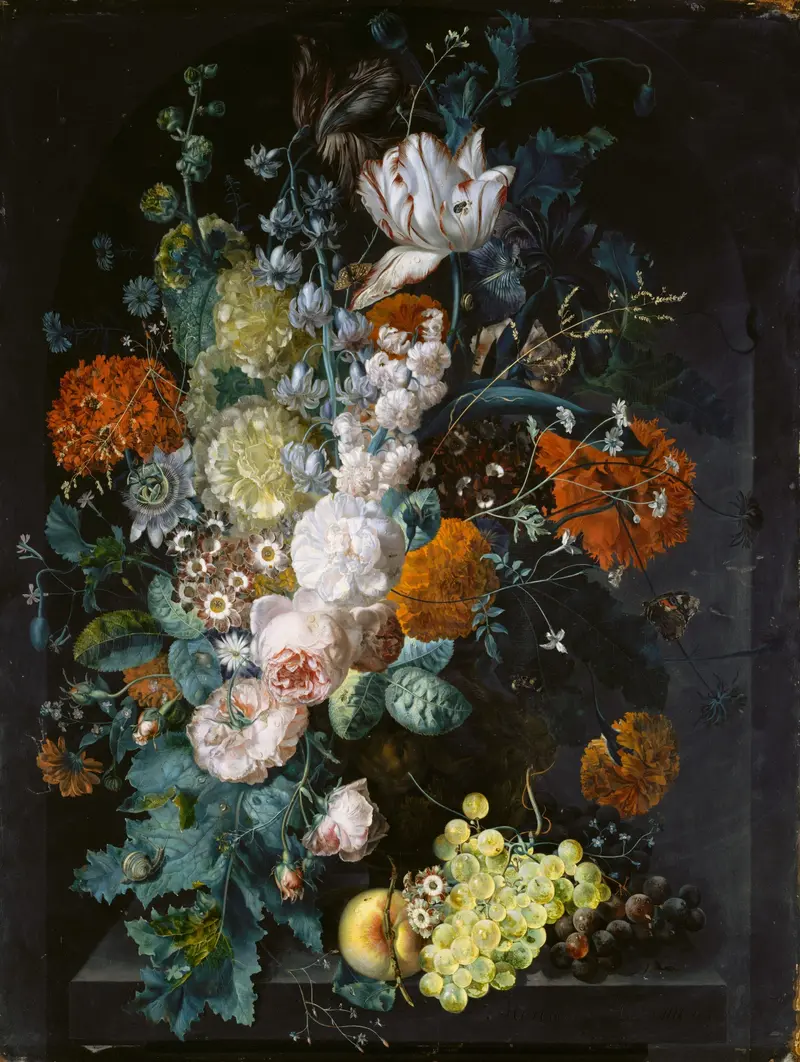
A Vase of Flowers by Margareta Haverman
Subject: Flowers
1716 · Oil on wood · 79.4 × 60.3 cm
Metropolitan Museum of Art, New York
Flowers of many kinds rise from a vase, with fruit at its foot. Margareta Haverman trained with Jan van Huysum, a famously secretive flower painter, and later won a place in the Royal Academy in Paris, only to be expelled for reasons that remain unknown. Look at the leaves: they look blue today because the yellow pigment in them has faded. Bought in 1871, it is the Met's only painting by an early modern Dutch woman.
Sources: Metropolitan Museum of Art
No. 18
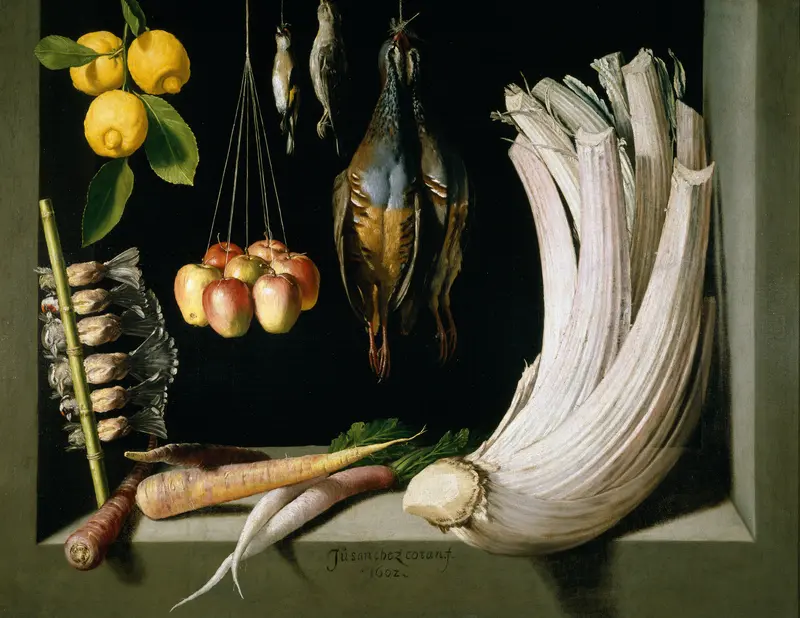
Still Life with Game, Vegetables and Fruit by Juan Sánchez Cotán
Subject: Game, vegetables and fruit
1602 · Oil on canvas · 68 × 88.2 cm
Museo del Prado, Madrid
Game birds, apples and a lemon hang on strings in a stone window frame, above a cardoon, carrots and radishes; some objects lean on the frame while the radishes and carrots jut out toward us, creating an illusion of depth. Juan Sánchez Cotán signed and dated it 1602. The Prado credits him, above all, with establishing the still life, which it calls the most characteristically Spanish genre. It is in the Prado in Madrid.
Sources: Museo del Prado
No. 19
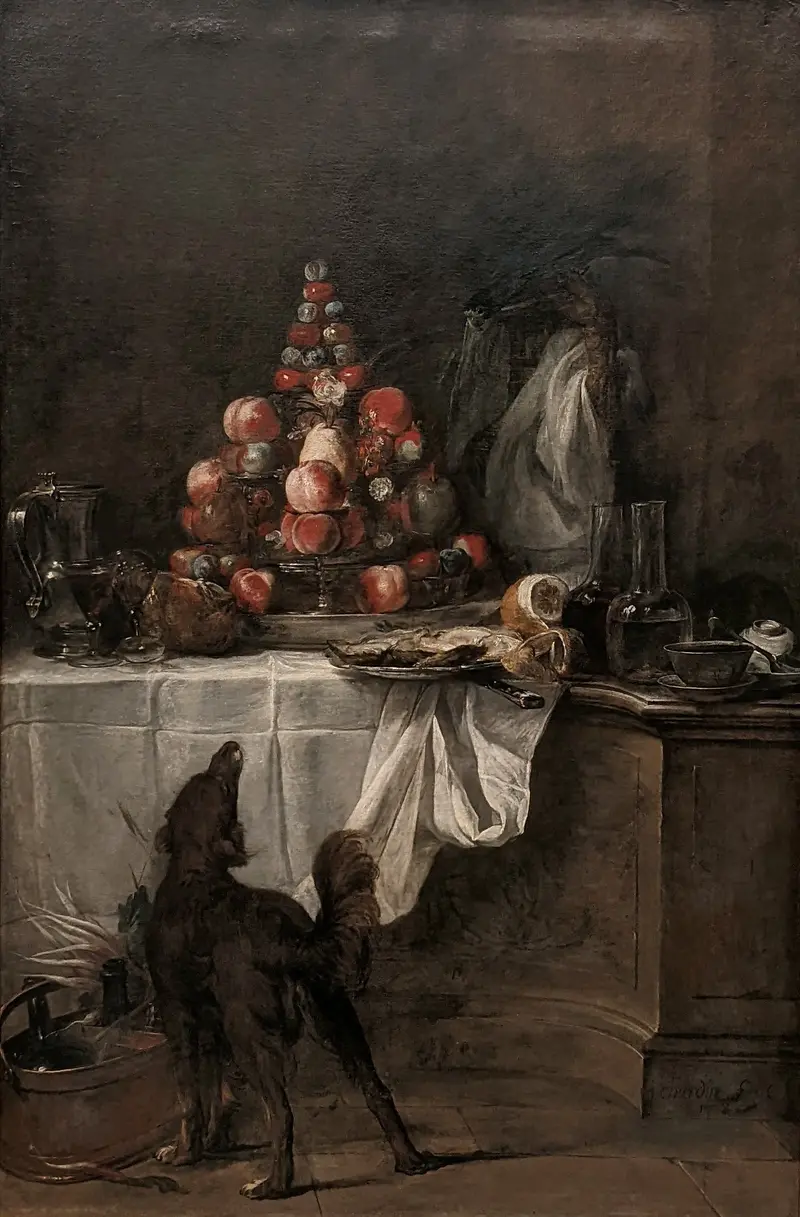
The Buffet by Jean Siméon Chardin
Subject: Fruit and tableware
1728 · Oil on canvas · 194 × 129 cm
Louvre, Paris
A sideboard holds a pyramid of peaches, plums and apples, tableware and a lemon, while a dog looks up from below. Chardin presented it with The Ray (No. 9) as his reception piece to the Royal Academy in 1728, and signed and dated it at lower right. It stayed in the Academy's collection and has been in the Louvre in Paris since 1851.
Sources: Louvre
No. 20Romanticism
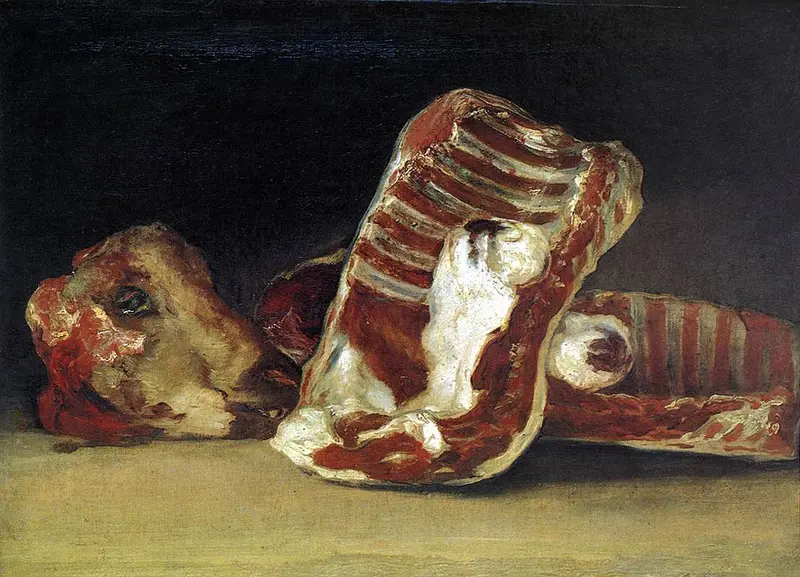
Still Life: A Butcher's Counter by Francisco de Goya
Subject: Meat
1808–1812 · Oil on canvas · 45 × 62 cm
Louvre, Paris
A sheep's head lies beside flayed ribs and loin on a ledge. Goya signed it just beneath the head. It belongs to a series of 12 still lifes listed in 1812 in the inventory made after the death of his wife, Josefa; in 1865 the series decorated a dining room near Madrid, and it was later split up. The Louvre bought this one in 1937, and it is in Paris.
Sources: Louvre
No. 21Cubism
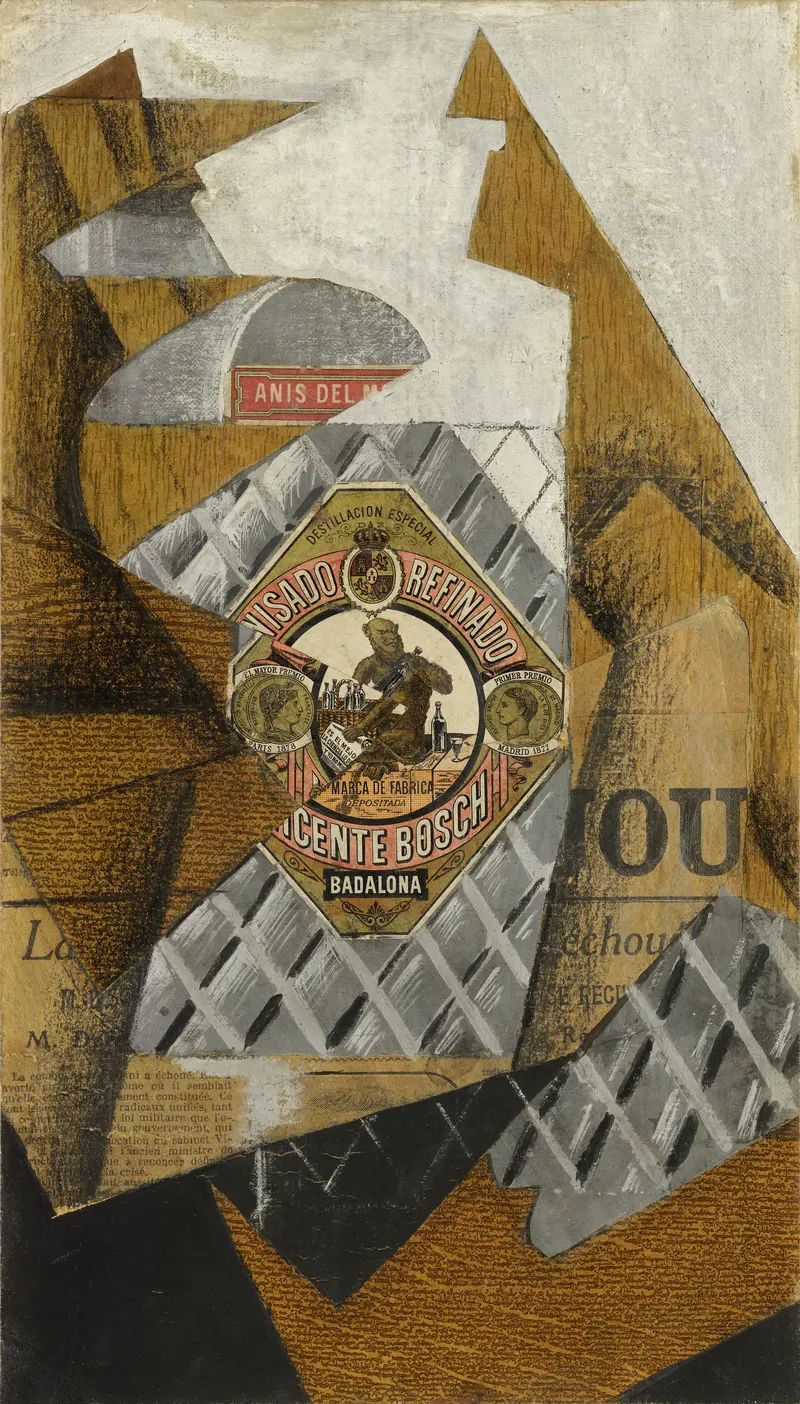
The Bottle of Anís del Mono by Juan Gris
Subject: A bottle (Cubist collage)
1914 · Oil, collage and graphite on canvas · 41.8 × 24 cm
Museo Reina Sofía, Madrid
Juan Gris built this Cubist picture around the label of a bottle of Anís del Mono, a liqueur popular with Spanish artists that Picasso had already used in his own work. He made it in 1914 in oil, collage and graphite. The Reina Sofía suggests the cities on the label, Paris, Madrid and Badalona, may hide a message linking Braque, Picasso and Gris himself as the founders of Cubism. It is in the Museo Reina Sofía in Madrid.
Sources: Museo Reina Sofía
No. 22Post-Impressionism
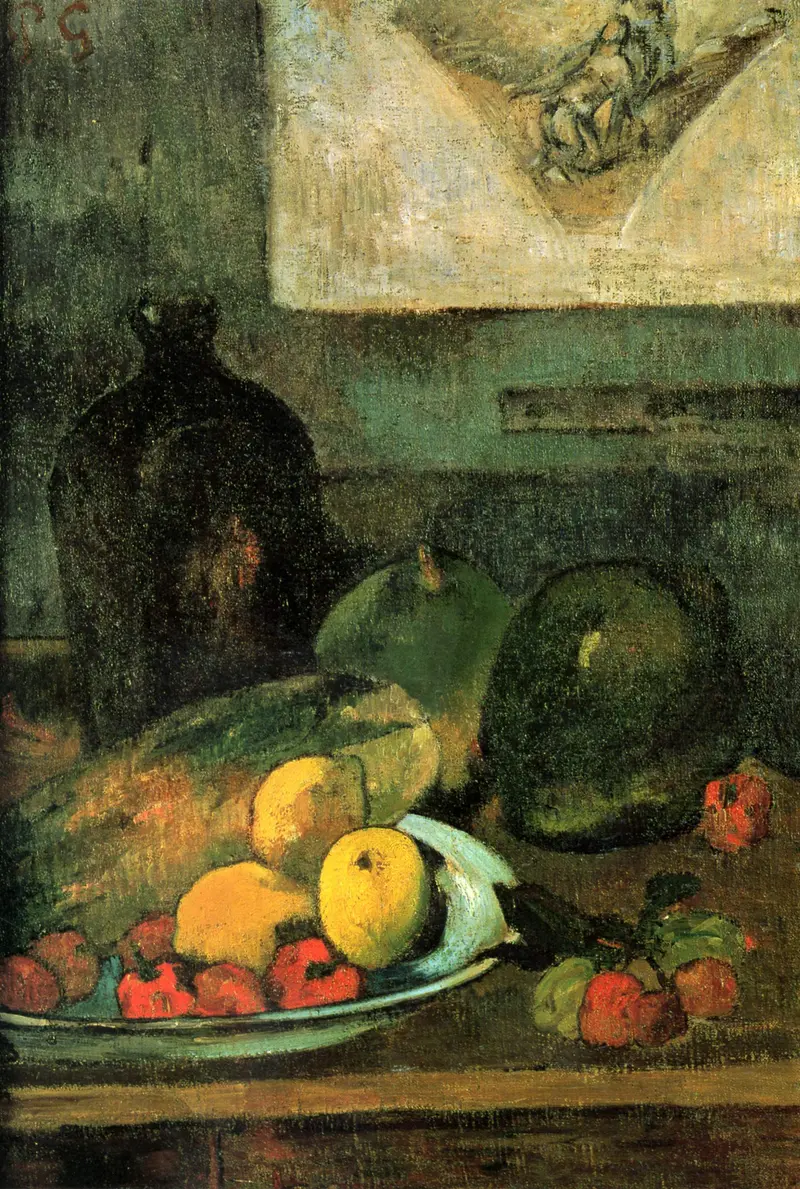
Still Life with a Sketch after Delacroix by Paul Gauguin
Subject: Fruit
c. 1887 · Oil on canvas · 45 × 30 cm
Musée d'Art Moderne et Contemporain, Strasbourg
Tropical fruit is laid out on a table below a sketch after Eugène Delacroix pinned to the wall. Gauguin painted it around 1887 and marked it with his initials, “P.G.,” at the upper left. The collector Raymond Koechlin left it to the Strasbourg museums in 1931, and it is in the Musée d'Art Moderne et Contemporain de Strasbourg.
Sources: Musée d'Art Moderne et Contemporain
No. 23Impressionism
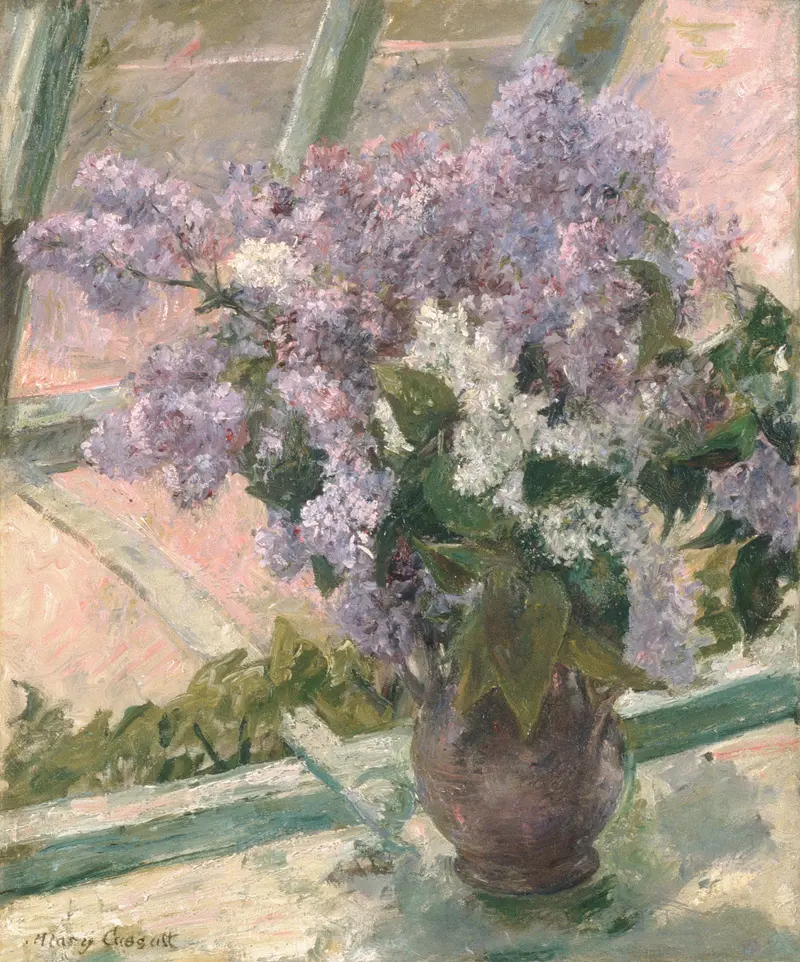
Lilacs in a Window by Mary Cassatt
Subject: Flowers (lilacs)
c. 1880–1883 · Oil on canvas · 61.5 × 51.1 cm
Metropolitan Museum of Art, New York
A dark vase of purple and white lilacs stands on a sill beside a window propped open, perhaps in a greenhouse. Pure still life is very rare in the work of Mary Cassatt, who usually painted people. She made it around 1880–1883, and its first owner was Moyse Dreyfus, a Paris collector and early patron. It has been at the Metropolitan Museum of Art in New York since 1997.
Sources: Metropolitan Museum of Art
No. 24
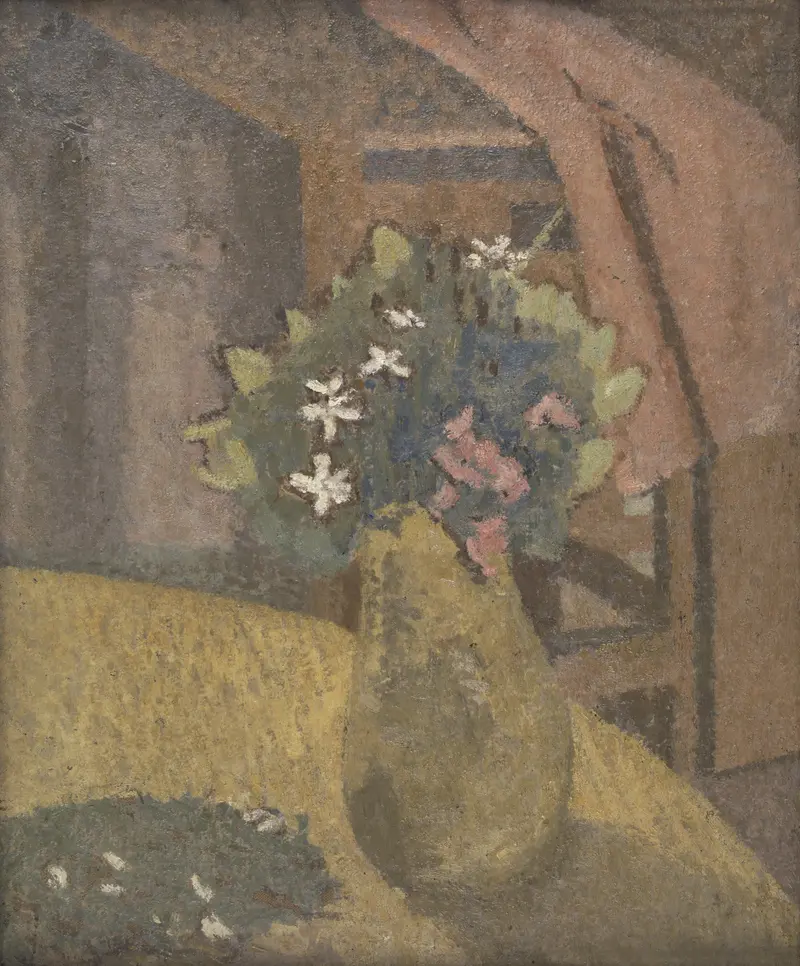
Vase of Flowers by Gwen John
Subject: Flowers
1910s · Oil on board · 40 × 32 cm
National Library of Wales, Aberystwyth
A vase of small flowers stands on a table, while behind it a garment flung over a piece of furniture adds a note of unease to the stillness. Gwen John painted it in Paris in the 1910s, in oil on board with a dry, loaded brush; the National Library of Wales links it to the end of her affair with Rodin. Long overshadowed by her brother Augustus, she is now acclaimed as an early modernist. It is in the National Library of Wales.
Sources: National Library of Wales
No. 25
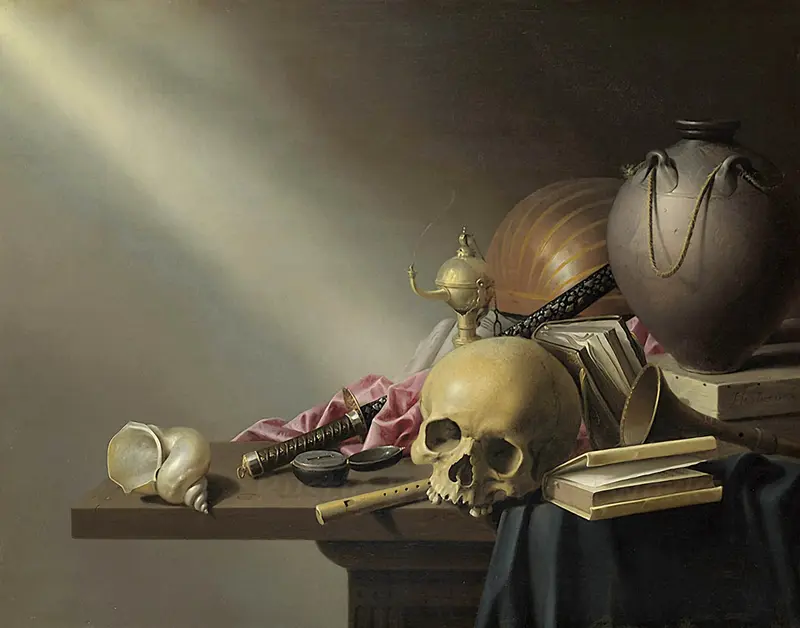
An Allegory of the Vanities of Human Life by Harmen Steenwijck
Subject: Vanitas (skull)
c. 1640 · Oil on oak panel · 39.2 × 50.7 cm
National Gallery, London
A skull, books, musical instruments, a Japanese sword, a shell, a lamp and a watch: each object is a reminder that life and its pleasures are short. Look behind the skull: a thin trail of smoke shows the lamp has just gone out. X-rays show Harmen Steenwijck first painted a bust of a man wearing a wreath, probably a Roman emperor, where the flagon now stands. He made it around 1640, and it is in the National Gallery in London.
Sources: National Gallery
Want to see more? Browse every still life painting in the collection.
Browse all 2,434 still life paintingsVan Gogh still life paintings
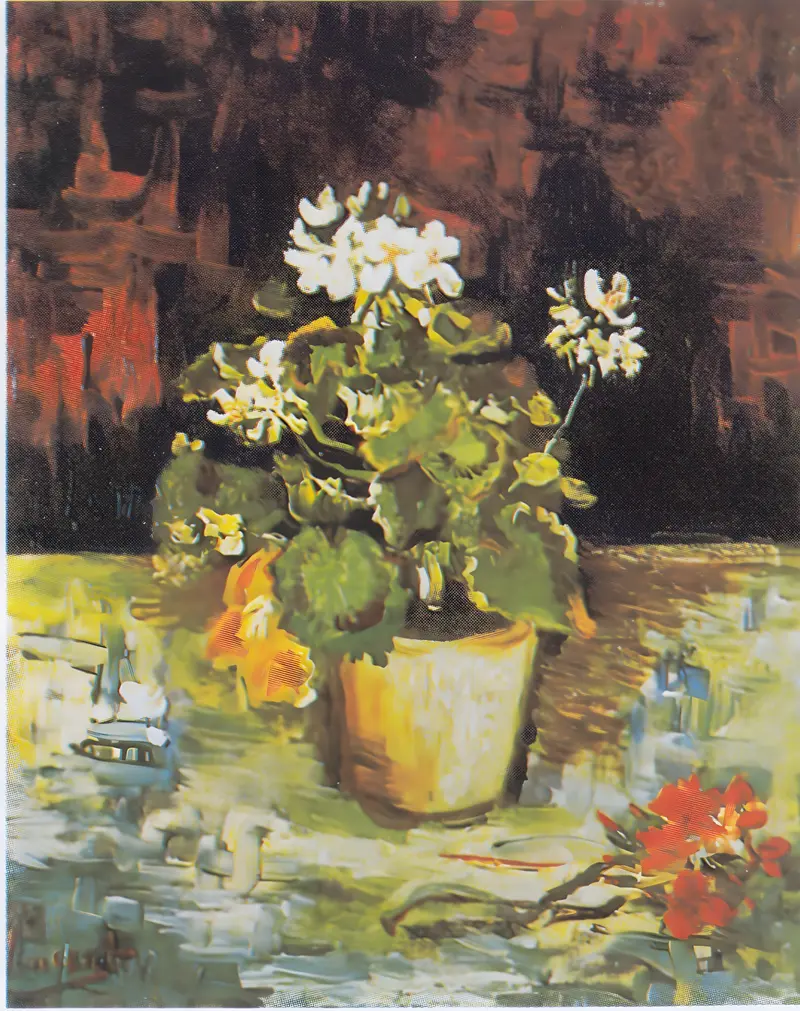
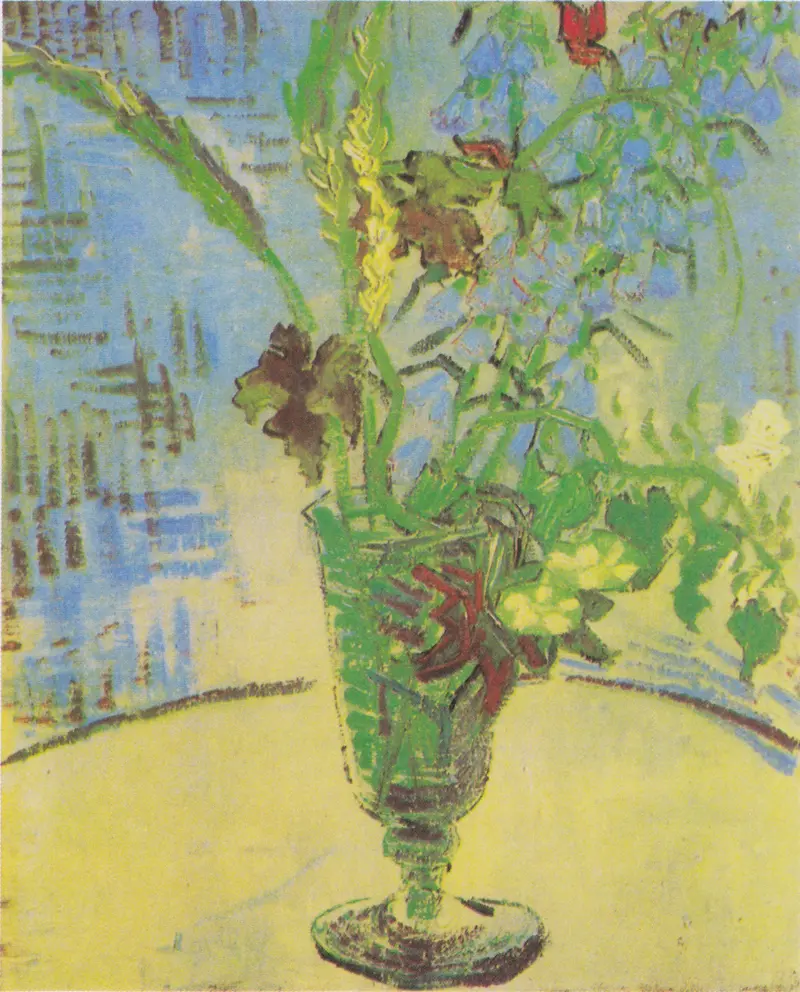
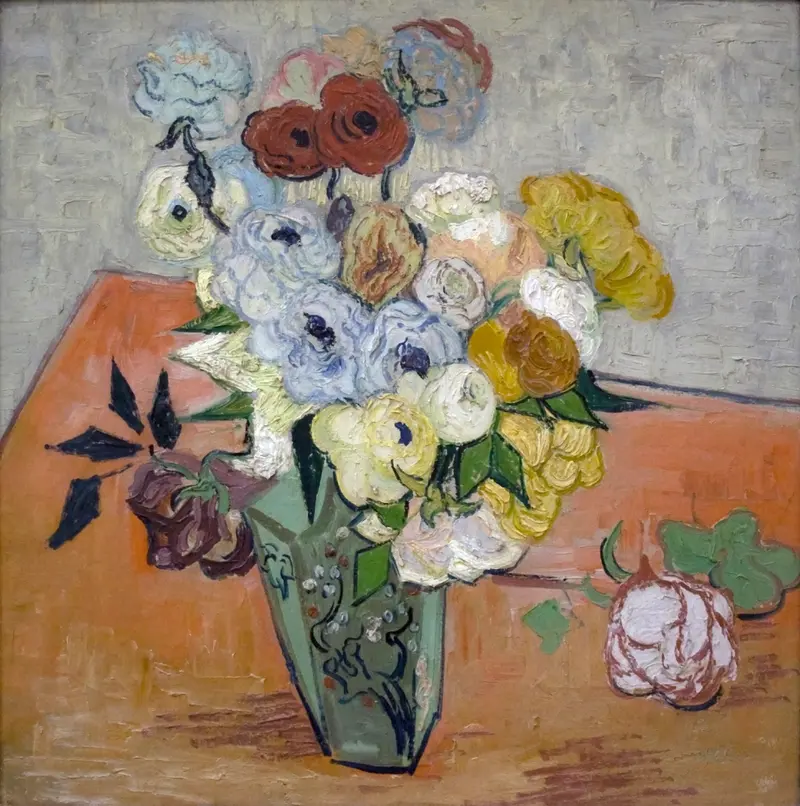
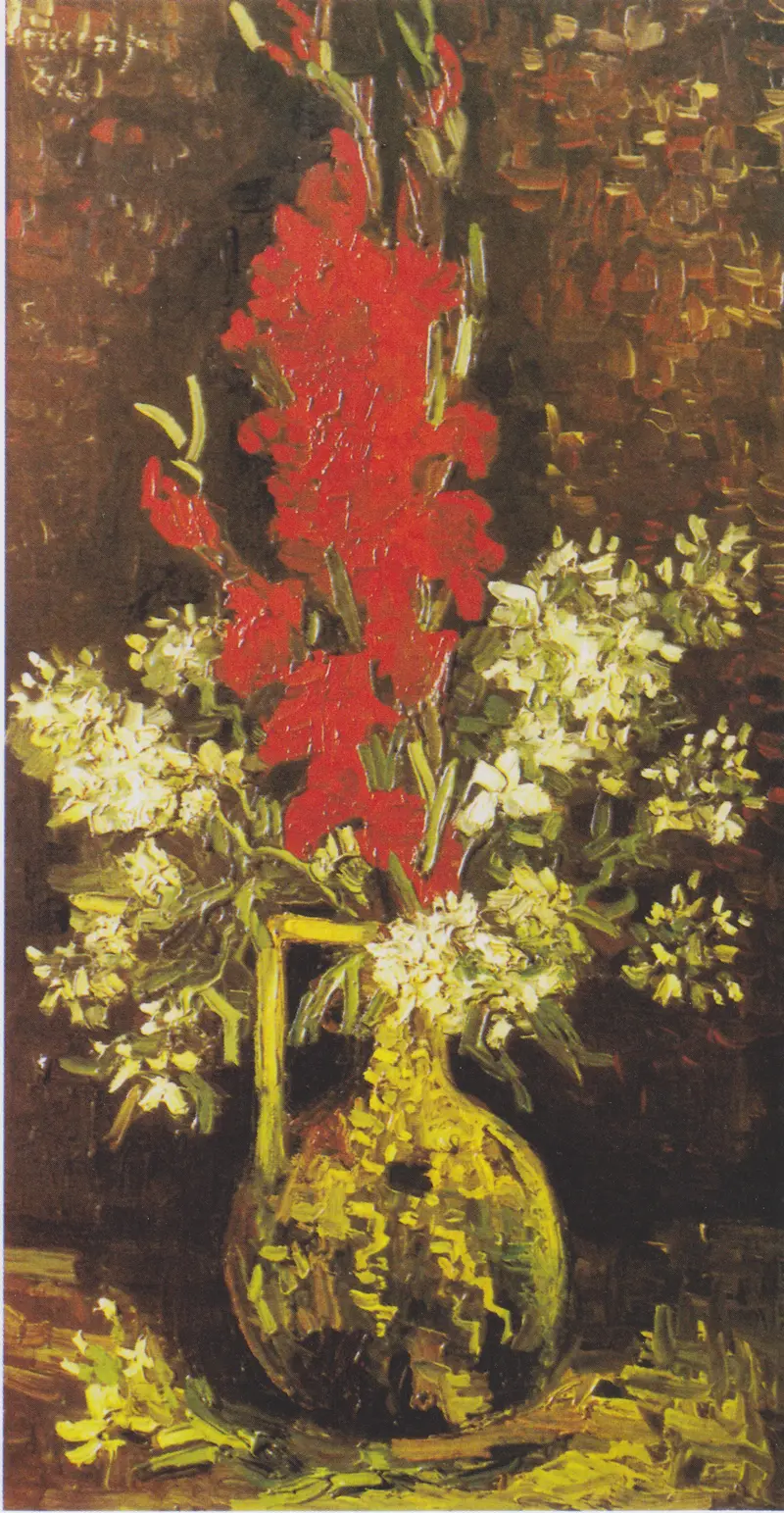
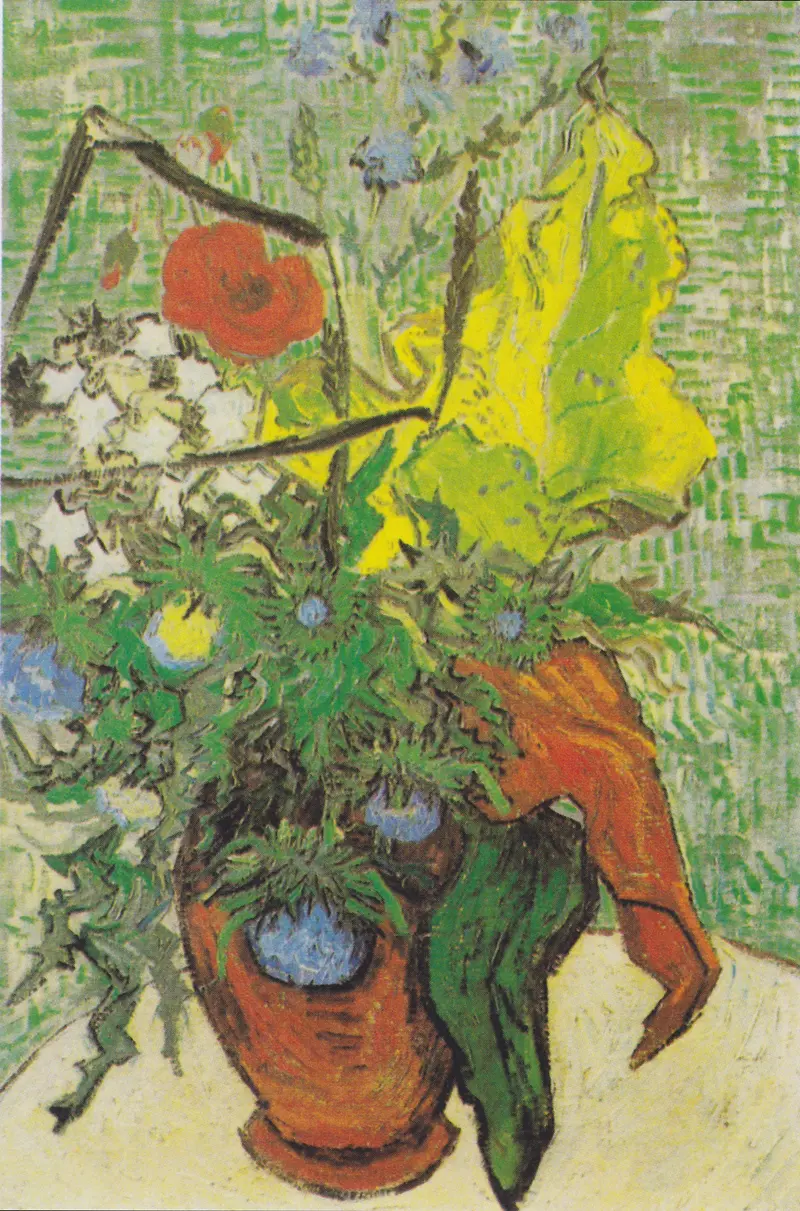
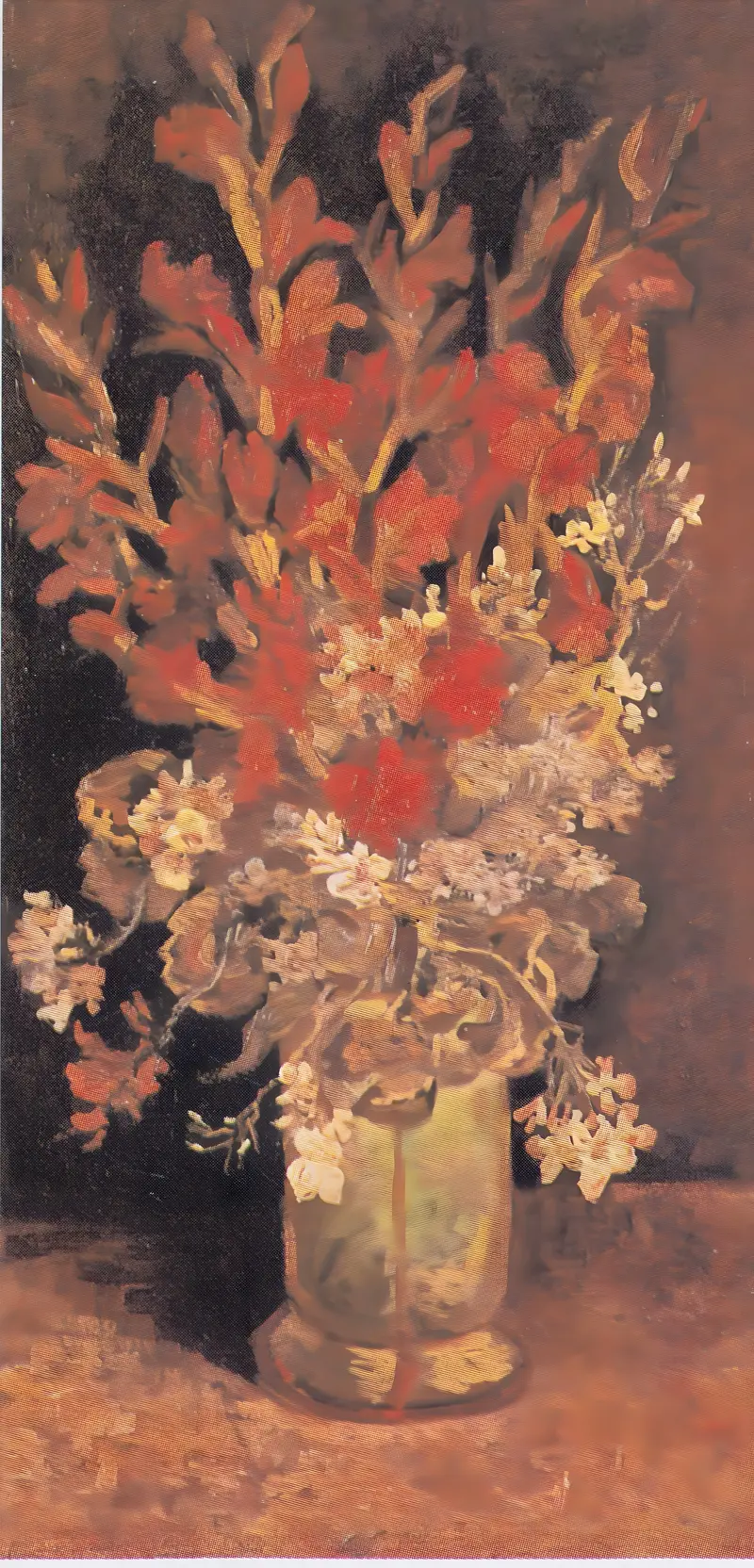
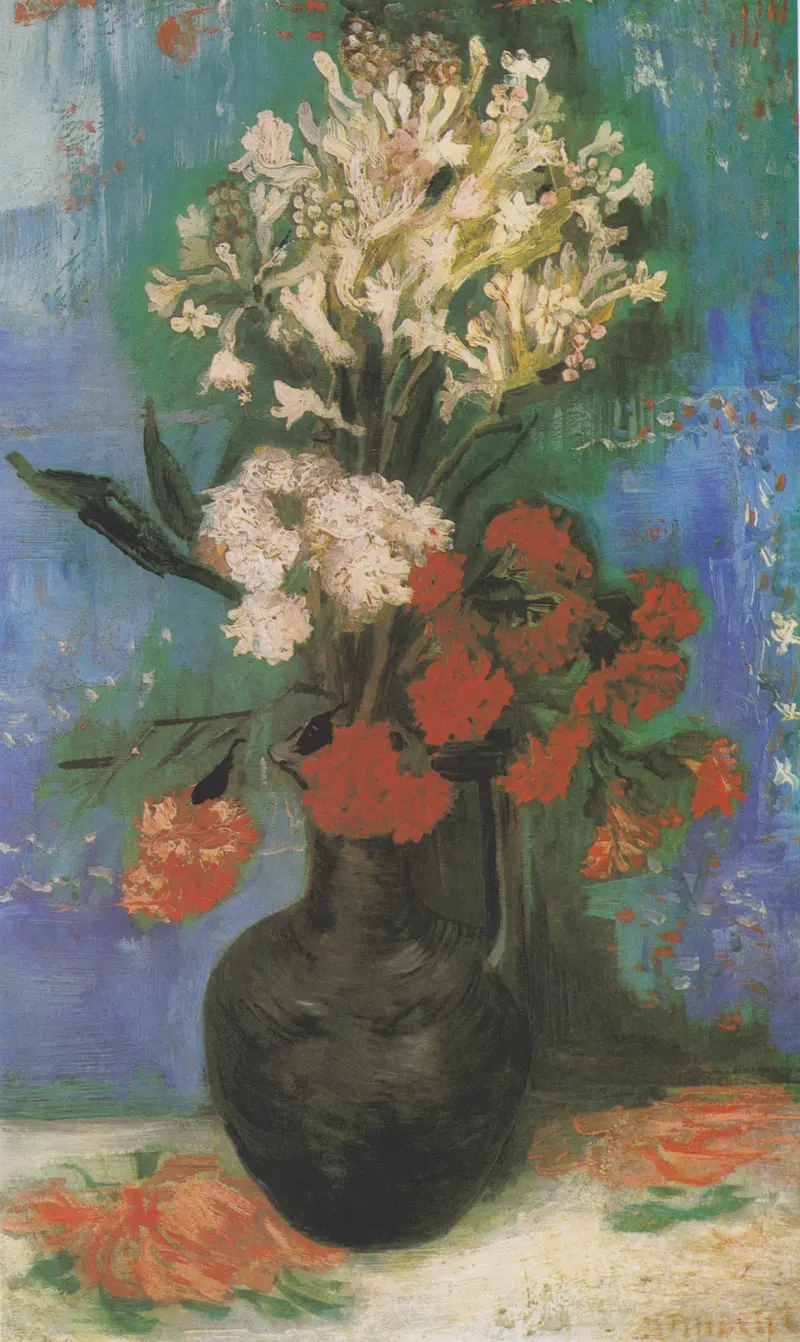
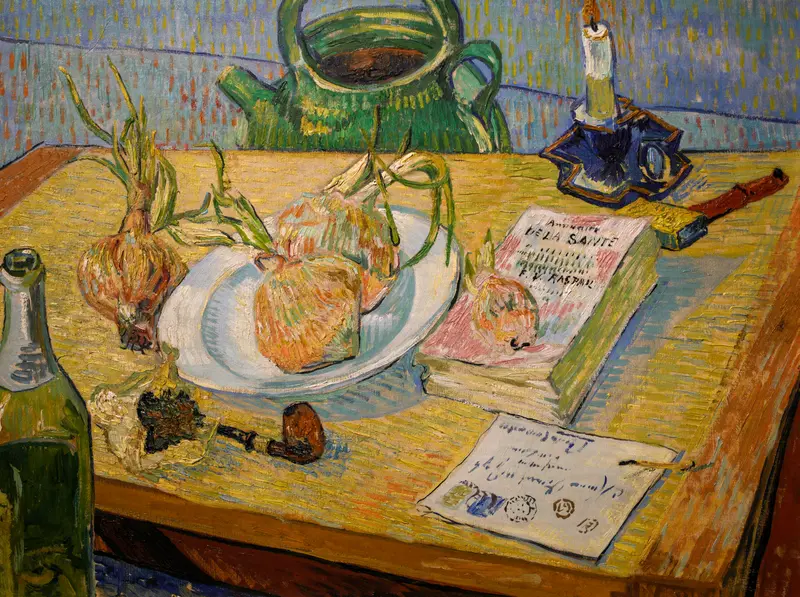
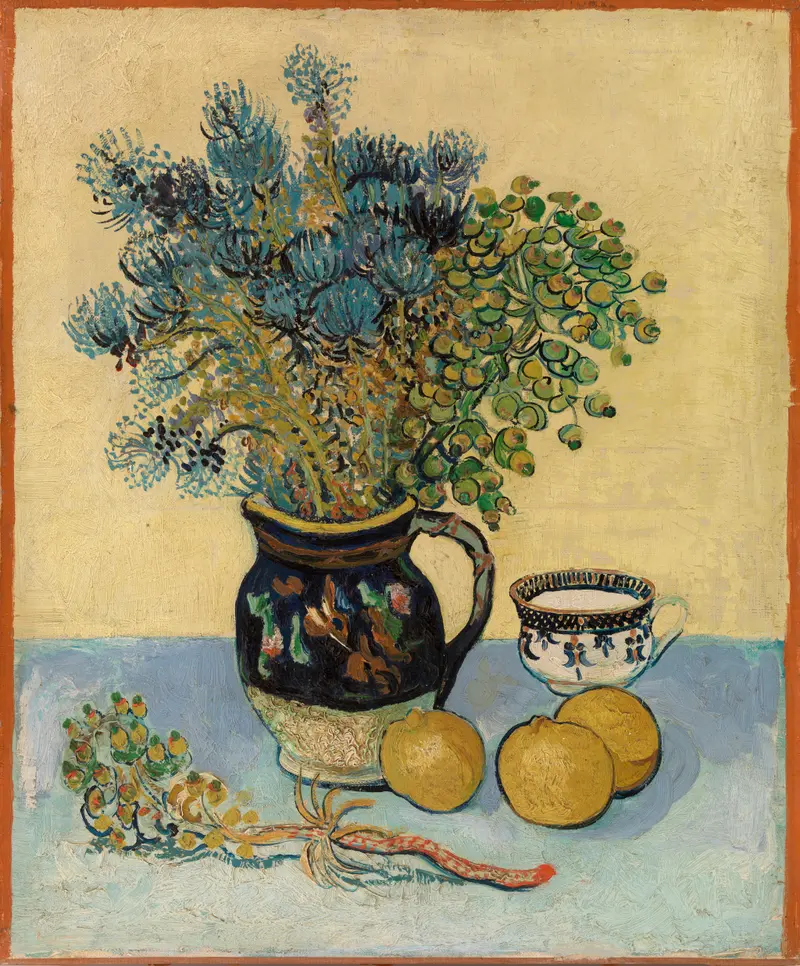
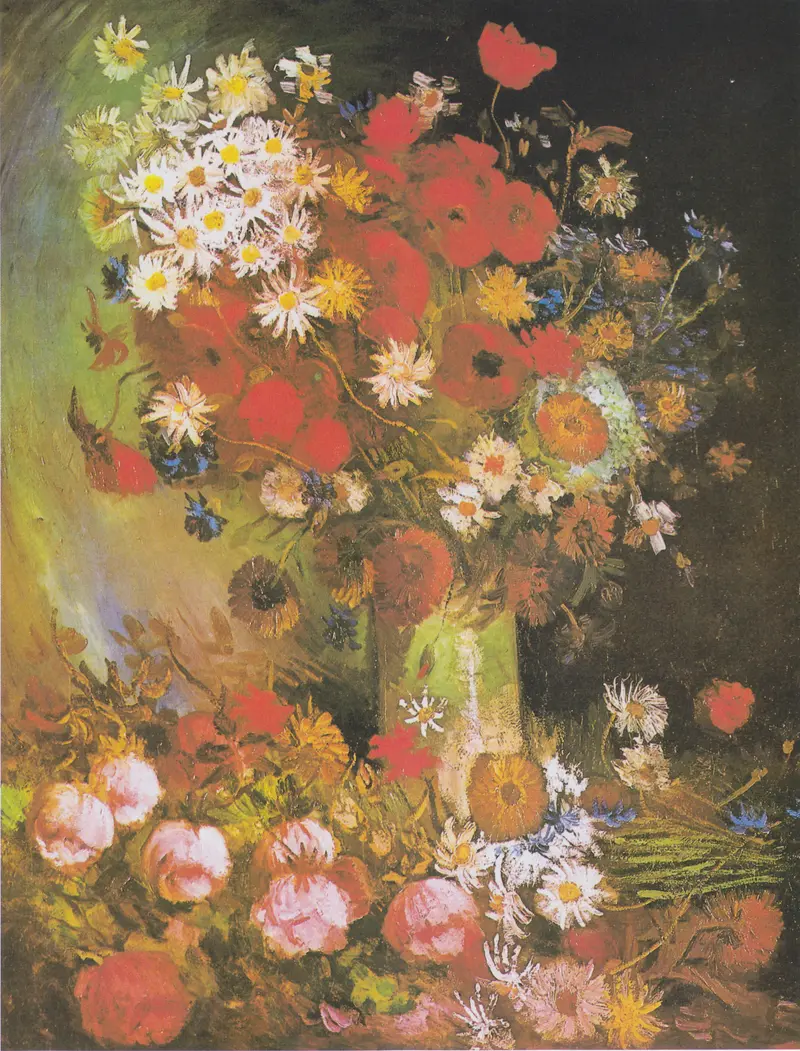
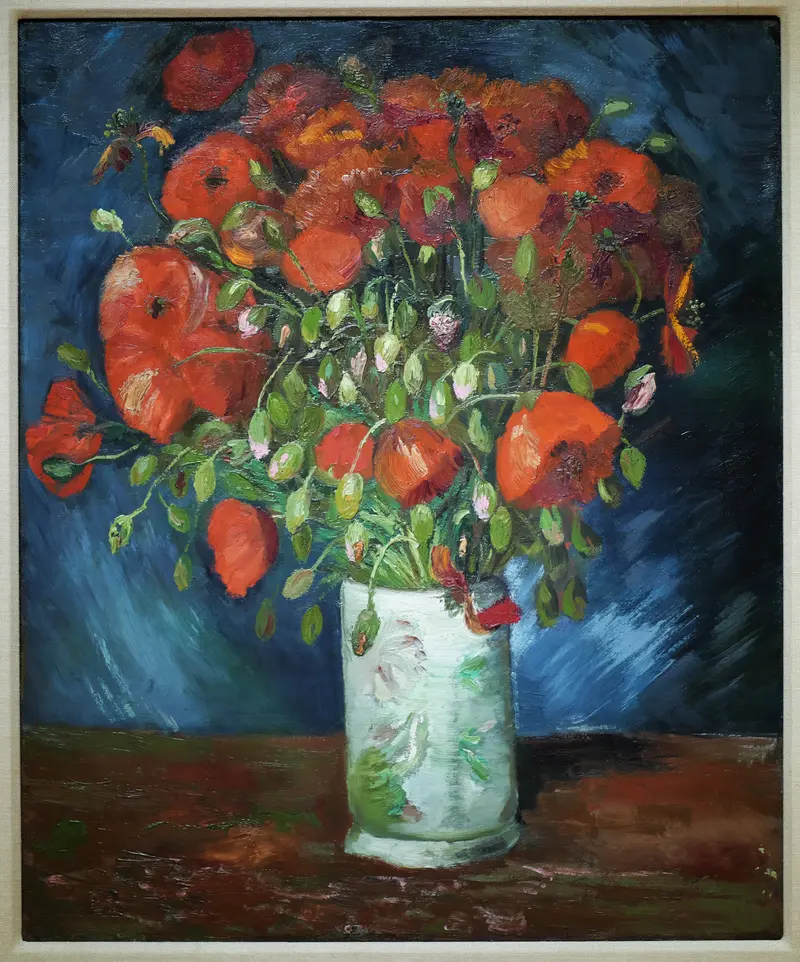
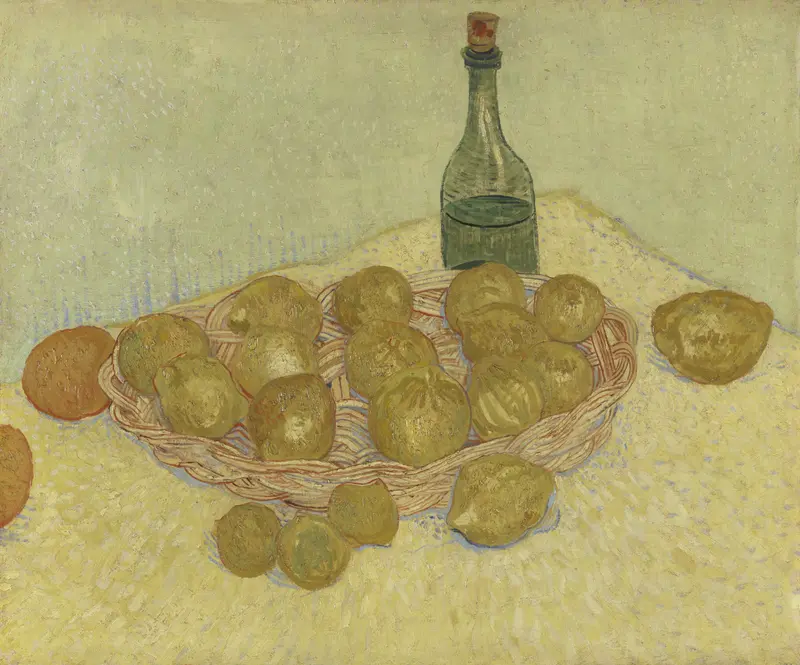
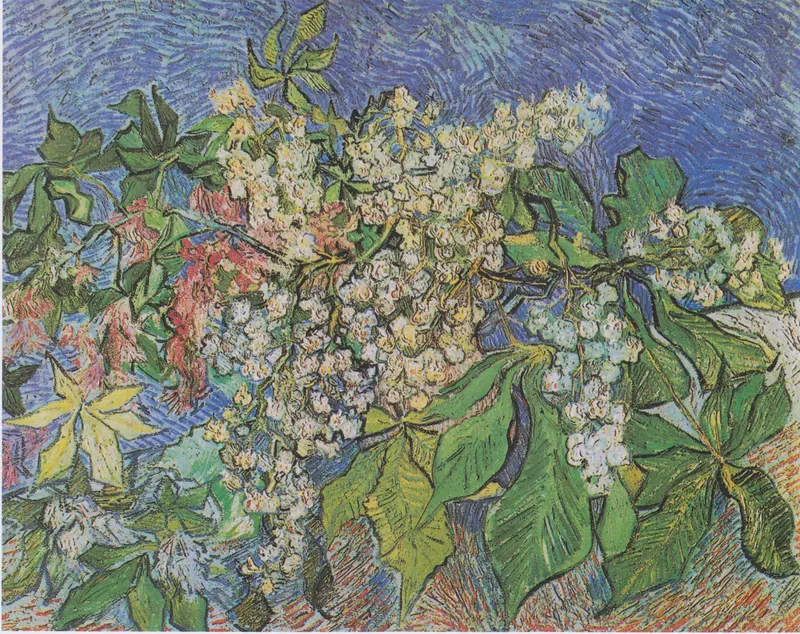
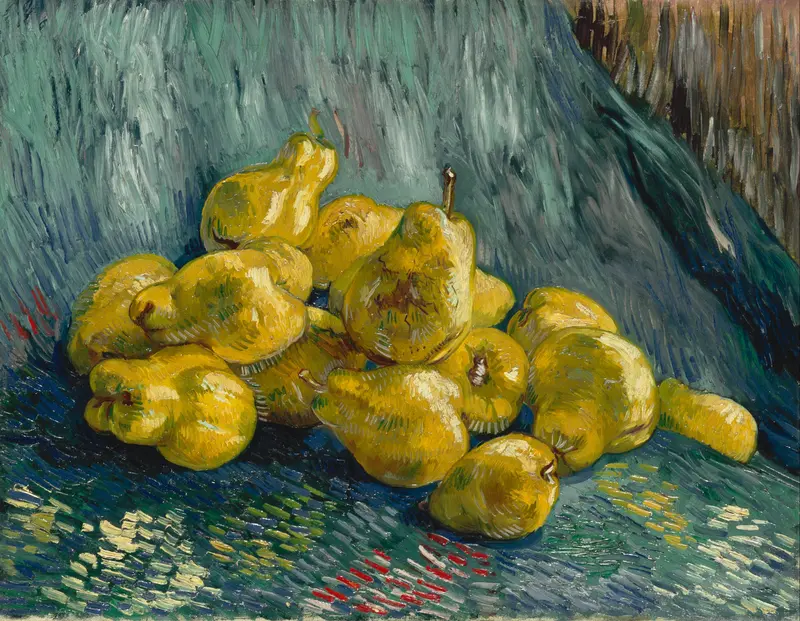
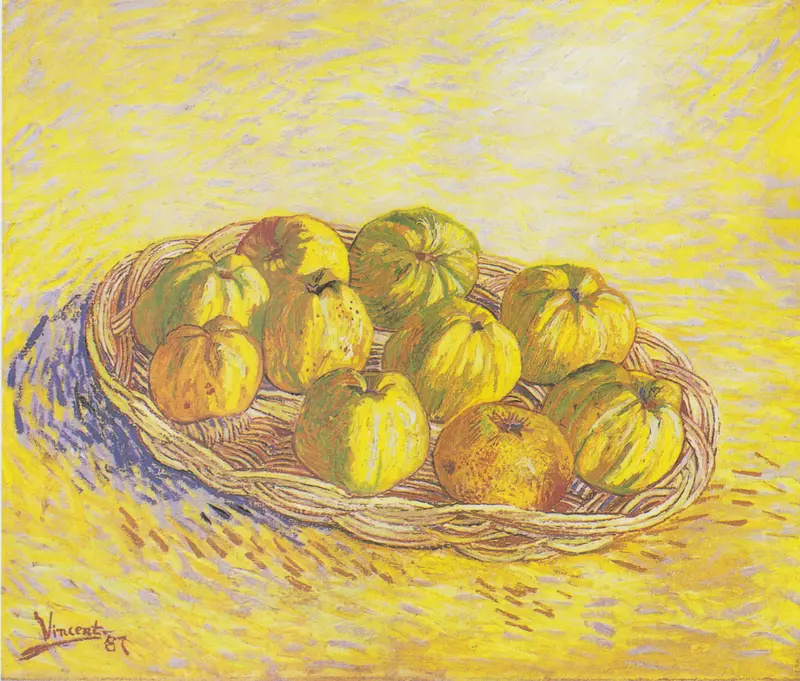
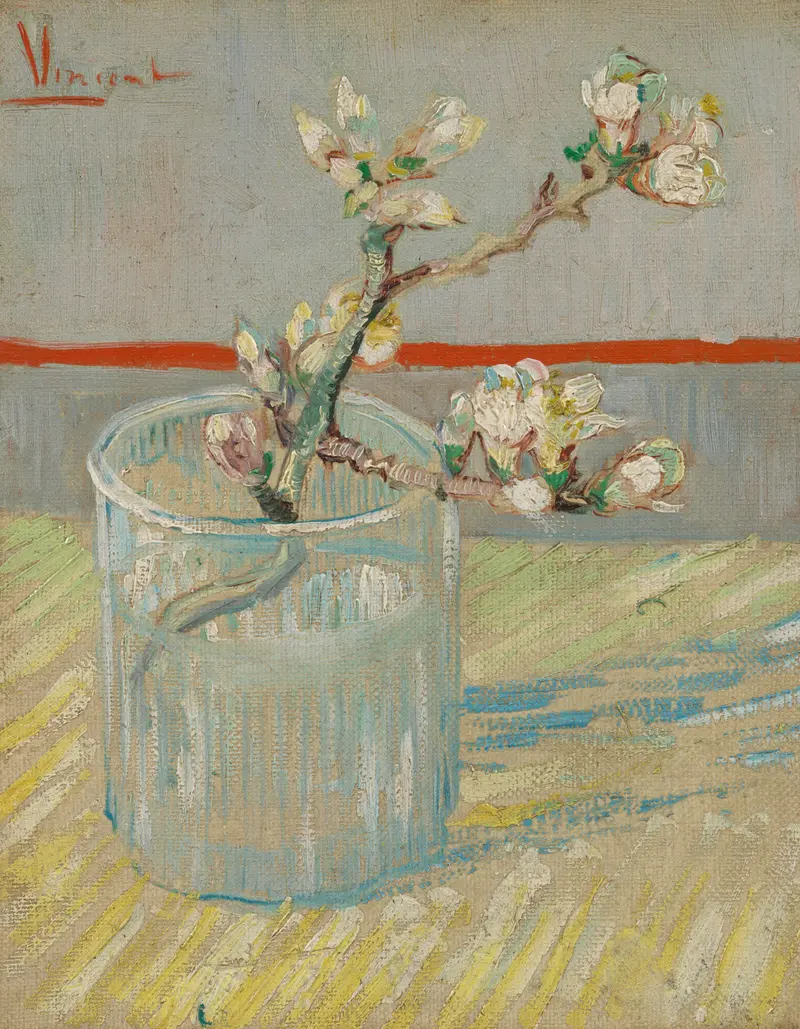
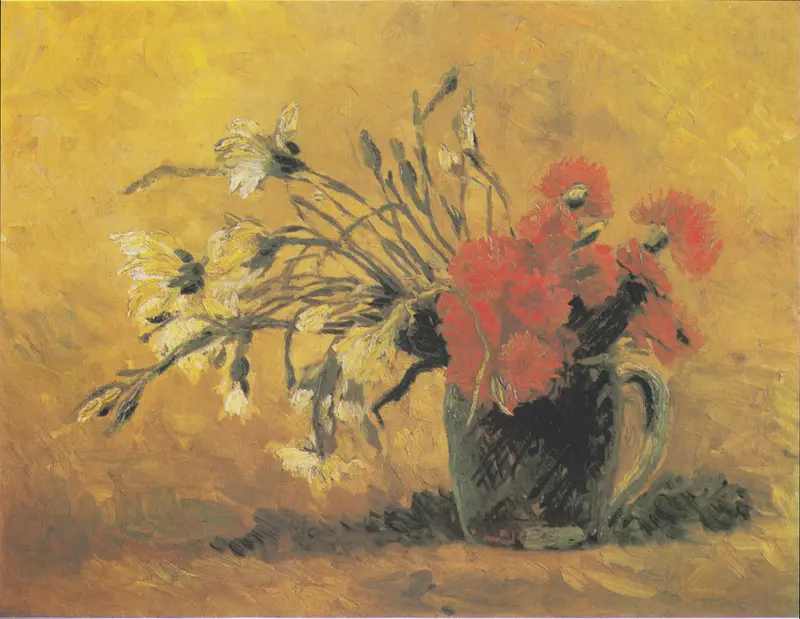
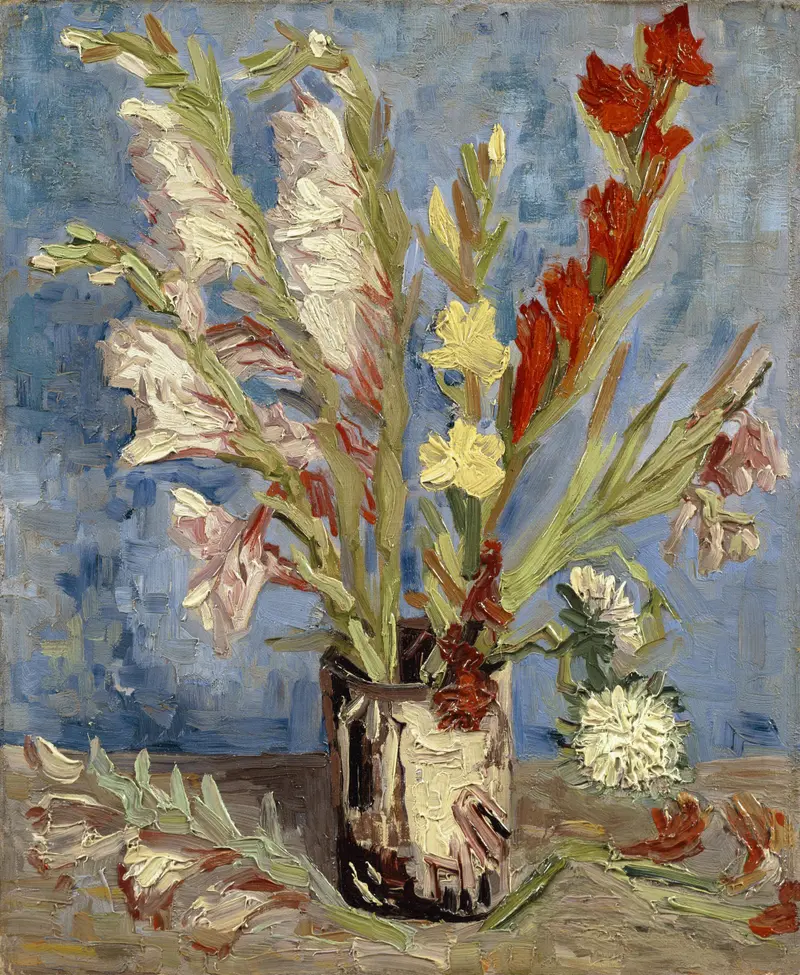
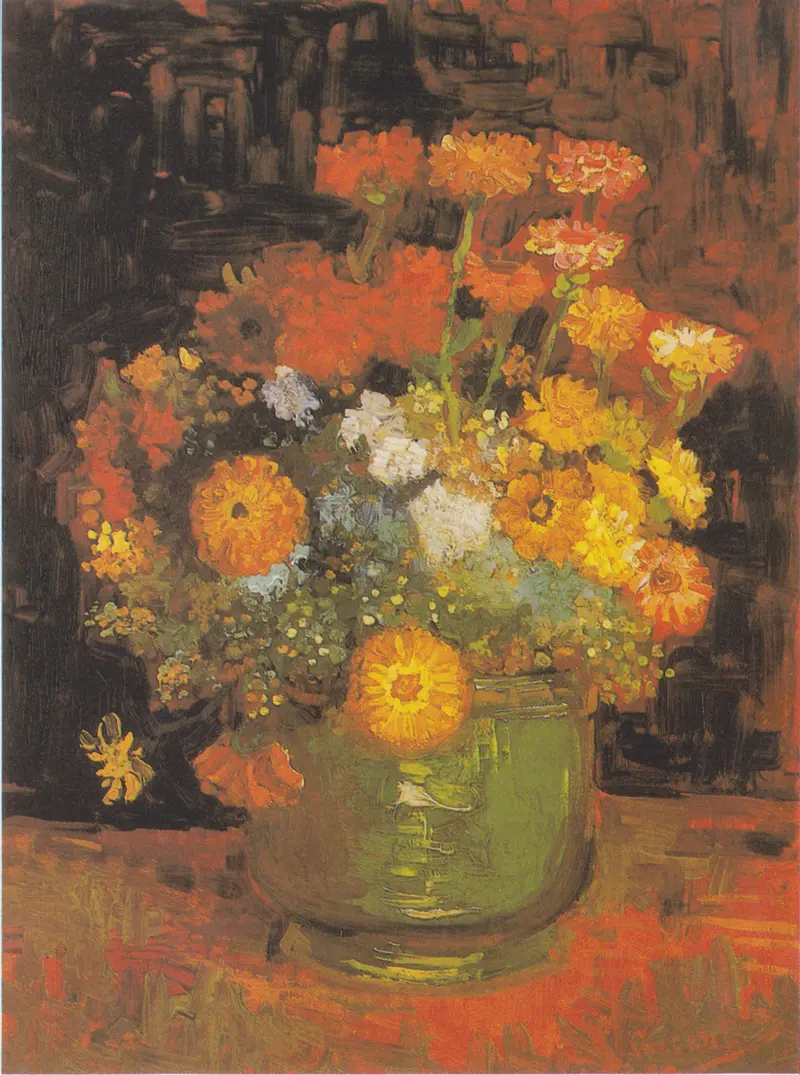
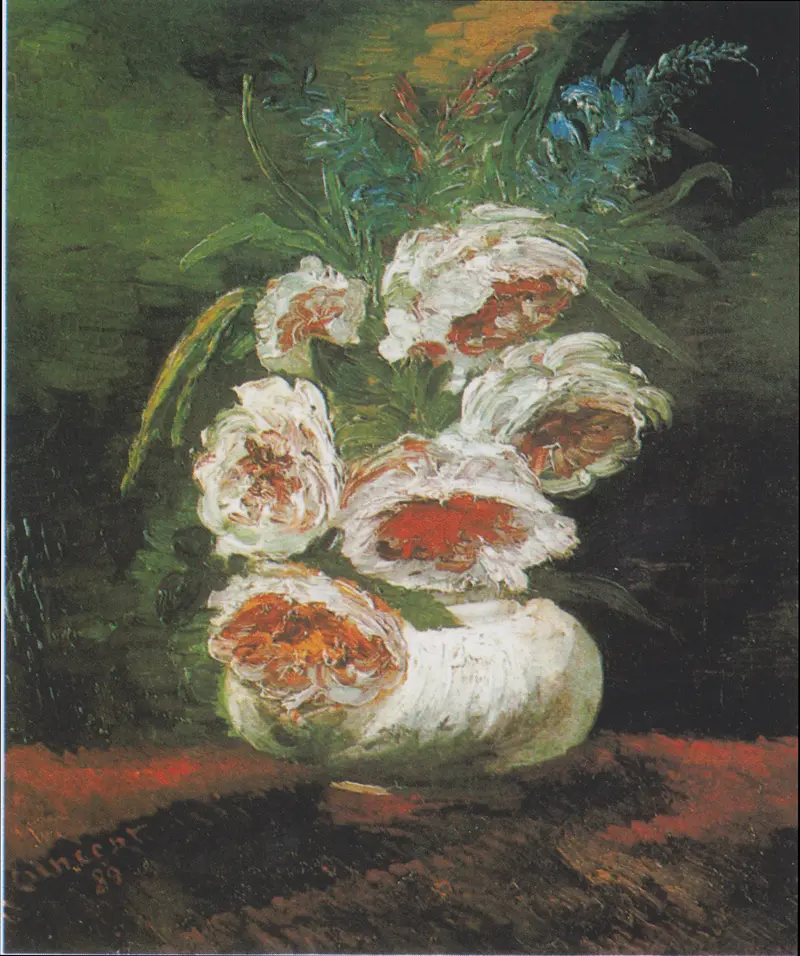
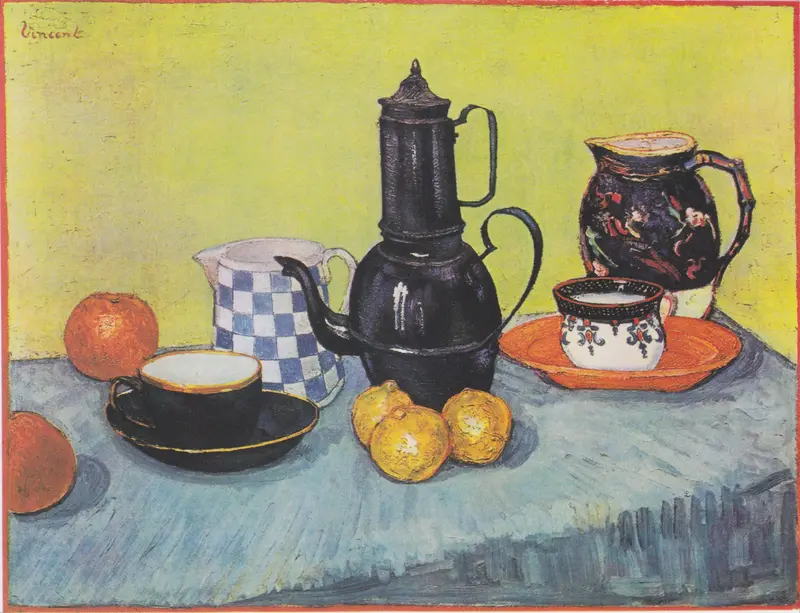
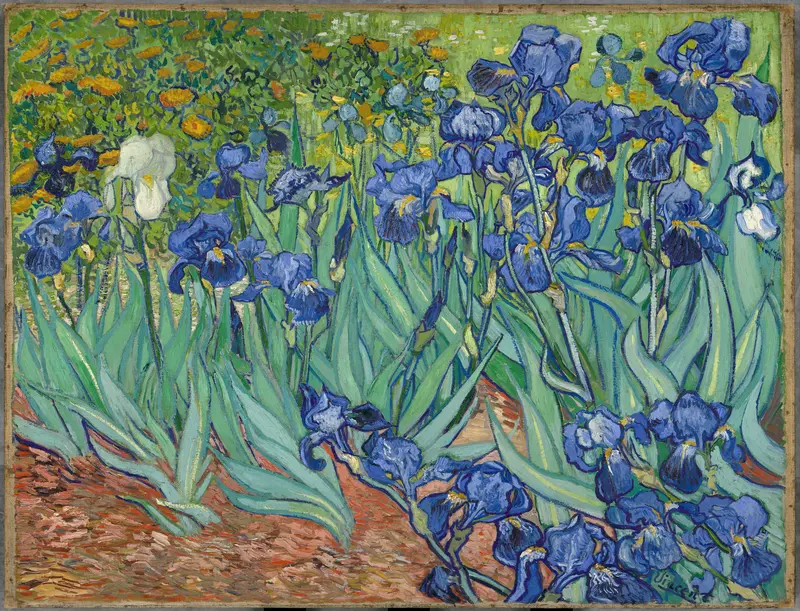
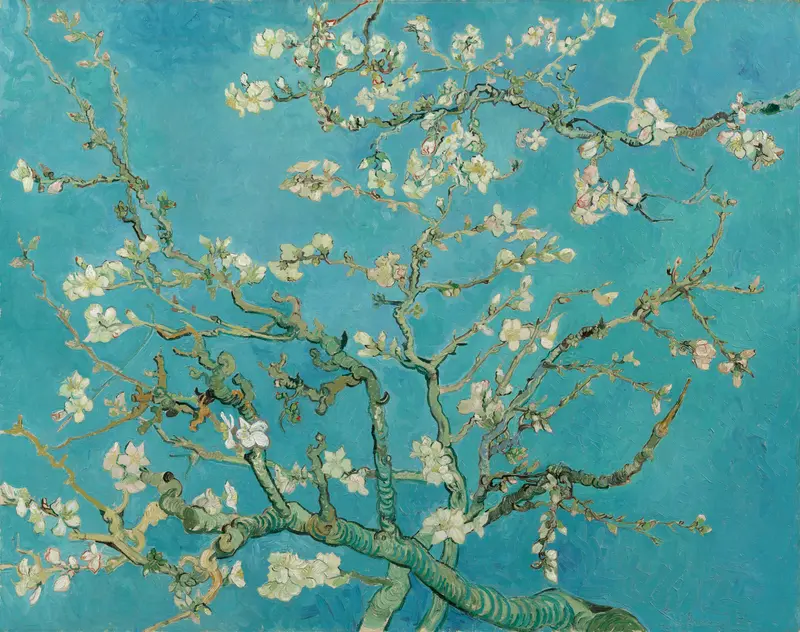
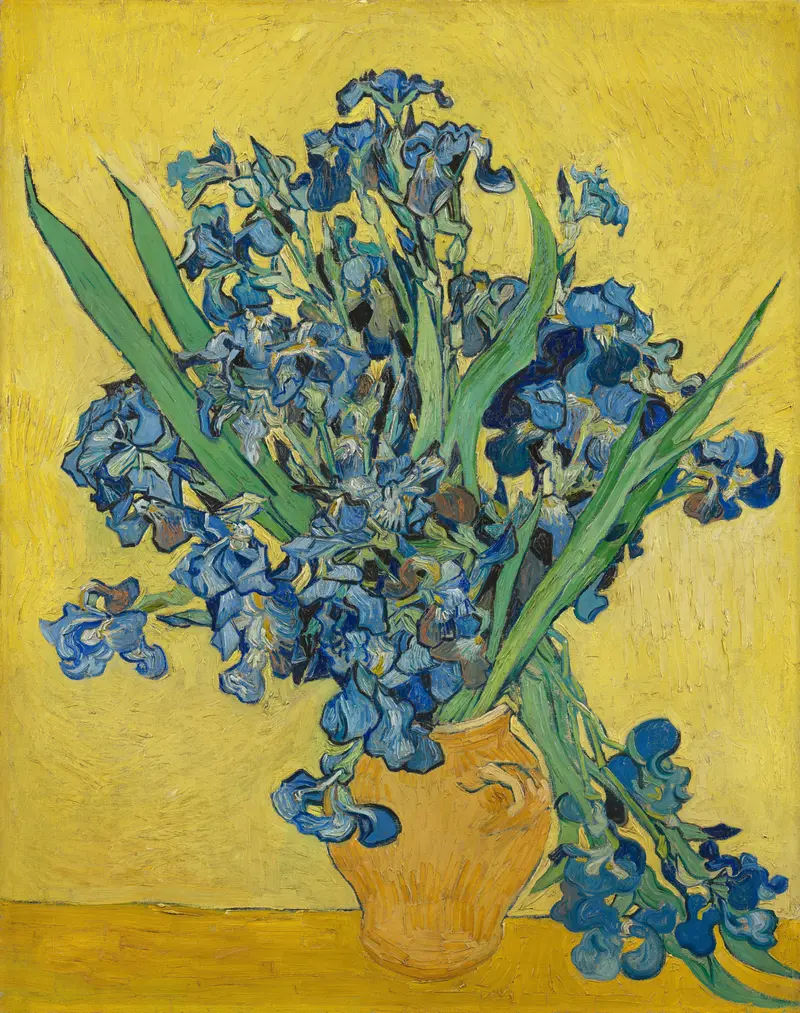
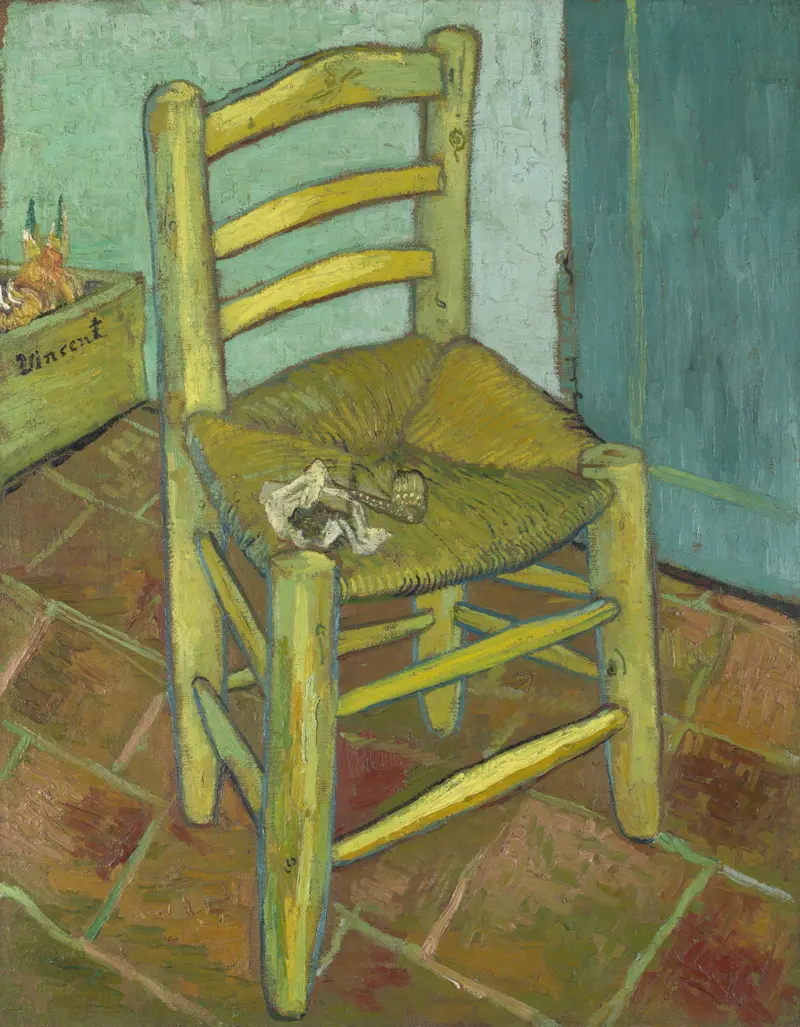
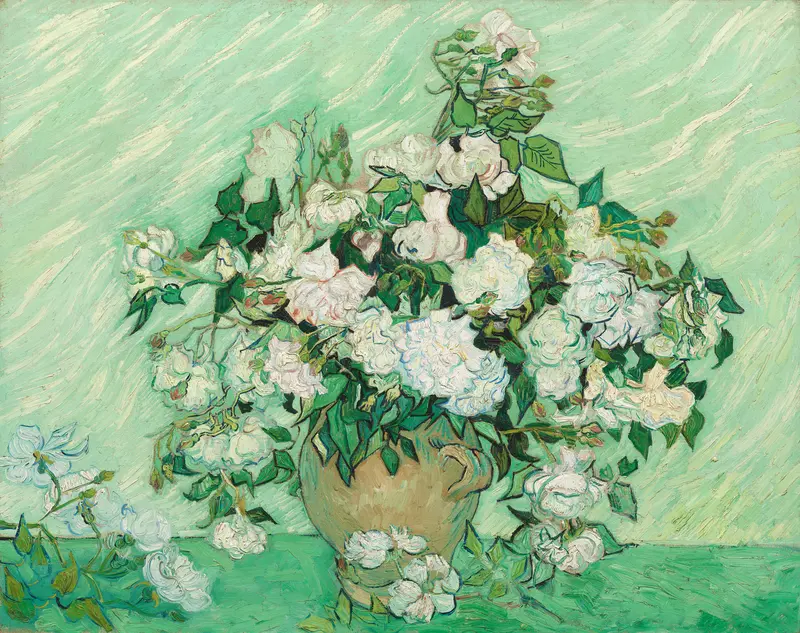
Sunflowers was only the start: Van Gogh also painted irises, roses, almond blossom and his own chair. Six more famous Van Gogh still life and flower paintings.
Famous still life paintings of flowers
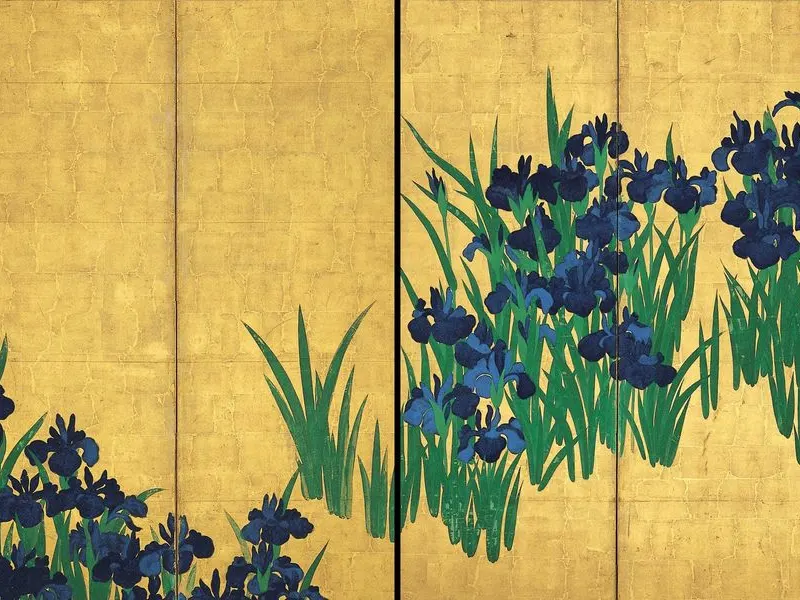
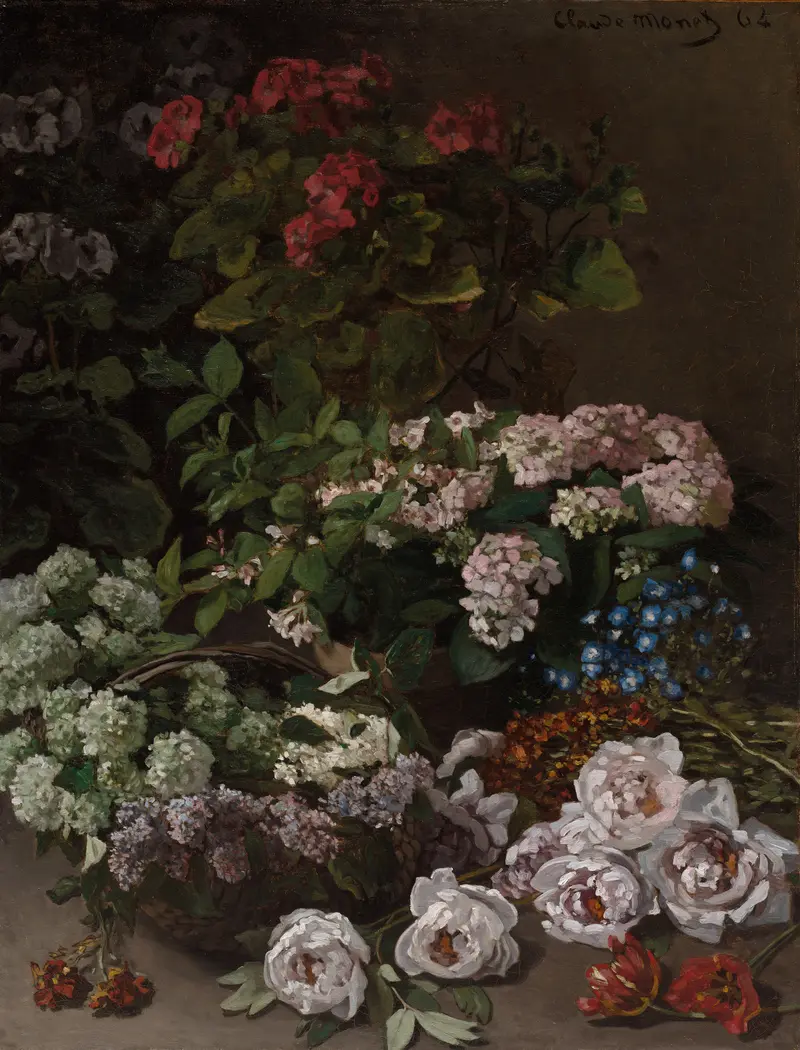
Dutch and Flemish painters made the flower piece famous, often combining blooms from different seasons in one impossible bouquet. Six famous flower still lifes, from Jan Brueghel the Elder to Fantin-Latour and Monet.
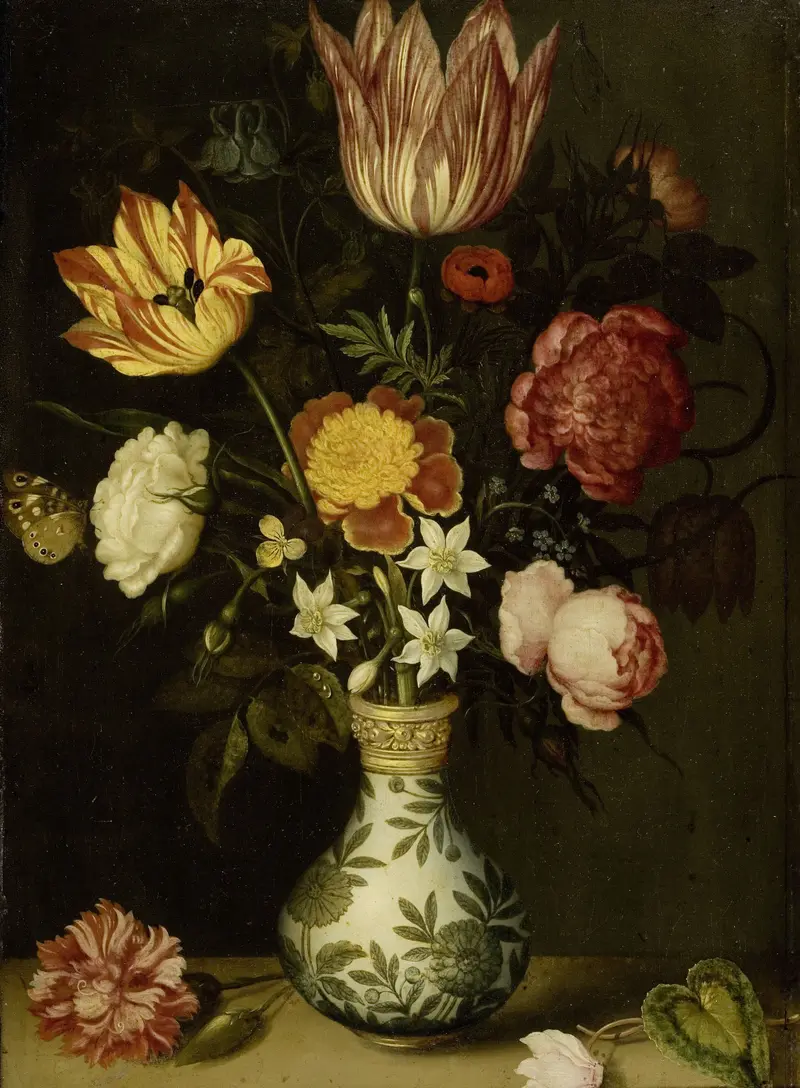
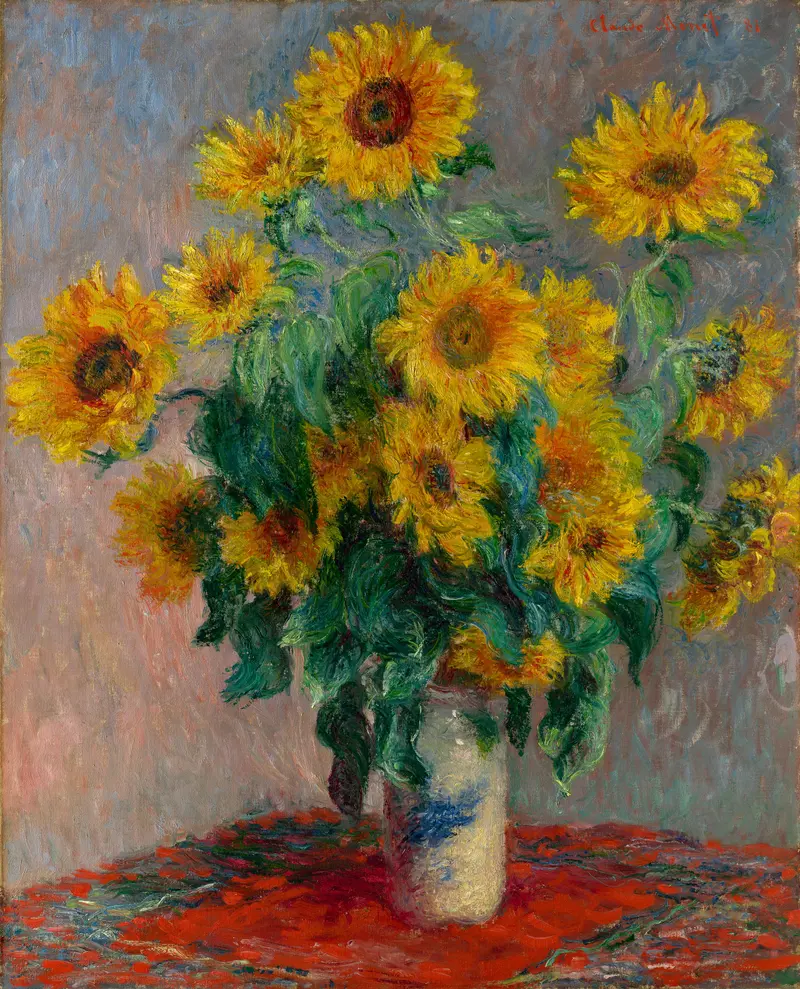
Famous still life paintings of food and fruit
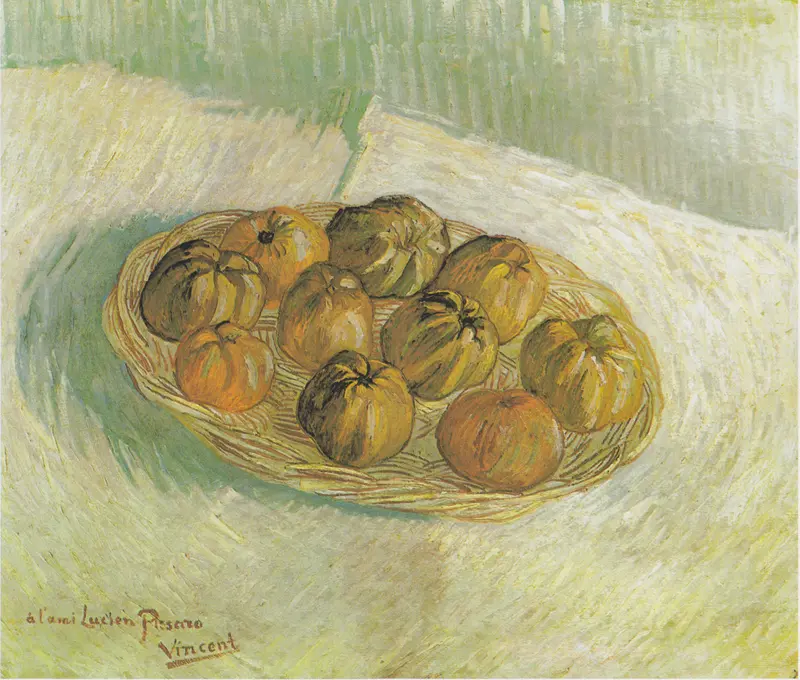
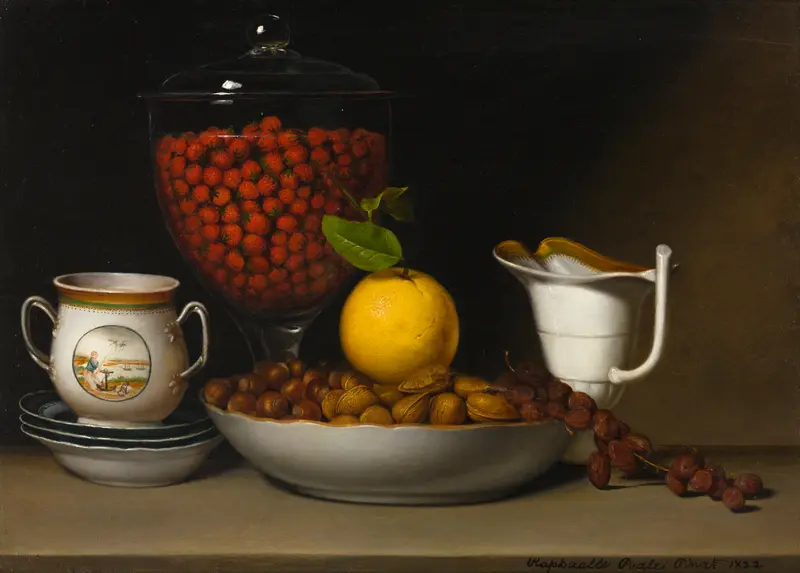
Pies, glasses, strawberries and apples: six famous still life paintings of food and fruit, from Pieter Claesz and Willem Kalf to Cézanne.
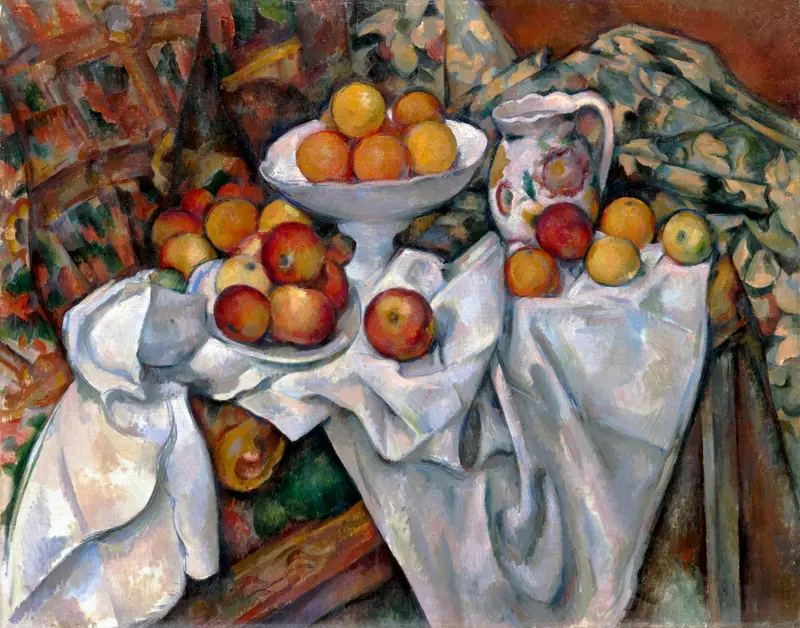
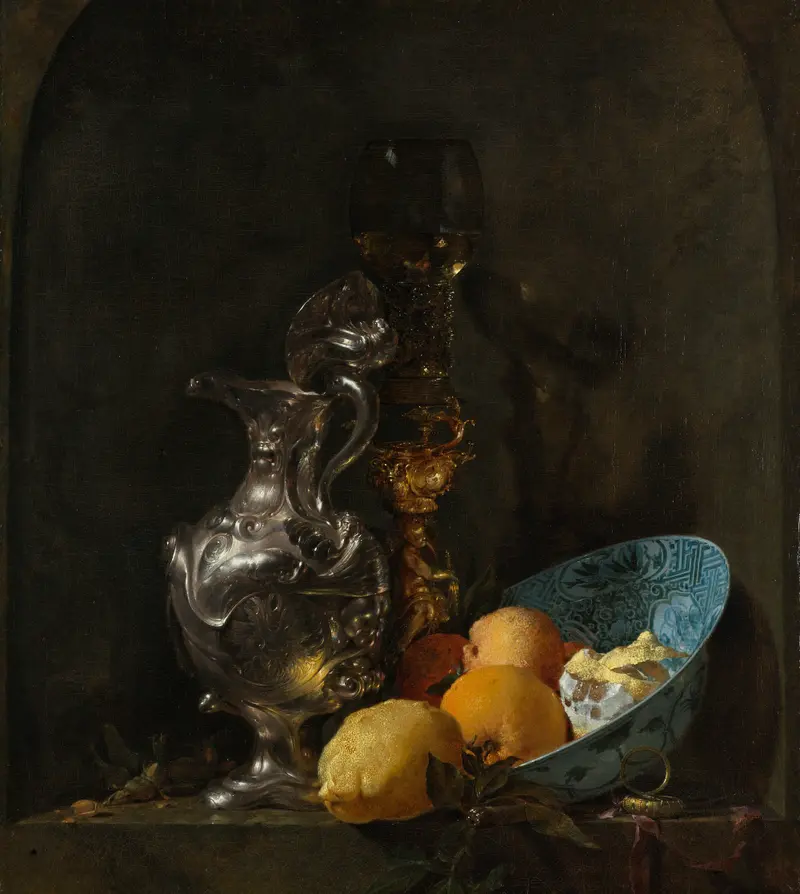

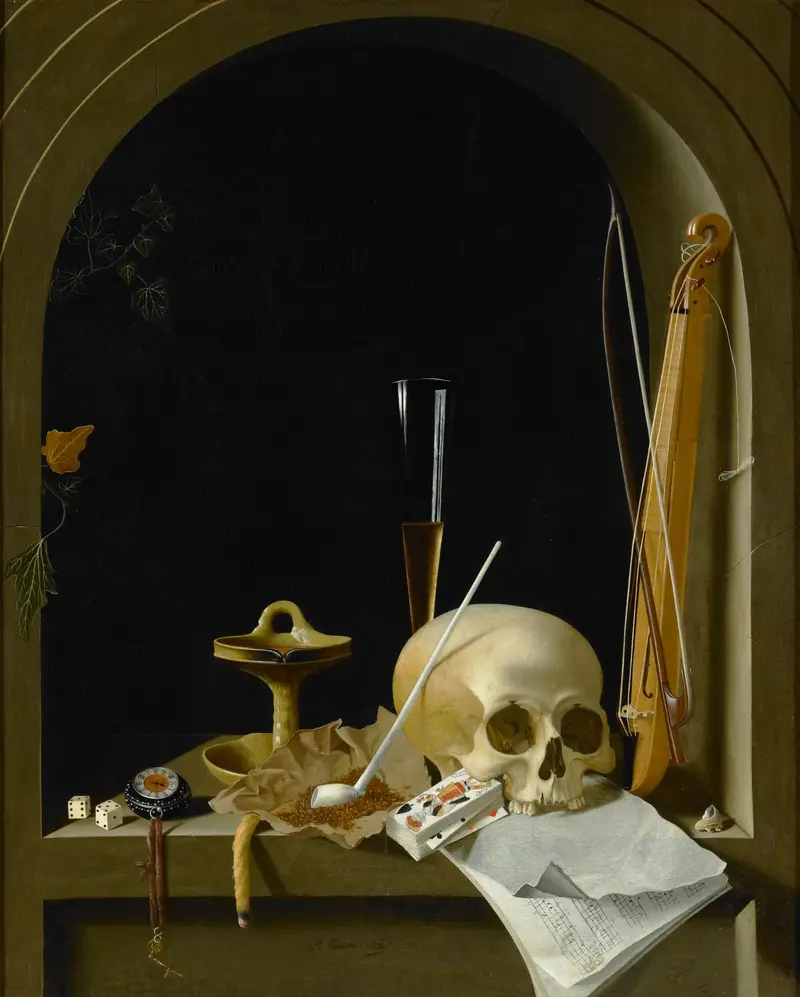
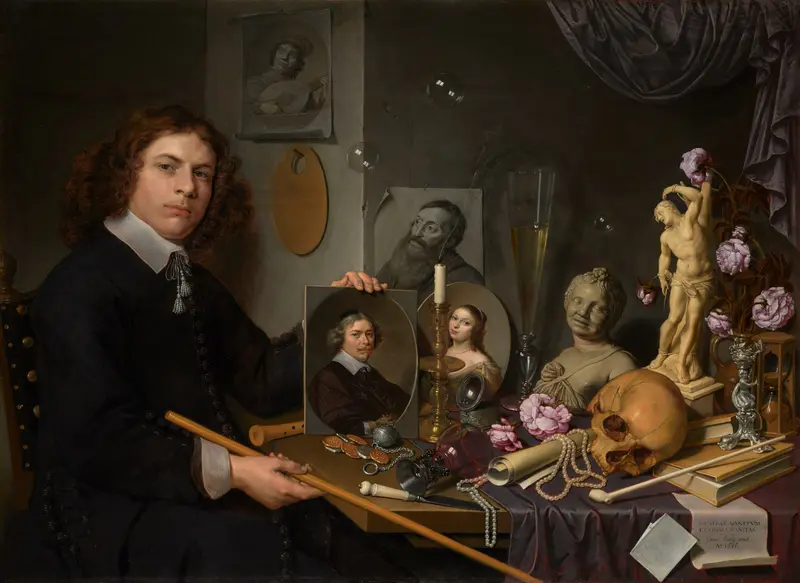
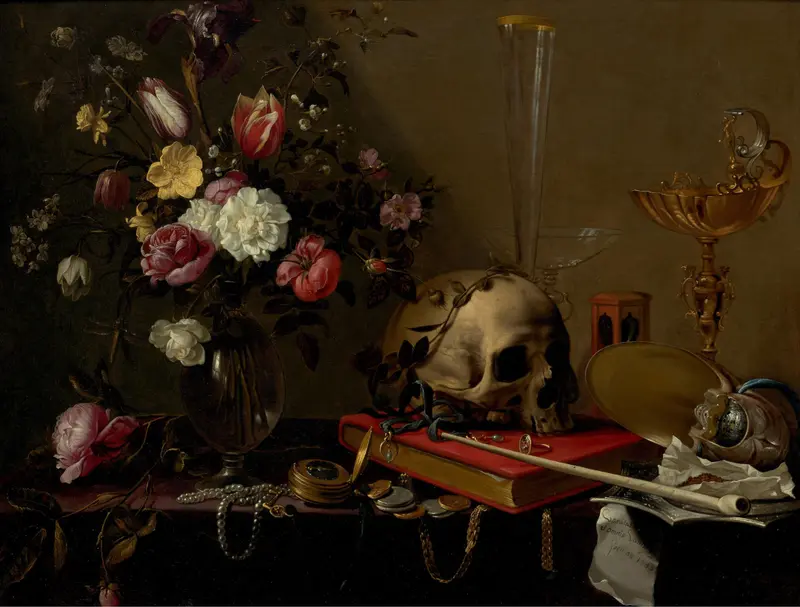
Vanitas still life paintings with skulls
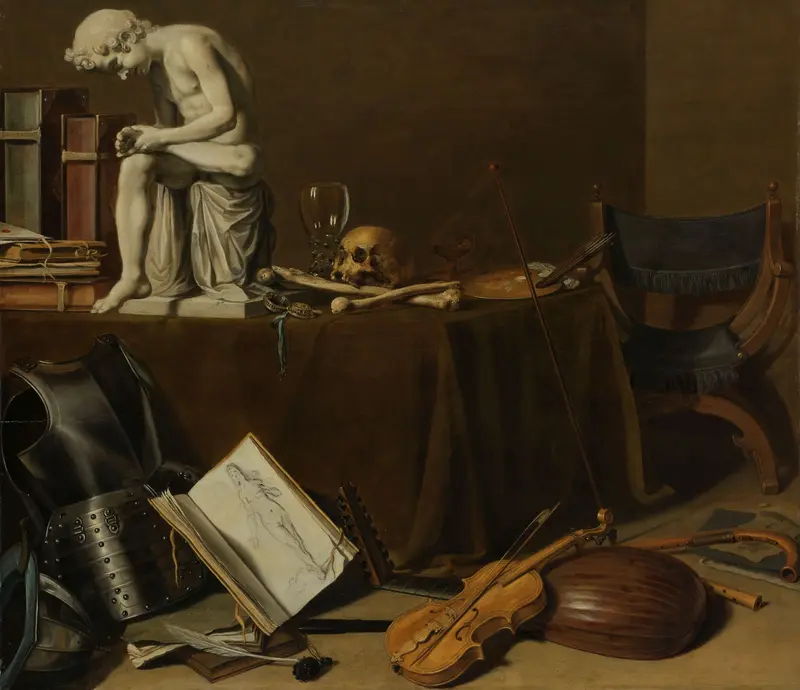
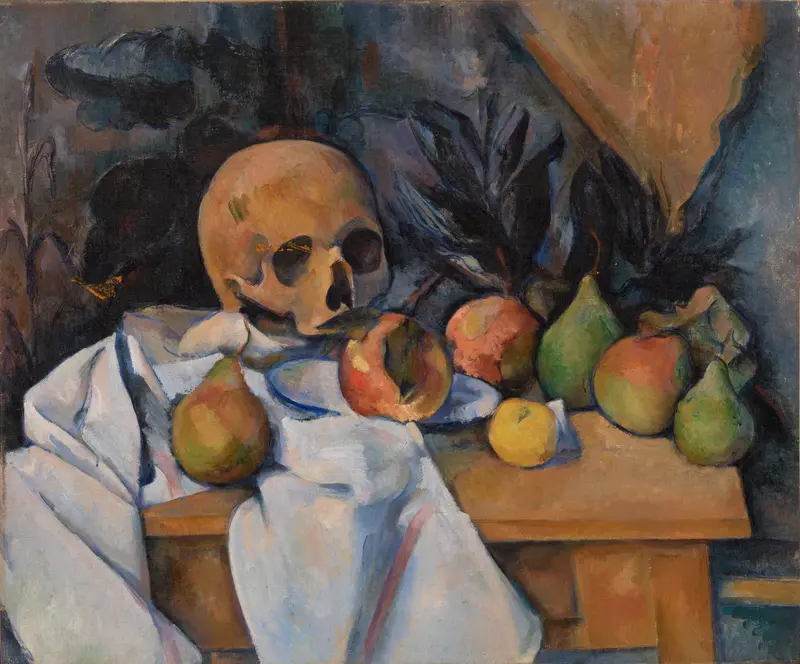
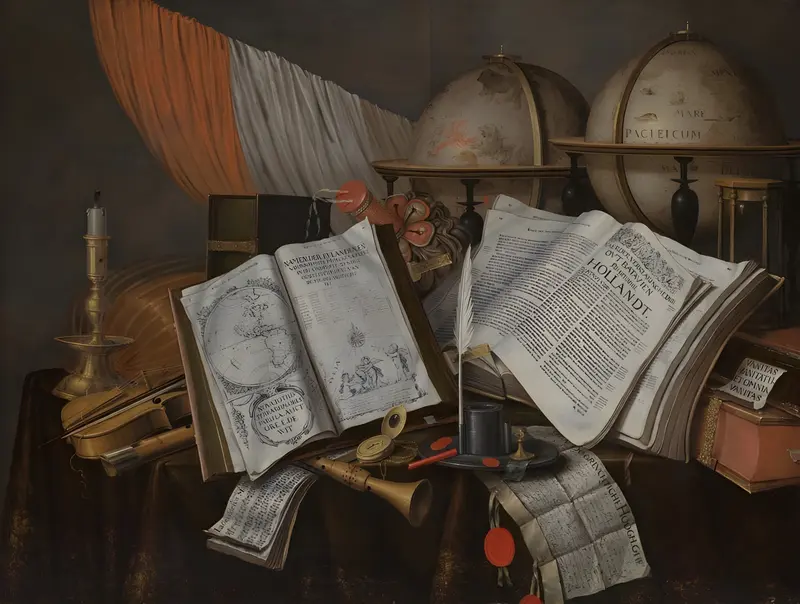
In a vanitas, a skull, a snuffed-out candle or a ticking watch reminds us that life and its pleasures are short. Six more famous still life paintings with skulls, from Pieter Claesz to Cézanne.
Famous still life painters
Famous still life artists, from the Flemish flower painters to Cézanne, including Rachel Ruysch, one of the finest flower painters of her age. Each link opens all their paintings.
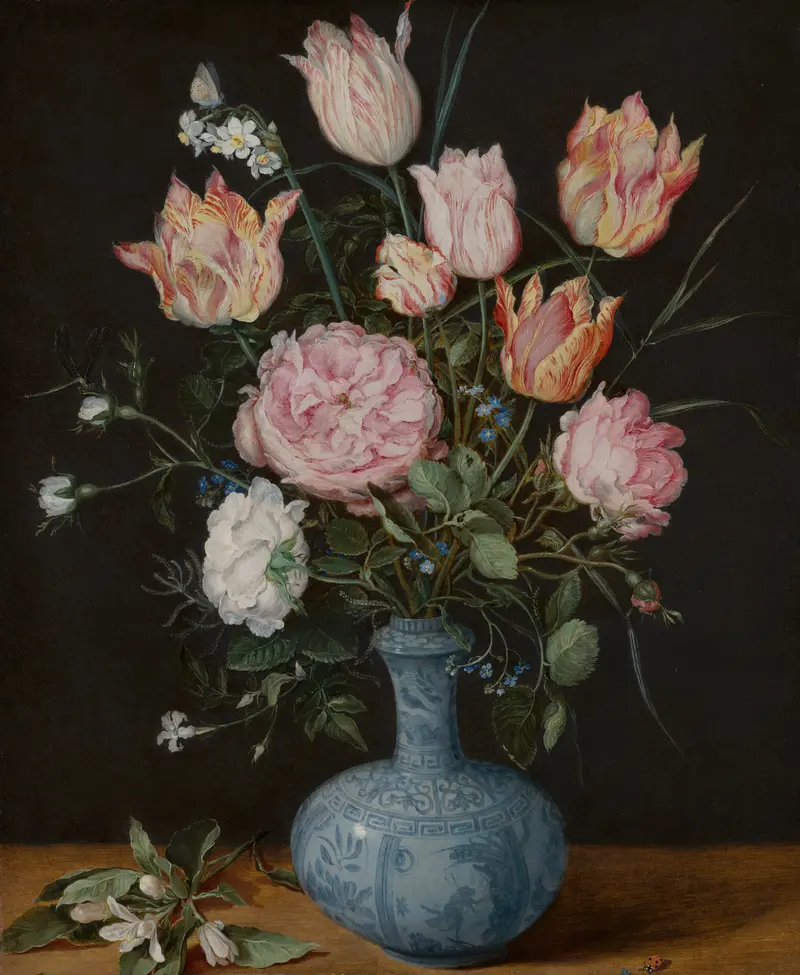 Jan Brueghel the ElderFlemish master of jewel-like bouquets that bring together flowers from different seasons.
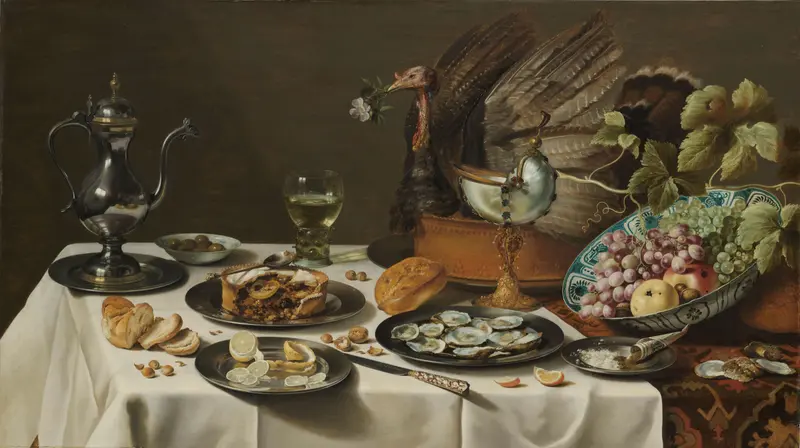 Pieter ClaeszDutch painter of laid tables and vanitas still lifes, from turkey pies to skulls.
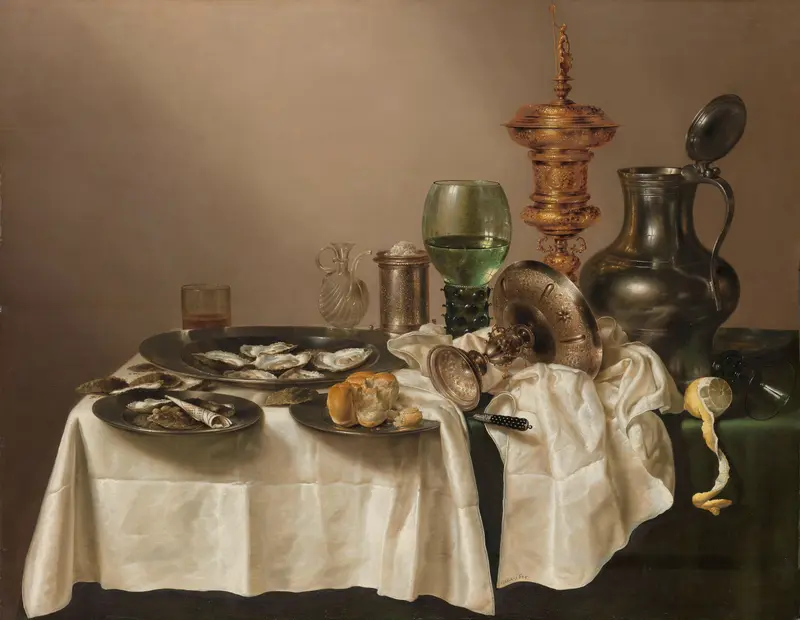 Willem Claesz HedaPainted gleaming silver, glass and half-finished meals in soft gray light.
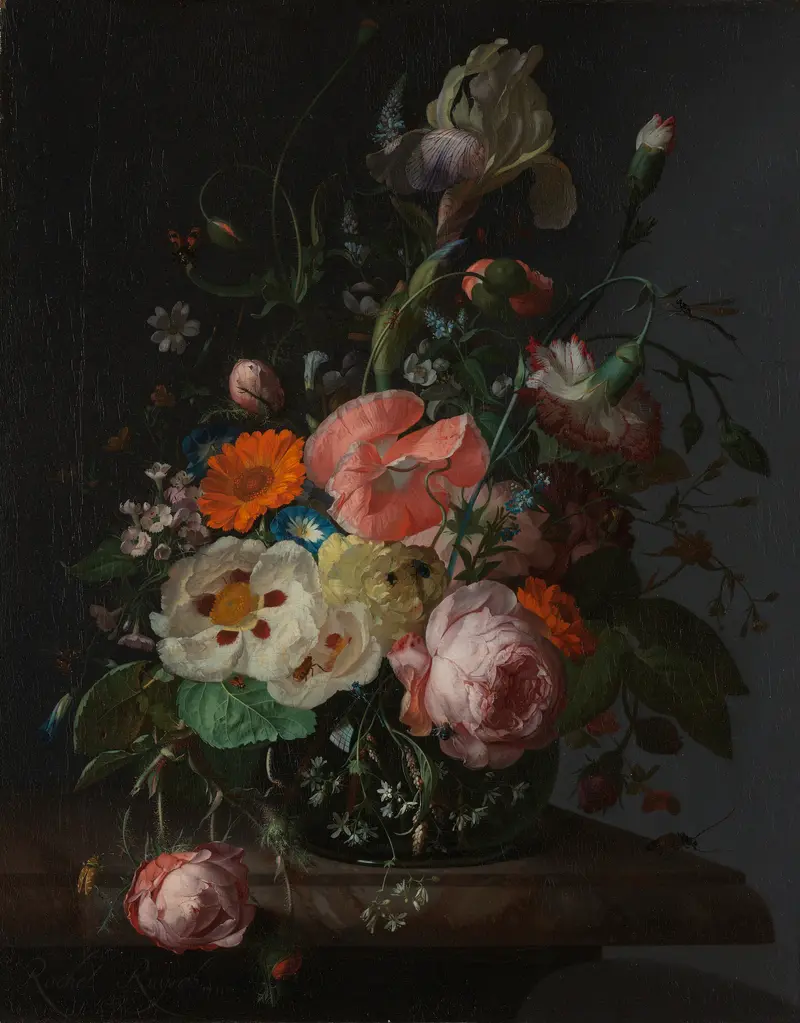 Rachel RuyschOften considered the finest of the Dutch flower painters of her time.
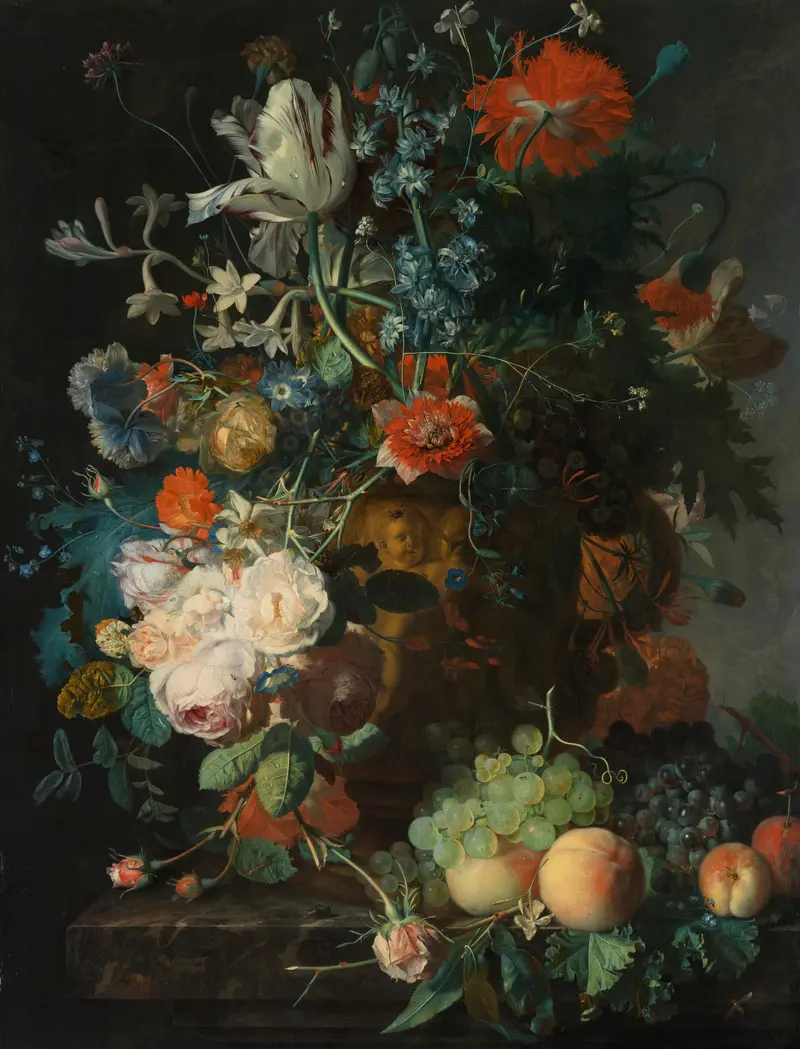 Jan van HuysumThe star flower painter of 18th-century Amsterdam, famously secretive about his methods.
- Jean Siméon ChardinEntered the Royal Academy in 1728 with The Ray and The Buffet, and made humble kitchen things beautiful.
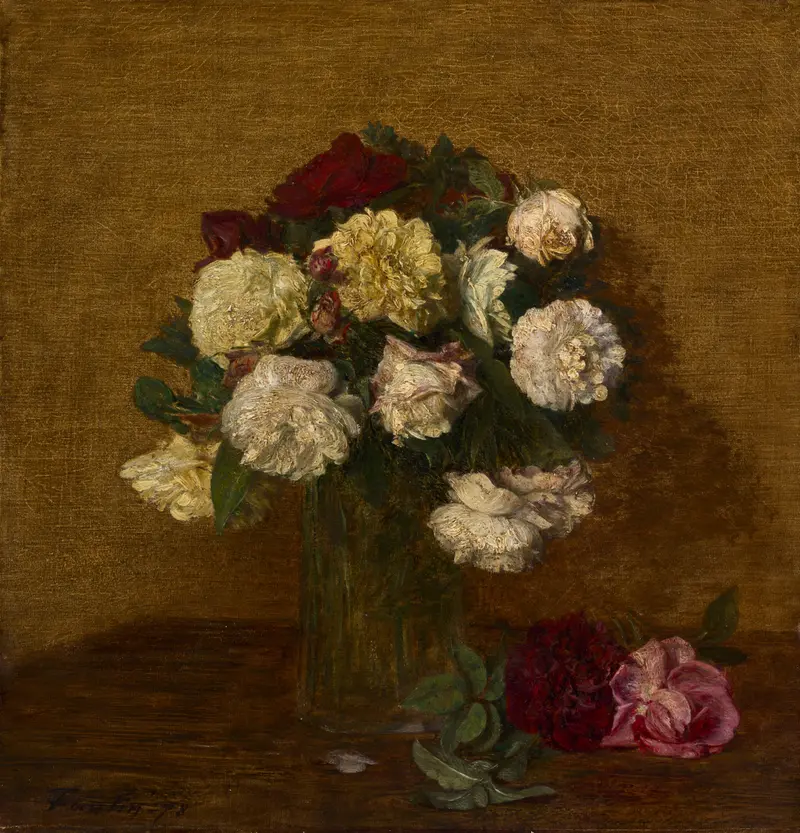 Henri Fantin-LatourPainted more than 800 flower pictures, over 100 of them showing only roses.
- Paul CézanneUsed apples, jugs and tablecloths for bold experiments that shaped modern art.
List of famous still life paintings and their artists
The 25 most famous still life paintings: who painted them, what they show, when, and where each one is today.
Show the list of 25 still life paintingsHide the list
| # | Painting | Subject | Painted by | Year | Medium | Size | Located in | City |
|---|---|---|---|---|---|---|---|---|
| 1 | Sunflowers | Flowers (sunflowers) | Vincent van Gogh | 1888 | Oil on canvas | 92.1 × 73 cm (36.3 × 28.7 in) | National Gallery | London |
| 2 | Skull of a Skeleton with Burning Cigarette | Vanitas (skull) | Vincent van Gogh | 1886 | Oil on canvas | 32.3 × 24.8 cm (12.7 × 9.8 in) | Van Gogh Museum | Amsterdam |
| 3 | Basket of Fruit | Fruit | Caravaggio | c. 1597–1600 | Oil on canvas | 47 × 61 cm (18.5 × 24 in) | Pinacoteca Ambrosiana | Milan |
| 4 | The Slaughtered Ox | Meat (a flayed ox) | Rembrandt | 1655 | Oil on beech panel | 94 × 69 cm (37 × 27.2 in) | Louvre | Paris |
| 5 | The Basket of Apples | Fruit | Paul Cézanne | c. 1893 | Oil on canvas | 65 × 80 cm (25.6 × 31.5 in) | Art Institute of Chicago | Chicago |
| 6 | Rideau, Cruchon et Compotier | Fruit | Paul Cézanne | 1893–1894 | Oil on canvas | 59 × 72.4 cm (23.2 × 28.5 in) | Private collection | |
| 7 | Asparagus | Vegetables (asparagus) | Édouard Manet | 1880 | Oil on canvas | 16.9 × 21.9 cm (6.7 × 8.6 in) | Musée d'Orsay | Paris |
| 8 | Still Life with Cheeses, Almonds and Pretzels | Food | Clara Peeters | c. 1615 | Oil on panel | 34.5 × 49.5 cm (13.6 × 19.5 in) | Mauritshuis | The Hague |
| 9 | The Ray | Fish (a ray) | Jean Siméon Chardin | 1728 | Oil on canvas | 114.5 × 146 cm (45.1 × 57.5 in) | Louvre | Paris |
| 10 | Still Life with Partridge and Iron Gloves | Game (a partridge) | Jacopo de' Barbari | 1504 | Oil on limewood | 52 × 42.5 cm (20.5 × 16.7 in) | Alte Pinakothek | Munich |
| 11 | Still Life with Profile of Laval | Fruit | Paul Gauguin | 1886 | Oil on canvas | 46 × 38.1 cm (18.1 × 15 in) | Indianapolis Museum of Art at Newfields | Indianapolis |
| 12 | Still Life with Lemons, Oranges and a Rose | Fruit and flowers | Francisco de Zurbarán | 1633 | Oil on canvas | 62.2 × 109.5 cm (24.5 × 43.1 in) | Norton Simon Museum | Pasadena |
| 13 | Goldfish | Goldfish and plants | Henri Matisse | 1912 | Oil on canvas | 140 × 98 cm (55.1 × 38.6 in) | Pushkin Museum of Fine Arts | Moscow |
| 14 | A Bunch of Asparagus | Vegetables (asparagus) | Édouard Manet | 1880 | Oil on canvas | 46 × 55 cm (18.1 × 21.7 in) | Wallraf-Richartz-Museum | Cologne |
| 15 | The Studio Wall | Plaster casts | Adolph Menzel | 1872 | Oil on canvas | 111 × 79.3 cm (43.7 × 31.2 in) | Hamburger Kunsthalle | Hamburg |
| 16 | Still Life with Peacocks | Game (peacocks) | Rembrandt | c. 1639 | Oil on canvas | 145 × 135.5 cm (57.1 × 53.3 in) | Rijksmuseum | Amsterdam |
| 17 | A Vase of Flowers | Flowers | Margareta Haverman | 1716 | Oil on wood | 79.4 × 60.3 cm (31.3 × 23.7 in) | Metropolitan Museum of Art | New York |
| 18 | Still Life with Game, Vegetables and Fruit | Game, vegetables and fruit | Juan Sánchez Cotán | 1602 | Oil on canvas | 68 × 88.2 cm (26.8 × 34.7 in) | Museo del Prado | Madrid |
| 19 | The Buffet | Fruit and tableware | Jean Siméon Chardin | 1728 | Oil on canvas | 194 × 129 cm (76.4 × 50.8 in) | Louvre | Paris |
| 20 | Still Life: A Butcher's Counter | Meat | Francisco de Goya | 1808–1812 | Oil on canvas | 45 × 62 cm (17.7 × 24.4 in) | Louvre | Paris |
| 21 | The Bottle of Anís del Mono | A bottle (Cubist collage) | Juan Gris | 1914 | Oil, collage and graphite on canvas | 41.8 × 24 cm (16.5 × 9.4 in) | Museo Reina Sofía | Madrid |
| 22 | Still Life with a Sketch after Delacroix | Fruit | Paul Gauguin | c. 1887 | Oil on canvas | 45 × 30 cm (17.7 × 11.8 in) | Musée d'Art Moderne et Contemporain | Strasbourg |
| 23 | Lilacs in a Window | Flowers (lilacs) | Mary Cassatt | c. 1880–1883 | Oil on canvas | 61.5 × 51.1 cm (24.2 × 20.1 in) | Metropolitan Museum of Art | New York |
| 24 | Vase of Flowers | Flowers | Gwen John | 1910s | Oil on board | 40 × 32 cm (15.7 × 12.6 in) | National Library of Wales | Aberystwyth |
| 25 | An Allegory of the Vanities of Human Life | Vanitas (skull) | Harmen Steenwijck | c. 1640 | Oil on oak panel | 39.2 × 50.7 cm (15.4 × 20 in) | National Gallery | London |
Famous still life paintings: questions and answers
What is the most famous still life painting?
There's no official ranking, but Vincent van Gogh's Sunflowers (1888) is the strongest candidate. The National Gallery in London, which owns one of the five versions on public display, describes it as one of the most recognizable paintings in the history of art. Close behind are Caravaggio's Basket of Fruit in Milan, which the Ambrosiana considers a kind of prototype of the genre, Paul Cézanne's The Basket of Apples in Chicago, and Rembrandt's The Slaughtered Ox at the Louvre.
Sources: National Gallery, London: Sunflowers · Pinacoteca Ambrosiana: Basket of Fruit · Art Institute of Chicago: The Basket of Apples · Musée du Louvre: Le Boeuf écorché
Who is the most famous still life painter?
There's no single answer, but Vincent van Gogh is the best-known name: soon after his death he "became known as the painter of sunflowers," says the National Gallery. Among painters who made still life a specialty, Jean-Siméon Chardin stands out; he entered the French Royal Academy in 1728 as a painter of animals and fruit, with The Ray as his reception piece. Paul Cézanne used simple still lifes for bold experiments, and his work deeply influenced Picasso and 20th-century art.
Sources: National Gallery, London: Sunflowers · National Gallery, London: Jean-Siméon Chardin · Musée du Louvre: La Raie (The Ray) · National Gallery, London: Paul Cezanne · Tate: Still life (art term)
What is a still life painting?
A still life is a painting whose main subject is inanimate objects, such as fruit, flowers, food, dead game, vessels and everyday things, typically arranged on a table. Tate calls it one of the principal genres of Western art. Some still lifes simply celebrate food, wine and beautiful things; others carry a warning about how short life is. They also gave painters a chance to show off their skill at capturing cloth, metal, glass and reflected light.
Sources: National Gallery, London: Glossary, Still lives · Getty Art & Architecture Thesaurus: still lifes · Tate: Still life (art term) · National Gallery, London: Still Life: An Allegory of the Vanities of Human Life
Why is it called a still life?
It's called a still life because its subjects are motionless: as Tate puts it, things that do not move or are no longer alive. The English name comes from the Dutch word stilleven, which came into use around 1650, when still lifes were especially popular in the Netherlands. The Getty translates it as "quiet life." In French it was once called vie coye, or silent life, a term later replaced by nature morte.
Sources: Tate: Still life (art term) · National Gallery, London: Glossary, Still lives · Getty: The Hidden Meaning in Cézanne's Still Life · Getty Art & Architecture Thesaurus: still lifes
Who invented still life painting, and what was the first still life?
No one person invented still life, and no one can name the very first. The Getty notes that such images go back to ancient Greece and Rome; a Roman bedroom fresco from Boscoreale, near Pompeii (about 50–40 BCE, now at the Met), includes a glass bowl of fruit. As a stand-alone painting, Jacopo de' Barbari's Still Life with Partridge and Iron Gloves (1504) is "an especially early example," says Munich's Alte Pinakothek. Flemish specialists and Caravaggio's Basket of Fruit (around 1600) followed.
Sources: Getty Art & Architecture Thesaurus: still lifes · The Met: Cubiculum from the Villa of P. Fannius Synistor at Boscoreale · Alte Pinakothek, Munich: Dead Partridge with Iron Gauntlets and Crossbow Arrows · Rijksmuseum: Still Lifes, the 16th and 17th Centuries in the Netherlands · Pinacoteca Ambrosiana: Basket of Fruit
What is the purpose of still life painting?
Still lifes did several jobs at once. They let painters prove their skill, since they were valued as a demonstration of how well an artist could render cloth, metal, glass and shells. Rare collectors' items, such as exotic shells and Chinese porcelain, suggested the owner's wealth. Many carried a moral about how brief life and pleasure are. And, as the Getty puts it, they invite us to "slow down and appreciate the details." Later, Cézanne and the cubists used still lifes for formal experiments.
Sources: National Gallery, London: Still Life: An Allegory of the Vanities of Human Life · National Gallery, London: Pieter Claesz. · Tate: Still life (art term) · Getty: The Hidden Meaning in Cézanne's Still Life
What is a vanitas still life?
A vanitas is a still life filled with symbols that remind viewers of death and of the emptiness of worldly goods and pleasures. The name is Latin for vanity, taken from the Bible's Book of Ecclesiastes: "Vanity of vanities... all is vanity." Typical clues are a skull, a snuffed-out candle or lamp, a ticking watch, books, musical instruments and wine. Dutch painters made many in the 1600s; Harmen Steenwijck's Allegory of the Vanities of Human Life in London is a classic example.
Sources: Tate: Vanitas (art term) · National Gallery, London: Glossary, Vanitas · National Gallery, London: Glossary, Still lives · National Gallery, London: Still Life: An Allegory of the Vanities of Human Life
What do the objects in a still life symbolize?
Meanings vary, and the National Gallery admits it's "always difficult to be sure" why objects were chosen, but some symbols recur. A skull stands for death; a ticking watch or snuffed-out lamp for time running out; books, music and wine for learning and fleeting pleasures. In Caravaggio's Basket of Fruit, fresh fruit beside worm-eaten fruit shows time passing. Van Gogh's sunflowers, from bud to decay, echo the same idea, while rare tulips, Chinese porcelain and other luxuries signaled wealth.
Sources: National Gallery, London: Still Life: An Allegory of the Vanities of Human Life · Pinacoteca Ambrosiana: Basket of Fruit · National Gallery, London: Sunflowers · National Gallery, London: Dutch flower painting, in detail · National Gallery, London: Willem Claesz. Heda
What are the most famous Dutch still life paintings?
There's no official top ten, but the biggest name is Rembrandt, with The Slaughtered Ox (1655, Louvre) and Still Life with Peacocks (about 1639, Rijksmuseum). Among the specialists, look for Willem Claesz Heda's Still Life with a Gilt Cup (1635), Pieter Claesz's tables of food, Willem Kalf's showy pronkstilleven, Harmen Steenwijck's vanitas in London, and the flower pieces of Ambrosius Bosschaert, Rachel Ruysch and Jan van Huysum. Still life was one of the most popular genres in 17th-century Holland.
Sources: Musée du Louvre: Le Boeuf écorché · Rijksmuseum: Still Life with Peacocks · Rijksmuseum: Still Lifes, the 16th and 17th Centuries in the Netherlands · National Gallery, London: Willem Kalf · National Gallery, London: Still Life: An Allegory of the Vanities of Human Life · National Gallery, London: Dutch Flowers (exhibition)
What are the most famous still life paintings of flowers?
Van Gogh's Sunflowers tops the list; the National Gallery says no other artist has been so closely associated with a specific flower. The other classics come from the Dutch Golden Age: Ambrosius Bosschaert's Still Life of Flowers in a Wan-Li Vase and the lavish bouquets of Rachel Ruysch and Jan van Huysum. Look closely: these bouquets were impossible at the time, combining flowers that bloom in different seasons, painted from separate studies and drawings.
Sources: National Gallery, London: Sunflowers · National Gallery, London: A Still Life of Flowers in a Wan-Li Vase · National Gallery, London: Dutch Flowers (exhibition) · National Gallery, London: Flowers in a Terracotta Vase · National Gallery, London: Flowers in a Glass Vase with a Tulip
Who are the most famous women still life painters?
There's no official list, but Clara Peeters, Rachel Ruysch and Margareta Haverman lead it. The Met notes that because hardly any women artists could study nude models, several became still-life specialists. Peeters, from Antwerp, was among the earliest painters of food still lifes. Ruysch is "often considered supreme among the great Dutch flower painters of her time," says the National Gallery. Haverman trained with Jan van Huysum and joined Paris's Royal Academy. Later, Mary Cassatt painted Lilacs in a Window, a rarity in her work.
Sources: The Met: Margareta Haverman, A Vase of Flowers · Mauritshuis (via Collectie Nederland): Still Life with Cheeses, Almonds and Pretzels · National Gallery, London: Flowers in a Glass Vase with a Tulip · The Met: Mary Cassatt, Lilacs in a Window
Are famous still life paintings in the public domain, and can I download them for free?
Yes. Every painting on this page is in the public domain. Cornell University Library's copyright chart shows that works published before 1931 are out of US copyright, as are unpublished works by artists who died before 1956. The U.S. Copyright Office won't register a photo that's a "slavish copy" of a painting, and EU Directive 2019/790 (Article 14) denies new copyright to non-original reproductions of public-domain art. Our standard downloads are free for any use, including commercial.
Sources: Cornell University Library: Copyright Term and the Public Domain in the United States · U.S. Copyright Office: Compendium (Third Edition), Chapter 900, §909.3(A) · EUR-Lex: Directive (EU) 2019/790, Article 14
How we chose the most famous still life paintings
We ranked the paintings by how widely each one is known around the world: the number of languages that have an encyclopedia entry about it, checked in October 2026. The more cultures write about a still life, the higher it ranks.
A few rules keep the list useful. Every painting is in the public domain, so you can download and use it freely. No painter has more than two places. A still life is a painting whose subject is objects, so famous scenes with people at the center, such as Velázquez's An Old Woman Cooking Eggs or Manet's Luncheon on the Grass, are left out. Van Gogh's Irises and Almond Blossom, painted from life outdoors rather than set up on a table, are in the Van Gogh section instead.
Dates, sizes and locations come from the museums' own records, and each entry links to its sources.
Spotted a mistake? Tell us and we will correct it.
Browse all 2,434 still life paintings
Every one is public domain and free to download, most famous first: still life paintings of flowers, fruit and food by famous artists, from the 1500s to the 1900s.