Study for The Horse Fair — History & Analysis
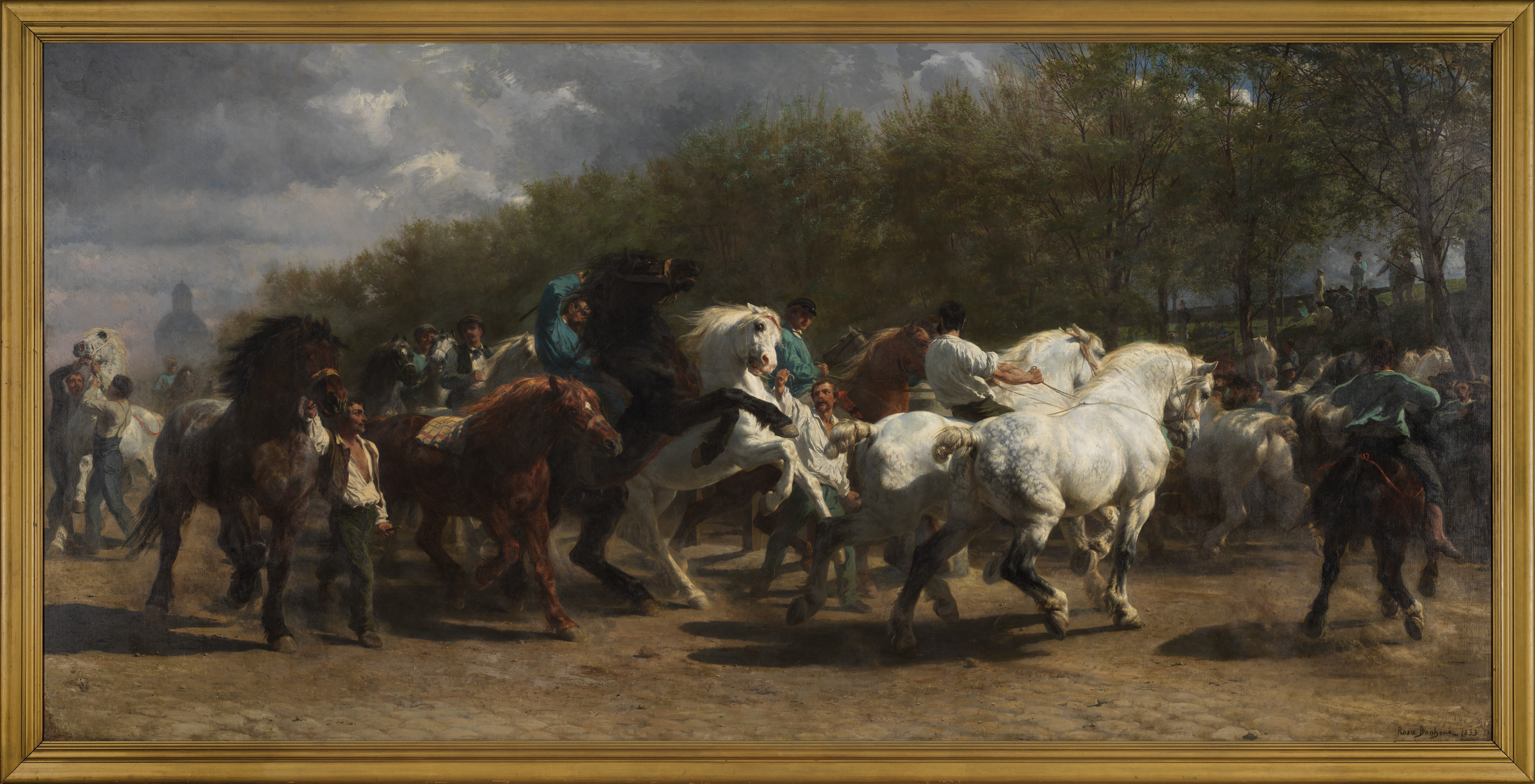
Could a single brushstroke hold eternity? In Study for The Horse Fair, the fleeting essence of life is captured, reflecting the bond between human and animal, as well as the inexorable passage of time. Look to the left at the powerful stance of the horses, their muscles taut and glistening under the deft application of paint. The ochre and deep browns anchor the composition, while the splashes of white suggest the glimmer of sweat and the very vitality of the creatures.
Notice how the artist’s bold strokes create a sense of movement, blending realism with vitality, and drawing the viewer into the frenetic energy of the scene. Beneath the surface, this piece hints at deeper themes of strength and struggle, where the horses symbolize untamed spirit and freedom. The unresolved tension between the riders and their mounts evokes a dialogue about control and collaboration. Moreover, the juxtaposition of chaotic energy against a backdrop of calmness invites contemplation of nature’s power versus humanity’s ambition.
During the mid-19th century, Bonheur was deeply engaged in the study of animals, driven by her fascination with their anatomy and behavior. Working in France at a time when women artists faced significant challenges, she carved a space for herself in a male-dominated art world. This study, created around 1850, laid the groundwork for her later, more renowned works, reflecting her dedication to both her craft and the natural world.