Cattle at Rest on a Hillside in the Alps — History & Analysis
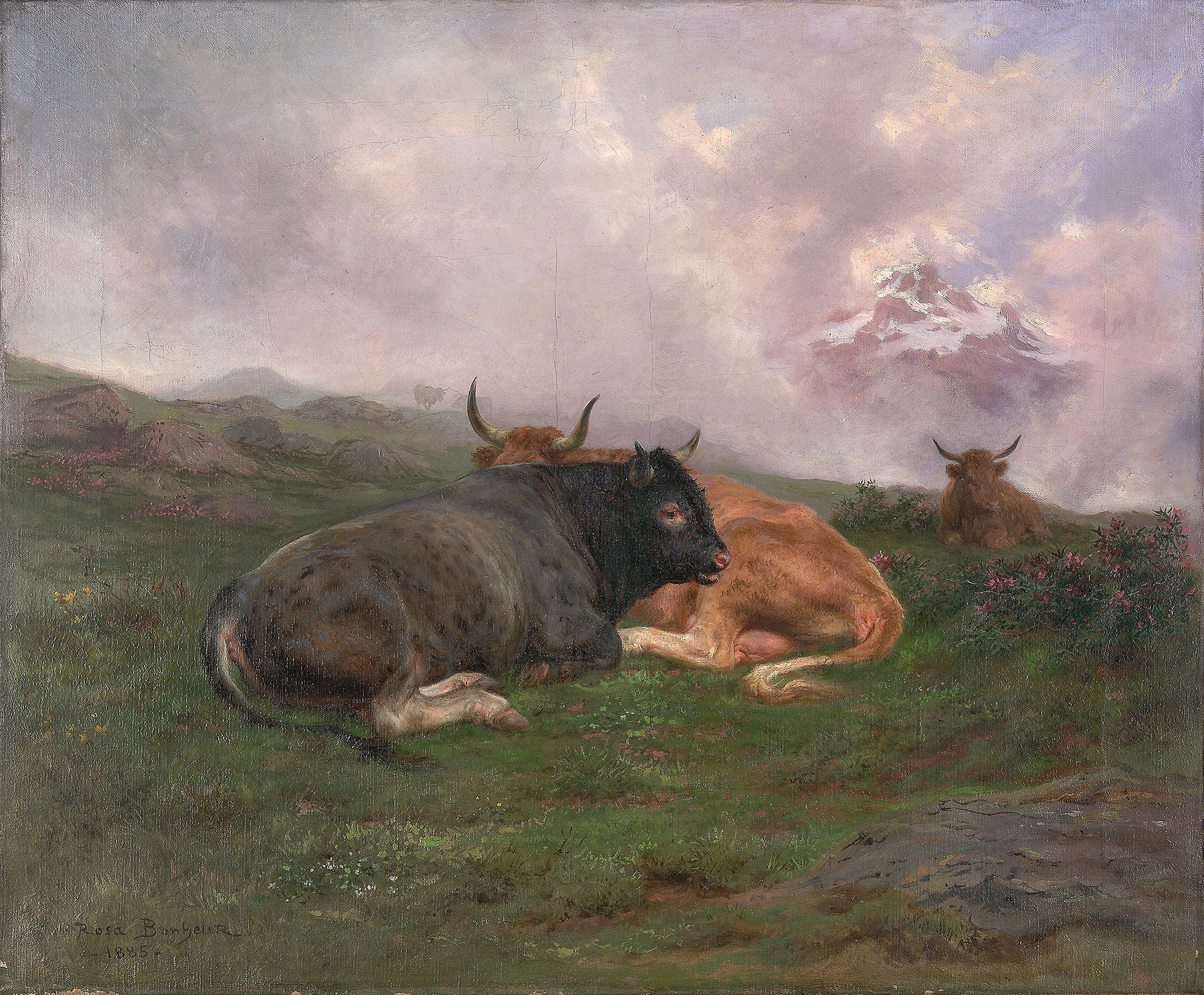
Where does light end, and longing begin? This question resonates deeply within the pastoral serenity captured in this remarkable artwork, reflecting not just nature, but the enduring legacy of harmony between humankind and the natural world. Look to the left at the sun-dappled hillside, where gentle light caresses the forms of the resting cattle. Notice how Bonheur employs delicate brushwork to evoke the texture of fur and grass, creating a tactile sensation that invites the viewer to linger.
The balanced composition, with the animals nestled against the rolling landscape, draws the eye across the canvas, revealing layers of color that shift from deep greens to warm earth tones, illustrating the tranquility of the alpine setting. Within this serene tableau lies a palpable tension between stillness and the life that surrounds it. The cows, with their peaceful repose, embody a moment of pause in the chaos of existence, a reminder of nature's rhythms and the simple beauty of rural life. Bonheur's choice to depict these animals in such an intimate manner suggests a profound respect for their presence, urging us to reflect on our connection to the natural world and the legacies we inherit and create.
In 1885, Bonheur painted this work during a period when she was a celebrated artist, renowned for her ability to capture the essence of animal life. Living in a time when women's roles in art were often marginalized, she broke barriers with her skill and passion for the subject matter. The painting represents not just her artistic achievements but also a commitment to preserving the beauty of the rural landscape as industrialization began to reshape the world around her.