Terugkeer van de verloren zoon — History & Analysis
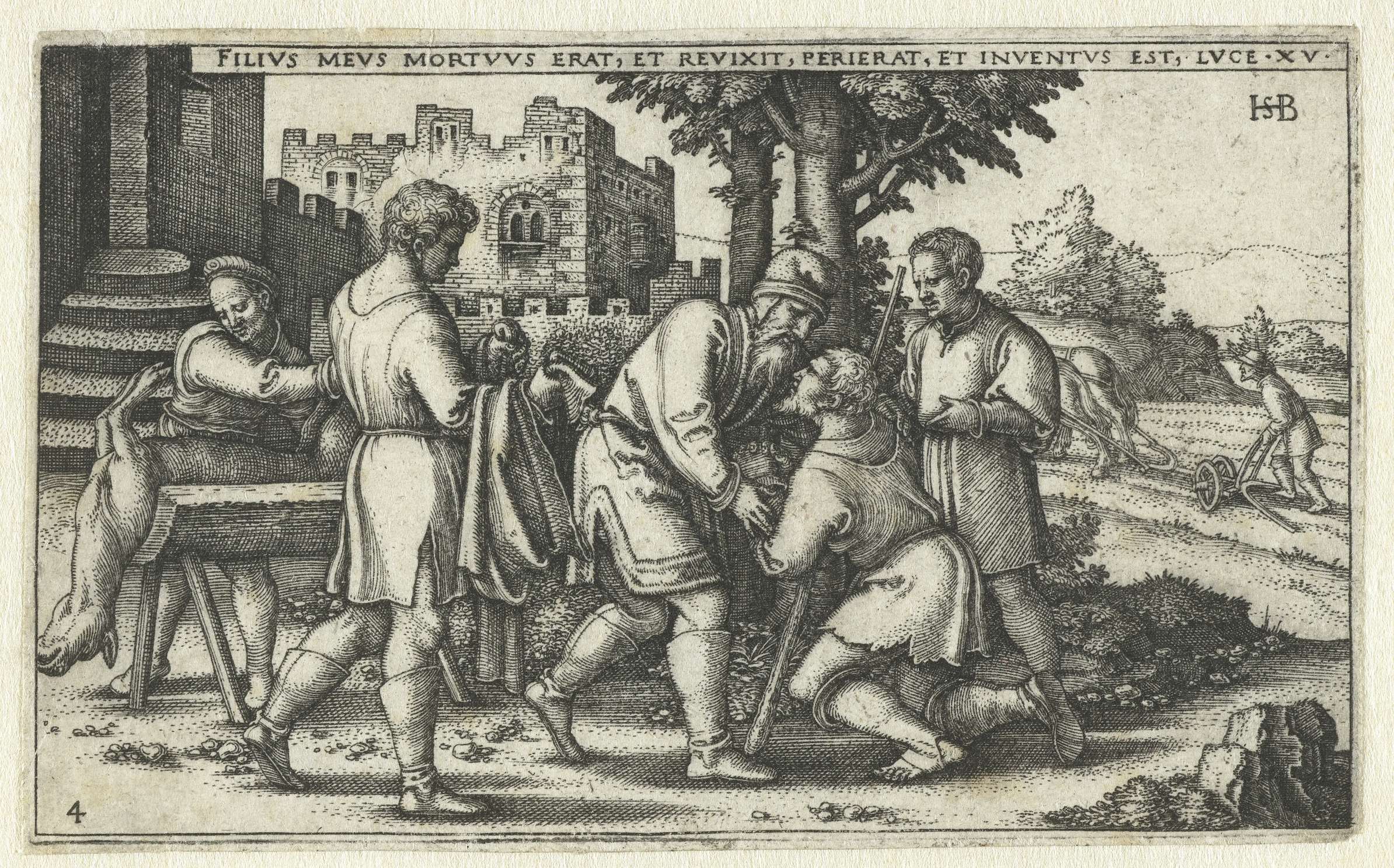
Can beauty exist without sorrow? In Hans Sebald Beham's Terugkeer van de verloren zoon, time stands still, capturing the poignant reunion of loss and redemption. Look closely at the figures in the foreground, where the father embraces his wayward son, their expressions a delicate interplay of relief and shame. The warm, golden light bathes them, accentuating the deep shadows that hint at both the past struggles and the hope of reconciliation.
The details in their attire, rich in color and texture, draw our eye to the contrast between their worlds—the lavish garments of the father versus the worn, humble clothing of the son, both deepening the emotional gravity of their interaction. Beneath the surface, the painting unfolds layers of meaning; the son's body language reveals fragility, while the father’s open arms signify forgiveness and unconditional love. The background, muted yet intricate, signifies the passage of time, suggesting that healing is a journey rather than a destination. This tension between despair and hope resonates deeply, exploring themes of familial bonds and the human condition.
In 1540, Beham crafted this work during a time when Northern Renaissance art was marked by a focus on morality and personal spirituality. Living in Nuremberg, he was influenced by the Reformation, which instigated profound changes in artistic expression and religious themes. This context enriched the narrative depth of the painting, as it reflects a universal story of redemption in a world grappling with change.