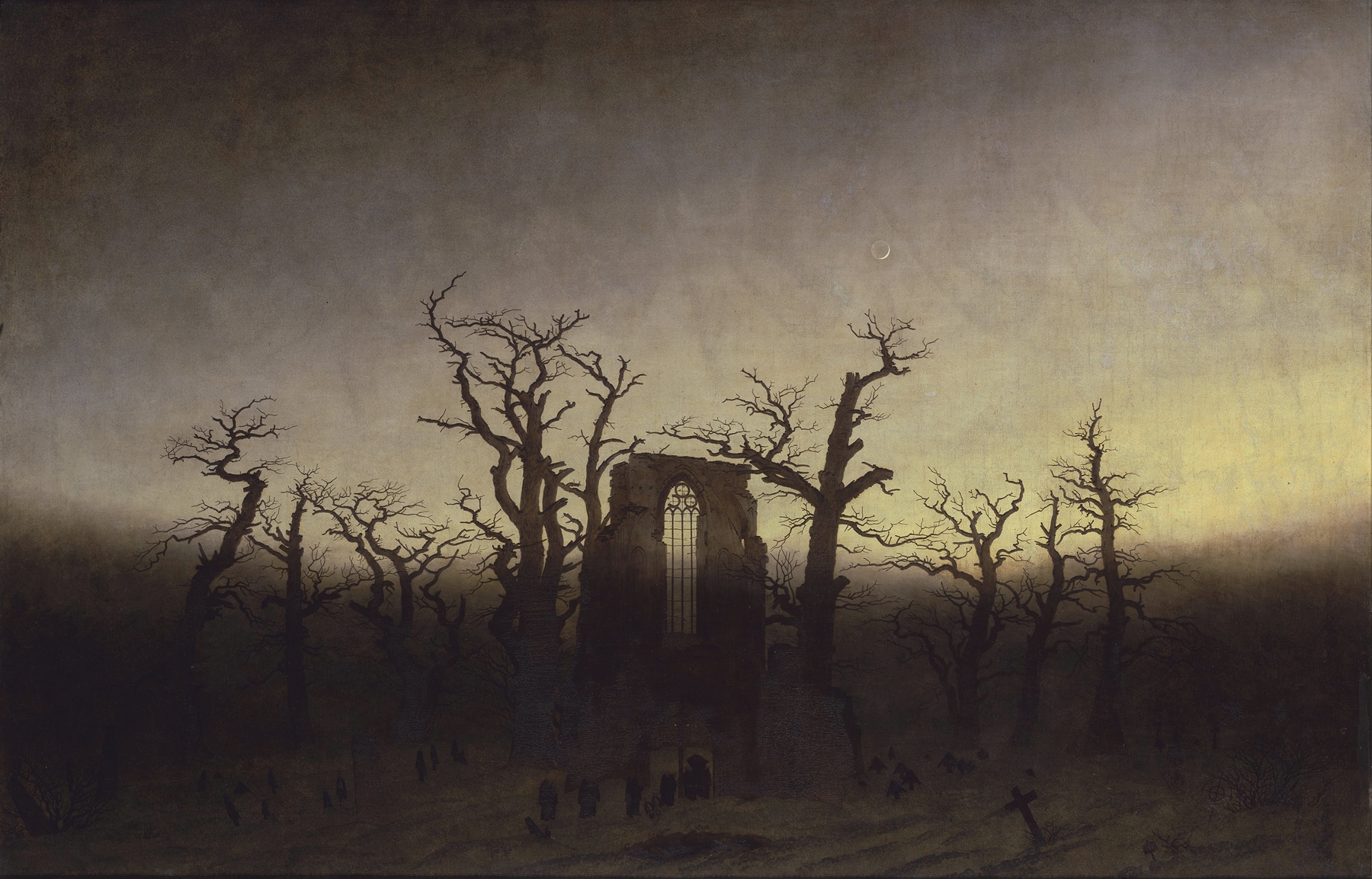
The Abbey in the Oakwood — History & Analysis

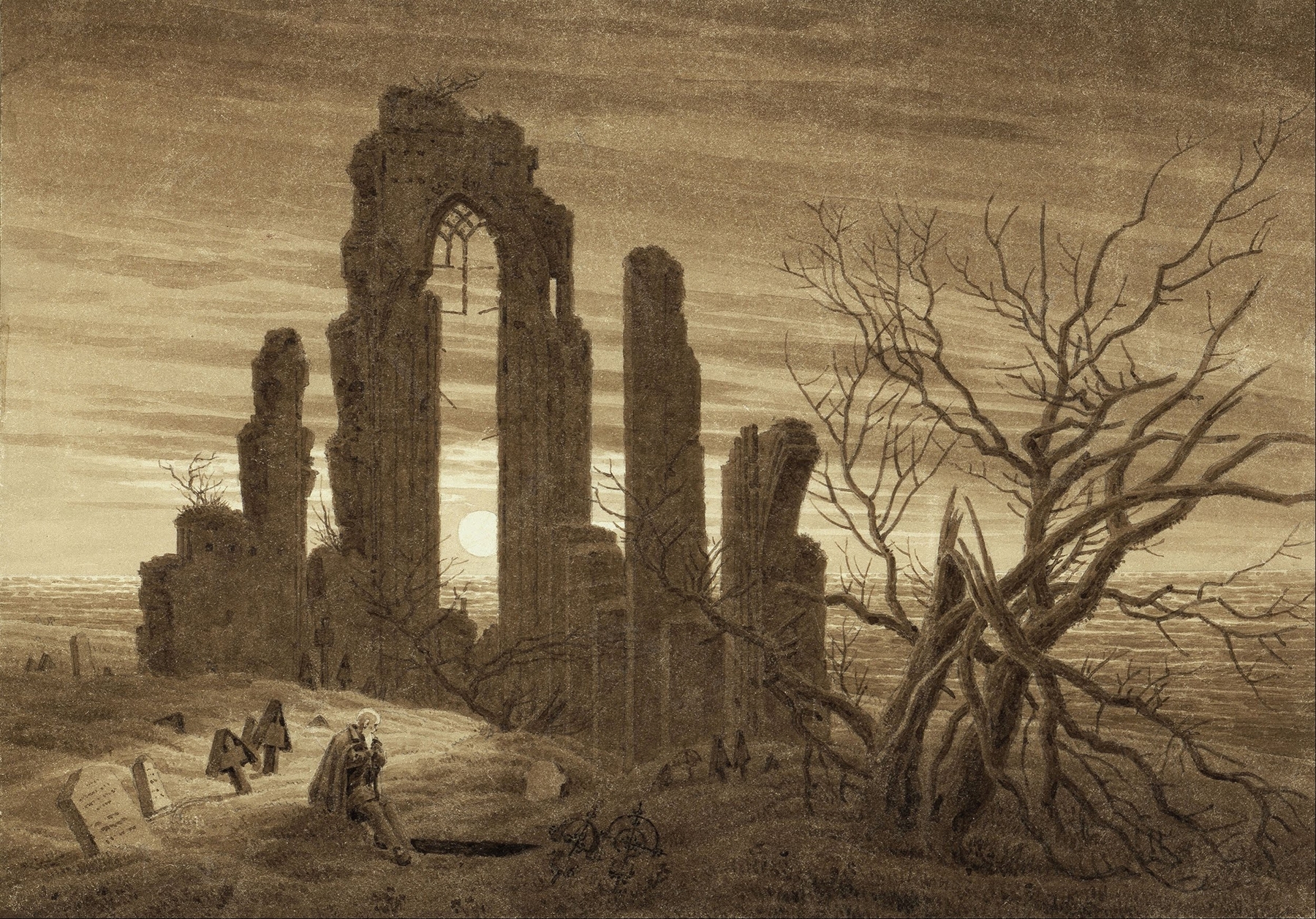
“Art reveals the soul when the world turns away.” In the grip of nostalgia, we often find ourselves drawn to places that evoke forgotten memories, yet *The Abbey in the Oakwood* does more than recall; it invites you into a rapturous moment suspended in time. Look to the center, where the solemn ruins of an abbey emerge from a fog-laden landscape, enveloped by twisted oak trees that stretch their gnarled branches toward the heavens. The muted colors—earthy browns and soft greens—blend harmoniously, allowing the delicate interplay of light and shadow to elicit a profound sense of melancholy. The horizon, almost infinitesimal, underscores the isolation of the structure, as if the abbey is a remnant of a past age, waiting quietly for the echoes of its former life to return. In this work, the contrast between nature and human endeavor is palpable. The decaying abbey represents the transience of human existence, while the steadfast oaks symbolize the enduring power of nature. The mist that conceals as much as it reveals adds layers of mystery, suggesting that even in decay, there is beauty—a poignant reminder of the impermanence that defines our lives. This emotional tension stirs a deep longing for times past, yet reminds us that such reflections are tinged with both loss and solace. Created between 1809 and 1810, this painting emerged during a time of personal upheaval for Friedrich, as he grappled with the loss of loved ones and the shifting landscapes of Romanticism in art. Working in Germany, he sought to convey the profound connection between nature and the human soul, setting the stage for a new era in landscape painting that would resonate long after his time.