The Biglin Brothers Turning the Stake — History & Analysis
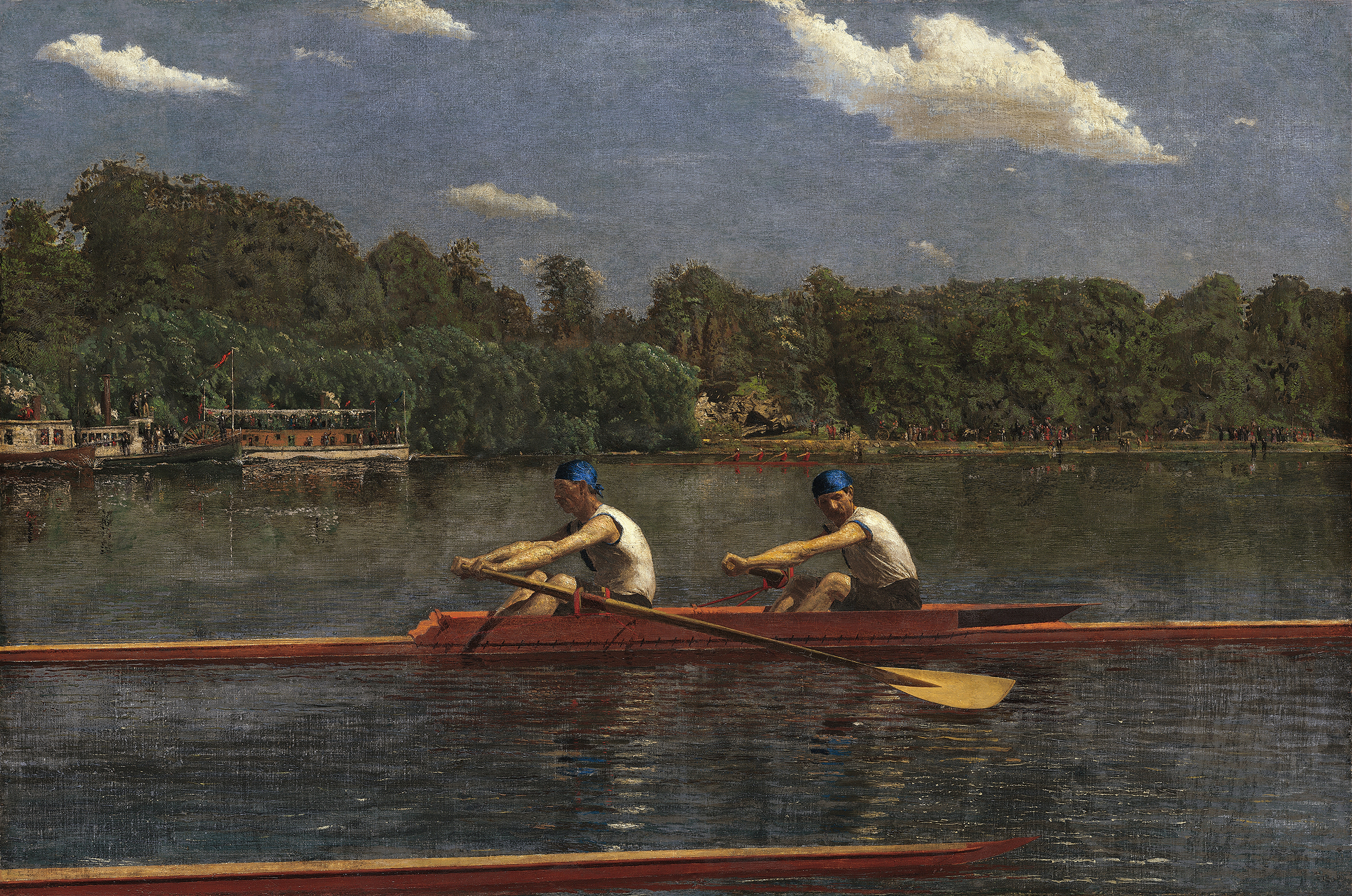
“Between color and silence, truth hides.” This poignant thought echoes through the rippling waters of a shared experience, where muscle meets the relentless pull of ambition. In The Biglin Brothers Turning the Stake, the moment captures both effort and transcendence, inviting the viewer to reflect on the silent dialogue between man and nature. Look to the center, where the brothers' taut bodies strain against the oars, their expressions a mixture of concentration and camaraderie. The artist employs a rich palette of blues and greens, imbuing the scene with a vitality that mirrors the heartbeat of the race.
Notice how the light glimmers off the water's surface, emphasizing the tension of the moment as shadows dance along their muscular forms, contrasting the stillness of the surrounding landscape. Delve deeper, and you'll uncover the nuances of brotherhood and rivalry, embodied in their synchronized movements yet distinct individuality. The rippling water acts as a metaphor for life's challenges, reflecting their determination but also the broader existential struggle. Eakins masterfully balances dynamism with stillness, hinting at a moment poised between triumph and defeat, where every stroke could lead to glory or despair.
In 1873, Thomas Eakins was immersed in the Philadelphia art scene, dedicated to capturing the human condition through realism. At this time, he sought to convey the raw essence of sports and physicality, drawing inspiration from his own experiences with rowing. This work stands as a testament to both his artistic ambition and the cultural significance of athletics, resonating deeply with the spirit of an emerging American identity.