The Champion Single Sculls (Max Schmitt in a Single Scull) — History & Analysis
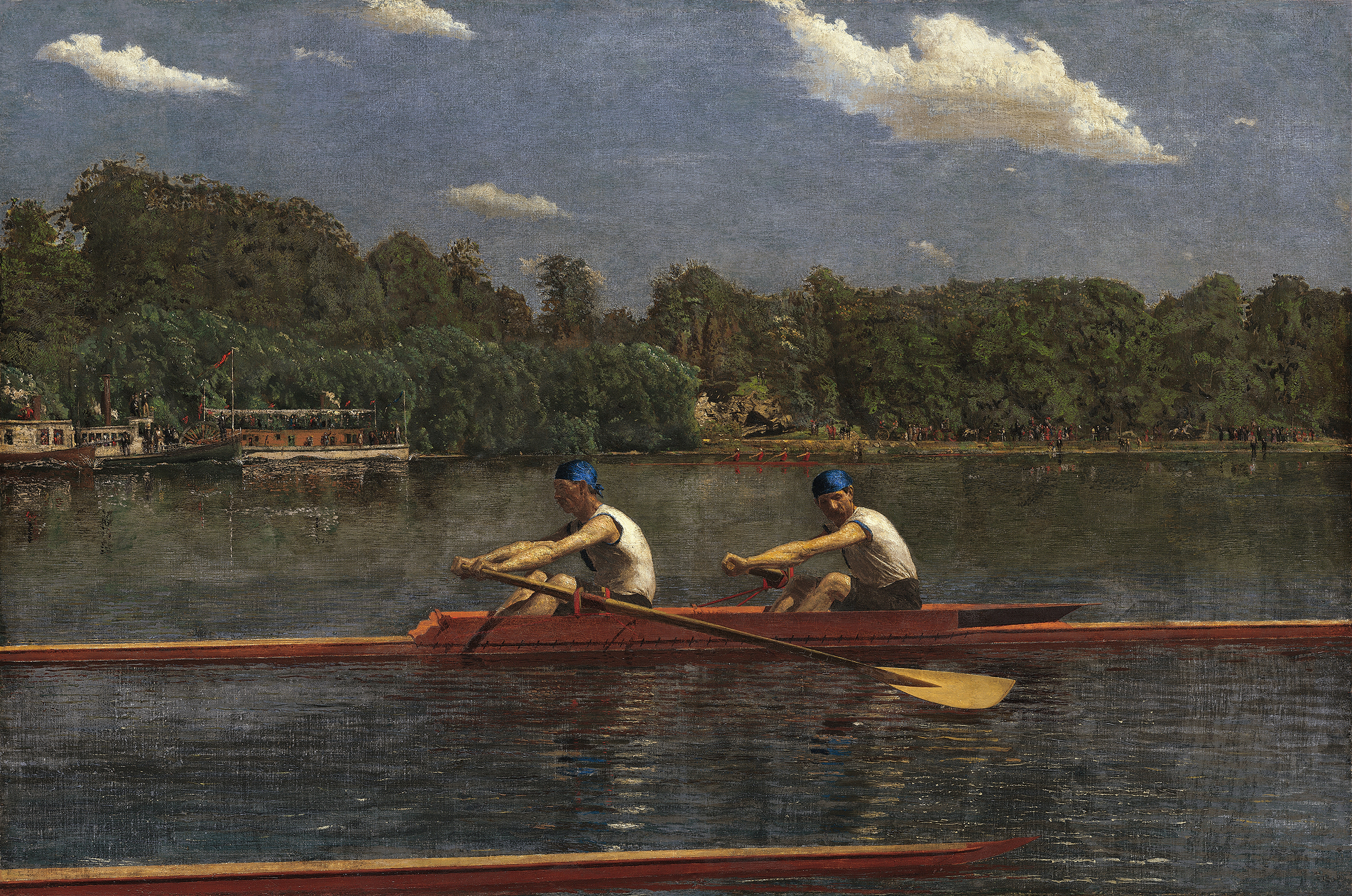
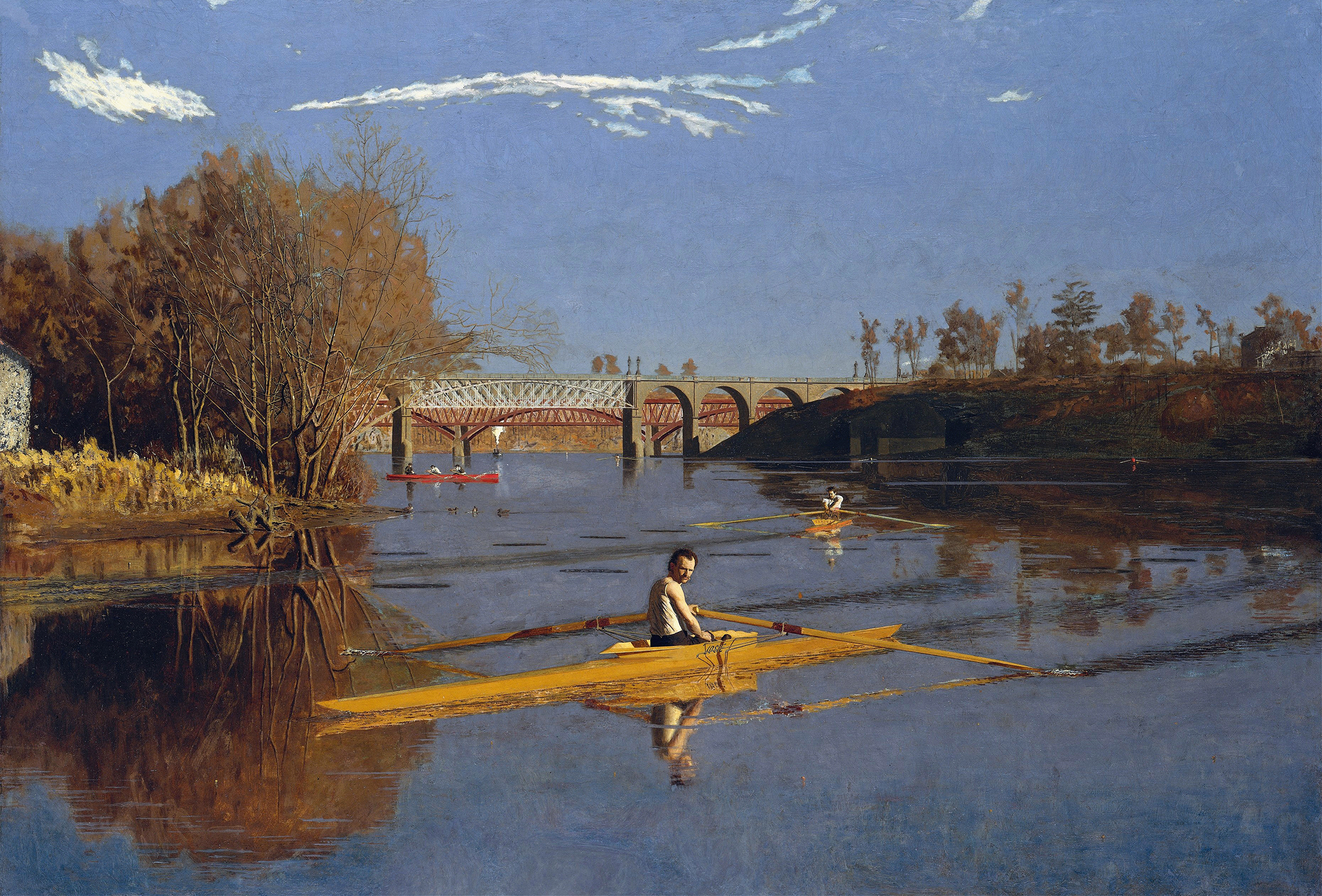
“Every silence here is a confession.” In the quiet solitude of the river, the weight of stillness hangs heavily, hinting at untold stories that dwell beneath the surface. Look to the left of the canvas, where a figure glides through the water, capturing the essence of focus and determination. The athlete's powerful strokes disturb the tranquil river, sending ripples that contrast with the serene backdrop of lush greenery. Notice how the sunlight glints off the water, illuminating the scull and creating a brilliant interplay of light and shadow that conveys both motion and grace.
The palette is rich yet subtle, with greens and blues enveloping the scene, emphasizing the connection between the oarsman and the natural world around him. Delve deeper into the painting, and you'll uncover layers of tension—the contrast between the individual’s exertion and the peaceful environment speaks to the void one must transcend to achieve greatness. The lone figure embodies the spirit of competition, yet the absence of spectators portrays solitude, hinting at the sacrifices inherent in pursuit of excellence. Each stroke not only propels the boat forward but also navigates the uncharted waters of ambition and personal struggle.
Created in 1871, this work emerged during a pivotal moment in American art, as Eakins was establishing his reputation as a realist painter in Philadelphia. At that time, he was deeply invested in exploring the human form and its relationship with athleticism, seeking to capture both the physical and emotional essence of his subjects. The painting captures a moment of introspection and ambition, reflecting the artist's own journey toward artistic authenticity amid a rapidly changing cultural landscape.