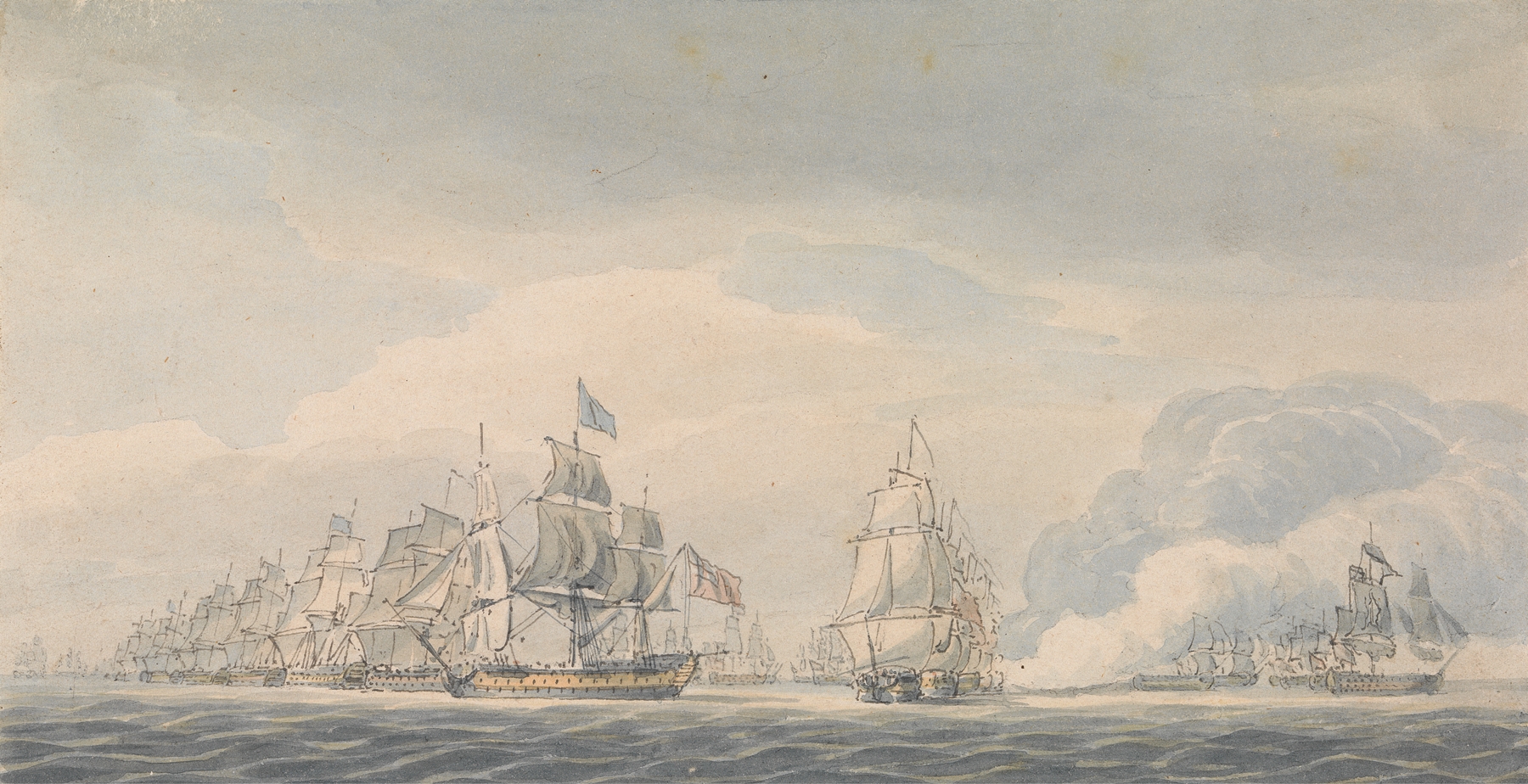
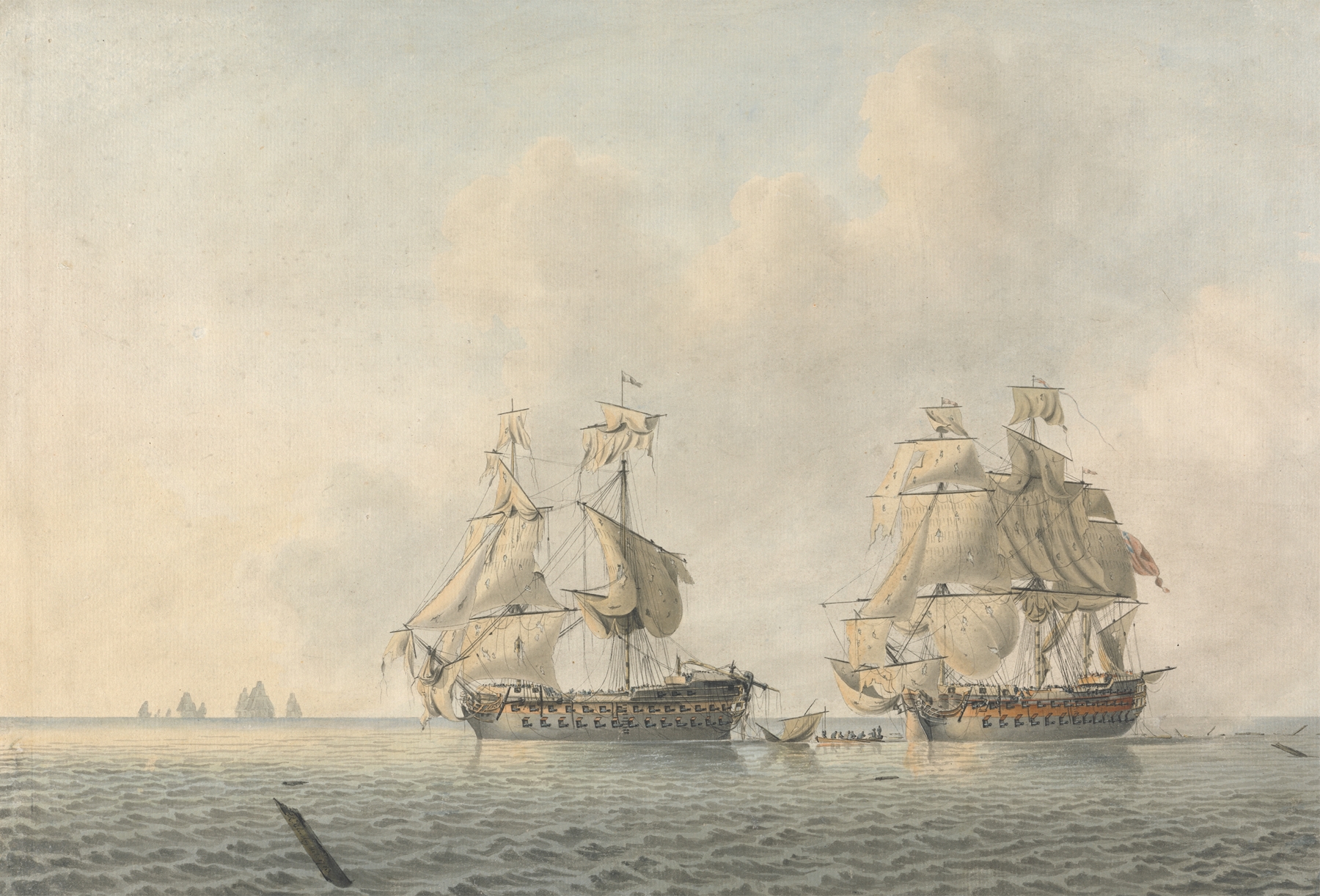
The Dutch Vice Admiral under Admiral De Winter striking his flag to the English Vice Admiral Onslow under Admiral Duncan at the Battle of Camperdown, 11th October 1797 — History & Analysis
The roar of cannon fire shatters the sea's stillness, filling the air with tension and despair. Sailors, clad in tattered uniforms, cling to the splintering masts as waves churn violently beneath colossal ships. Above them, flags flap furiously in the wind, ancient symbols of pride and surrender as the Dutch vice admiral strikes his flag, surrendering to the inevitable. Focus on the commanding figures at the center, where the adversaries stand in stark, contrasting colors: deep navy blues against the luminescent whites and reds of their British counterparts.
Notice the way light dances across the water, illuminating the chaos of the battle, while shadows loom ominously over the Dutch ship. Cleveley employs dynamic brushstrokes, creating a swirling effect that mirrors both the tumult of the ocean and the internal struggle of men caught in the throes of war. Look closer at the subtle details — the expressions etched on the sailors' faces, a confluence of resolve and desperation. The flags flapping in the wind symbolize not just national pride but the divinity of fate, as the moment stretches into an eternity of decision.
Here, victory and defeat intertwine, revealing the haunting realities of naval warfare and the fragility of honor amidst chaos. Created in 1799, this piece emerged from a time of profound upheaval in Europe, as the Napoleonic Wars loomed on the horizon. Robert Cleveley was immersed in the maritime world, capturing the essence of naval battles that defined not only nations but also individual destinies. In portraying this pivotal moment during the Battle of Camperdown, he reflected on the complex interplay of glory and despair that defines human existence.