The Fair at Oegstgeest — History & Analysis
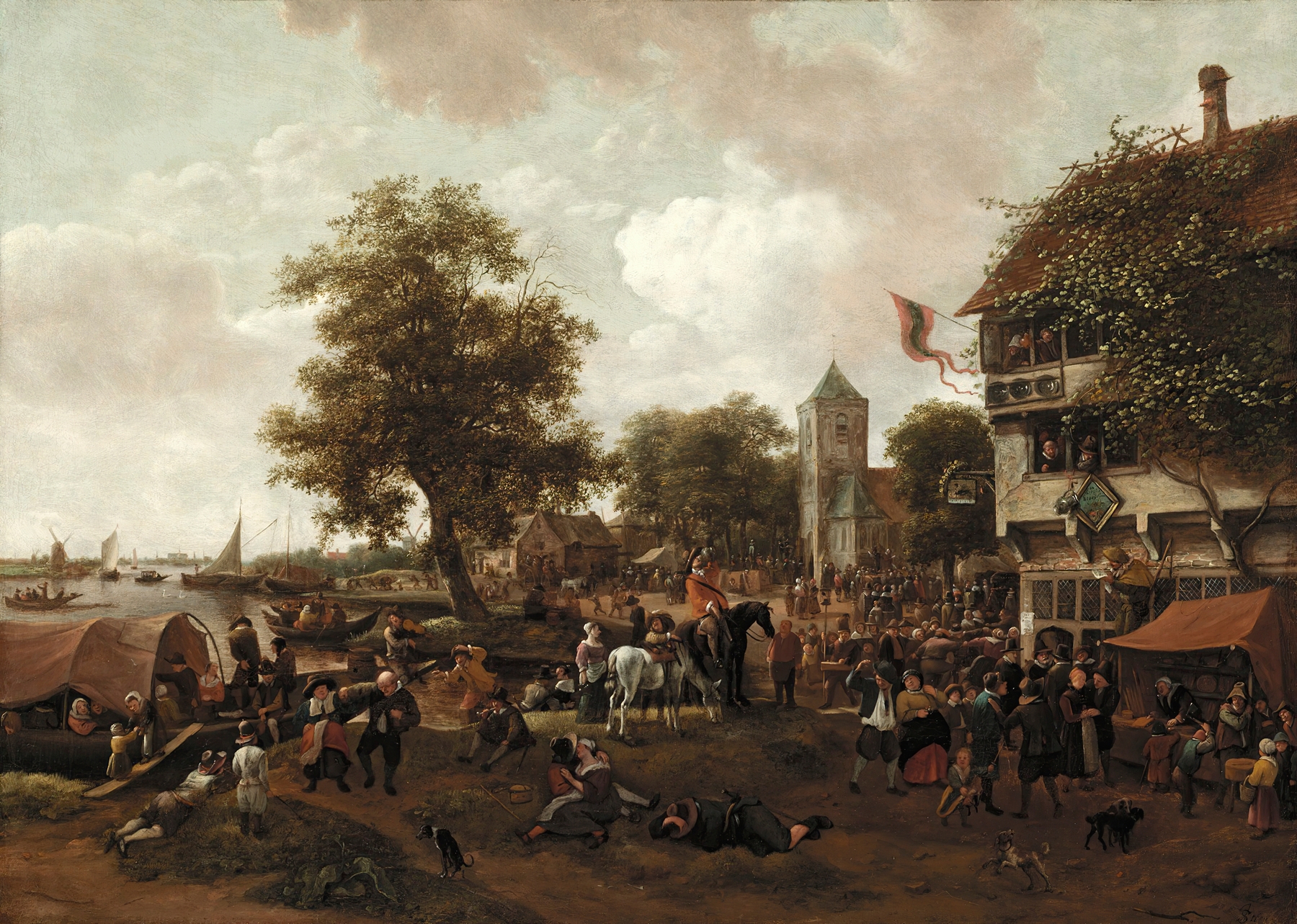
“Sometimes beauty is just pain, disguised in gold.” In a lively fair, amidst laughter and merriment, secrets lurk beneath the surface, waiting to be unveiled. The vibrancy of the festival serves as a veneer, concealing the treachery that can surface in joyous moments. Look to the left at the bustling crowd, where figures are engulfed in animated conversations, their expressions ranging from elation to sly amusement. Notice how the artist employs a rich palette of warm colors, contrasting the vitality of the fair with deeper shadows that hint at underlying discord.
The chaos of merriment is framed by a gentle diagonal movement of the figures, leading the eye through a tapestry of exuberance tinged with satire. In the foreground, examine the couple sharing a knowing glance, their body language suggesting complicity in a hidden betrayal, perhaps mocking the very festivities surrounding them. The children playing nearby, innocent and unaware, are juxtaposed against the adults' veiled intentions, emphasizing a loss of innocence. The juxtaposition of laughter and tension reveals the duality of human emotion, where celebrations often mask deeper grievances.
Jan Steen painted this scene between 1655 and 1660 in the Netherlands, a period marked by a flourishing of genre painting. As he navigated his own struggles with personal and professional challenges, his work often reflected a complex commentary on society’s foibles. The fair, a symbol of transient joy, serves as a poignant reminder of life’s fleeting pleasures and the betrayals that can hide within them.