Village Fair — History & Analysis

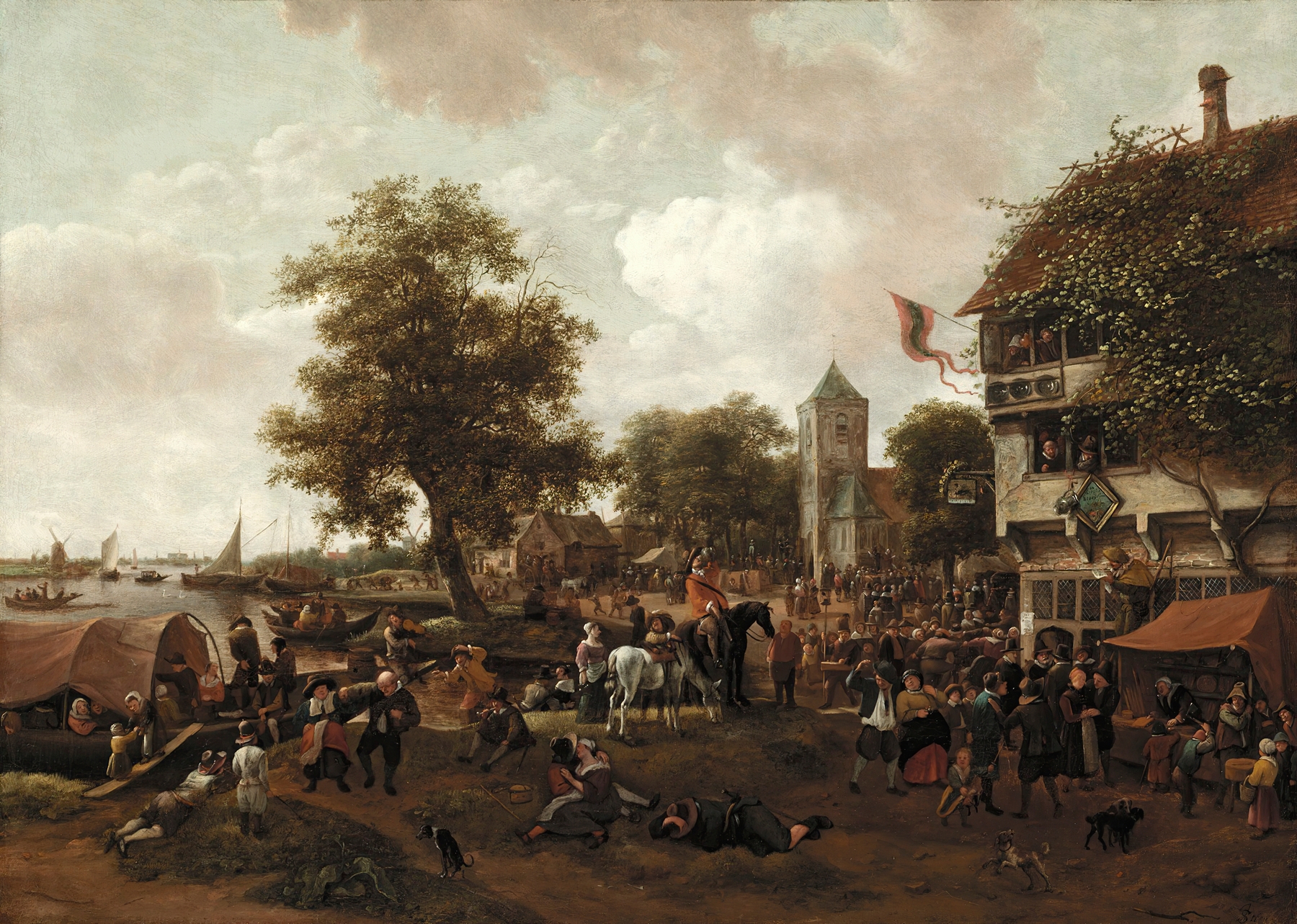
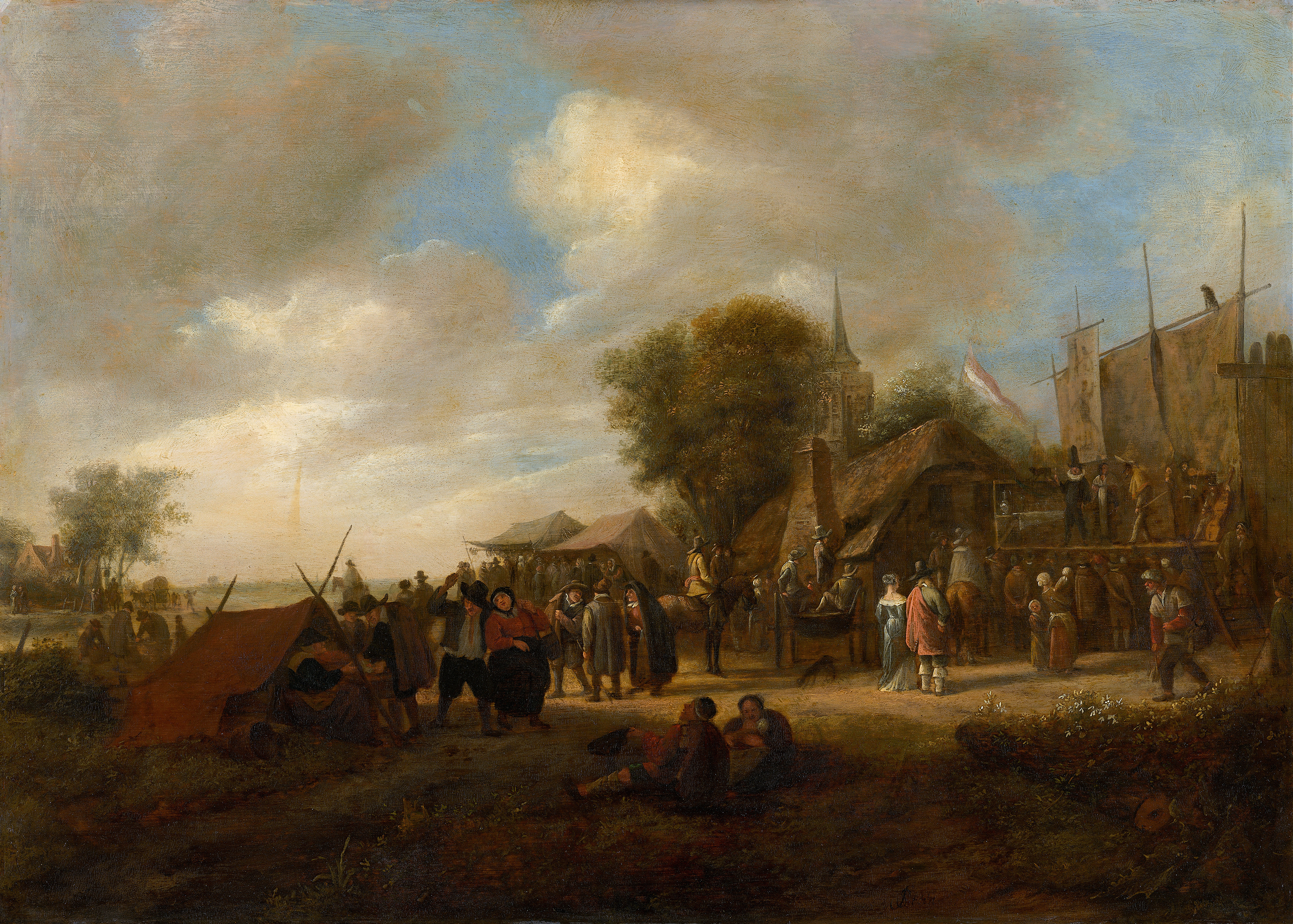
When did color learn to lie? Beneath the vibrant hues of festivity in Village Fair, a deeper narrative of deceit unfurls, inviting us to question the truth hidden within joyous moments. Look to the left, where a group of villagers revels in merriment, laughter spilling across their faces. The artist’s deft brushwork captures the shimmer of sunlight dancing off various garments, creating a kaleidoscope of color that seems to celebrate life.
Notice how the jarring juxtaposition of the idyllic scene contrasts with the expressions of those on the fringes, hinting at an undercurrent of tension. The warm, vibrant reds and blues evoke a sense of joy, yet the chaotic arrangement of figures creates an unsettling sense of disorder. As you explore the painting, pay attention to the subtle gestures: a woman cradling a child looks away from the jostling crowd, her gaze distant, suggesting a moment's betrayal of trust in this supposed paradise. The figures’ postures speak volumes, revealing secrets behind their cheerful façades.
The jovial atmosphere, while festive, harbors a hidden complexity, prompting viewers to ponder the darker realities that lurk beneath the surface of communal revelry. Jan Steen painted this work around 1650-1651 in the Netherlands, a time when the Golden Age was flourishing. Amid the sociopolitical upheaval of the period, his depictions of everyday life often contained moral undertones. While the art world was shifting towards realism and detail, Steen infused his scenes with chaotic narratives that both delighted and critiqued societal norms, reflecting a complicated relationship between appearance and reality.