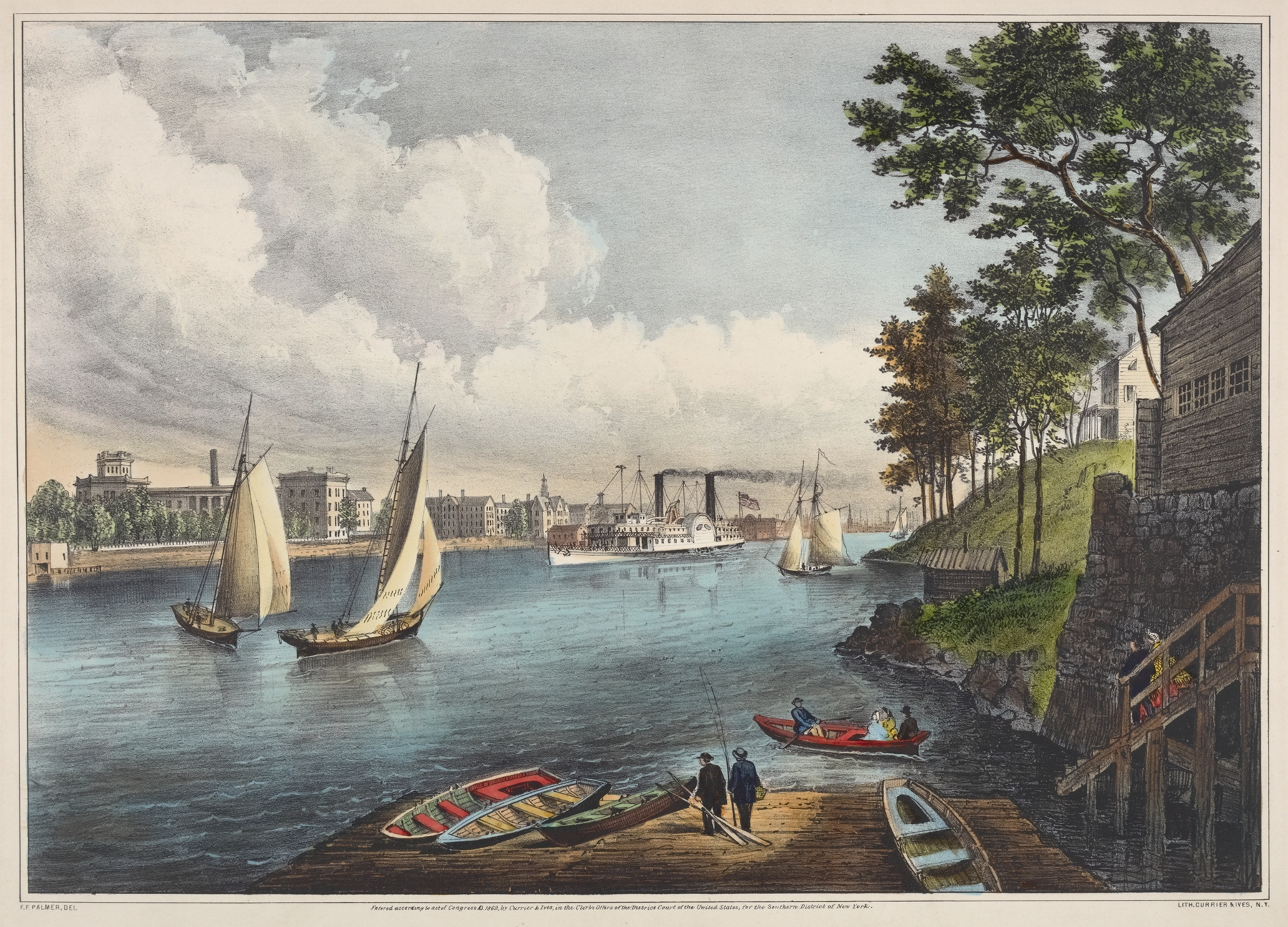
The mountain spring. Near Cozzen’s Dock, West Point — History & Analysis
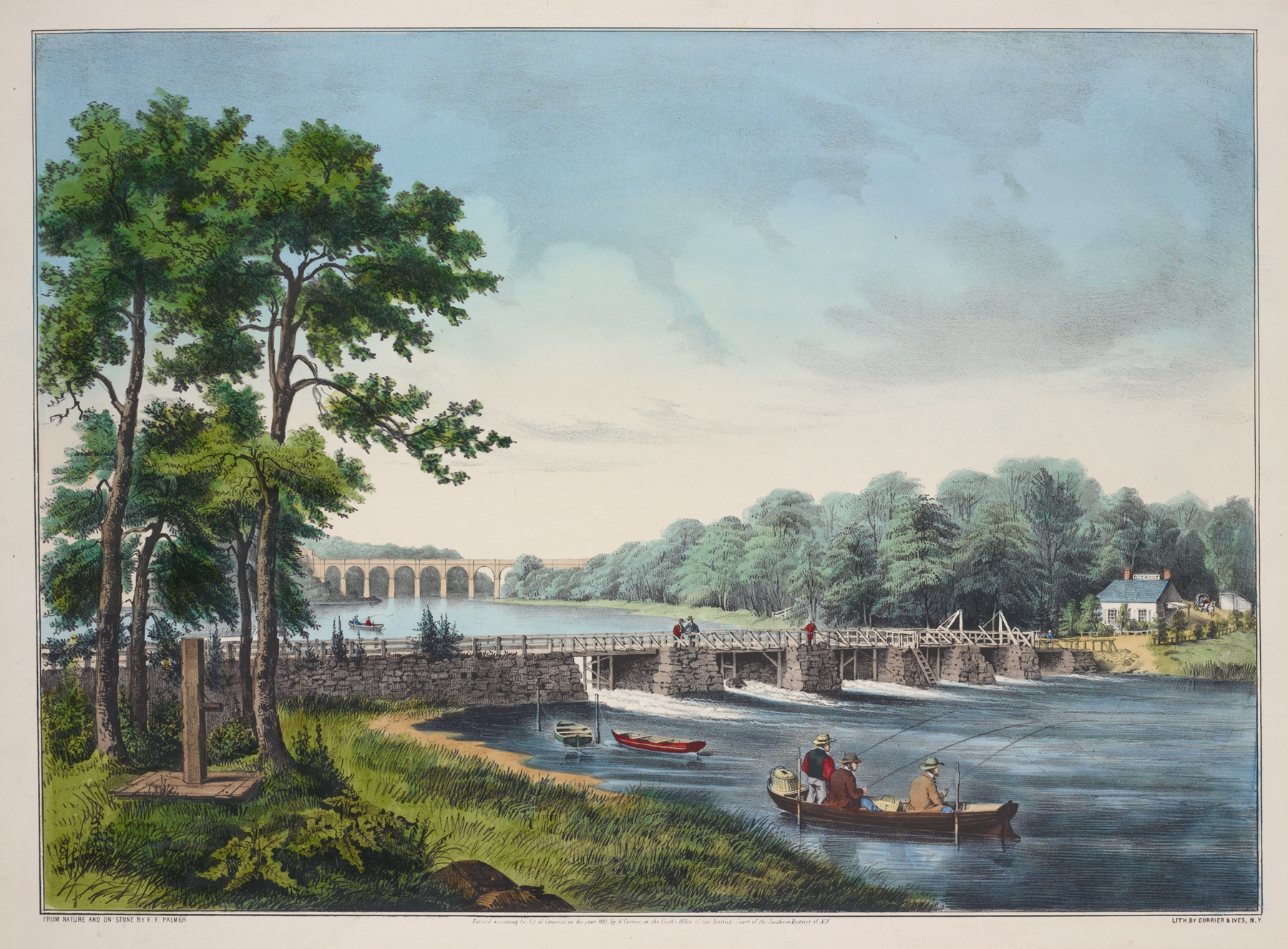
“To paint is to remember what time wants us to forget.” In Fanny Palmer's The Mountain Spring, the delicate balance between nature's tranquility and the rush of life springs forth in a vivid harmony that beckons the viewer to pause and reflect. Look to the center, where the crystal-clear water of the spring reflects the brilliant blue of the sky, cradled by lush greens and rugged browns. The careful layering of paint creates depth, inviting your gaze to wander through the verdant foliage that frames the scene. Observe how warm light dances upon the water's surface, creating a play of shadows and highlights that breathe life into the landscape, while the artist's soft brushstrokes evoke a sense of serenity.
As you explore further, notice the subtle contrast between the sturdy rocks and the fluid motion of water. This duality speaks to the balance of strength and gentleness found within nature. The vibrant colors harmonize, yet the cool tones of the spring suggest a hidden chill, a reminder that even in beauty, there can be an underlying tension. The small details, from the glistening droplets of water to the textures of the leaves, invite contemplation on the symbiosis of all elements at play.
In 1862, Fanny Palmer was actively engaged with the Hudson River School, a movement that celebrated the American landscape. Living in a period of great change—both artistically and socially—her work sought to capture the profound beauty of the burgeoning nation. Amidst the backdrop of the Civil War, Palmer's paintings were a refuge, reflecting a longing for peace and connection with nature, allowing audiences to escape the struggles of their time.