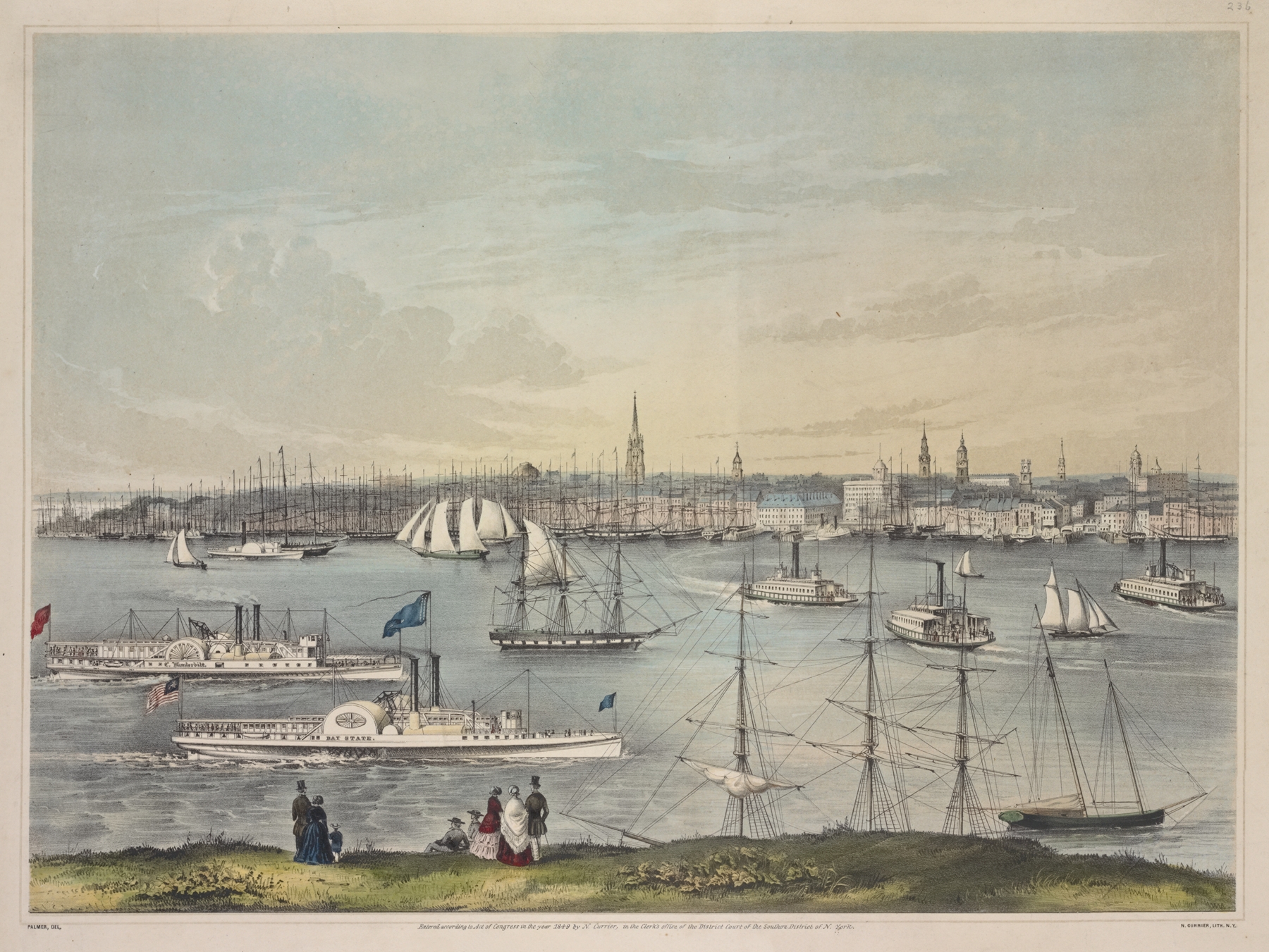
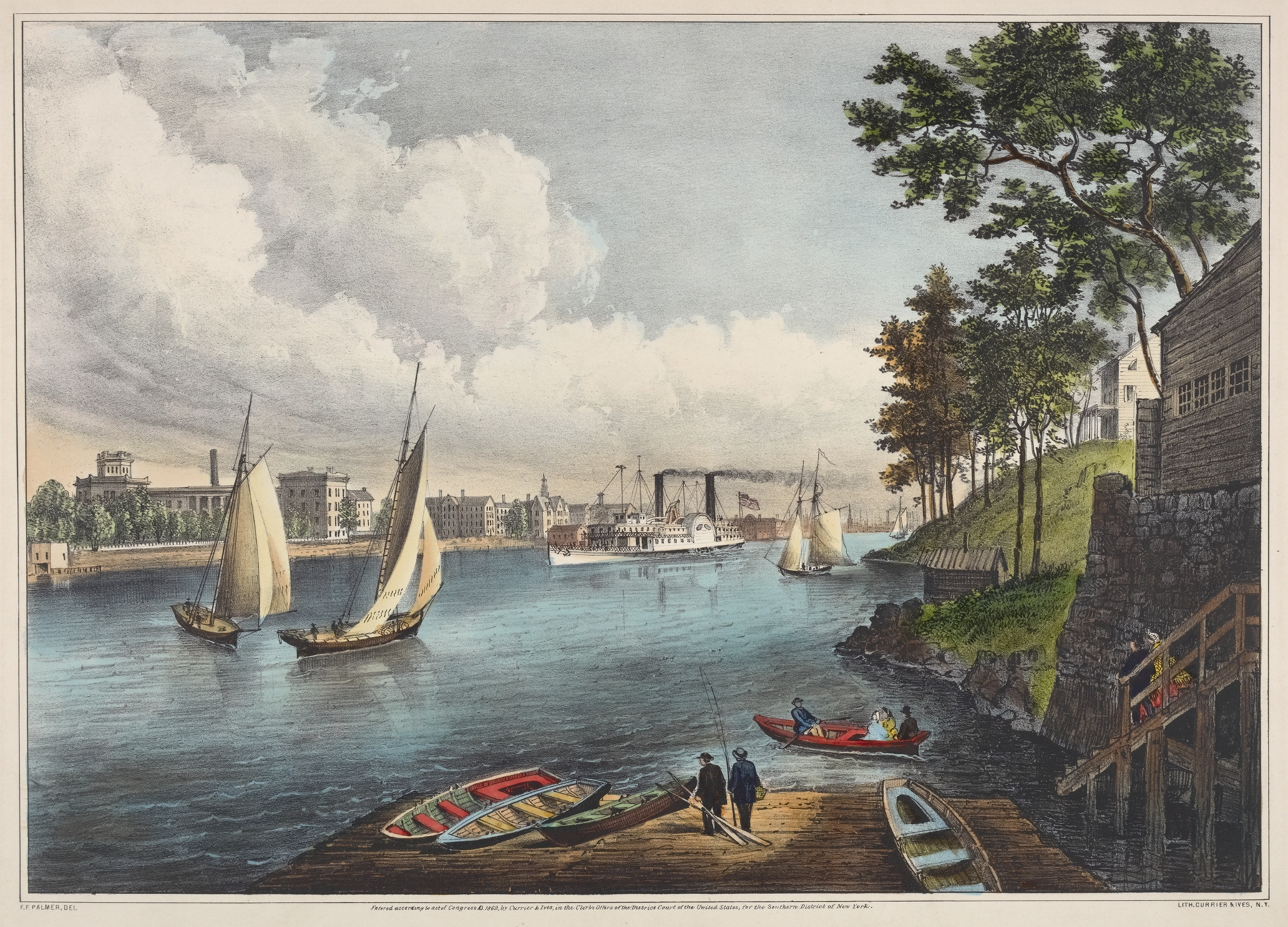
View of New York from Weehawken–North River — History & Analysis
“The canvas doesn’t lie — it simply waits.” Each stroke carries the weight of moments unseen, echoing a city poised on the brink of transformation. Focus your gaze on the horizon, where the gleaming spires of Manhattan emerge against a soft blue sky. The artist’s careful brushwork captures the shimmer of the North River, reflecting the vibrancy of the bustling metropolis. The composition, with its balanced interplay of lush greenery in the foreground and urban architecture in the distance, invites the viewer to draw a line between nature and industry, a delicate dance of coexistence.
The vivid colors, from the warm earth tones to the cool blues, convey a sense of awakening, urging one to visualize the life that pulses through the city. As the viewer delves deeper, the juxtaposition of serene nature and burgeoning civilization becomes apparent. The foreground, alive with foliage, contrasts sharply with the structured skyline, hinting at the tensions between progress and preservation. Each detail, from the distant steamships churning the river to the momentary stillness of the trees, speaks to the societal changes of the era, beckoning us to reflect on our connection to both the natural world and the manmade.
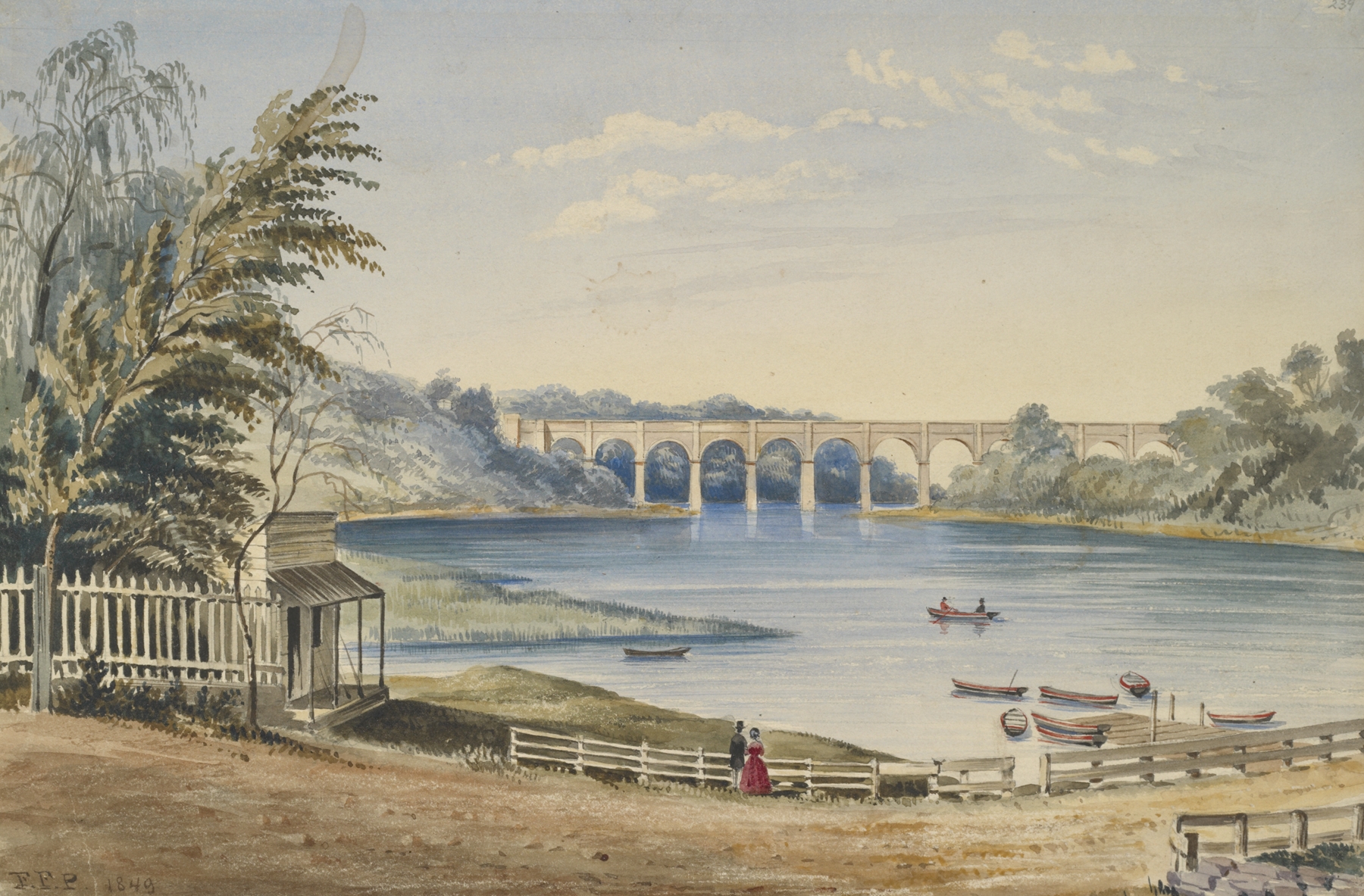
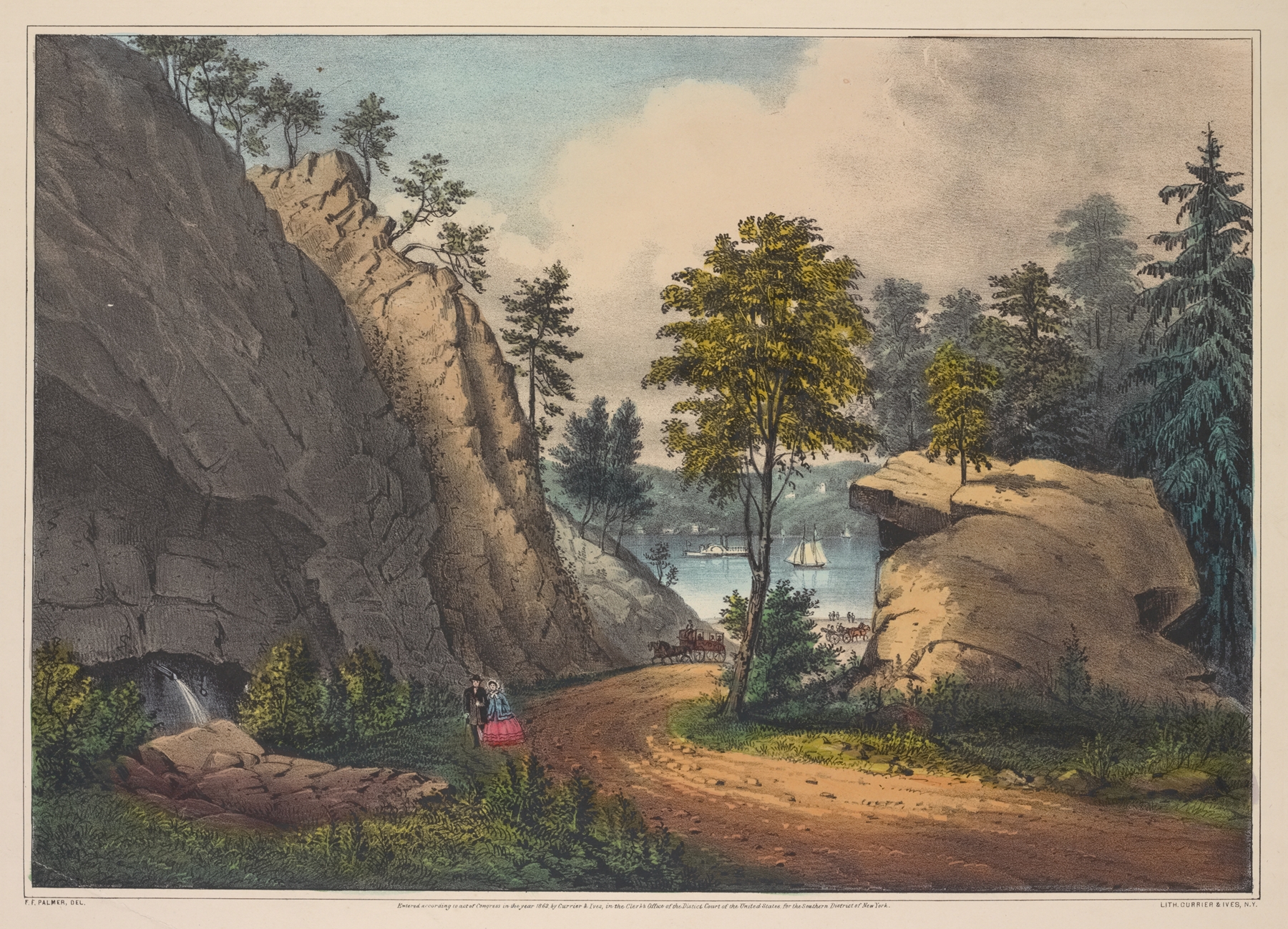
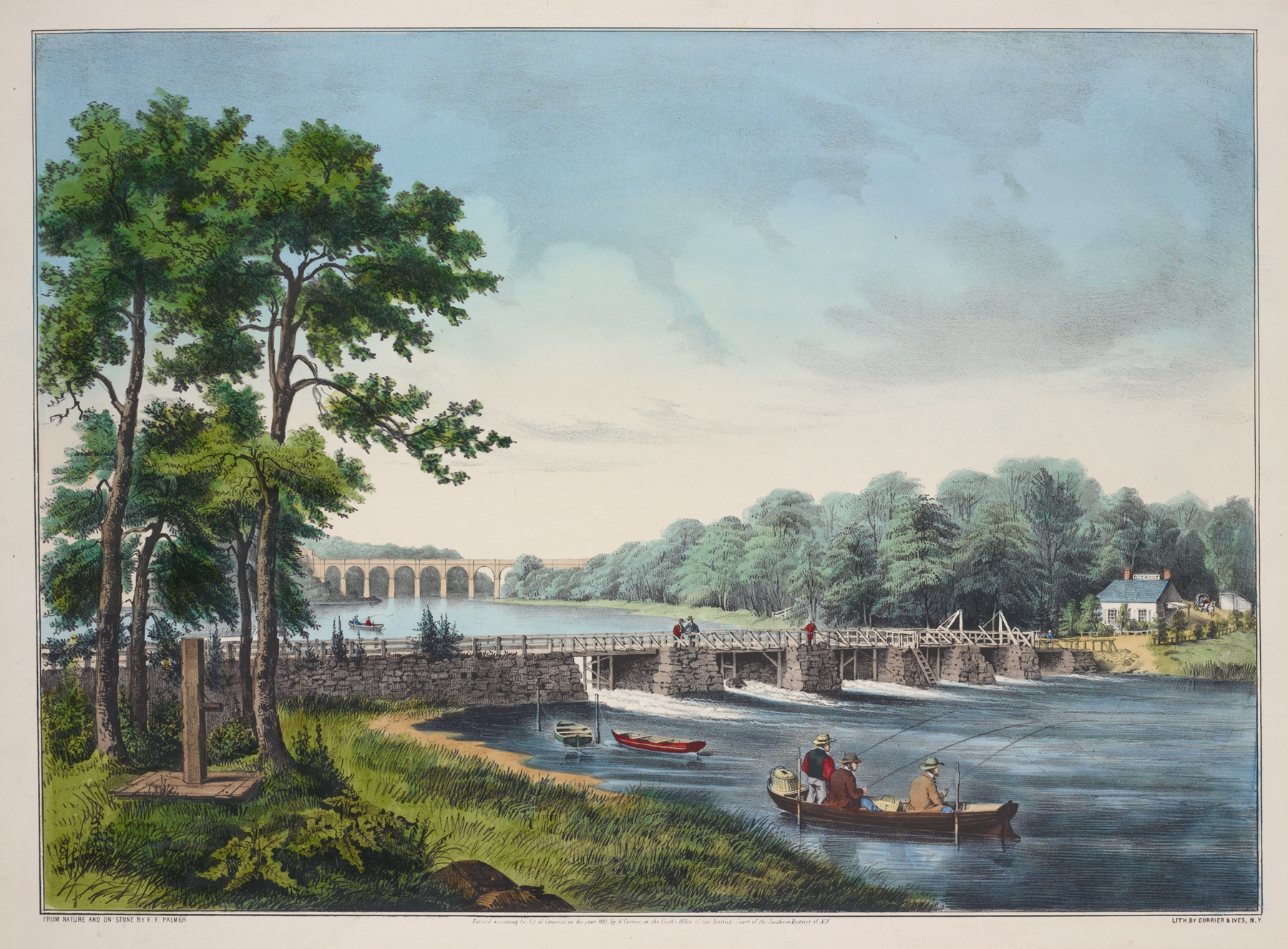
This painting encapsulates a moment in time, rich with potential and anticipation. In 1849, Fanny Palmer painted this work while living in New York, a city at the dawn of its rapid modernization. As railroads expanded and the population surged, artists like her captured the evolving landscape, blending natural beauty with urban development. During this period, Palmer established herself as a significant figure in American art, producing works that celebrated both the American landscape and the spirit of progress that defined her time.