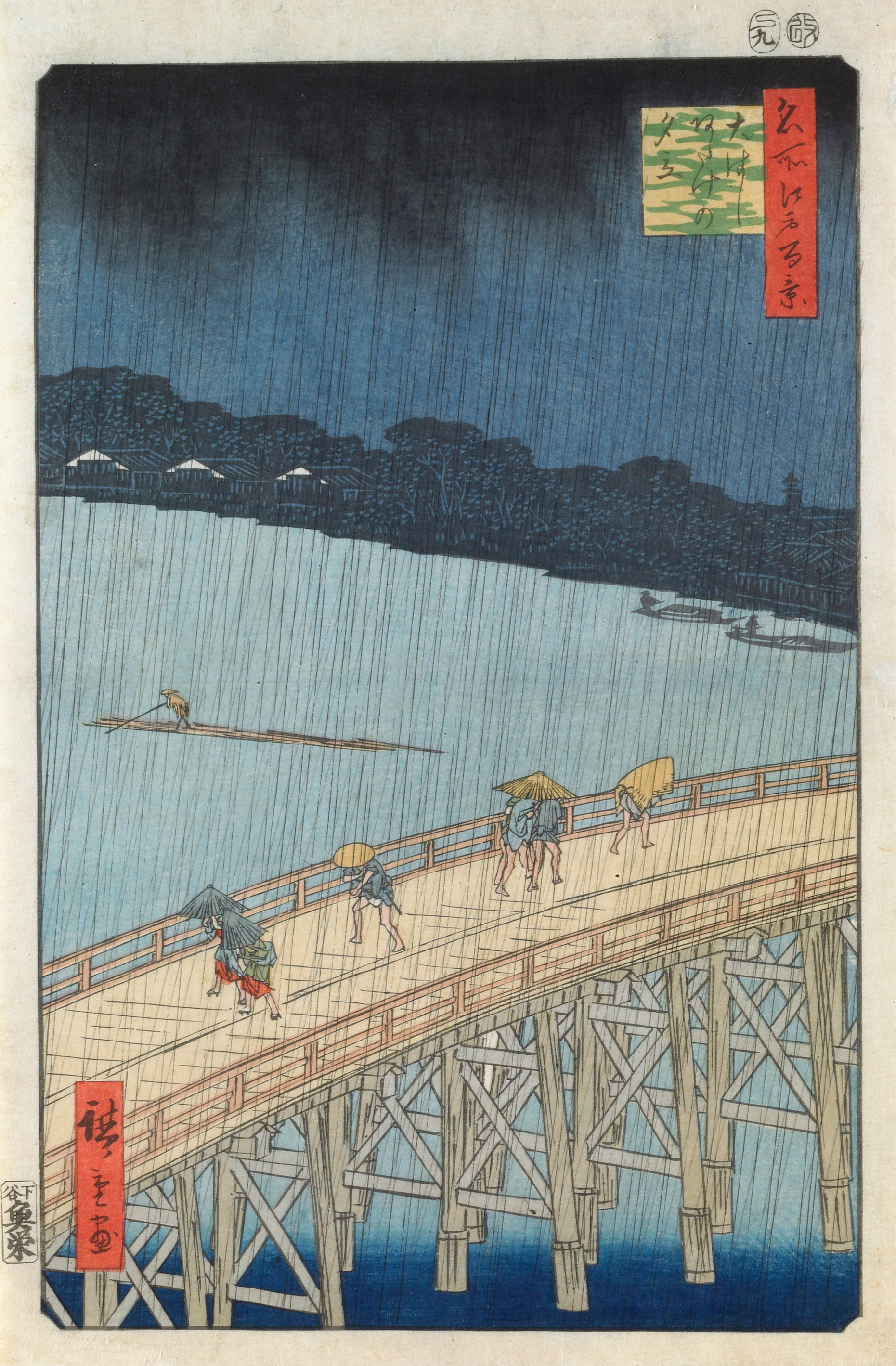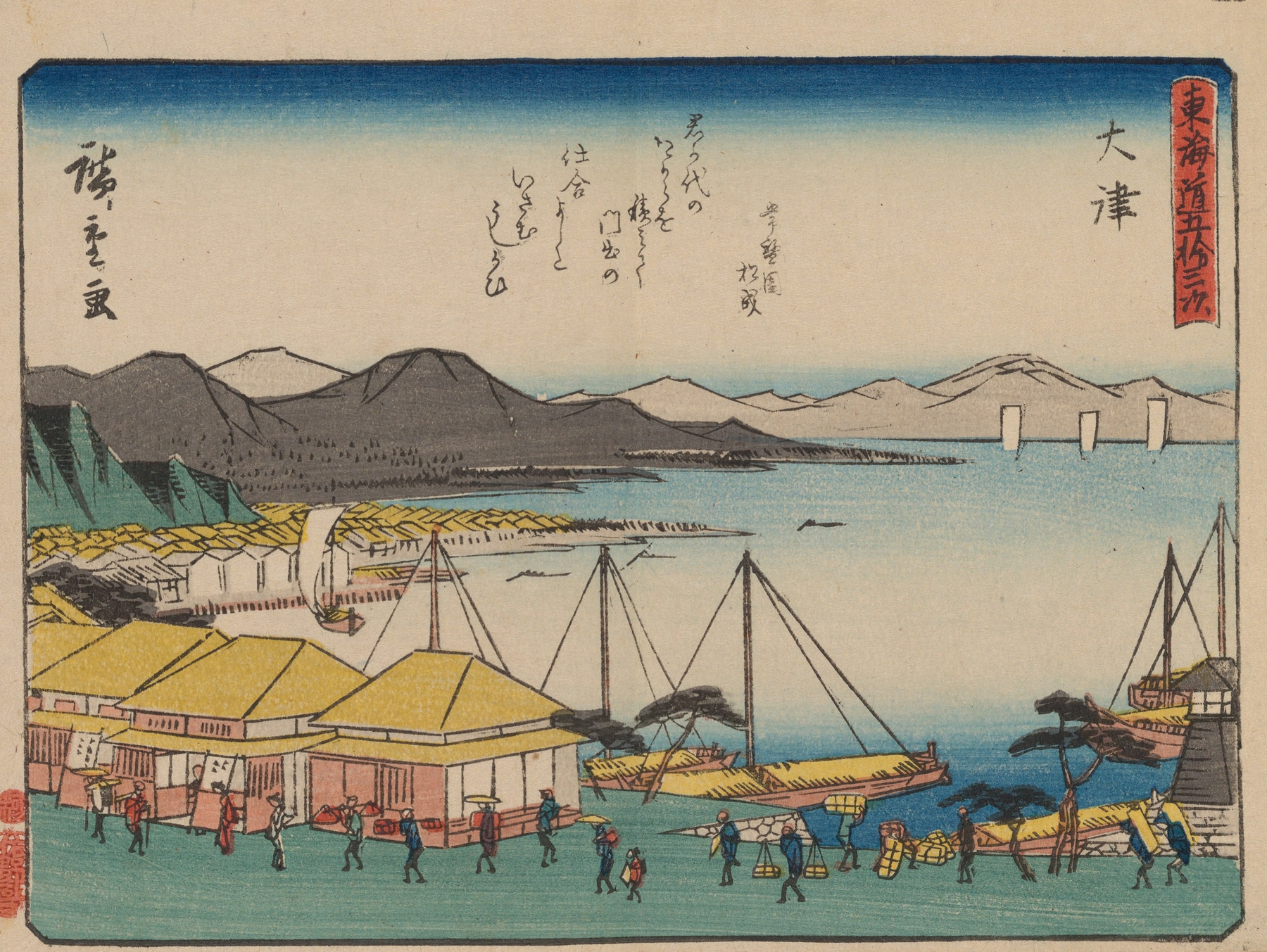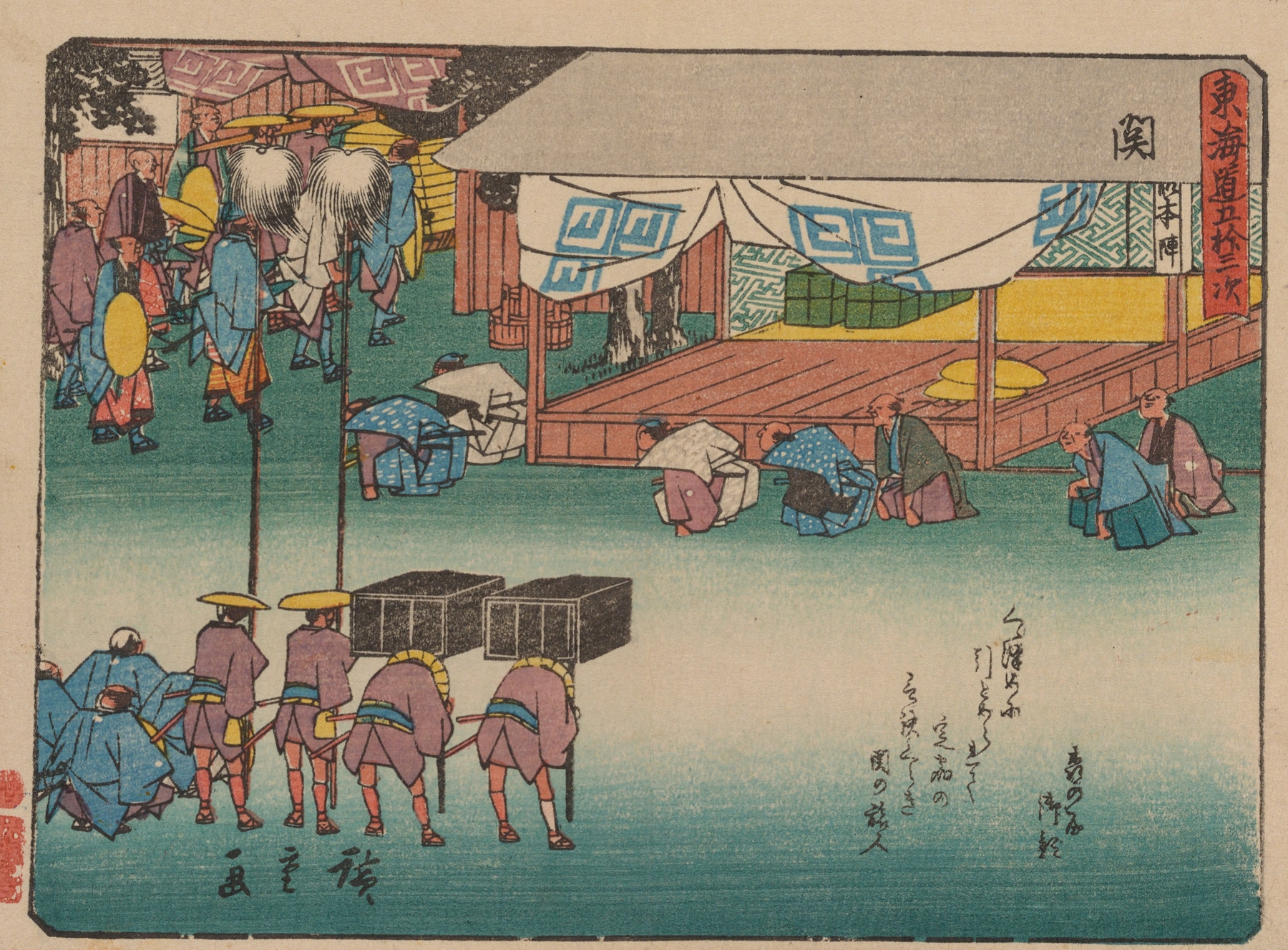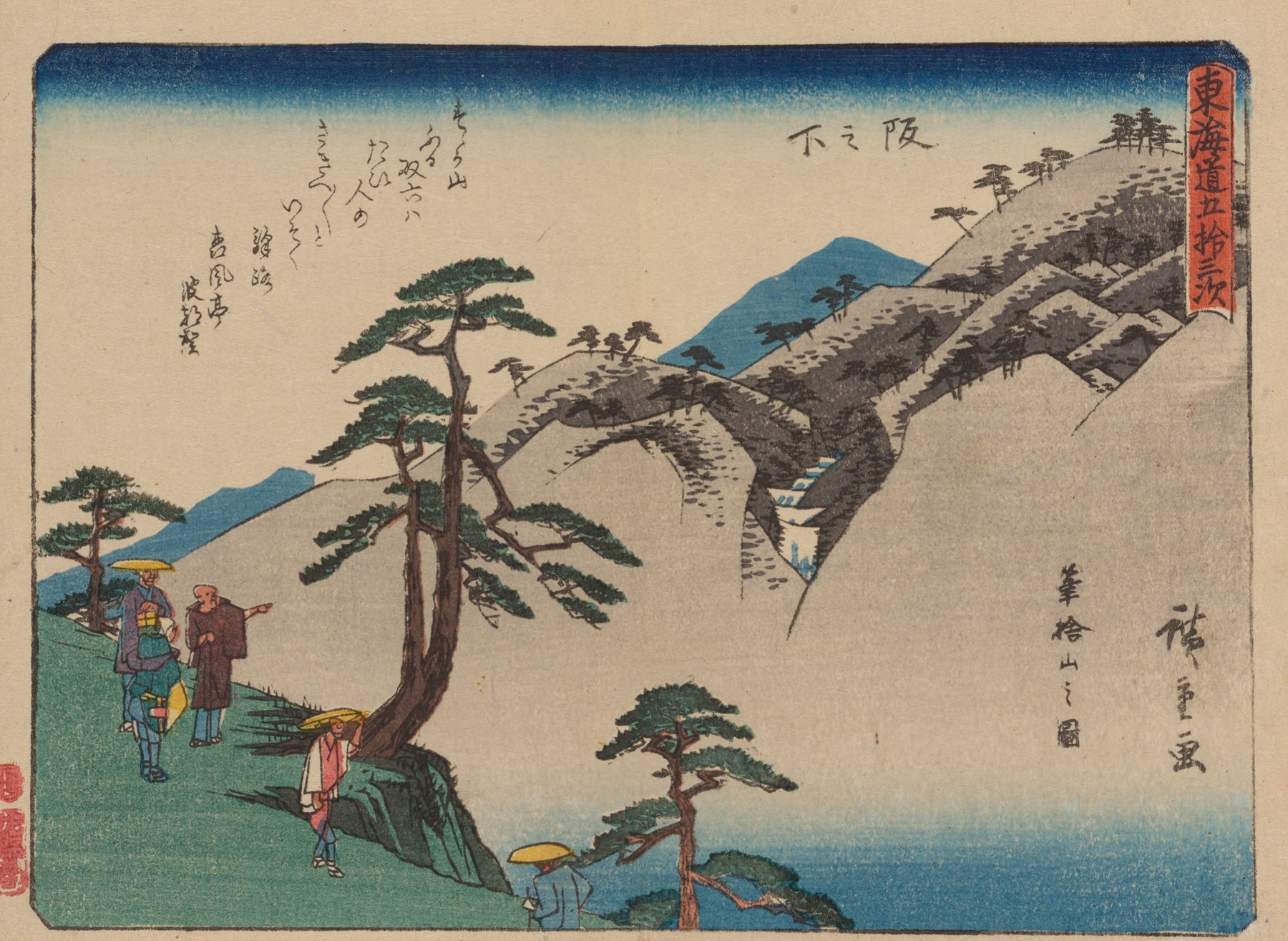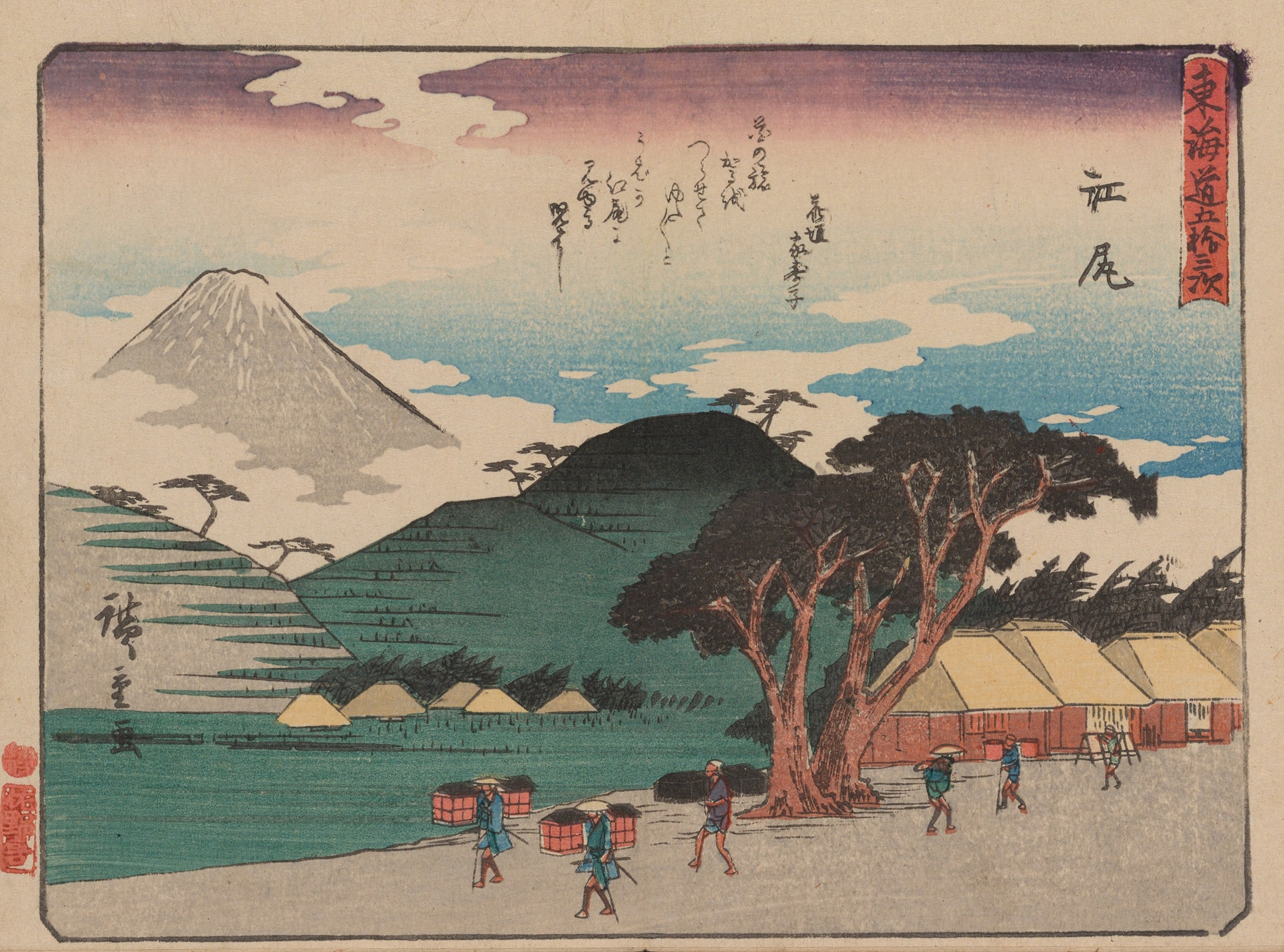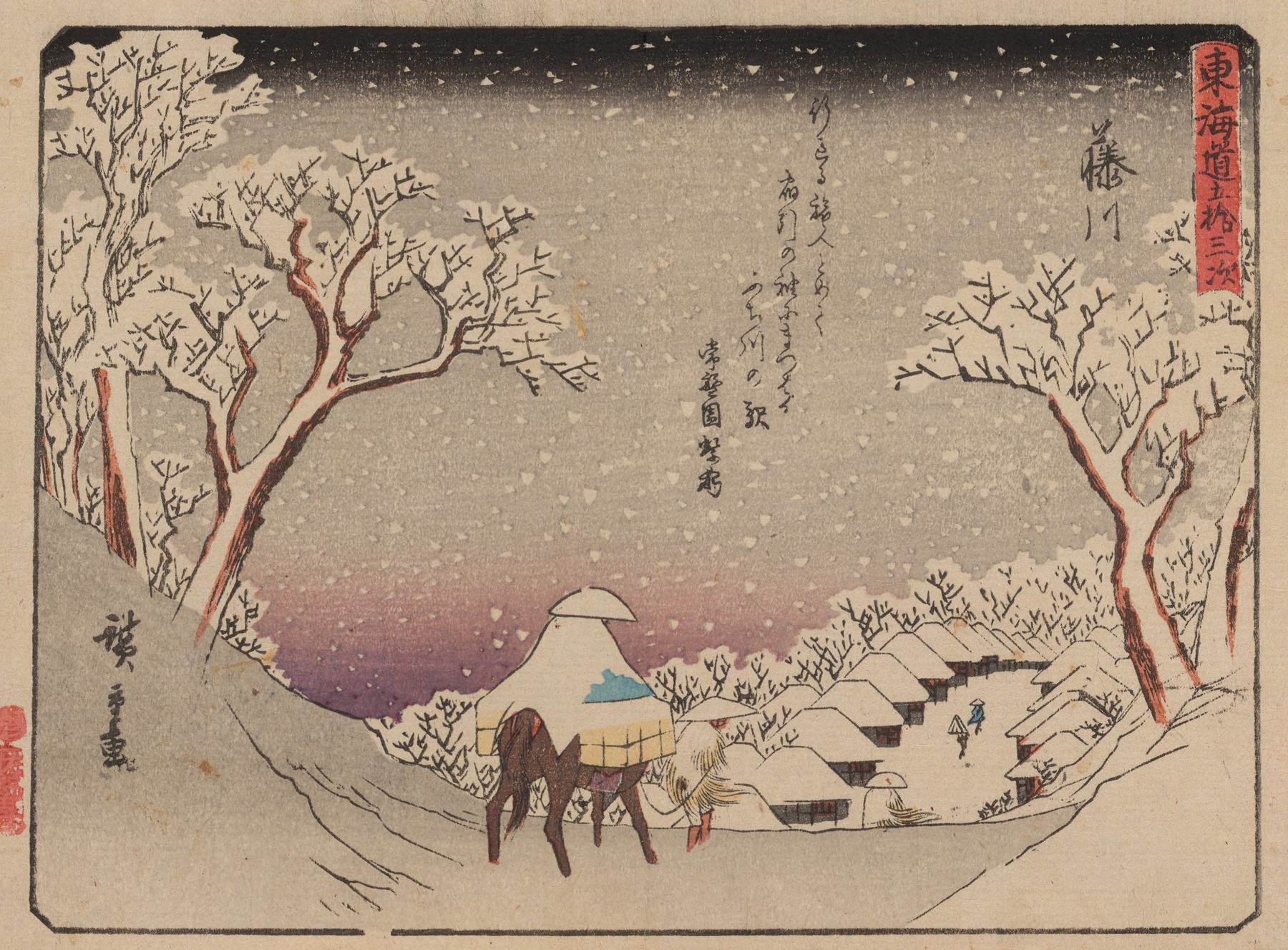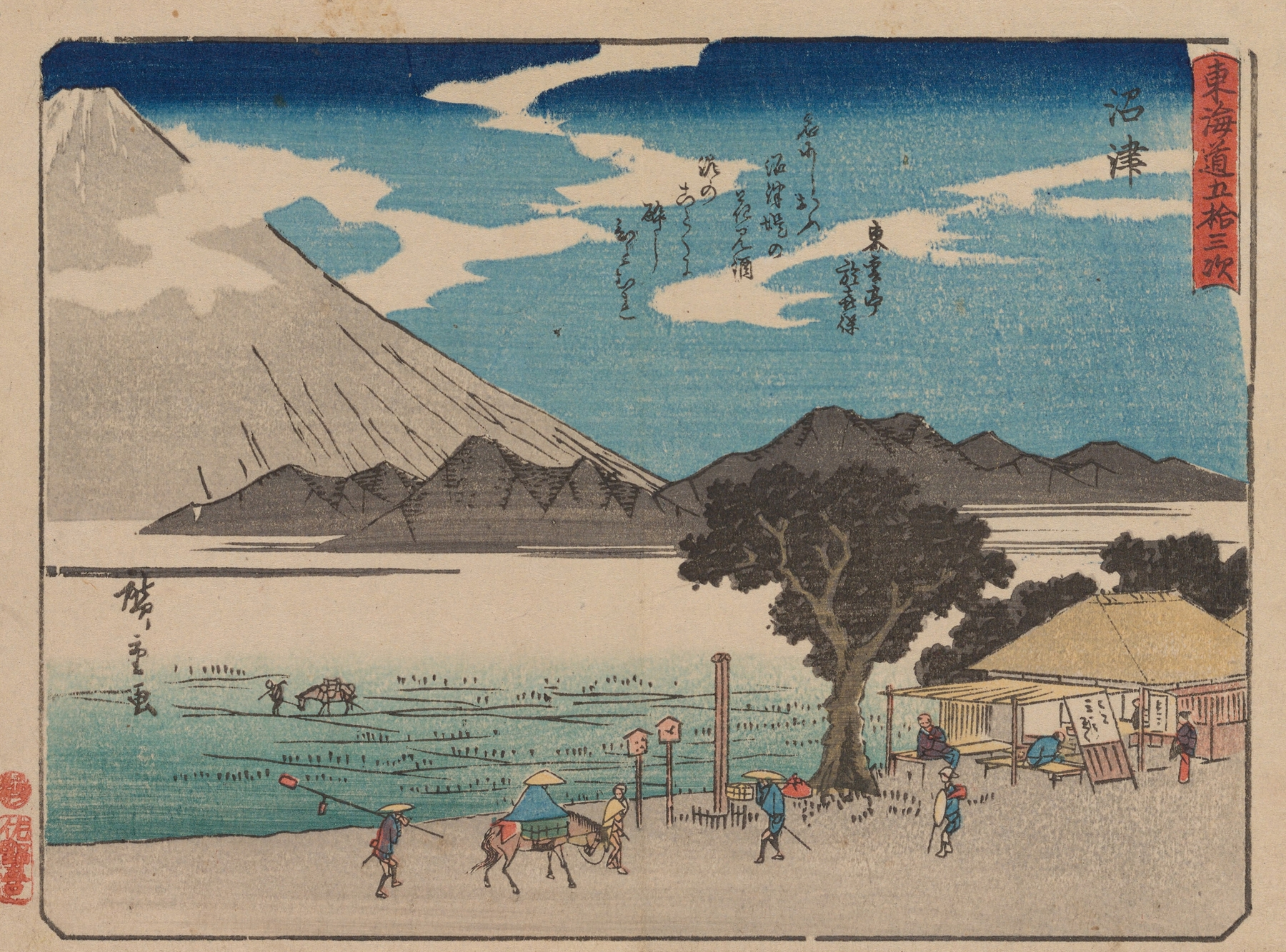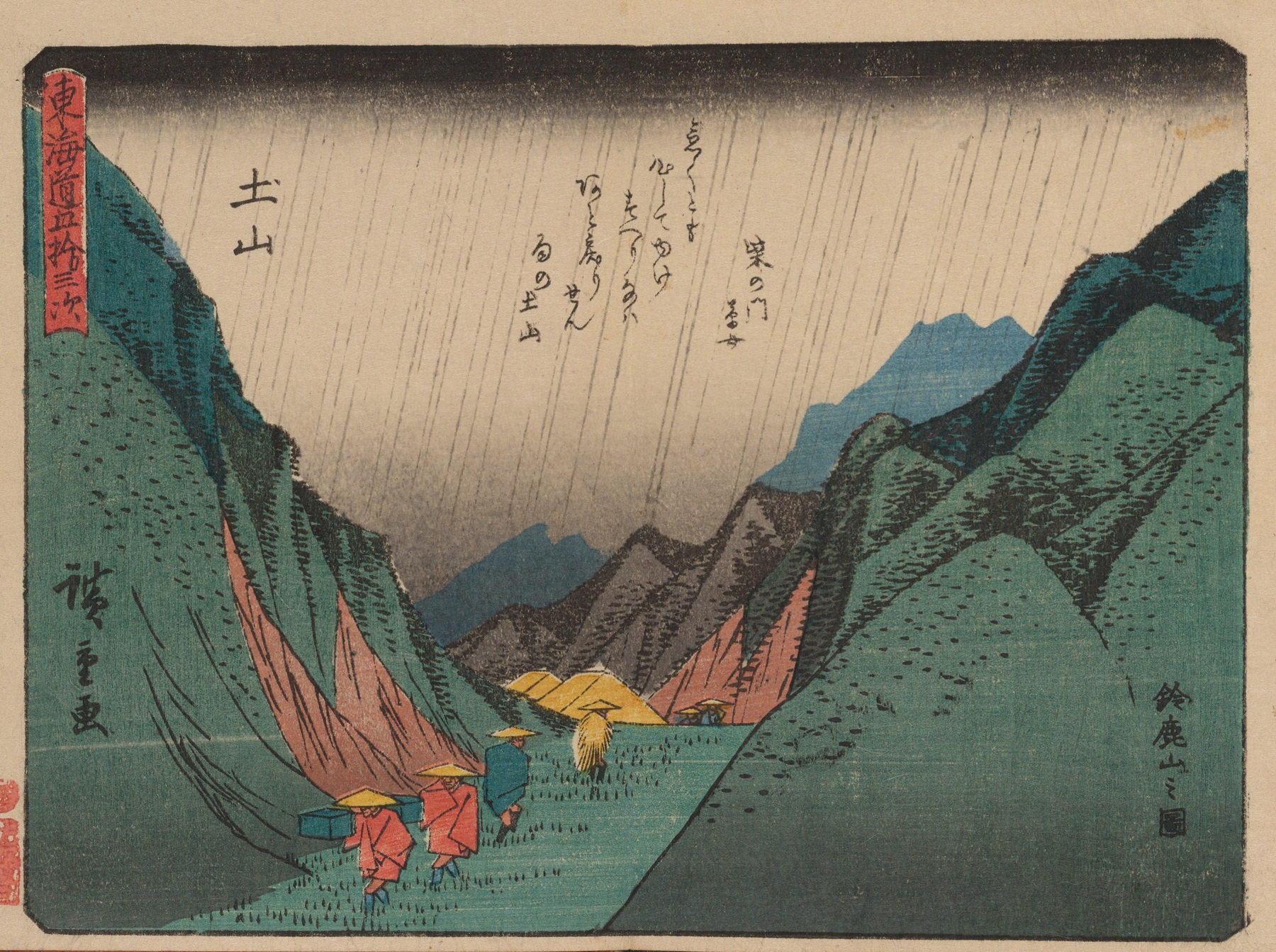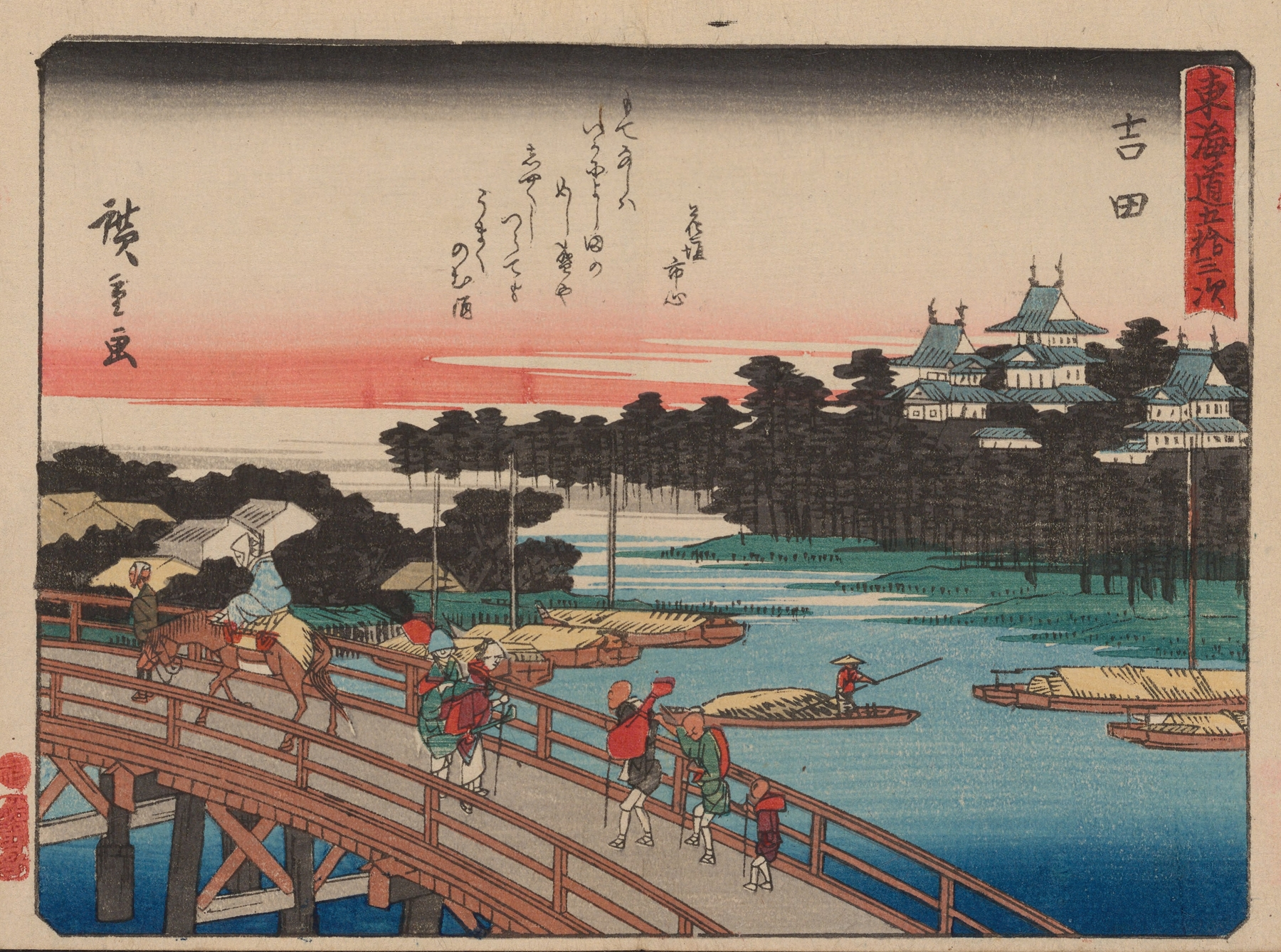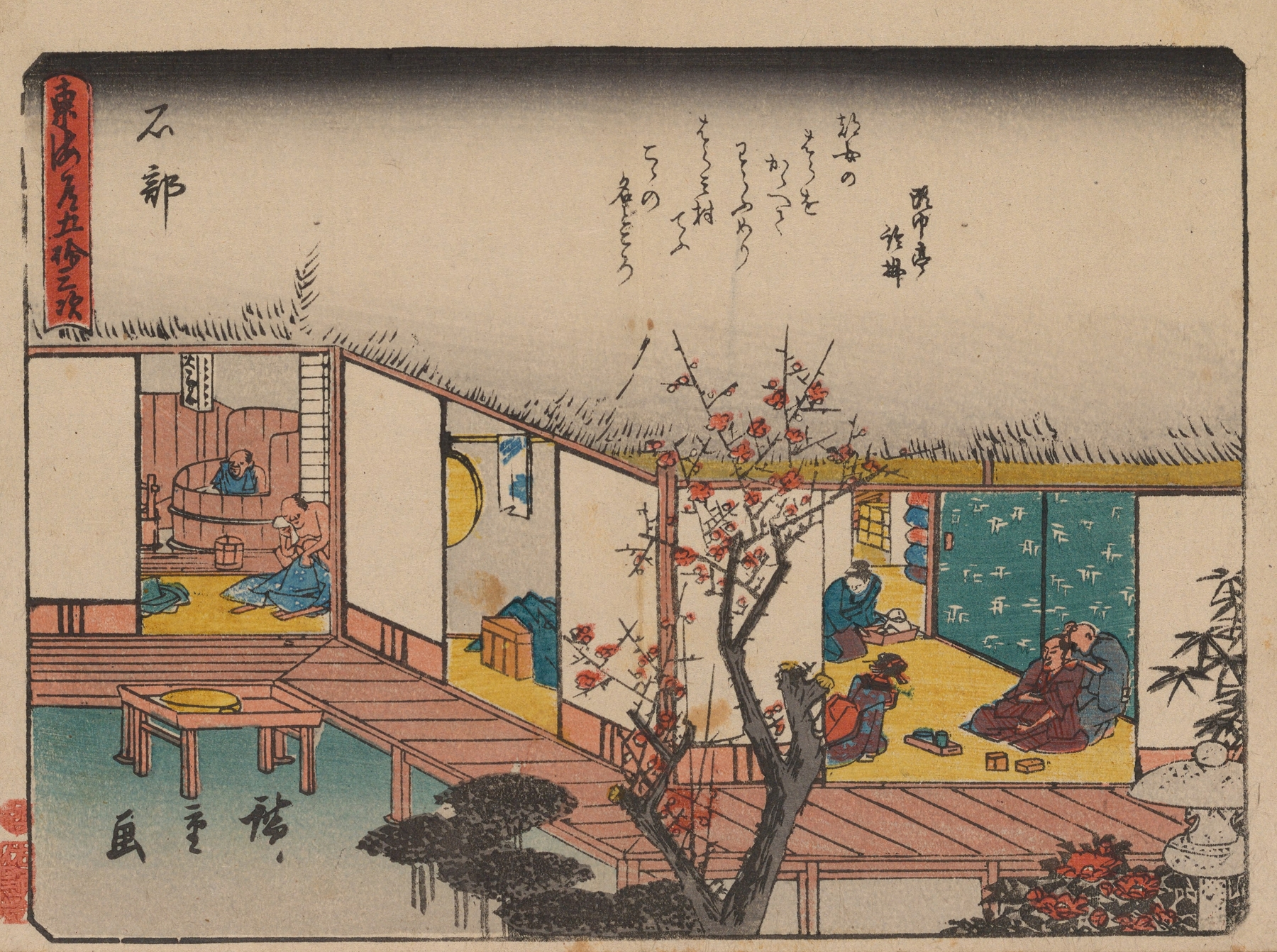

Could a single brushstroke hold eternity? In *Tokaido gojusantsugi, Pl.52*, the ephemeral beauty of decay is captured, inviting contemplation of impermanence and the passage of time. Each element reveals a fleeting moment, suggesting that life, much like the colors on the canvas, is vibrant yet transient. Look closely at the foreground, where delicate cherry blossoms scatter across a serene path. Notice how the soft, pale pink contrasts with the deeper, rich hues of the distant mountains, allowing the blossoms to emerge as the focal point. Hiroshige's meticulous attention to detail in each petal and branch creates a harmonious balance, while the gentle gradients of blue and green evoke a sense of tranquility, reinforcing the painting's meditative quality. As you absorb the scene, consider the interplay between the blooming flowers and the somber tones that surround them. This juxtaposition highlights an essential truth about beauty and decay; life is often most poignant in its fragility. The blossoms, in their brief splendor, remind us of both the joy of existence and the inevitability of its decline. Hiroshige captures this duality, compelling viewers to reflect on their own journeys through moments of beauty and loss. During the late 19th century, when this artwork was created, Hiroshige was experiencing a shift in the art world. The Meiji Restoration had begun, bringing both modernization and a renewed appreciation for traditional Japanese aesthetics. Working in Edo (now Tokyo), he found himself at the intersection of cultural change, as Western influences merged with his profound love for nature, solidifying his legacy in ukiyo-e printmaking.