View of Heidelberg — History & Analysis
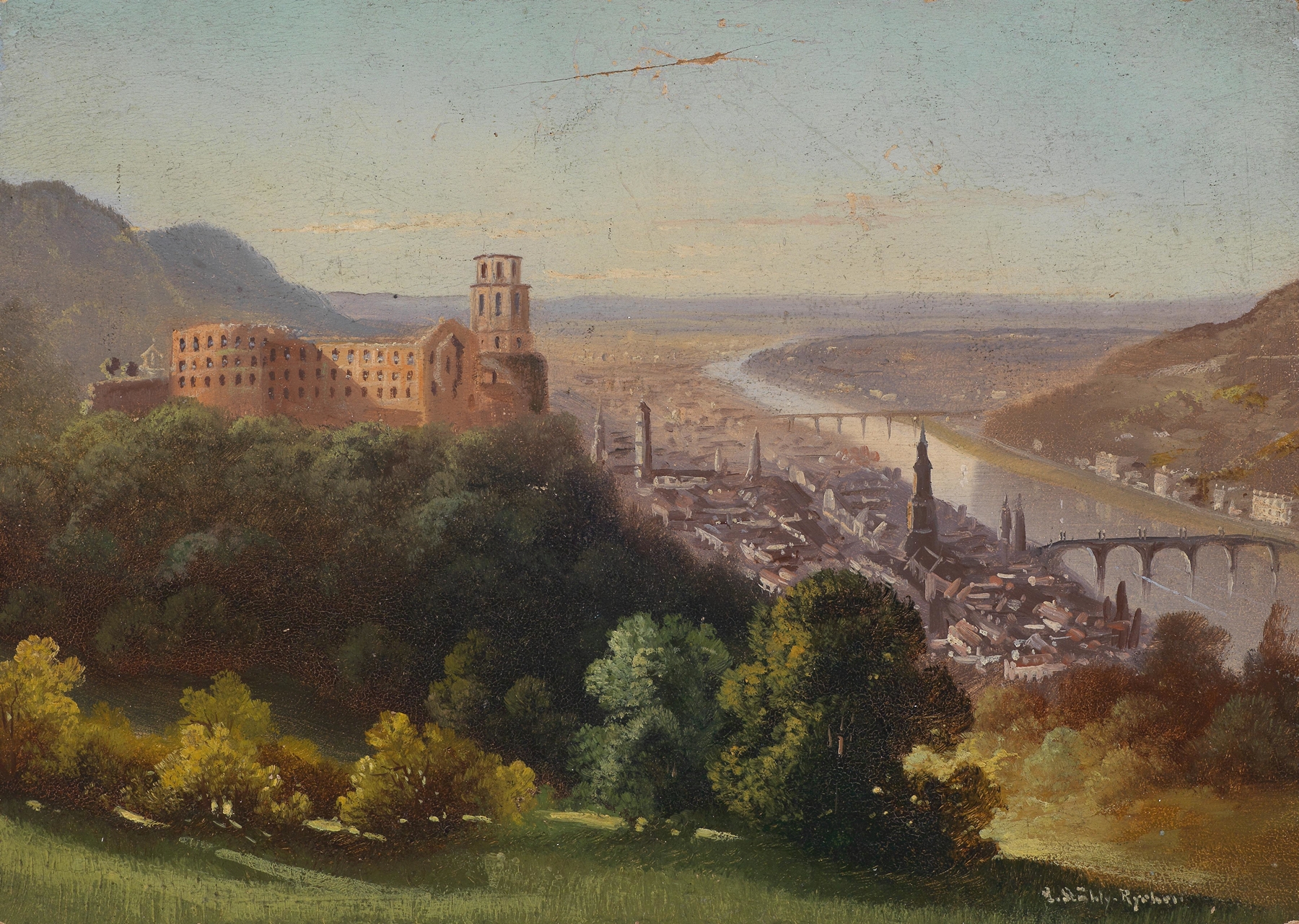
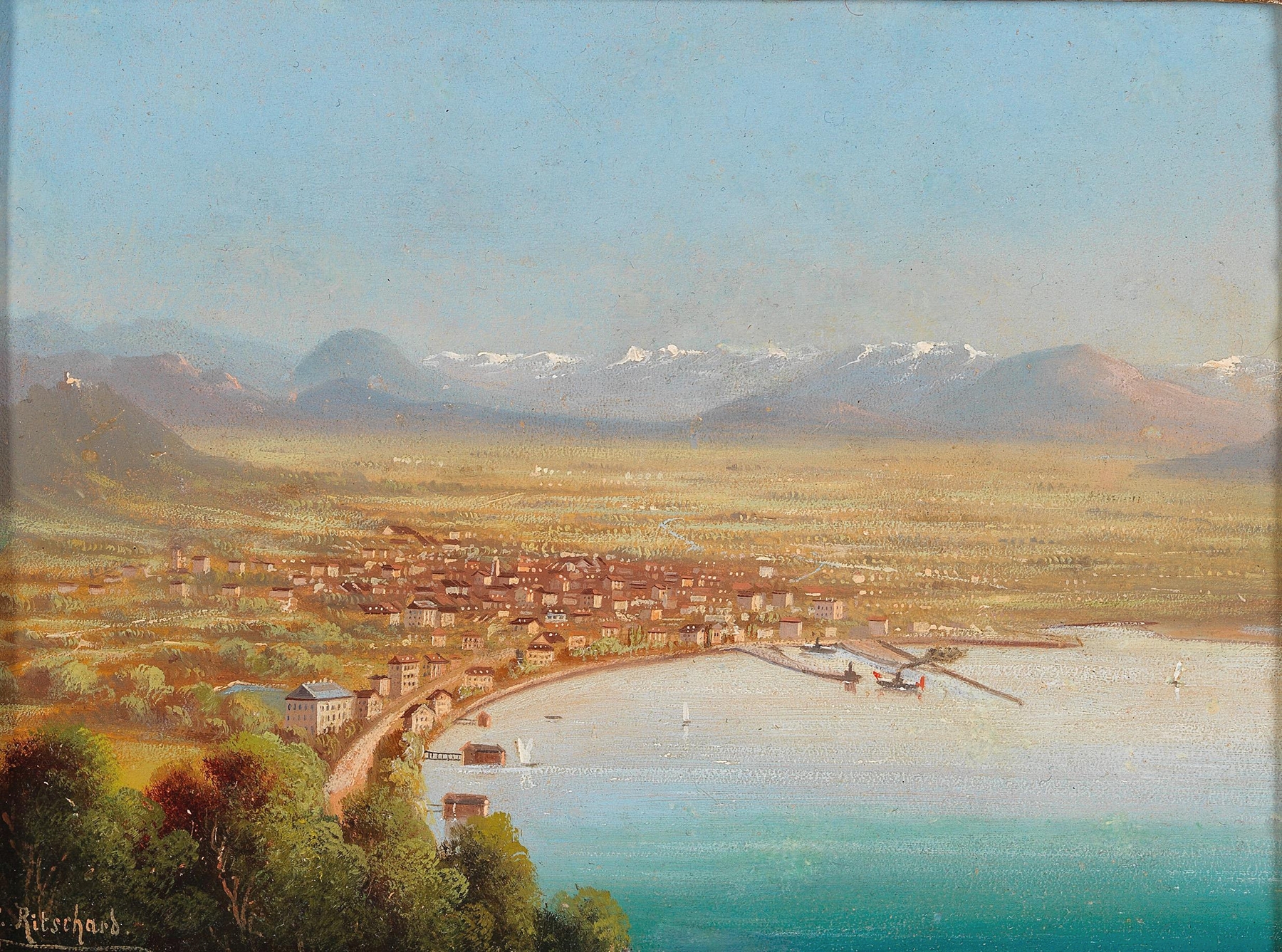
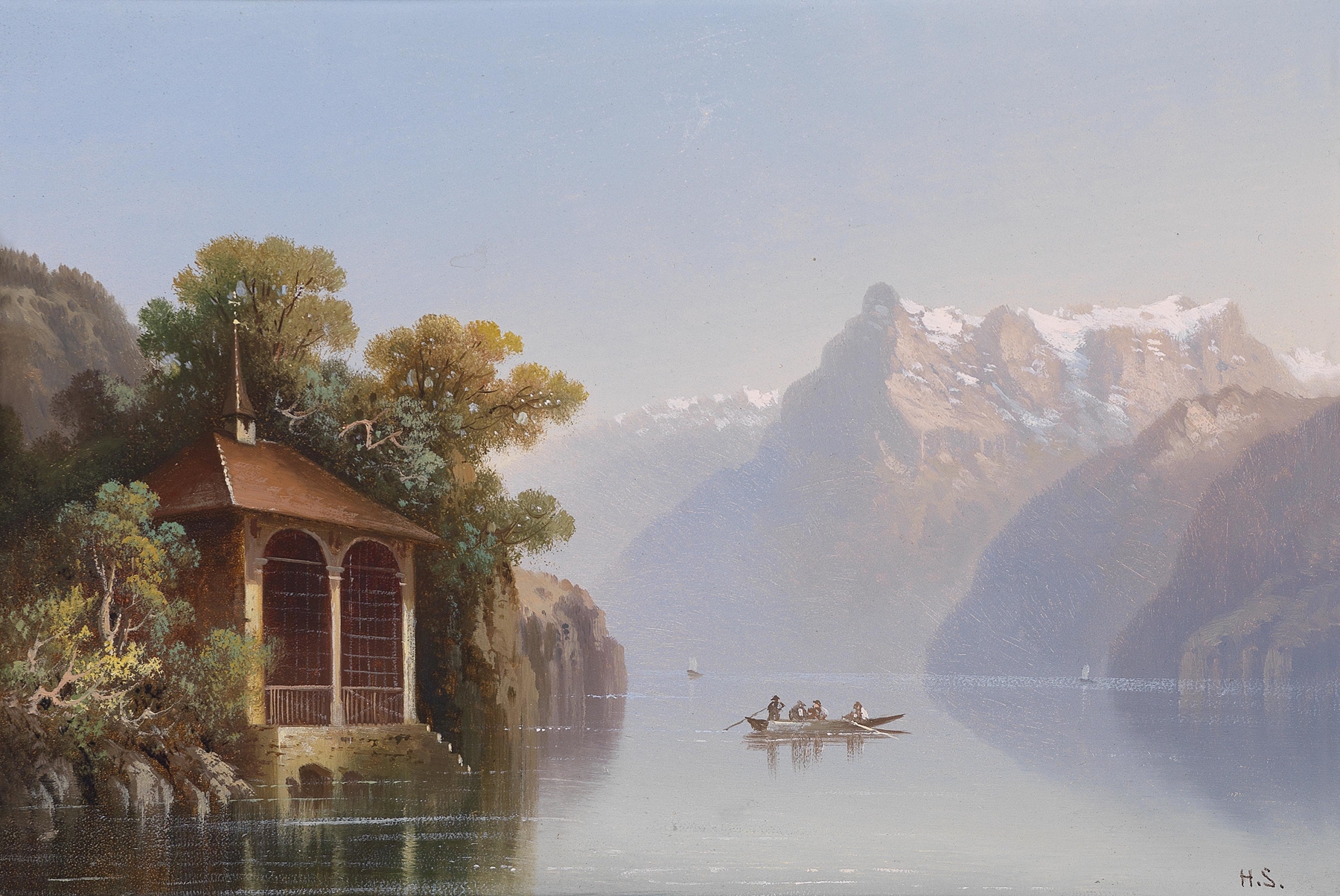
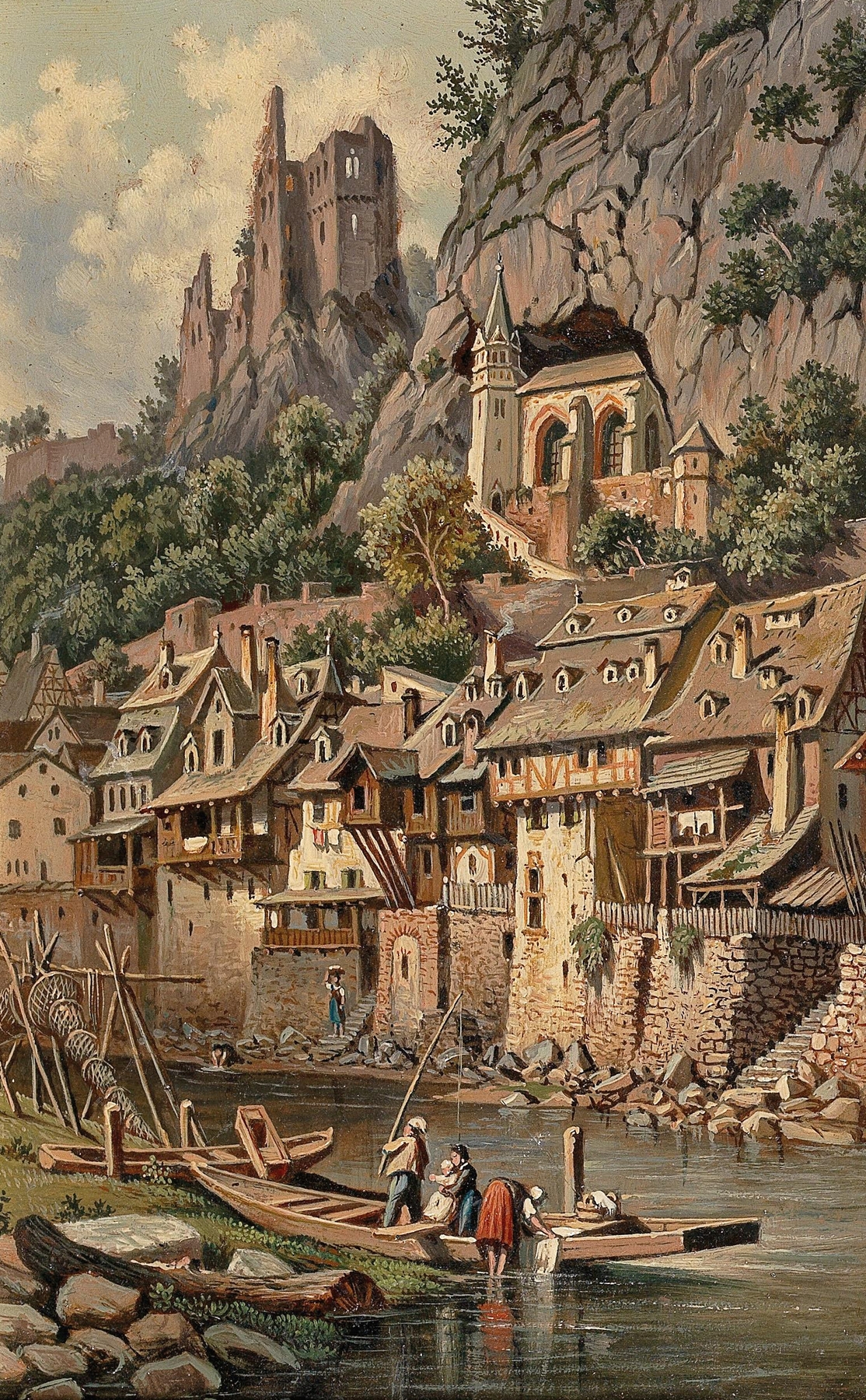
“Art reveals the soul when the world turns away.” In the quiet folds of memory, how often do we revisit places that dwell in the heart, yet elude time’s grasp? Look to the foreground, where the lush greenery embraces the meandering river, inviting you to trace its path. The soft contours of the hills rise gently, leading your gaze to the historic silhouette of Heidelberg, bathed in a warm, inviting light. Notice how the delicate brushstrokes create a tapestry of vibrant hues—emerald greens, golden yellows, and deep blues—that pull you into a serene and timeless landscape.
As you immerse yourself in this idyllic scene, consider the juxtaposition of nature and civilization. The towering castle, both majestic and crumbling, stands watch over the bustling town, suggesting an interplay of permanence and transience. The ethereal mist that clings to the mountains hints at the elusive nature of memory itself, blurring the lines between past and present and evoking a sense of nostalgia for places that may never be visited again.
During the period when this work was created, the artist was navigating the evolving landscape of Romanticism, often seeking to capture the emotional resonance of places. This particular artwork reflects the artist's deep connection to the natural world and an appreciation for architectural history, at a time when such sentiments were gaining popularity in Europe. The harmonious composition and evocative colors demonstrate a profound understanding of both manmade and natural beauty, solidifying the artist's place within the canon of 19th-century landscape art.