View of The Molde Fjord — History & Analysis
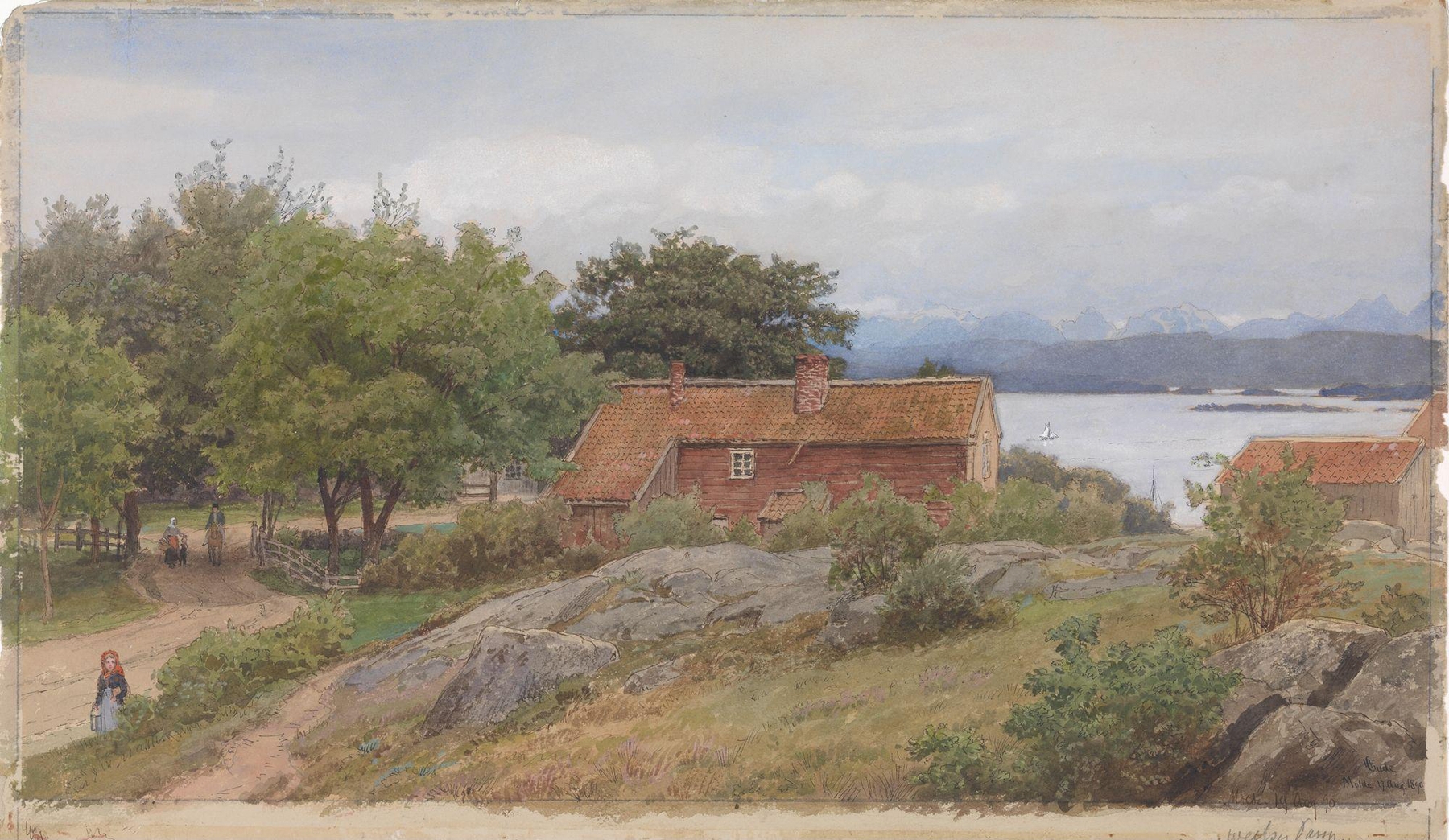
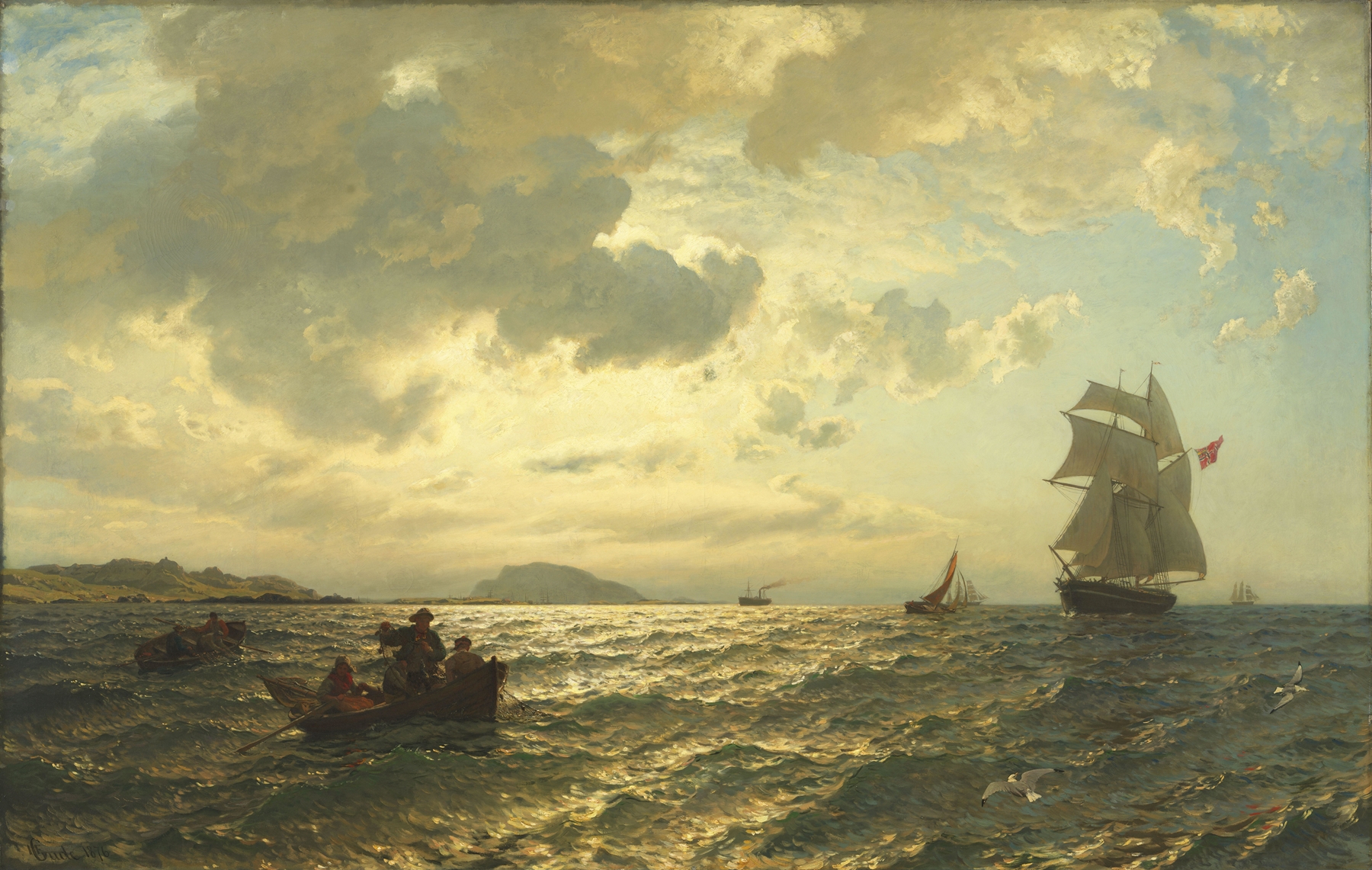
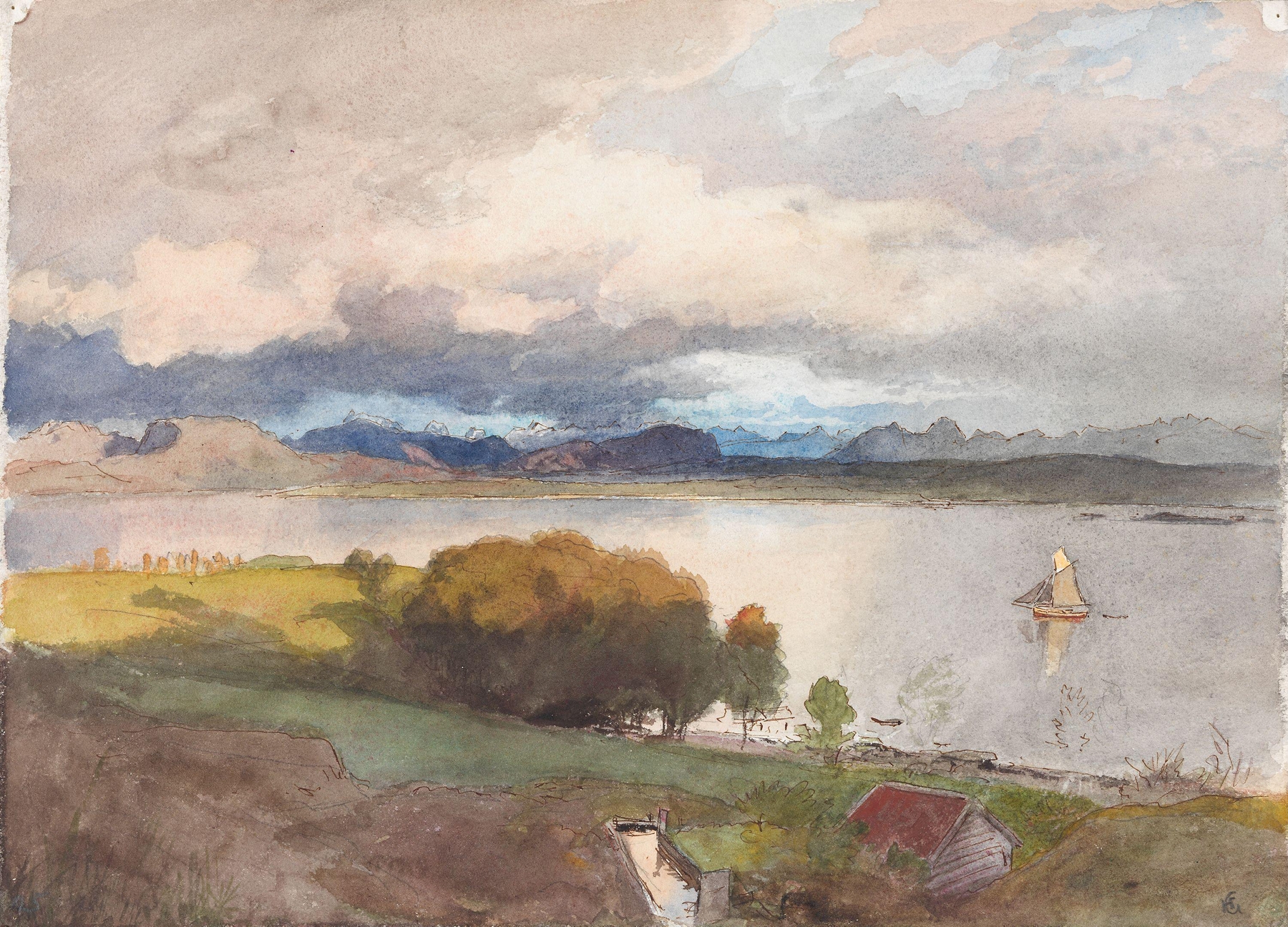
Is this a mirror — or a memory? The still waters of the fjord invite contemplation, drawing the viewer into a serene yet haunting space where nature’s majesty meets the whispers of the past. Look to the center, where the calm reflections of the towering mountains ripple gently against the water’s surface. Notice how the cool blues and soft greens blend seamlessly, creating a harmonious balance that feels both alive and ethereal.
The delicate brushwork evokes a sense of movement within the stillness, while the clouds above, kissed by light, suggest an impending shift in weather, maybe even an awakening. Beneath this tranquil exterior, the painting holds a deeper narrative. The juxtaposition of the majestic mountains against the placid fjord embodies a tension between grandeur and intimacy, evoking feelings of both solitude and connection. As if capturing a fleeting moment, the scene transcends mere representation, inviting viewers to reflect on their place within this expansive beauty.
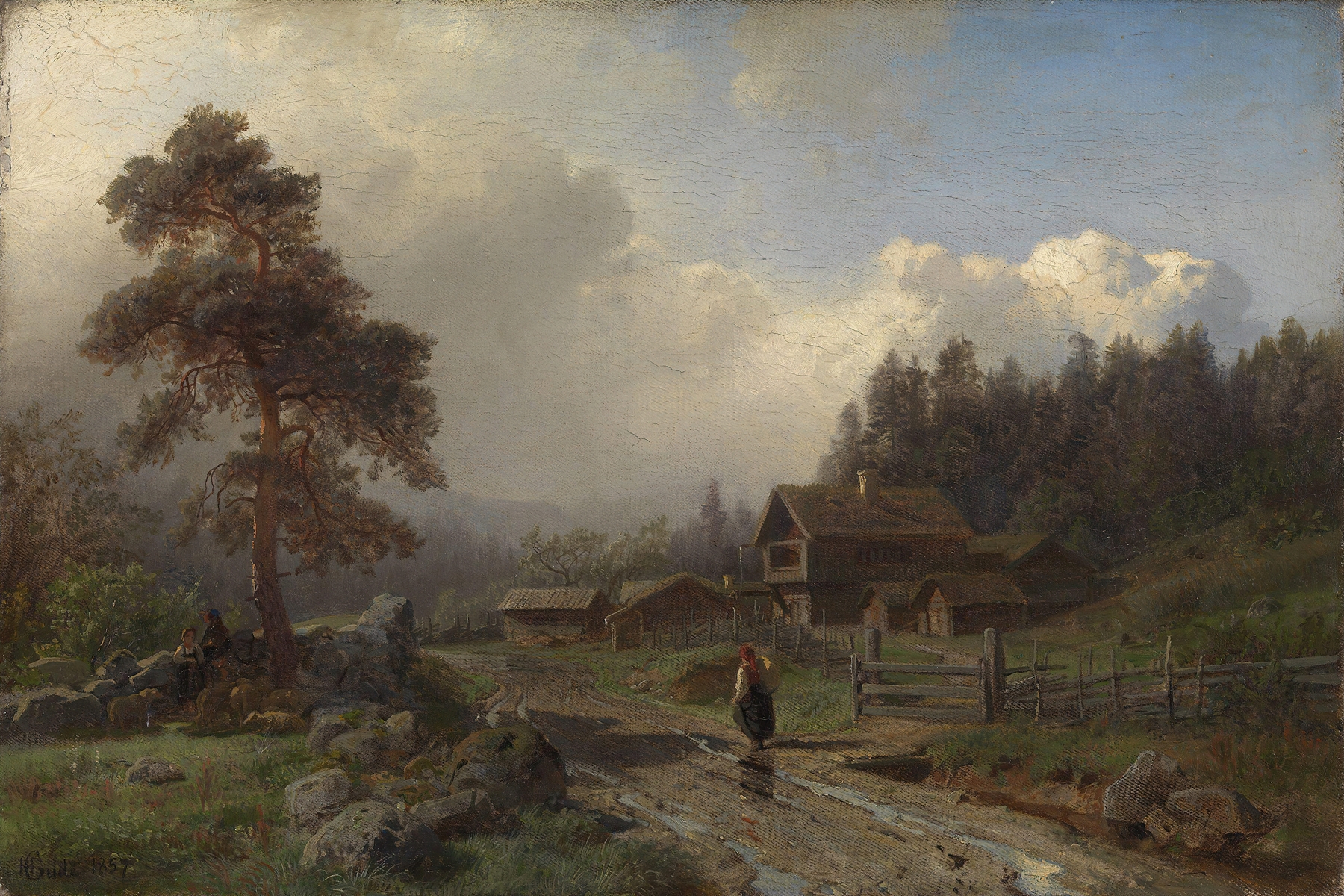
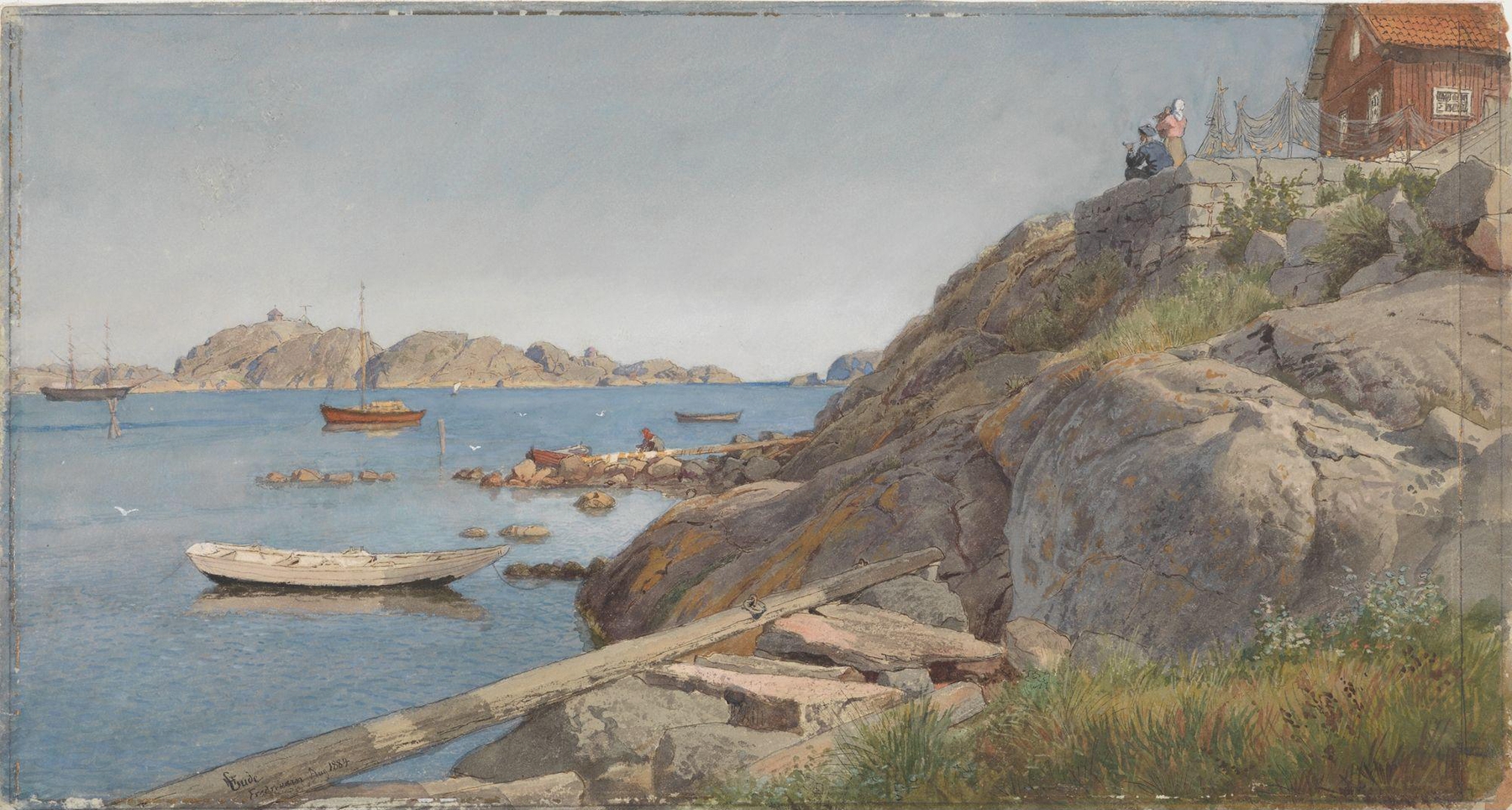
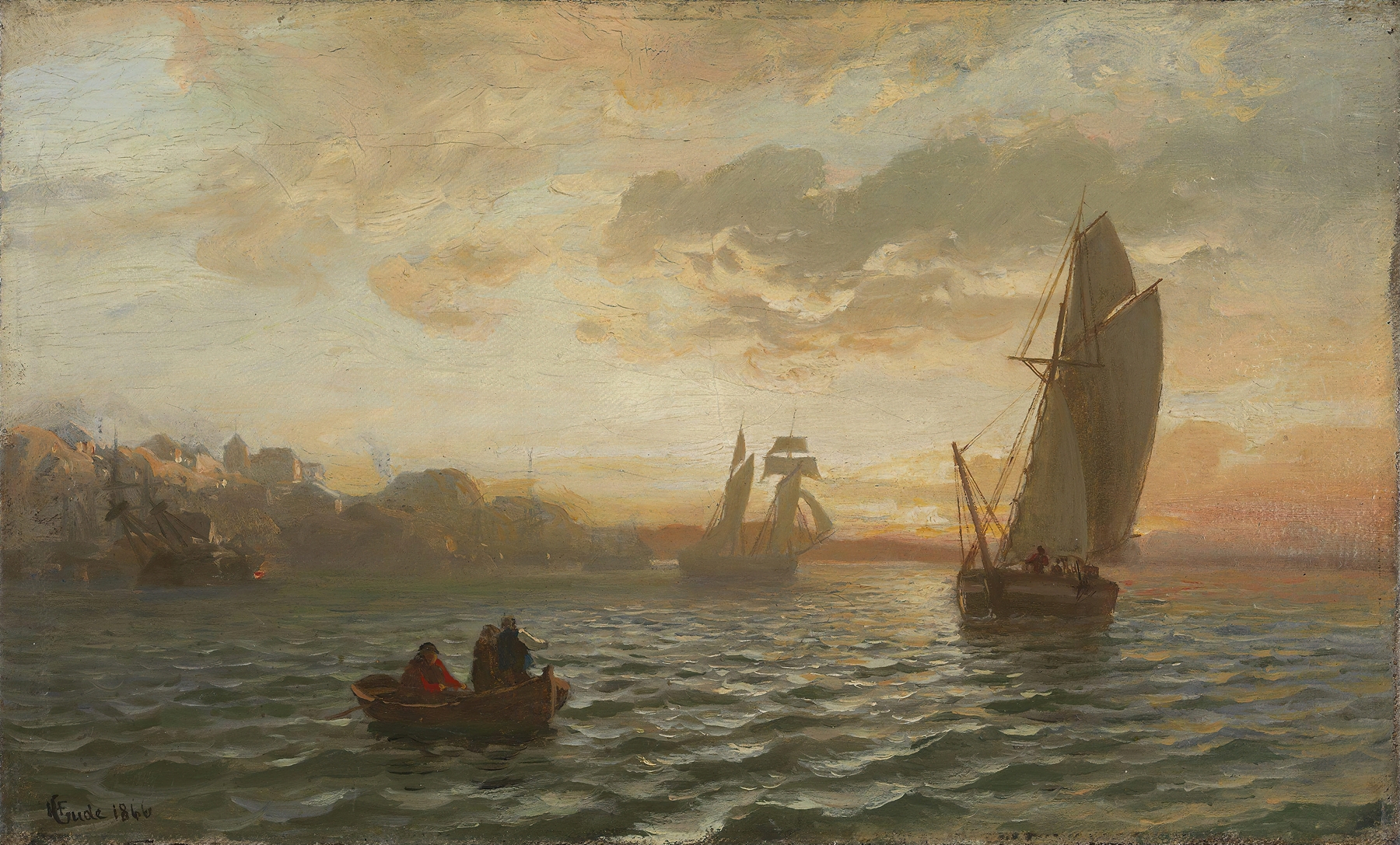
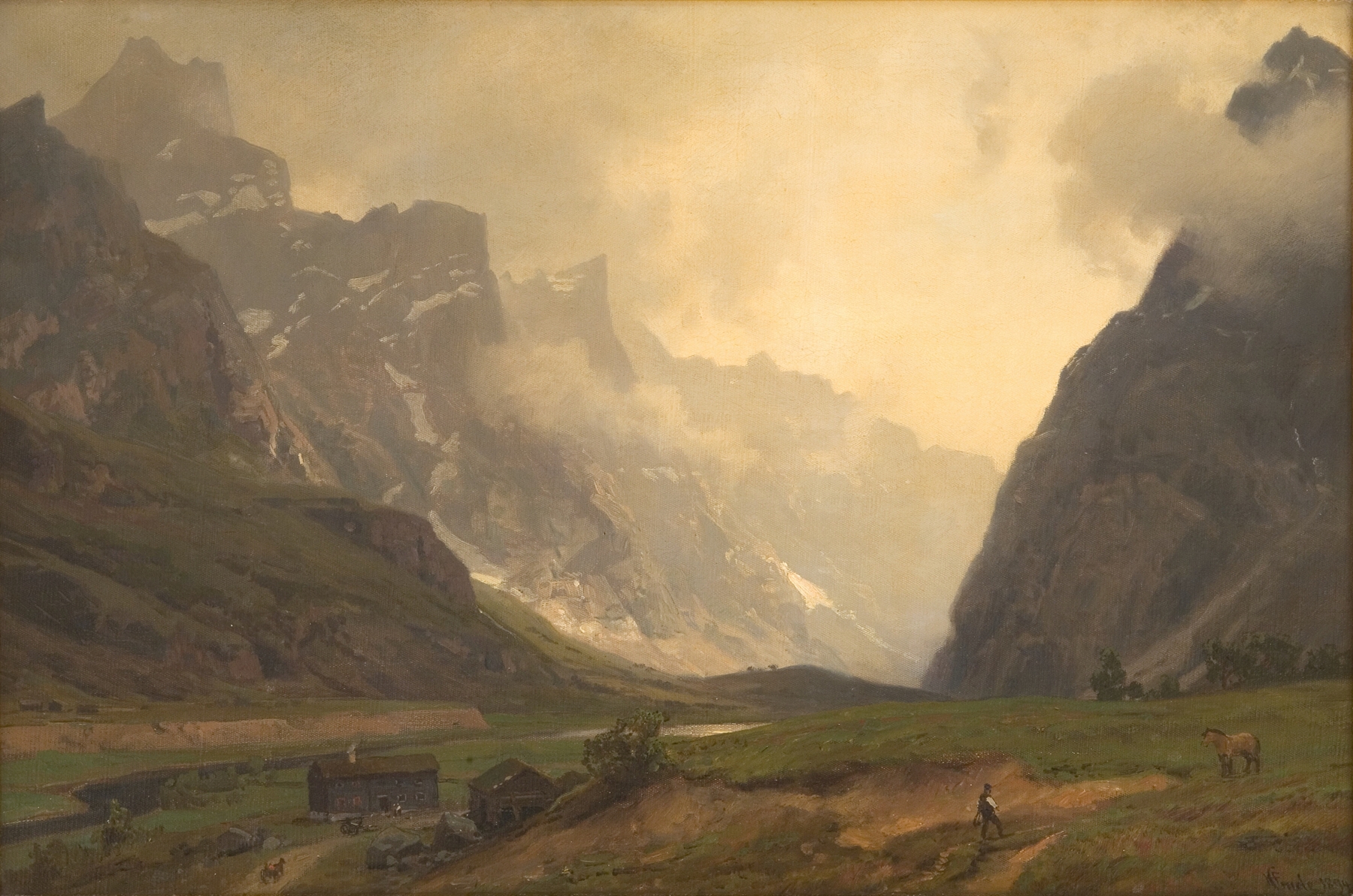
The ethereal quality of the light hints at an ephemeral truth — each visit to such landscapes molds our memories, transforming them into something almost divine. In 1890, Hans Gude painted this landscape while living in Norway, a period marked by the rise of national romanticism in art. The cultural embrace of nature was blooming, as artists sought to capture the essence of their homeland. Influenced by the growing interest in the sublime and the picturesque, Gude’s work reflects a deep appreciation for the Norwegian landscape, establishing him as a key figure in the development of Scandinavian art during this time.