Waterfall in Hallingdal — History & Analysis
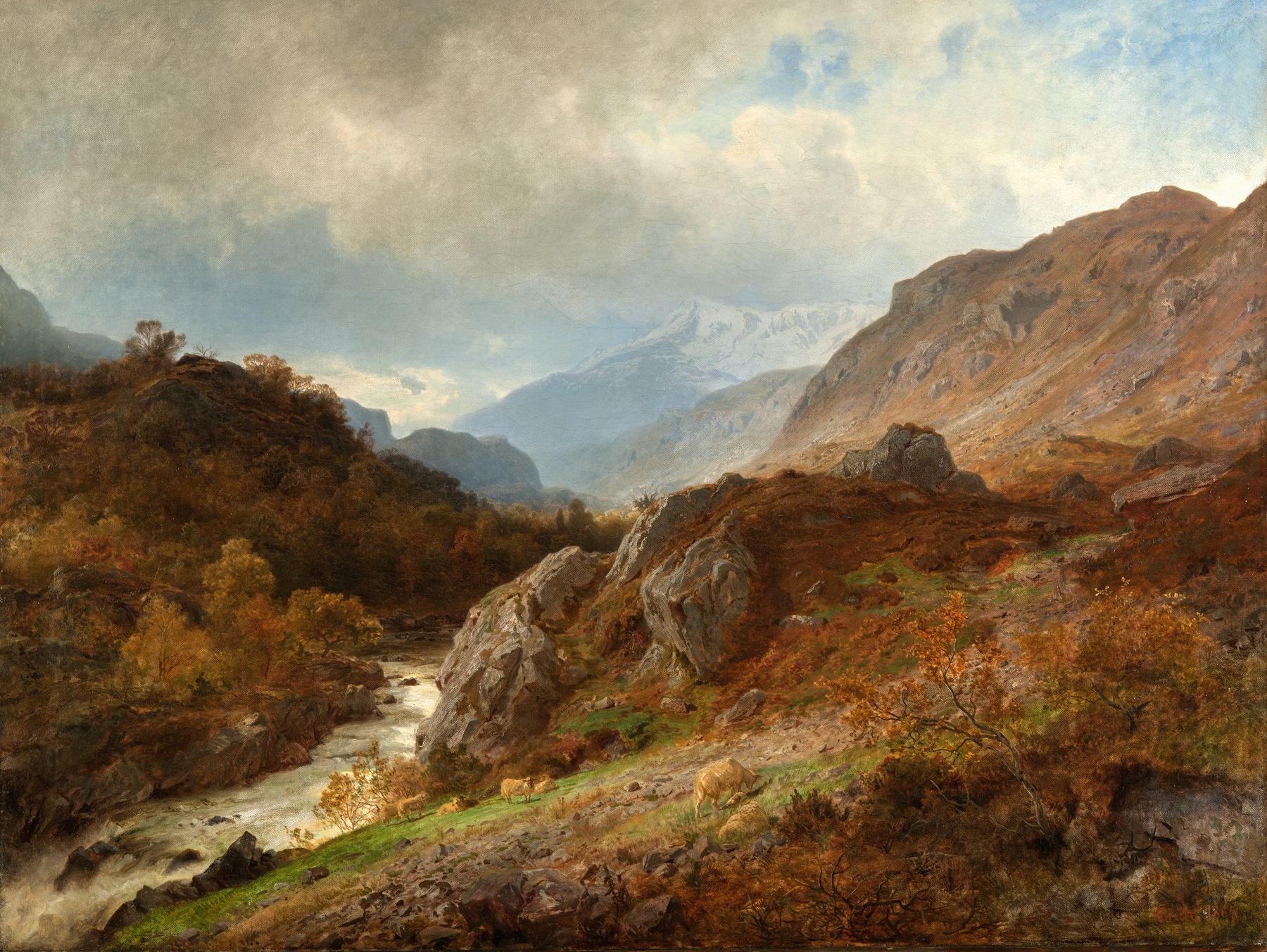
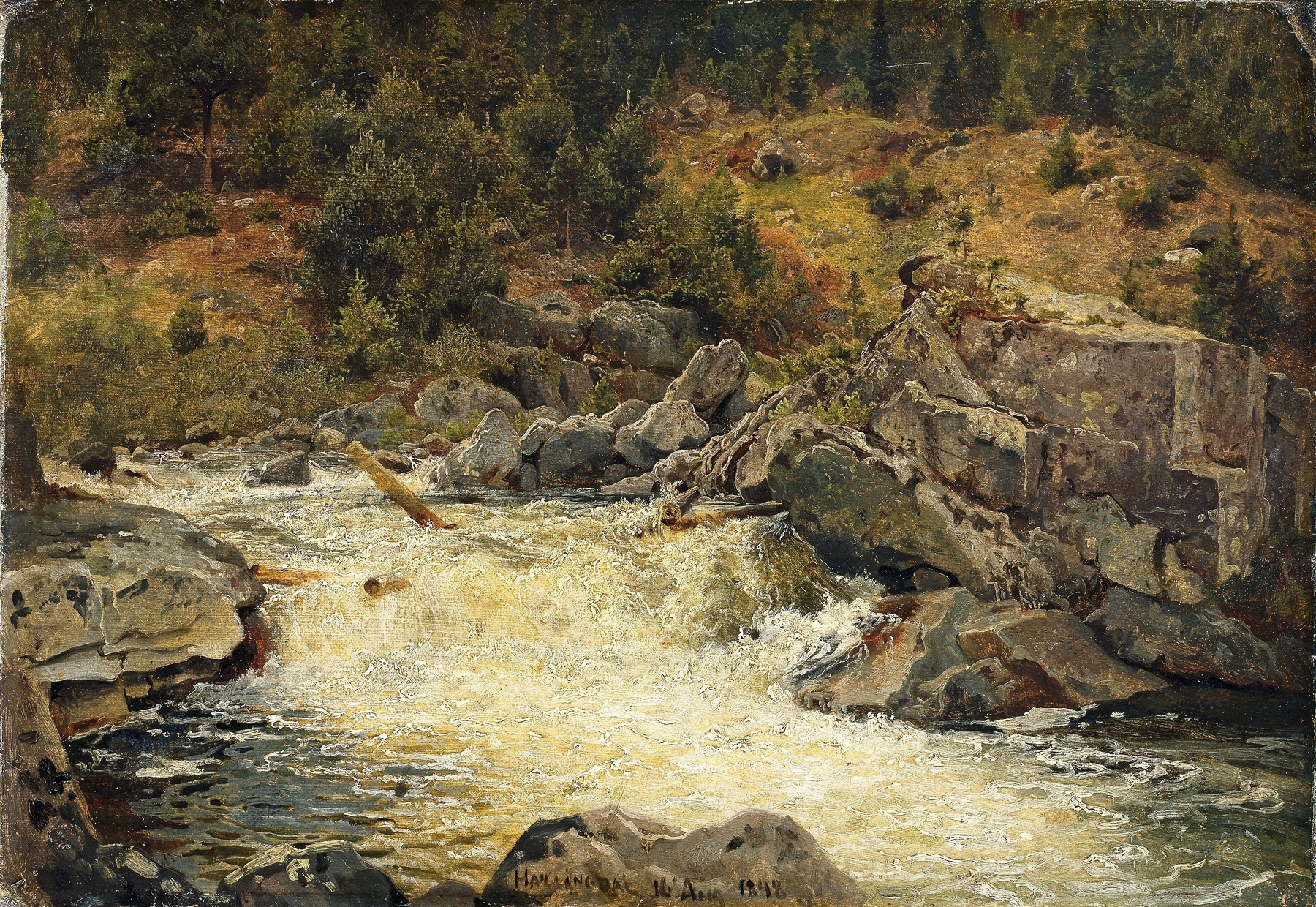
What if silence could speak through light? The stillness of nature, bathed in soft hues, invites contemplation of the sublime beauty that exists beyond words. Look to the left at the cascading waterfall, its pristine waters tumbling down rugged rocks, while gentle ripples dance in the foreground. The artist masterfully captures the various shades of green in the lush foliage, contrasting with the cool blues and whites of the water.
Notice how the sunlight filters through the trees, creating a delicate play of light and shadow that adds depth to the scene. The deliberate brushstrokes evoke an impression of movement, yet the tranquil setting invites a moment of pause. Delve deeper, and you may sense the tension between the vigorous flow of the waterfall and the serene composure of the landscape around it. This contrast hints at the duality of nature—its ferocity cloaked in beauty.
The subtle details, such as the glistening stones at the water's edge and the wisps of mist rising into the air, amplify the sense of awe and reverence for the natural world, urging the viewer to reflect on their place within it. Created in 1848 while the artist was in Norway, this work represents Gude's exploration of the Romantic ideals prevalent at the time. Emerging as a significant figure in the landscape genre, he was influenced by the beauty of the Norwegian countryside, amidst a growing appreciation for nature in art. This period marked a shift toward greater emotional expression in landscape painting, as artists sought to capture not just the visual but the spiritual essence of their surroundings.