Waterfall in Hallingdal — History & Analysis
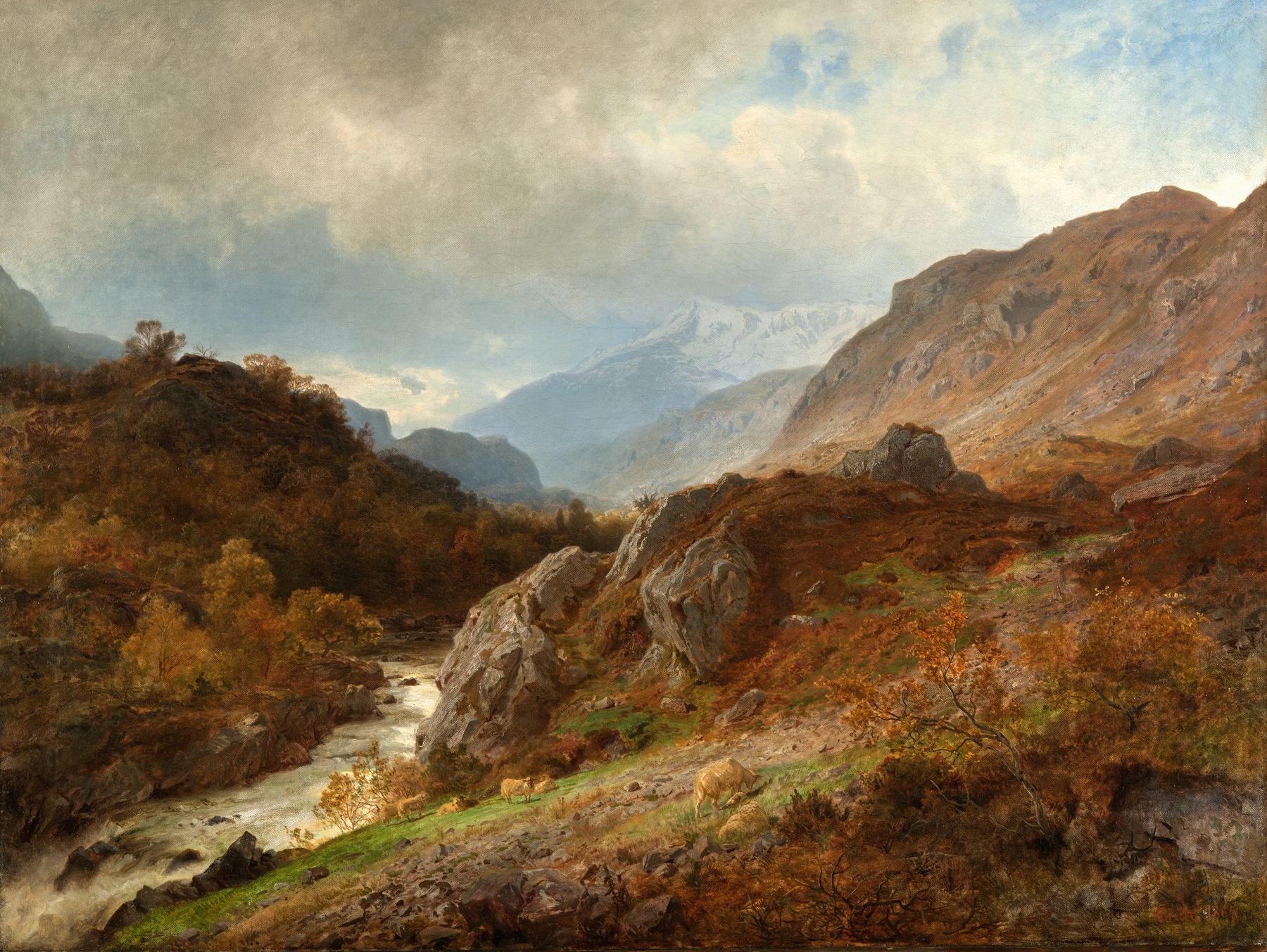
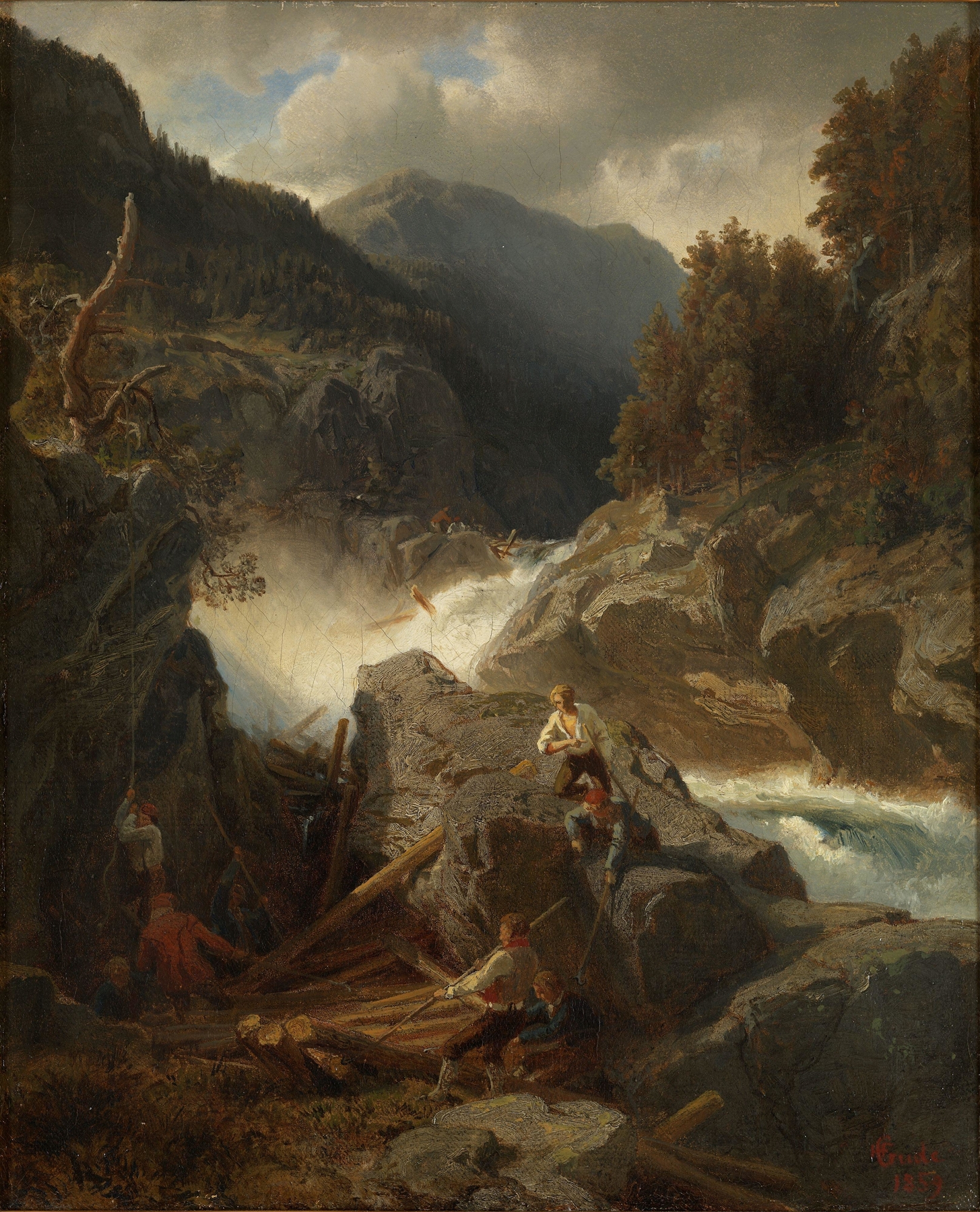
“Every brushstroke is a heartbeat remembered.” In the cascading motion of a waterfall, memory converges with nature, evoking the timelessness of place and feeling. Look to the left at the vibrant greens that cradle the water's edge, drawing you into the scene. The artist's deft brushwork creates a gentle interplay of light and shadow, illuminating the frothy white torrents contrasting against the lush, verdant bank. Notice how the blues and whites of the water shimmer with vitality, almost as if the flow itself is animated with a life of its own, capturing the very essence of movement and sound.
As you observe the painting, the rugged rocks juxtaposed with the silky water surface suggest a duality of permanence and transience. There is tranquility in the way the water flows, but behind it lies the power of nature, relentless and unstoppable. This contrast speaks to the fragility of memory, where moments of peace are often interspersed with the tumult of life’s realities, forming a tapestry of recollection and experience.
Hans Gude created this masterpiece in 1859, during a time when Romanticism was at its peak in the art world. He was in Norway, deeply inspired by the majestic landscapes around him, and his work reflected the era’s fascination with nature's beauty and sublimity. Gude's paintings often explored themes of nostalgia and the sublime, connecting his personal experiences with the grandeur of the Norwegian countryside, encapsulating a moment that resonates across time.