Wäscherei an der Wien bei St. Veit — History & Analysis
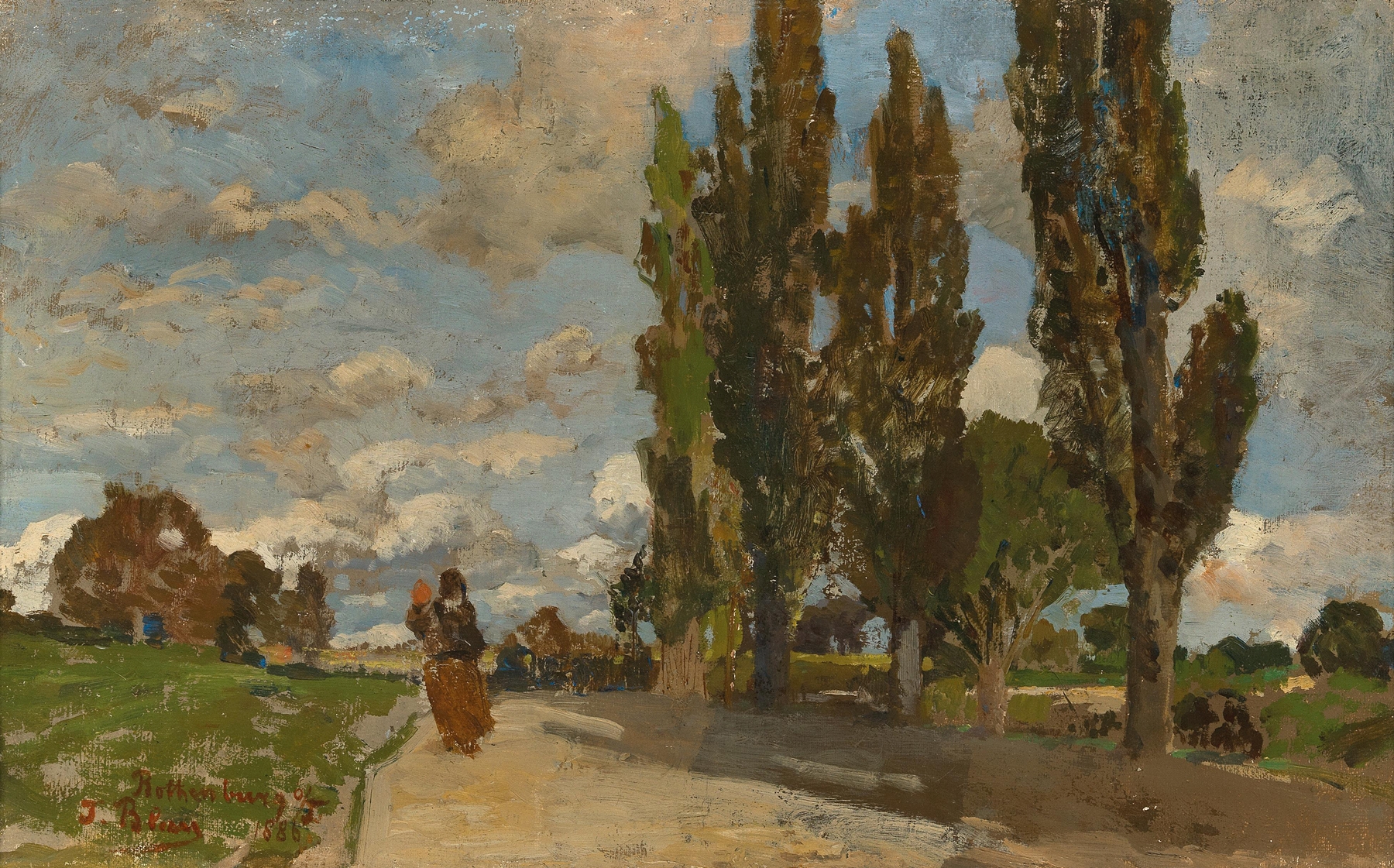
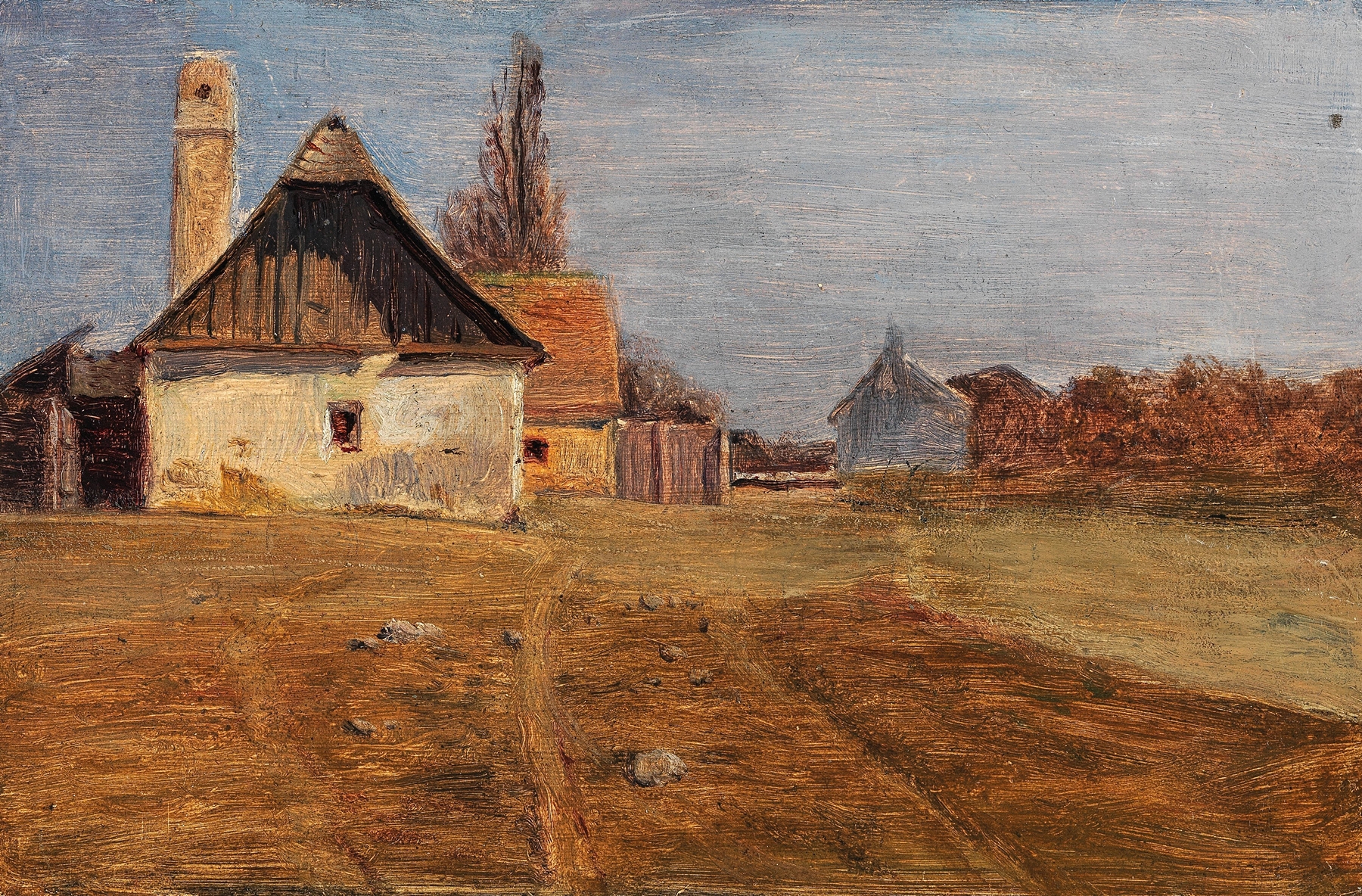
Could beauty survive in a century of chaos? The delicate balance of existence hangs in the air, suspended between the mundane and the extraordinary, waiting for its moment to unfurl. Look to the foreground where the washing line stretches across the canvas, laden with freshly laundered garments that flutter with a gentle breeze. Notice how the light filters through the fabric, casting soft shadows upon the cobblestones below.
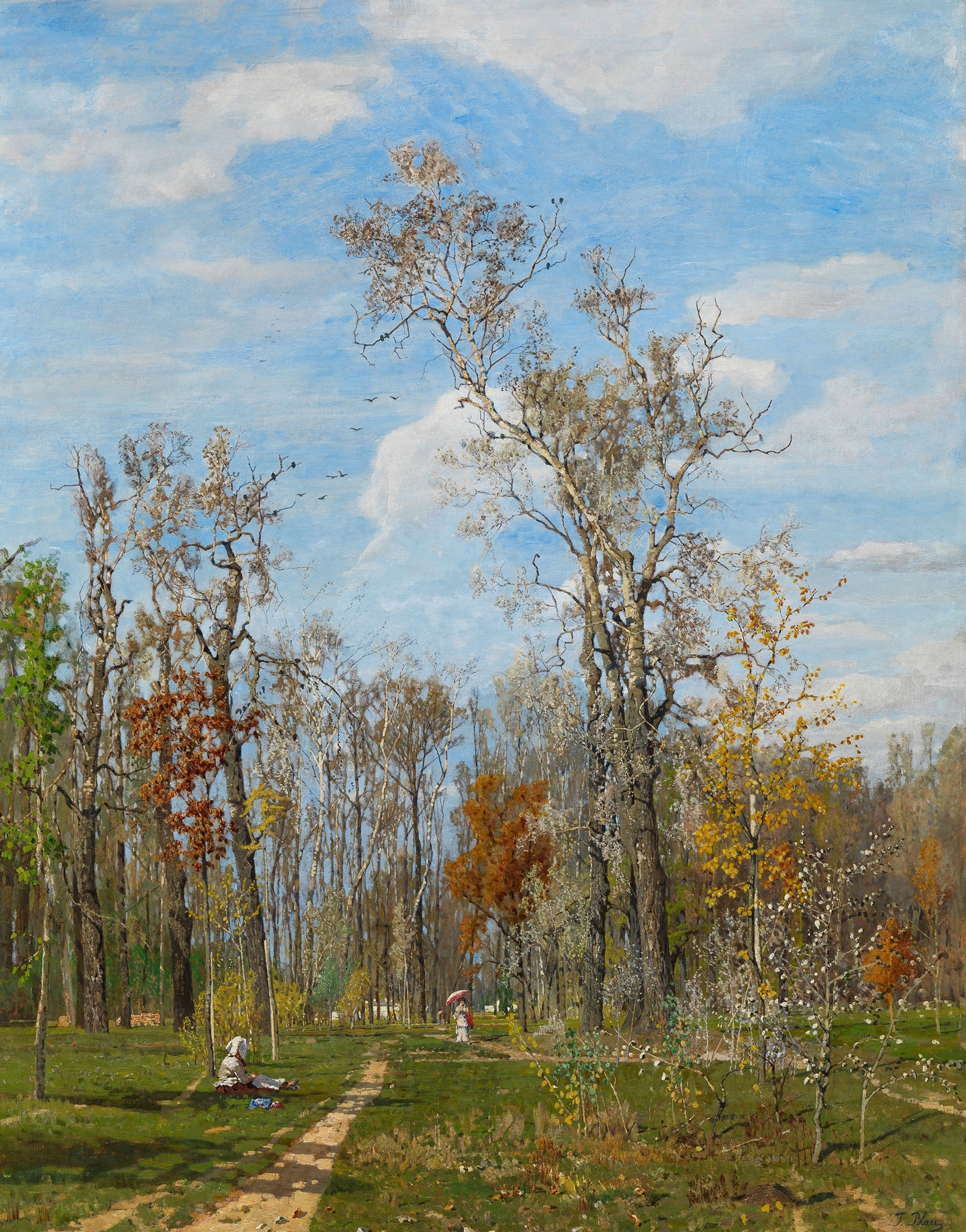
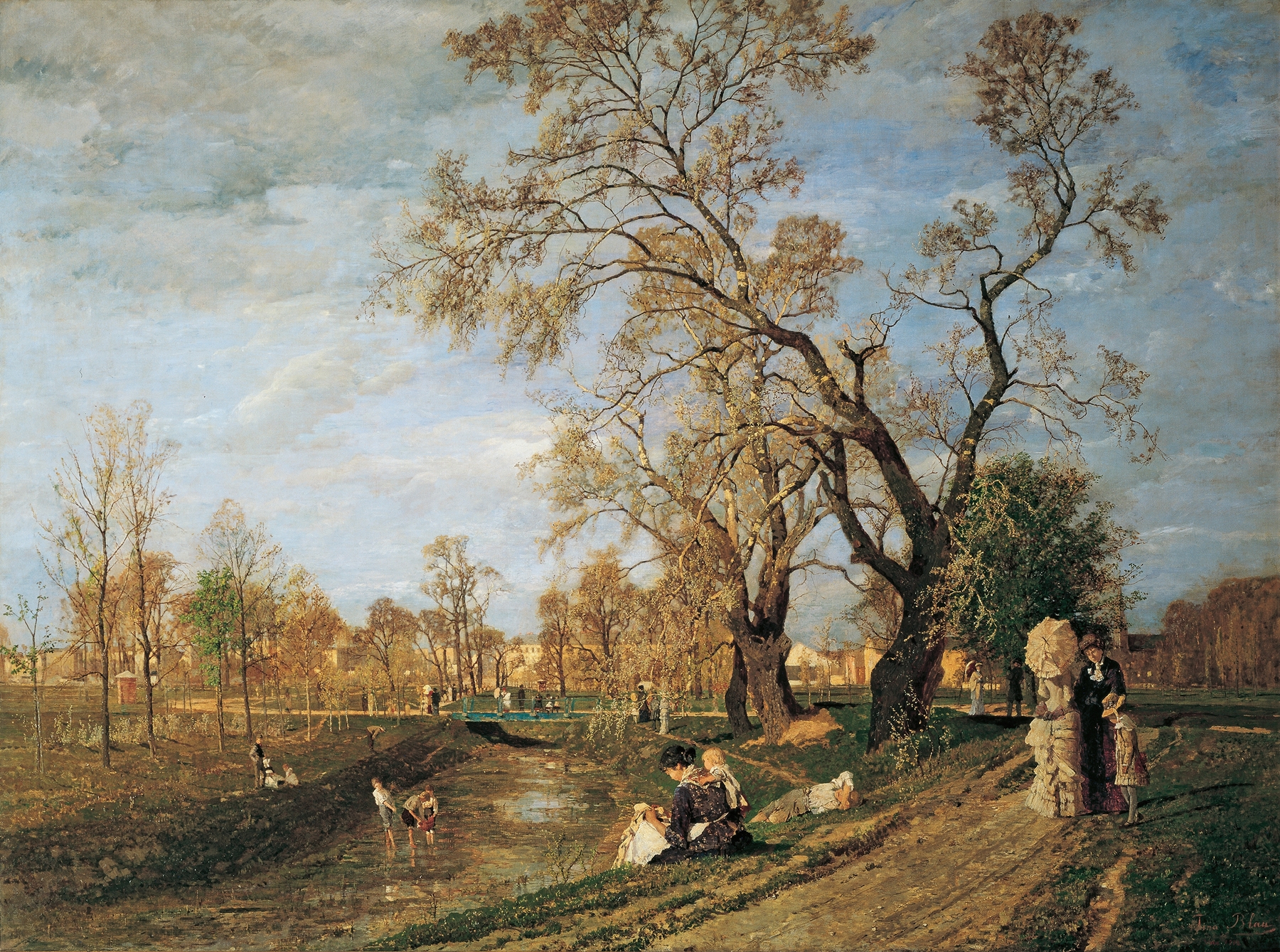
The palette is awash with soft blues and greens, evoking a sense of serenity amid the everyday activity of a laundress at work. The brushstrokes, fluid yet precise, invite the viewer to linger on the scene, as if caught in a tranquil moment of life. In this artwork, contrasts emerge subtly; the ordinary labor of washing juxtaposed with the ethereal beauty of nature surrounding the scene. The distant hills frame the horizon, suggesting a world beyond the daily toil, while the figures, though engrossed in their work, are imbued with a quiet dignity.
Each detail — from the splashes of water to the vibrant colors of the garments — speaks to the cyclical nature of life, destiny lingering just out of reach yet ever-present in the mundane. Tina Blau painted this piece in 1880 in Vienna, during a time when the city was rapidly modernizing yet also holding onto its rich artistic heritage. As an influential figure in the Austrian art scene, Blau was interested in capturing the nuances of everyday life, pushing against the confines of traditional genre painting. This work reflects her dedication to finding beauty in simplicity, an endeavor that resonated deeply in an era marked by social and technological upheaval.