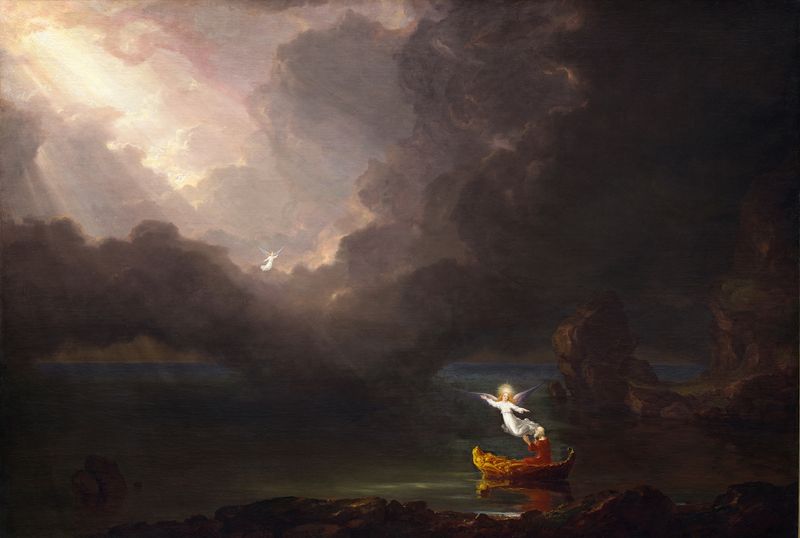
Allegory of the Catholic Faith — História e Análise
Welcome, everyone. Before you stands Johannes Vermeer’s Allegory of the Catholic Faith (c. 1670–1672), one of his most intellectually complex and symbolically rich works.
Unlike his quiet domestic interiors, this painting immerses us in a carefully constructed world of religious meaning. Notice how the light enters from the left, illuminating the female figure—an embodiment of Faith—dressed in elegant white and blue. Her upward gaze and open gesture suggest spiritual transcendence, drawing our attention beyond the physical space into the divine. Now, observe the dense symbolism surrounding her.
At her feet lies a globe, representing worldly concerns subdued by faith, while a snake crushed beneath a stone signifies the triumph of Christianity over evil. The crucifix, chalice, and richly detailed tapestry all reinforce Catholic doctrine, reflecting the religious tensions of Vermeer’s time in a predominantly Protestant Dutch Republic. Even the dramatic painting within the painting—depicting the Crucifixion—adds another layer, inviting contemplation on sacrifice and redemption. What makes this work so striking is Vermeer’s shift from intimate realism to deliberate allegory.
Every object is carefully placed, every detail meaningful. Yet, despite its complexity, the painting retains his signature mastery of light and texture, creating a scene that feels both tangible and transcendent. Here, Vermeer is not just observing the world—he is interpreting it, offering a profound meditation on faith, belief, and spiritual truth.
Mais obras de Johannes Vermeer
Ver tudo →
View of Delft
Johannes Vermeer

Girl with a Pearl Earring
Johannes Vermeer
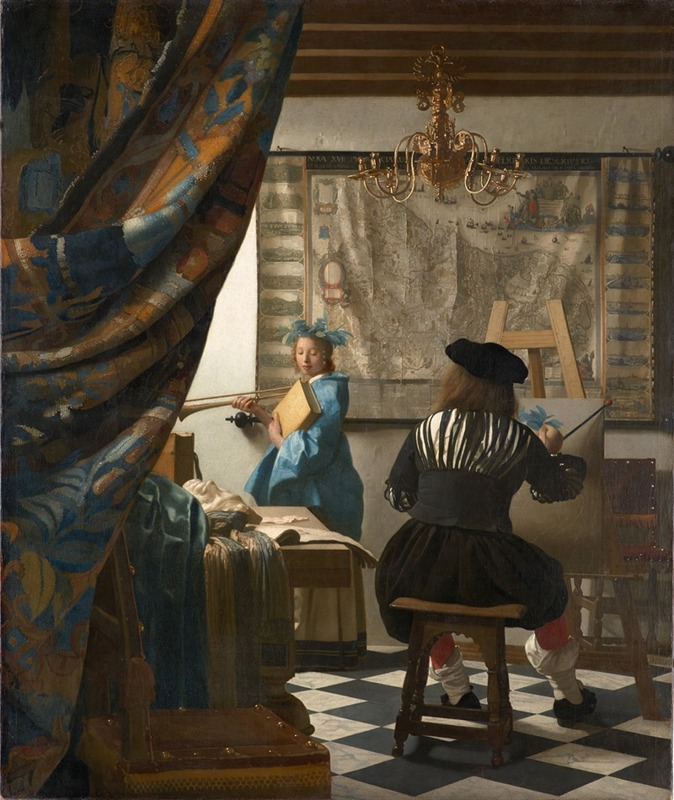
The Art of Painting
Johannes Vermeer
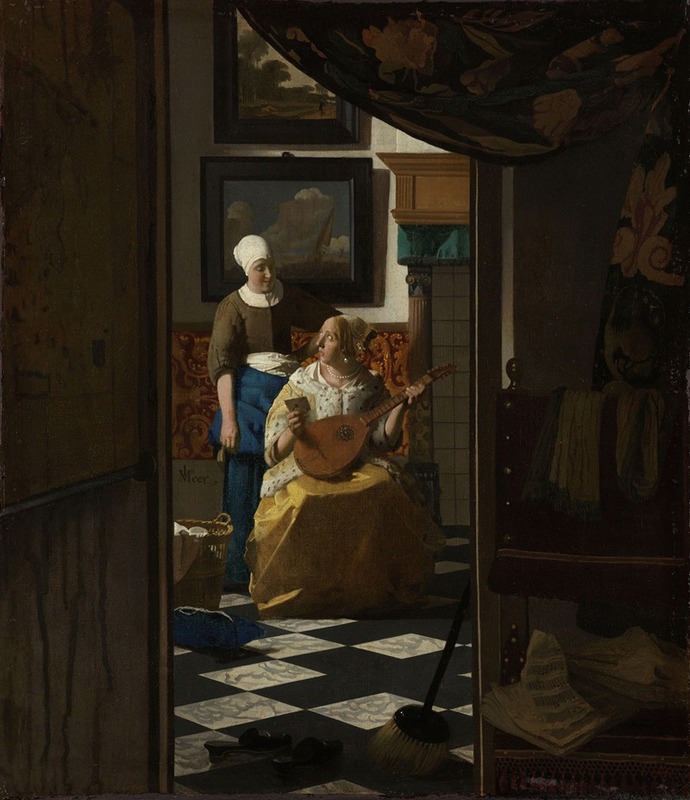
The Love Letter
Johannes Vermeer

View of Houses in Delft, Known as ‘The Little Street’
Johannes Vermeer

The Milkmaid
Johannes Vermeer

View of Houses in Delft, Known as ‘The Little Street’
Johannes Vermeer
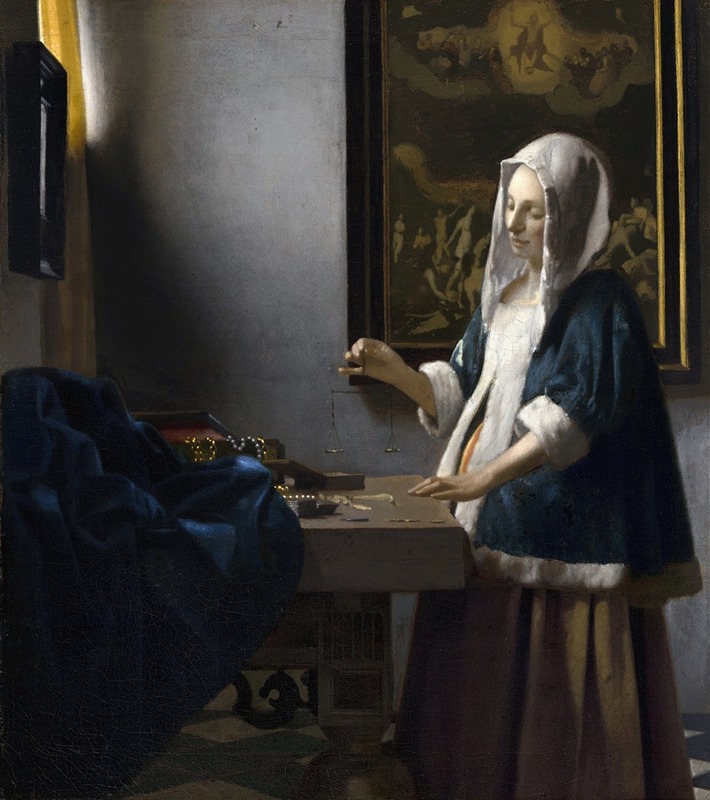
Woman Holding a Balance
Johannes Vermeer

The Love Letter
Johannes Vermeer
Girl with the Red Hat
Johannes Vermeer