Der Berg — História e Análise
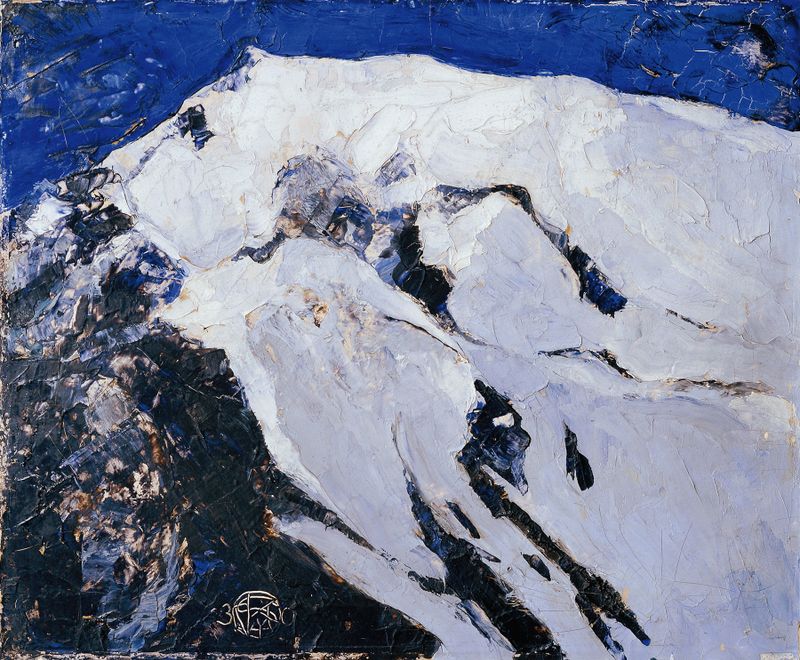
What if silence could speak through light? In Der Berg, the interplay of shadows and illumination invites contemplation on beauty’s quiet essence amid nature’s grandeur. Look to the center, where a majestic peak looms above a serene valley, dominating the composition with its stoic presence. This snow-capped mountain, rendered in a palette of cool blues and whites, contrasts sharply with the earthy tones of the foreground, suggesting a harmonious balance between the ruggedness of nature and the delicate touch of light. Notice how the soft strokes of the brush create a sense of depth, guiding the viewer's gaze toward the distant horizon where the sky gently kisses the mountain’s summit. Delve deeper into the details: the wisps of clouds hovering around the summit hint at a fleeting moment, evoking a sense of transience and the ephemeral nature of beauty.
The rich textures of the landscape, punctuated by gentle slopes and valleys, convey a feeling of tranquility, while the starkness of the peak reminds us of nature's sublime power. There’s a tension between the overwhelming scale of the mountain and the subtle finesse of the surrounding terrain, reflecting the duality of strength and delicacy in the natural world. Franz Secky painted Der Berg in 1931, during a period where the art world was grappling with modernism and emotive expression. Living in Germany, he was influenced by the shifts in cultural and aesthetic values that defined this time.
As artists sought new ways to convey perception and emotion, Secky's focus on the serene beauty of landscapes marked a significant departure, aiming to capture not just the physical form but also the spirit of the environment around him.